


Discovering the Harlequin Sweetlips: An Extraordinary Fish
The harlequin sweetlips (Plectorhinchus chaetodonoides), also called clown sweetlips in English, is among the hidden treasures of the Indo-Pacific coral reefs. This fish amazes with its spotted silhouette and unique behaviors, which attract curious divers and marine life experts alike. What mysteries lie behind its big lips and spectacular appearance? Find out why this species deserves your attention on your next underwater exploration!
A Usual Quiet Presence on Coral Reefs
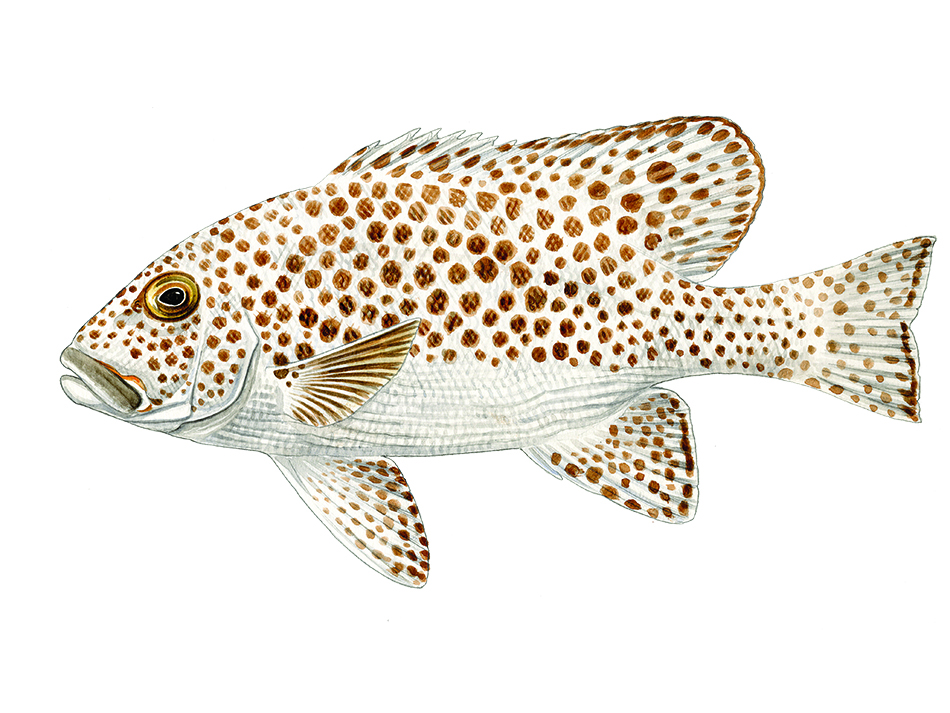
The harlequin sweetlips is often noticed… for its tranquility! Covered in large brown spots, this fish hides under overhangs, in rock cavities, or in the shade of coral tables, where life is vibrant. Impressive in its calm, it remains surprisingly placid even when divers approach, unlike many other more skittish reef inhabitants.
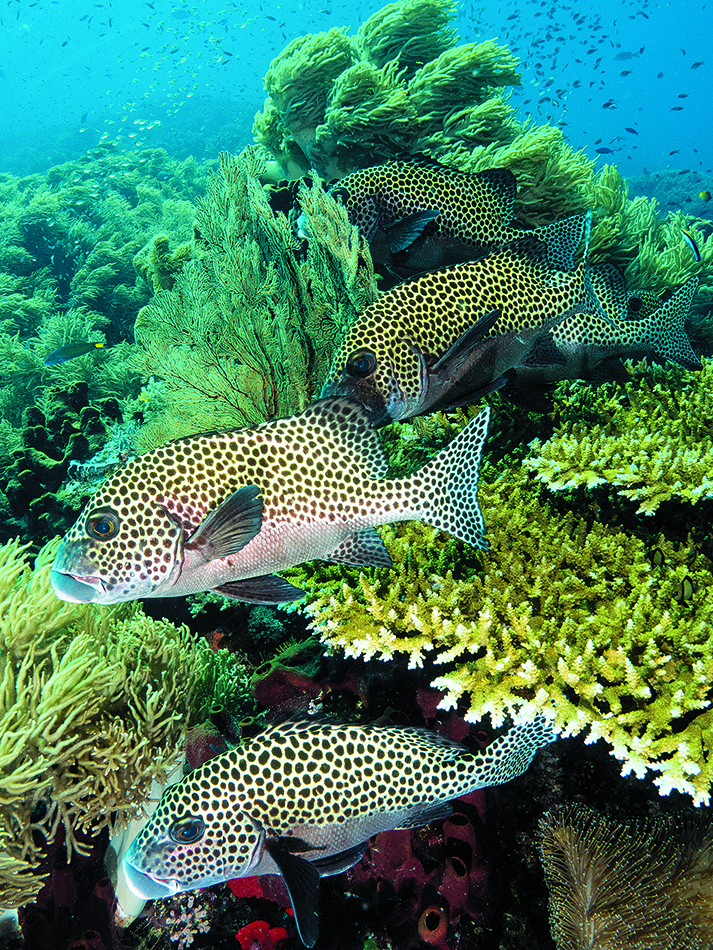
Easily identifiable, it features large, fleshy lips and a mouth with pharyngeal teeth. These teeth enable it to produce sounds, amplified by its swim bladder, reminiscent of small grunts. You’ll understand its English nickname of “grunt”!
Lifestyle and Behavior
- Activity: Primarily nocturnal, it forages in the sand for food as night falls.
- Behavior: Mainly solitary during the day, it can sometimes be seen in the company of other sweetlips, like the oriental sweetlips (P. orientalis), the Lesson’s sweetlips (P. lessonii) or the lined sweetlips (P. lineatus).
Harlequin Sweetlips Identity Card
- Distribution: Found in tropical waters from the Indian Ocean to the central Pacific, from Polynesia to northern Japan and south to Australia. See distribution sheet on the IUCN.
- Habitat: Lives in coral reefs, generally up to 30 meters deep. Prefers shelters under overhangs, coral tables, and caves.
- Diet: Feeds at night on mollusks, crustaceans, and small fish by sifting through sandy substrates.
- Size: Can reach up to 72 cm in length for the largest individuals.
- Mouth: Small, but equipped with thick and remarkable lips, hence the name “sweetlips” in English.
- Etymology: The name Plectorhinchus evokes their prominent lips. “Chaetodonoides” suggests a misunderstood resemblance to butterflyfish (Chaetodon).
- Appearance: Adults bear a thick constellation of dark brown spots, except on the belly, which is uniformly gray-brown.
Young Harlequin Sweetlips’ Spectacular Disguises
Nature never lacks ingenuity to ensure the survival of its species, and the harlequin sweetlips is no exception. In its juvenile state, this fish sports a completely different look: its coat alternates wide white spots with a dark brown background, reminiscent of the coloration of a clownfish or some juvenile wrasses.
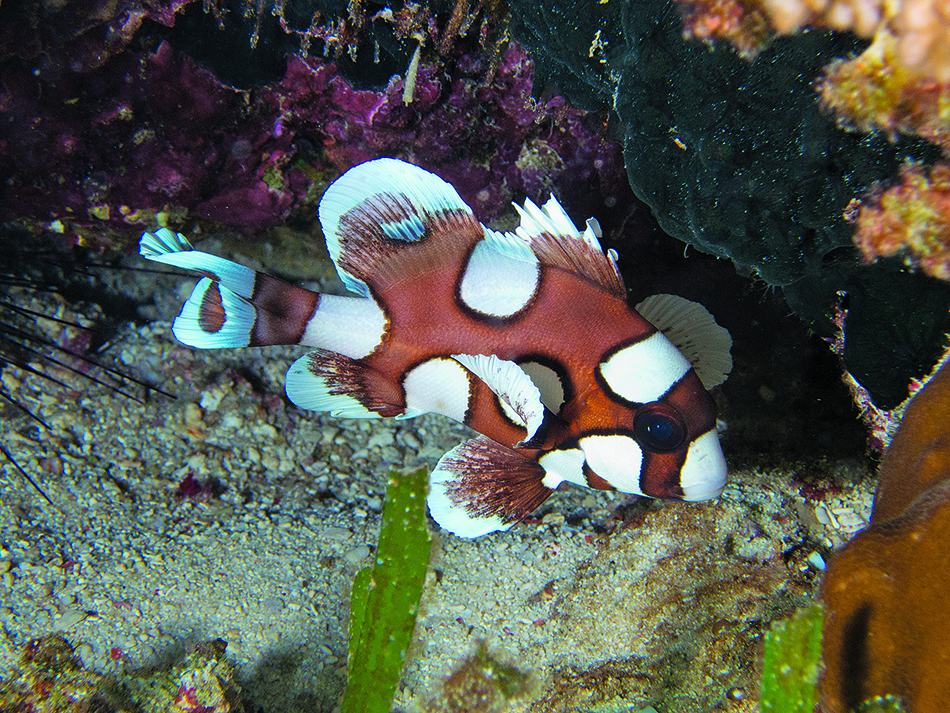
This mimicry primarily serves to keep predators at bay. By imitating toxic or dangerous species, these young fish benefit from natural protection. Additionally, the young Plectorhinchus chaetodonoides are famous for their undulating and jerky movements, reminiscent of the vibrations of a toxic flatworm, further enhancing their defensive strategy.
With age, the harlequin sweetlips loses these bright colors and eccentric behavior to adopt a more discreet appearance and a more solitary life.
Learn More
- Discover more details about the harlequin sweetlips on Wikipedia
- Detailed profile of Plectorhinchus chaetodonoides on Fishbase
This article, originally written by Anthony Leydet for the print edition of PLONGEZ!, has been adapted for the web. Photographer: Anthony Leydet. Illustrator: Cyril Girard.