


Photographing freedivers offers a unique opportunity to capture the beauty and fluidity of these underwater athletes. Whether to immortalize moments of leisure, training, or competition, mastering a few techniques is essential to enhance your images. Here are 15 practical tips to improve your underwater shots.
1. Choose the right equipment
To capture the human and sporty ambiance of freedivers, opt for a wide-angle lens, such as a 20 mm or wider. This will allow you to get closer to the subject, thus reducing the water layer between you and them, while facilitating the use of lighting.
2. Assess your models’ comfort underwater
Before starting, it is crucial to assess your model’s comfort underwater. Ask simple questions: do they practice freediving regularly? To what depth do they feel comfortable? This will influence the choice of location and depth of the session. A safety briefing is also essential to put the model at ease.
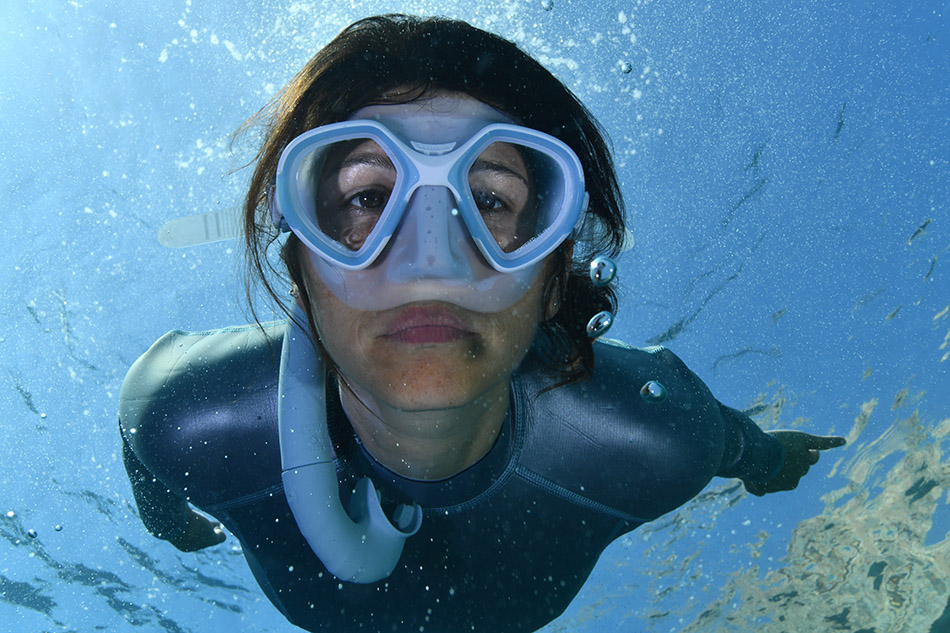
3. Freediving or scuba?
The choice between photographing while freediving or scuba diving depends on your preferences and skills. Freediving offers more freedom of movement, while scuba allows you to stay underwater longer. Make sure you are comfortable with the chosen method.
Box: Safety first!
Safety is paramount. Follow the « one freediver per freediver » rule by planning for a safety freediver. This is particularly important if you are scuba diving, as you will not be able to ascend quickly to provide assistance.
4. Organize the session
Before diving, clearly define your photographic objectives. Show photo examples to your model to facilitate understanding of what you expect. Good communication is essential to adjust poses underwater.

Did you enjoy this excerpt?
Read the full article.
READING TIME ≈ 04 min
To enjoy this article and its exclusive content, a modest contribution is required.