


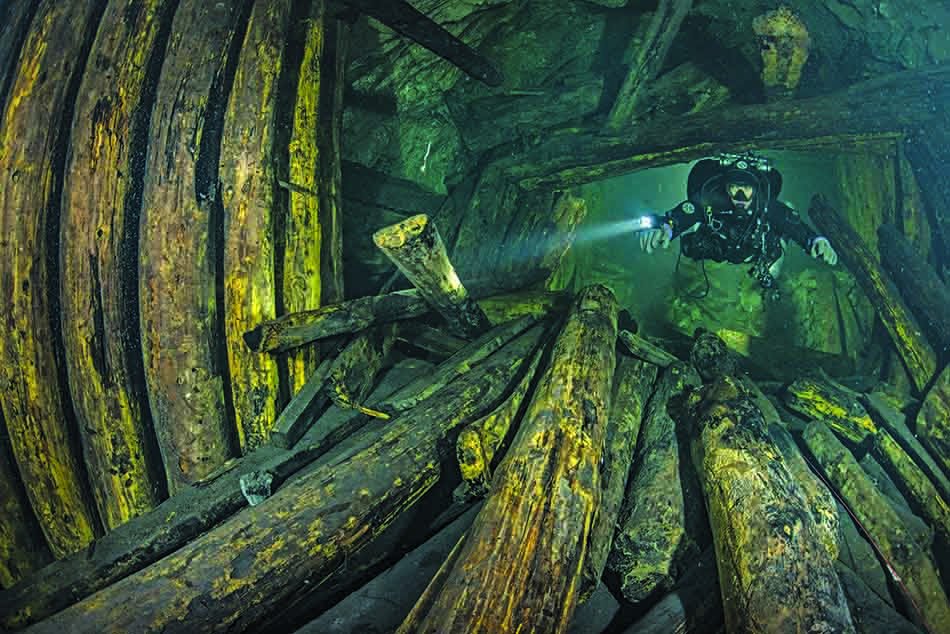
The old uranium mine in Kowary, closed in the 1960s, now offers a unique experience for divers. By exploring its flooded tunnels, visitors can feel the echoes of the past, marked by the suffering of miners exposed to radioactivity.
A Troubled Mining Past
Located in the charming town of Kowary, in western Poland, this mine was established shortly after World War II. Founded on January 1, 1948, by the state-owned company « Kowarskie Kopalnie, » it attracted many refugees seeking employment in a booming mining industry. Stanisław Jasiński, one of the first miners, began working in the shaft near the village of Podgórze (Zgorzelec County, Lower Silesian Voivodeship). Without training, he had only a shovel and a pickaxe to work with, unaware of the radioactive nature of the ore he was extracting. Miners were kept in secrecy, and those who spoke out risked disappearing mysteriously.
Invisible Dangers
Miners, like Stanisław Moszkowski, quickly realized the dangers of their work. After five years of sorting ore, he noticed harmful effects on his health, with pieces of skin peeling off his hands. Anatol Moszkowski, who started working in the mine at 18, received advice from a Russian engineer: “If you want to live, avoid places where the Pietiorka needle swings a lot!” It was only after several years that the miners understood the nature of their work and the risks associated with uraninite, the radioactive ore they were handling.
In 1963, mining operations ceased, leaving many miners suffering from serious illnesses related to radiation exposure.
Did you enjoy this excerpt?
Read the full article.
READING TIME ≈ 04 min
To enjoy this article and its exclusive content, a modest contribution is required.