


For four decades, the French Research Institute for Exploitation of the Sea (Ifremer) has been designing vehicles capable of exploring the ocean depths. Thanks to the collaboration of engineers, technicians, and scientists, the institute collects valuable data on the topography, fauna, and flora of abyssal ecosystems. Dive into the behind-the-scenes of the La Seyne-sur-Mer site, where maintenance and modernization operations for the manned submersible Nautile and the Victor 6000, Ariane, and Ulyx robots take place.
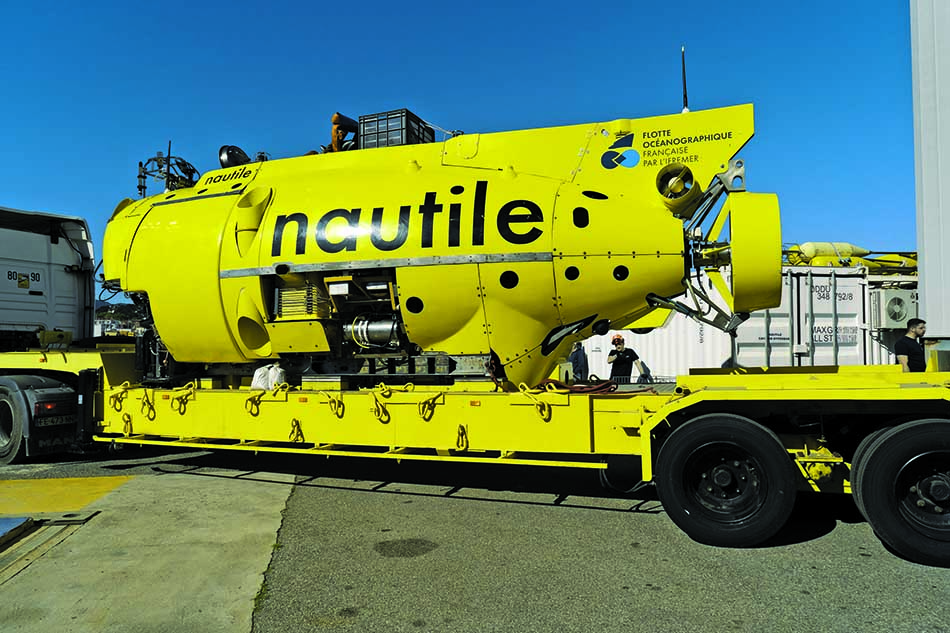
Photo: Alexie Valois
La Seyne-sur-Mer: an innovation hub
On April 23, 2025, in one of Ifremer’s buildings on the Mediterranean coast, the technical team of the Nautile is busy. This iconic submarine is finishing its maintenance and preparing to dive again. Life at sea is demanding, and breaks are necessary between scientific campaigns, which take place on average three times a year in all oceans.
The Nautile is the only habitable oceanographic submarine in the French Oceanographic Fleet (FOF), which also includes ships and robots. Designed by the National Center for Ocean Exploitation (CNEXO), the General Directorate of Armament (DGA), and the Directorate of Naval Constructions and Armaments (DCAN), it was launched in the 1980s. With a diving capacity of up to -6,000 m, it has completed more than 2,100 dives during its career. Jan Obderbecke, head of the Underwater Systems unit at Ifremer, emphasizes: “The Nautile offers a unique capability to take humans into the deep sea to perform very meticulous work.”
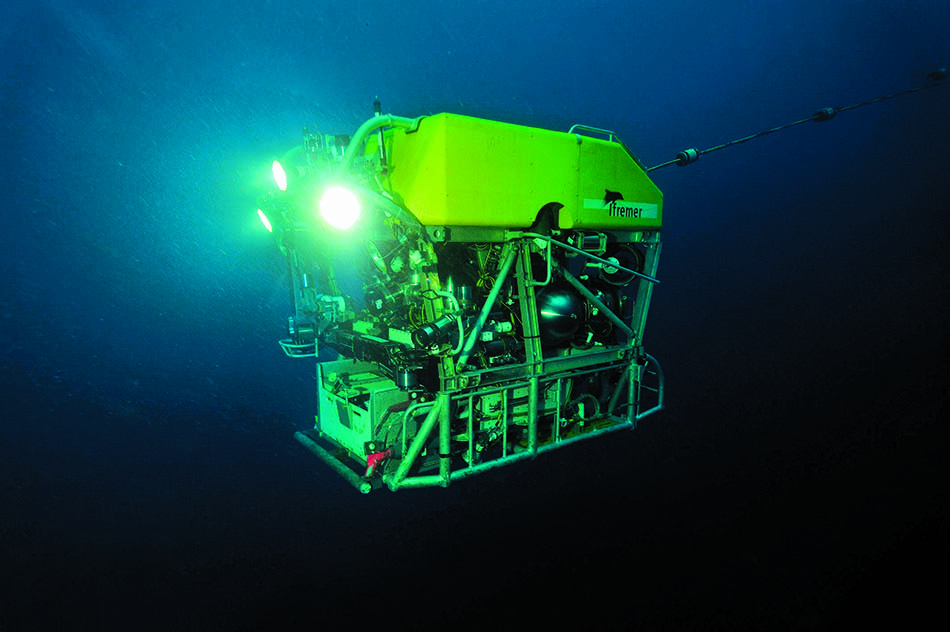
Photo: Olivier Dugornay/Ifremer.
Did you enjoy this excerpt?
Read the full article.
READING TIME ≈ 05 min
To enjoy this article and its exclusive content, a modest contribution is required.