


Text and photos: Gaby Barathieu
Raja Ampat: A biodiversity paradise unique in the world
In the heart of West Papua, where the Indian and Pacific Oceans meet, the Raja Ampat archipelago stands out as one of the true natural gems of our planet. Composed of a myriad of islands and islets, it offers its visitors exceptional biodiversity, protected like nowhere else in the world. Postcard landscapes blend with a thriving underwater life still untouched by human impact.
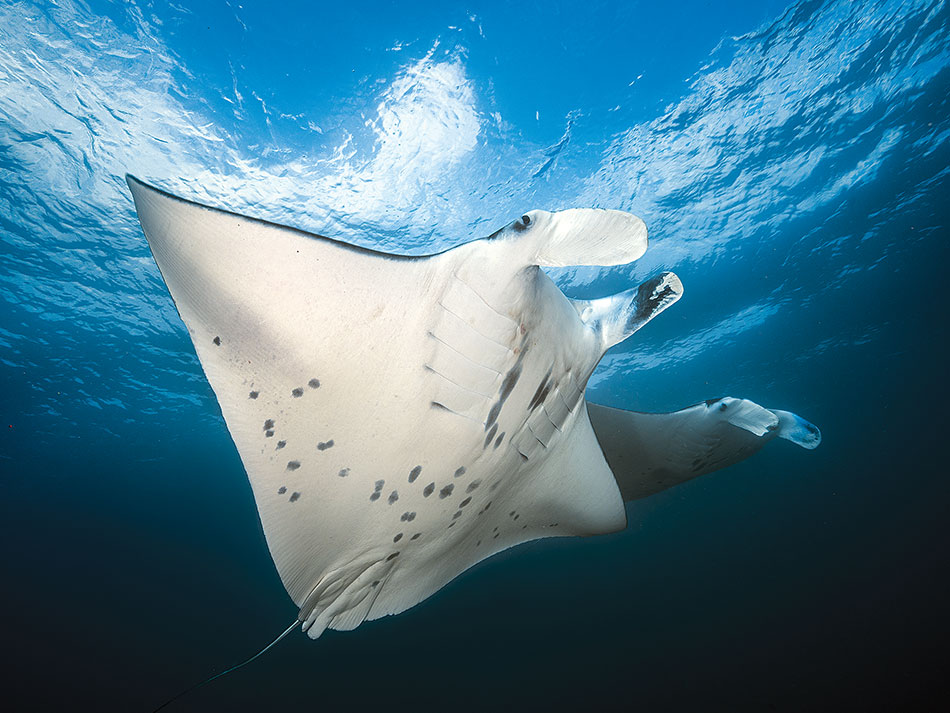
Raja Ampat: at the heart of the Coral Triangle
In Indonesian, Raja Ampat means ‘The Four Kings.’ An evocative name for an archipelago that includes four large islands — Waigeo, Batanta, Salawati et Misool — and nearly six hundred paradise islets, nestled in the Indo-Pacific region of the Coral Triangle. These lands are endowed with ecosystems of exceptional diversity, sometimes very close to each other, other times separated by several nautical miles. Each dive reveals a new colorful eden, where nature seems still untouched by human intervention. A fragile balance we hope to maintain.
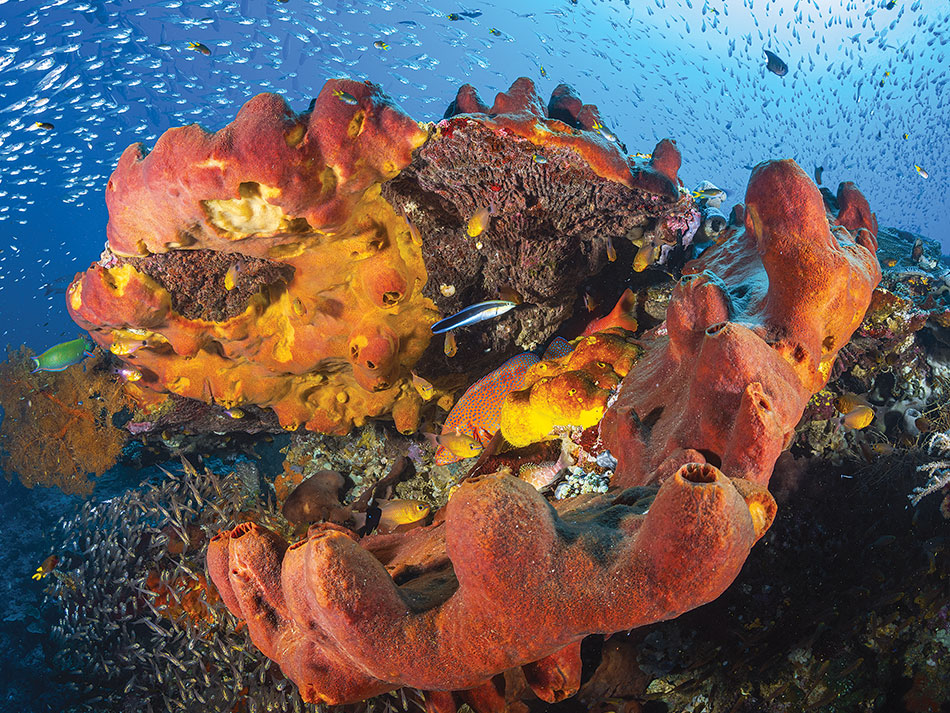
Misool: A global example of marine protection
Further south, in the Seram Sea, the island of Misool stands out as the southernmost of the ‘Four Kings.’ This island is home to one of the most intact and wild coral reefs in the world, a casket where biodiversity continues to increase over the years. Covered with lush forests and a mosaic of mangroves, Misool presents a unique landscape where limestone spires, steep cliffs and abundant vegetation stand out against the bright azure of the Seram Sea.
To preserve this exceptional territory, a 425 km² marine reserve was created in 2005 around the island of Batbitim: here, all fishing is strictly prohibited, from fish to sharks, including manta rays and turtles. In 2010, the protected area was extended to over 100,000 km². In this ‘no-take’ zone, illegal fishing has decreased by 86%, while species diversity has increased by 250% on average, and even by 600% at some sites. The Misool Eco Resort manages the visitation of these mythical dive sites, to limit tourism impact and ensure the long-term preservation of this exceptional fauna and flora.
Did you enjoy this excerpt?
Read the entire article.
READING TIME ≈ 7 min
Dive into the PLONGEZ! Magazine
To enjoy this article and its exclusive content, a modest participation is required.