


Welcome to Grande-Terre where turquoise lagoons meet a rich countryside. Here, dives are suitable for both beginners and divers looking for more sporty experiences or wreck enthusiasts.
Grande-Terre is an exploration area shared between the currents of the Atlantic and the calmer waters of the Grand Cul-de-Sac Marin, some parts of which are part of the « heart » of the Guadeloupe National Park.
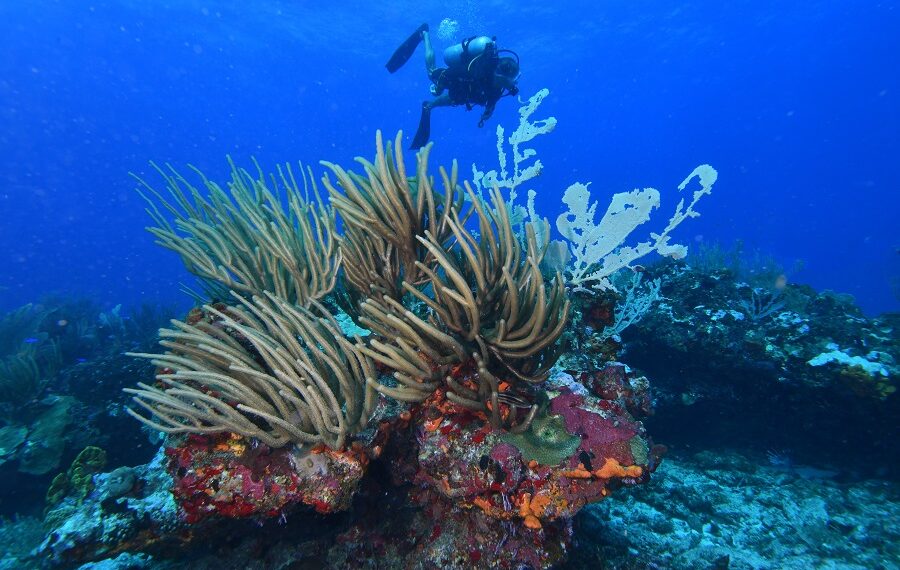
This area is protected by the longest coral reef (29 km long) and bordered by the largest area of mangrove in the Lesser Antilles. This vast lagoon harbors the main ecosystems of the coastline and the sea and constitutes a reservoir of exceptional biodiversity. It shelters the majority of the coral fauna and 60% of the gorgonians of the French West Indies.
Port Louis

Anse-BertrandHere the current is strong, so the dives are reserved for experienced divers. The tip of Grande Vigie, at the north of the island, is made up of many underwater cliffs, where you will find incredible landscapes adorned with large gorgonians, stag horn corals… You will encounter turtles, angelfish, seahorses, and garden eels.
Dive into the Amédien cave, shallow and wide, it is easily accessible but beware of the swell! The environment is entirely limestone, and you will observe a significant endemic fauna. Les Arches is a fantastic diving site, composed, as its name suggests, of numerous rocky formations and underwater tunnels.

Riviera du LevantOn the eastern tip of Grande-Terre, dive into the lagoon of Saint-François. It is a shallow area (less than 6 meters) but very fishy and surrounded by a barrier offering beautiful coral formations. It’s an ideal site for beginner divers and snorkeling enthusiasts. Look up, it’s not uncommon to spot dolphins in the blue!Head out of the waterAdmire the steep cliffs plunging into turquoise waters from Anse Bertrand. At Port-Louis, enjoy a moment of relaxation on the Souffleur beach where you will admire the mountains of Basse-Terre beyond the Grand-Cul-de-Sac-Marin. You can explore the mangrove or discover the ancestral work of sugarcane. After a dive in Saint-François, head to the extreme west of Grande-Terre: Pointe des Châteaux, subtly inserted into the Atlantic, gives those who climb it a thirst for more. The landscape is so majestic, the colors so contrasting, at the foot of the cross you will feel a sense of fulfillment. Finally, do not miss an escape to Pointe-à-Pitre, the capital, a city of art and culture.
Guadeloupe Islands Tourism Committee: www.lesilesdeguadeloupe.com