The winning images from the European Wildlife Photographer of the Year 2021 contest have been announced.
It is one of the most renowned competitions for nature photography. Each year the German Society for Nature Photography (GDT) selects the best photos in several categories and designates an overall winner. This year, Spanish photographer Angel Fitor captivated the jury with his photo Medusa Ballet. He received the title of European Wildlife Photographer of the Year 2021 on October 28. More than 19,000 photos from 36 countries were submitted by over 1,000 professionals and prominent nature photographers as well as talented newcomers. 89 winning photos for the 2021 contest have been announced.
A signal for ocean protection
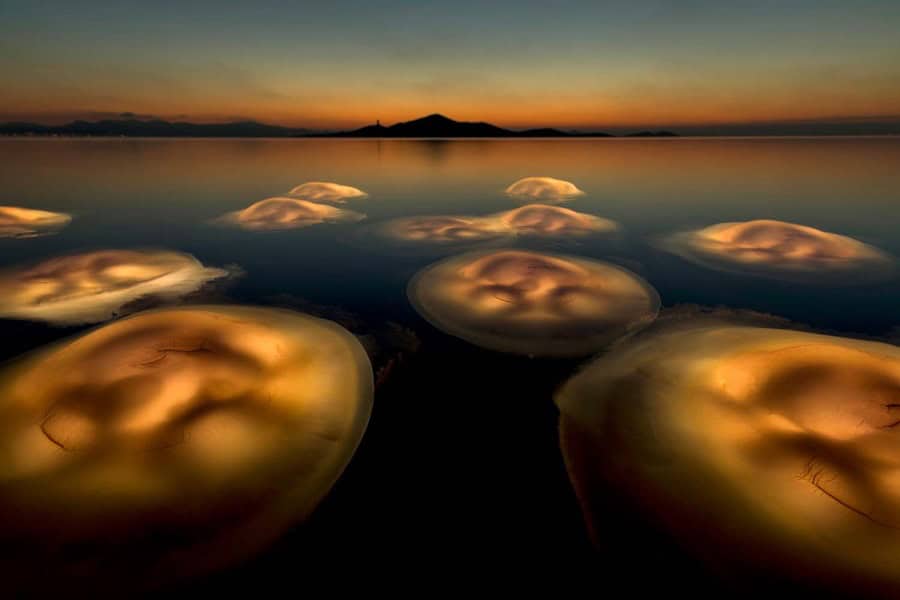
The grand winner and European Wildlife Photographer of the Year 2021 is the Spanish photographer, photojournalist, and author Angel Fitor, whose photo shows jellyfish in the Spanish lagoon of Mar Menor. The fact that Mar Menor, Europe’s largest saltwater lagoon, experienced massive fish dead shortly after the jury’s vote adds extra impact to the image. Jim Brandenburg, one of the most famous nature photographers and a member of this year’s jury, reminds us: « this powerful image touched us, the jury members, on several levels, and the ecological catastrophe that occurred shortly afterwards at the site where it was taken […] it [la photo gagnante; ndlr] speaks all the more about the enormous environmental problems of this region. » The conditions under which the photo was taken are also interesting: the eleven jellyfish shown in the photo are the result of the flash being triggered eleven times. Angel Fitor himself only had 2 of these impressive fried egg jellyfish (Cotylorhiza tuberculata) in front of his lens. « Through the illusion of a swarm of jellyfish, [the photo] evokes similarities to a phenomenon that can be observed all over heavily exploited seas. Marine ecosystems that are no longer intact and the warming of the seas due to climate change contribute to the increase in the number of individual species« , said the patron of the competition and president of the Federal Agency for Nature Conservation (BFN), Prof Dr Beate Jessel in her foreword to the competition’s catalog. Angel Fitor has long been concerned with the aquatic ecosystems of our planet, wanting to give them a voice with his images. He firmly believes in the power of photography to initiate necessary changes and address environmental issues with great conviction.
Prizes in 8 categories
There are eight major categories in this competition. In addition to wildlife photography with three categories (birds, mammals, other animals), there are five other themes: from plants and fungi to landscape and underwater photography to the Nature’s Studio category, which has an artistic direction. In each category, the jury selected the ten best images and named one of them as the winning image. In the underwater world category, Frenchman Fabrice Guerin won first place.
Discover our selection among the award-winning photos at this annual contest. Find the complete list on the official website.
Our « above and below water » selection among the 2021 winners
First prize – « Underwater world » category – Fabrice Guérin – France
Aquatic ballet
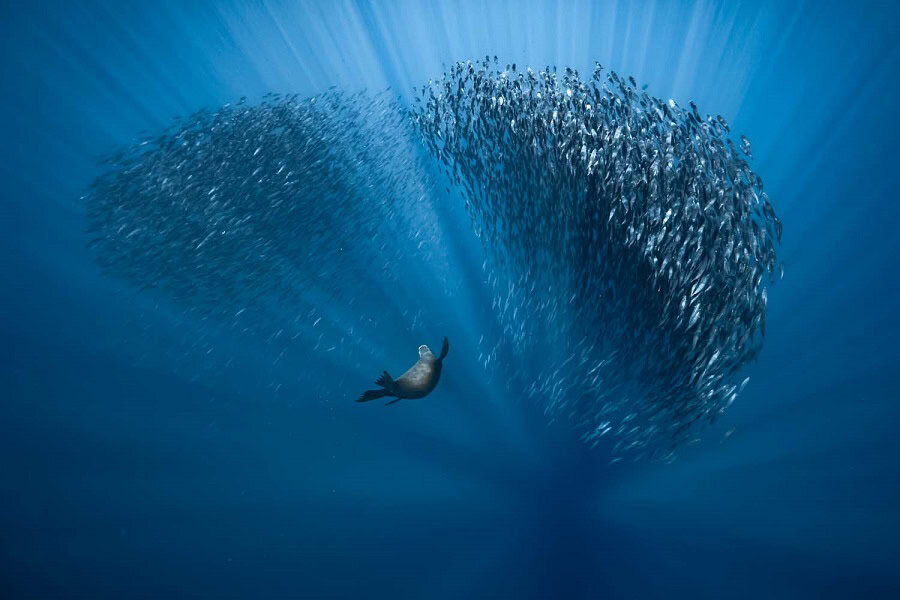
« Every winter in Baja California in the Pacific Ocean, countless predators gather at a specific time of the year with a common goal: to hunt huge schools of mackerel. Attacked from all sides, the mackerels tighten ranks to prevent their pursuers from focusing on a single individual. Here, we witness a well-organized hunt by striped marlins and California sea lions (Zalophus californianus). »
Second prize – « Underwater world » category – Tobias Friedrich – Germany
Night encounter
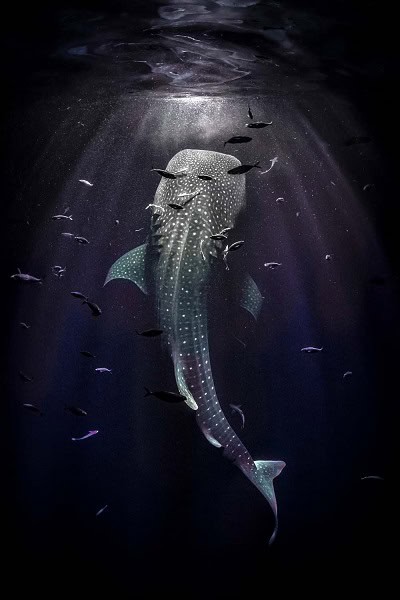
« I photographed this whale shark (Rhincodon typus) about five meters long in the spotlight of a diving boat off southern Maldives (Indian Ocean). With its mouth wide open, the animal swam through dense schools of plankton – an almost inexhaustible food source. The photographic challenge was to find the perfect moment when the enormous fish emerged from the night’s darkness into the cone of light from the lamp. »
Ranked in the top 10 « Underwater World » category – Henley Spiers – Great Britain
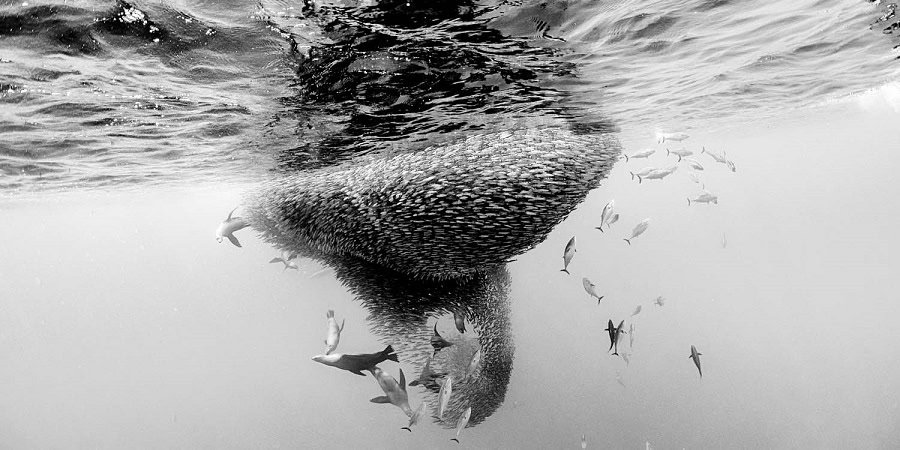
Baitball
« Off the Pacific coast of Mexico, we witnessed this scene of unbridled marine savagery. The coiled school of mackerel, also known as a baitball, was almost the size of a bus. It was attacked by skipjack tuna (Katsuwonus pelamis) and California sea lions (Zalophus californianus), with the tuna leading the charge and darting into the middle of the school with incredible speed and aggressiveness. As the baitball began to show signs of disintegration, the sea lions moved in to capture individual fish. »
Ranked in the top 10 « Underwater World » category – Kirsty Andrews – Great Britain
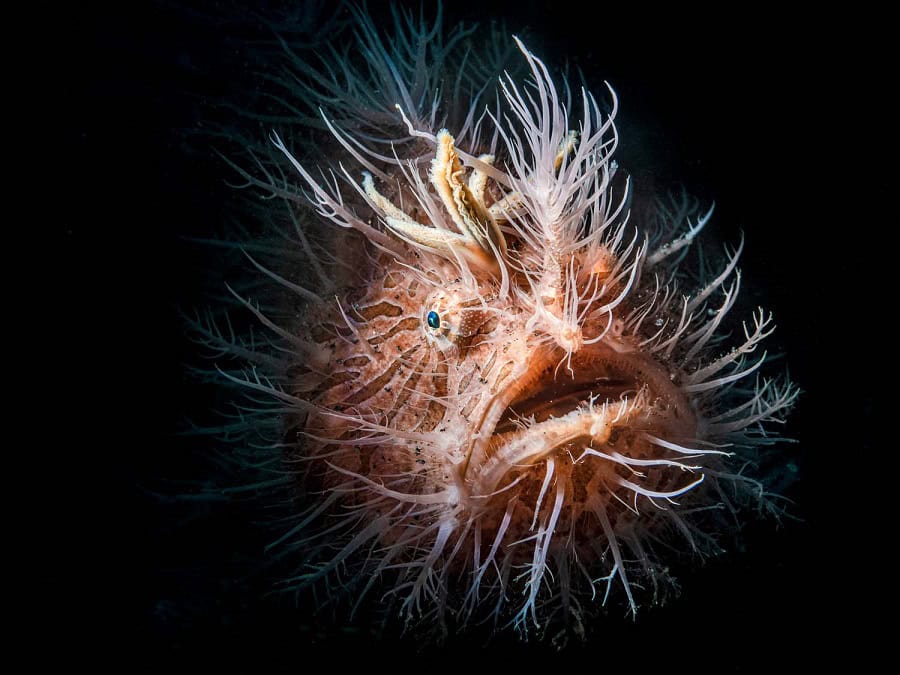
Hairy Fright
« The hairy frogfish (Antennarius striatus) is a creature with an intriguing appearance that is regularly found in the species-rich Lembeh Strait (Indonesia). These fishes rarely swim in open water but patrol the seabed well-camouflaged, attracting small prey fish with their worm-like appendage on their heads. What appears to be hair is actually filamental skin flaps that serve as camouflage. I used an offset snoot flash to highlight the skin texture and create a memorable portrait ».
Ranked in the top 10 « Underwater World » category – Georg Nies – Germany
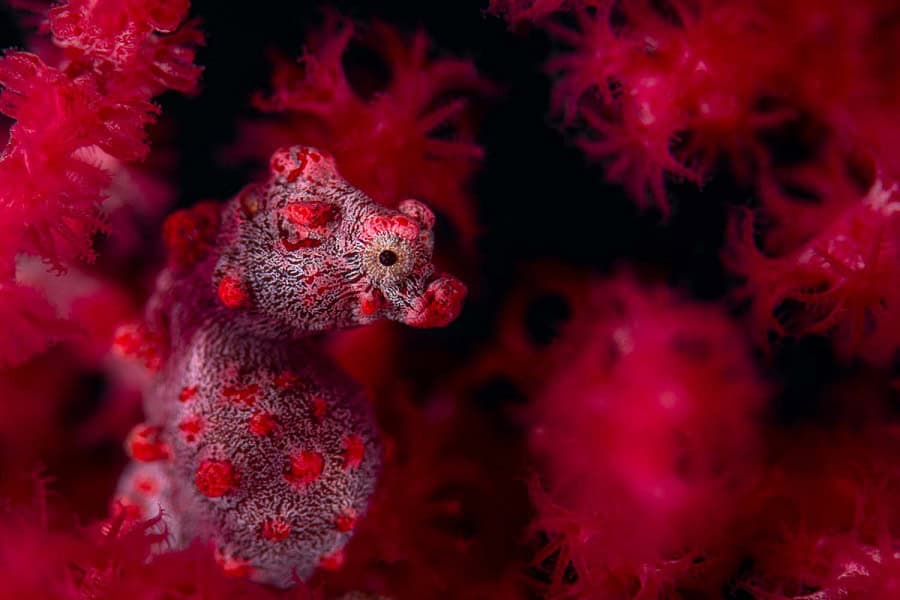
Pygmy Seahorse
« Pygmy seahorses (Hypocampus bargibanti) are among the smallest known fish, with a maximum size of two centimeters. They always live among corals, in this case in a red gorgonian at a depth of 20 meters. They resemble the gorgonians so closely in color and shape that only experienced divers may spot them. They usually cling to the coral branches with their tails but are quite capable of swimming over shorter distances. »
Ranked in the top 10 « Underwater World » category – Jennifer Stock – Great Britain
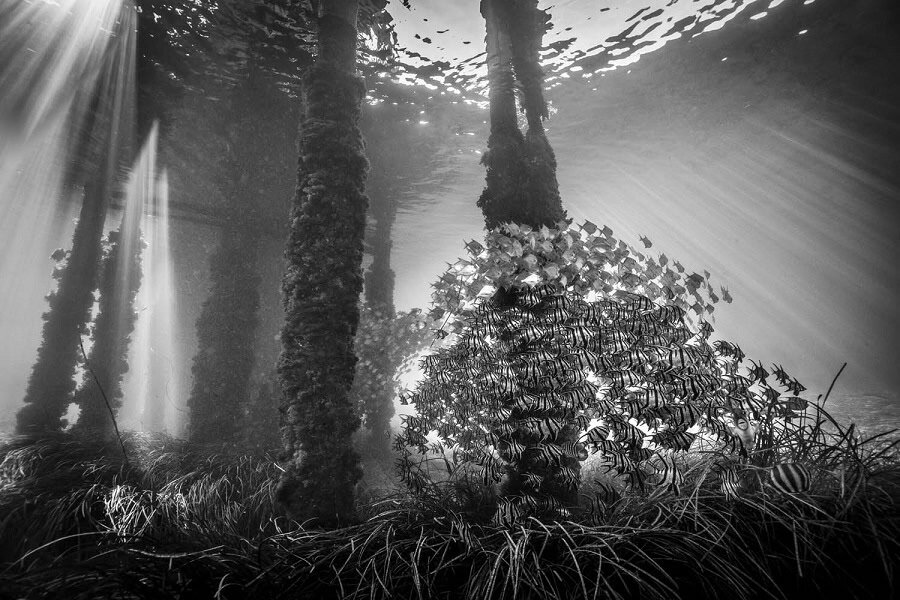
Under the Pier
« Under a pier in Fowler’s Bay, South Australia, I found a massive school of Enoplosus armatus. These incredibly curious fish were not used to human interaction and followed me with great curiosity. The school was so dense that I lost sight of my diving partner for a moment. It was an incredibly beautiful morning: the calm surface of the sea allowed the sun’s rays to pass through the water in waves, creating a perfect contrast with the dark columns of the pier. »
Ranked in the top 10 « Underwater World » category – Boshen Qian, GDT – China
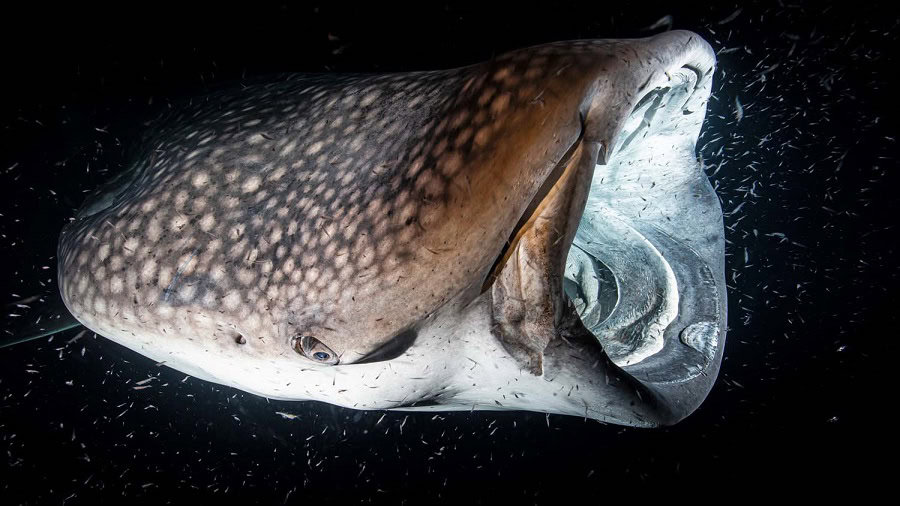
A lavish meal
« We were on a diving safari in the Maldives, and the crew had set up lights in the water at the back of the boat which attracted large amounts of krill. We hoped to attract whale sharks, and they did indeed appear. While I was taking this photo, my friend beside me triggered his camera simultaneously – four strobe flashes went off, and I got the lucky flash at 1/100th of a second. »
Ranked in the top 10 « Underwater World » category – João Rodrigues – Portugal
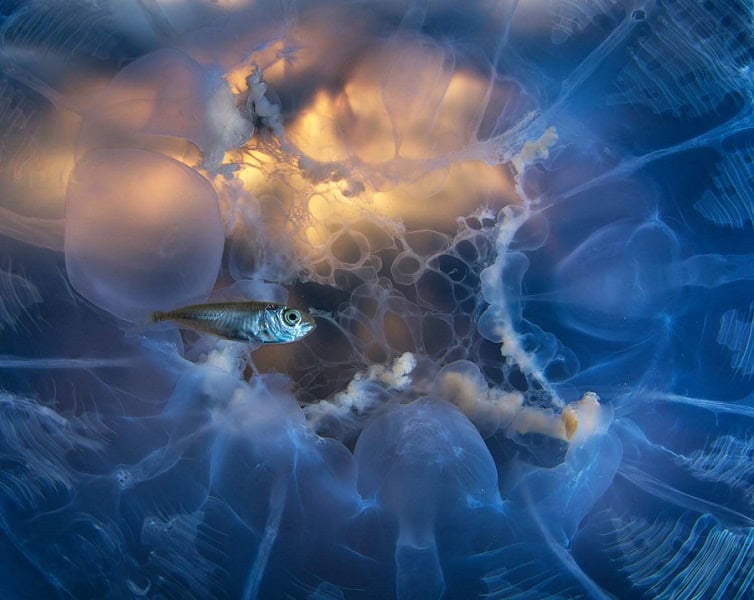
Shelter
« In the open sea off Olhão (Portugal), this juvenile Atlantic horse mackerel (Trachurus trachurus) was swimming near a jellyfish (Catostylus tagi). This species of jellyfish is the preferred prey of sea turtles. Since it lacks stinging filaments, small fish like to take shelter in it when predators approach. A behavior I wanted to document photographically. »
Ranked in the top 10 « Underwater World » category – Daniel Flormann – Germany
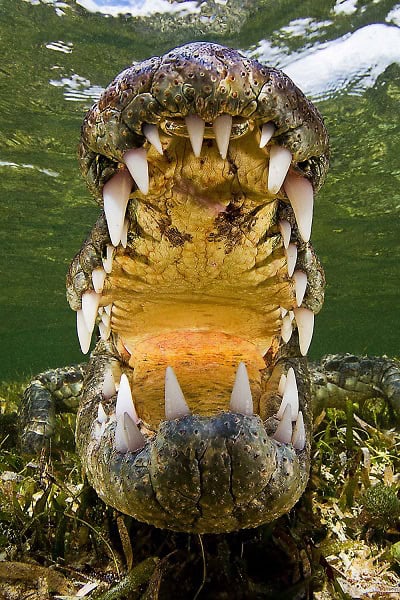
Attack
« This photo was taken in Mexico in 2016 during a snorkeling session with American crocodiles (Crocodylus acutus). It may seem like an attack, but this crocodile was actually very friendly and confident. It shows that even top predators like crocodiles or sharks are generally not dangerous to humans. In any case, we should be more concerned about the protection of these beautiful animals and actively ban cruel hunting methods such as shark finning. »
Ranked in the top 10 « Underwater World » category – Alvaro Lopez-Bletran – Spain
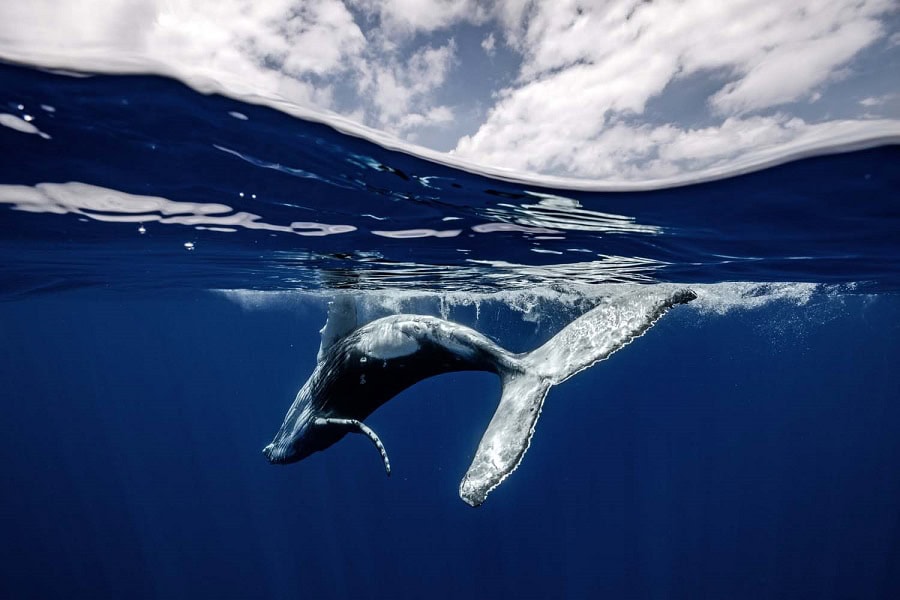
Playground
« Female humpback whales (Megaptera novaeangliae) migrate from their Arctic and Antarctic feeding grounds to tropical and subtropical regions to give birth to their young. This young humpback whale seems to take great pleasure in leaping and frolicking in the shallow waters of Moorea island (French Polynesia) – a magical moment. »
First prize – « Man and Nature » category – Magnus Lundgren – Sweden
Diving and Species Conservation
Sharks, like this great tiger shark (Galeocerdo cuvier), are icons of the wild sea and attract divers from all over the world. Therefore, a live shark is also a great asset to the local economy, not to mention its importance as a top predator for the health of the marine ecosystem. Thus, killing sharks for a few dollars is, in many respects, a very bad idea. In the Bahamas, where this photo was taken, sharks are now a protected species. Diving with sharks in a responsible manner is not a problem there, but part of the solution.
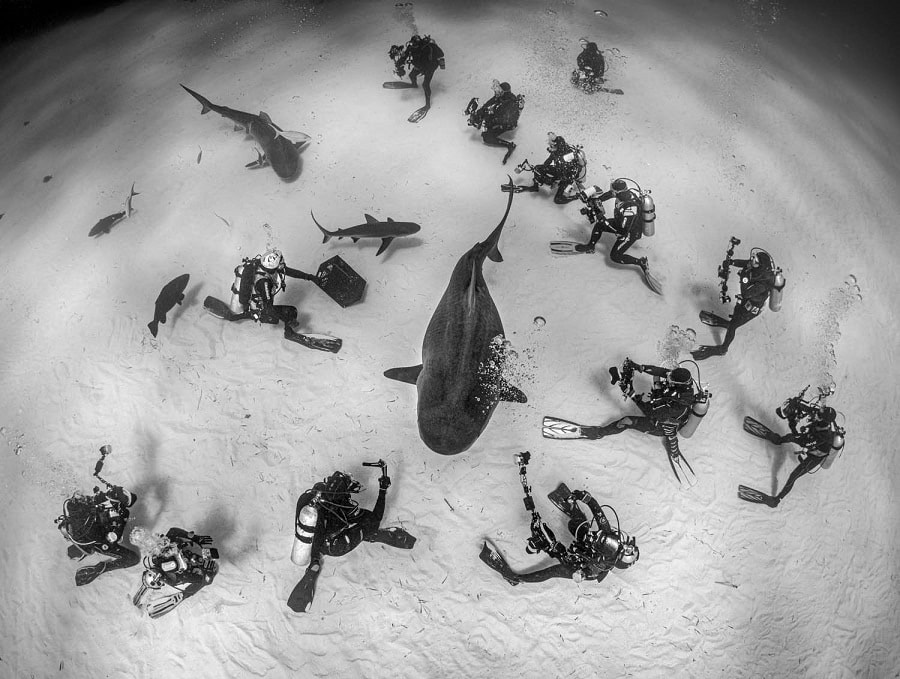
Ranked in the top 10 « Man and Nature » category – Mike Korostelev – Russia
Encounter in Blue
« This photo shows two mammals: a sperm whale (Physeter macrocephalus) and the freediver Irina Smolentseva. When sperm whales ‘stand’ vertically in the water, it is generally believed that they are sleeping. But I don’t think we can fully understand this behavior yet. What else could it be? Maybe meditation? Whales do not always accept human presence, but that day they were extremely tolerant of us, and we were able to observe their behavior up close for many hours. »
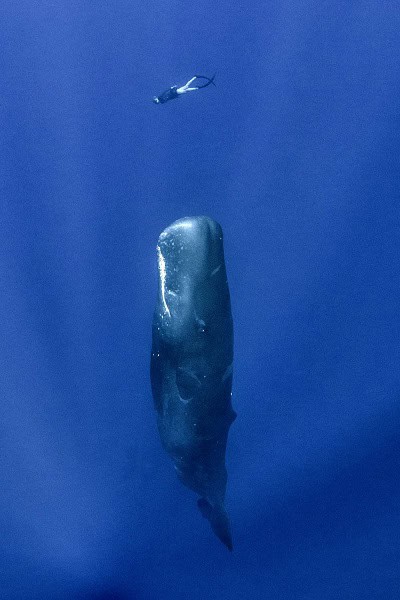
Ranked in the top 10 « Man and Nature » category – Francisco Javier Murcia Requena – Spain
Death in the Lagoon
« In the lagoon of Mar Menor (Spain), where this photo was taken, cormorants (Phalacrocorax carbo) are quite common. There, as everywhere else in the world, plastic waste poses a threat to a wide variety of marine life, from fish and sea turtles to birds and whales. In this case, a piece of plastic holding soda cans together caused the death of this cormorant. It may have wrapped around its beak while it was hunting fish, and the bird died because it could no longer eat. »
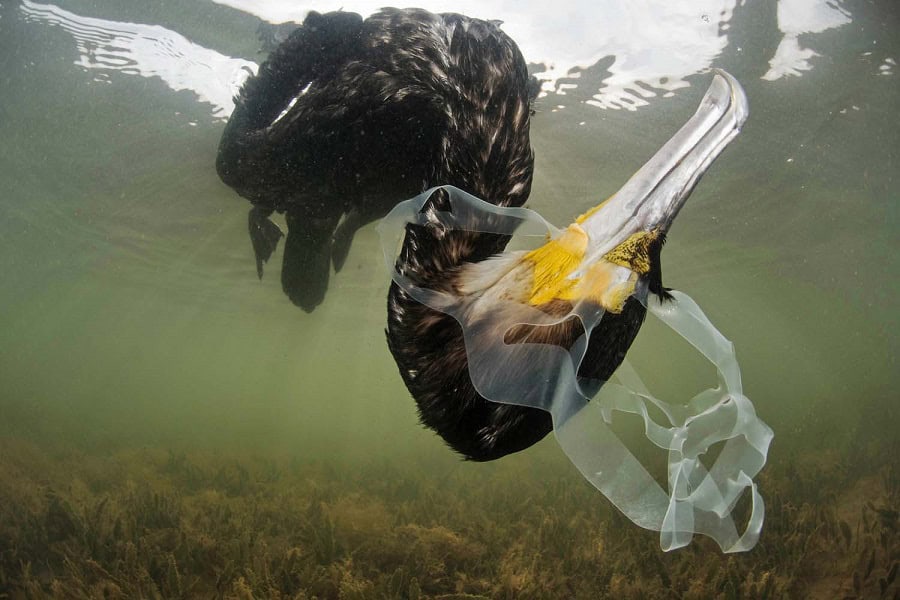
Ranked in the top 10 « Mammals » category – Marco Gaiotti – Italy
A quiet evening
« It was a beautiful evening while I was visiting a colony of walruses in western Spitsbergen last summer. The soft light of the midnight sun penetrating a thin layer of fog provided a perfect backdrop. Walruses (Odobenus rosmarus) are very curious animals, so I decided to sit down on the beach and wait. This young animal approached cautiously, and I managed to compose a portrait with the diagonal of the glacier in the background ».
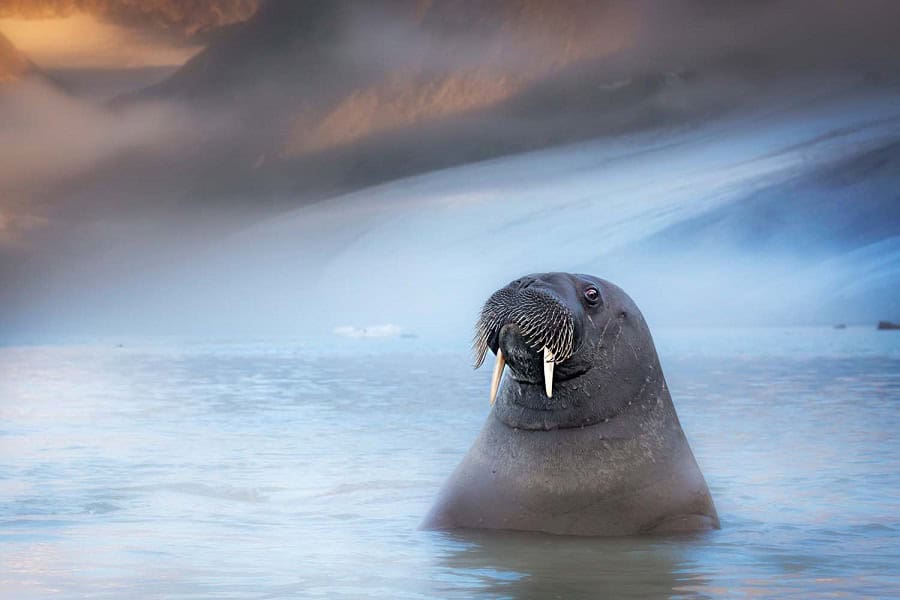
Ranked in the top 10 « Other Animals » category – Nicholas Samaras – Greece
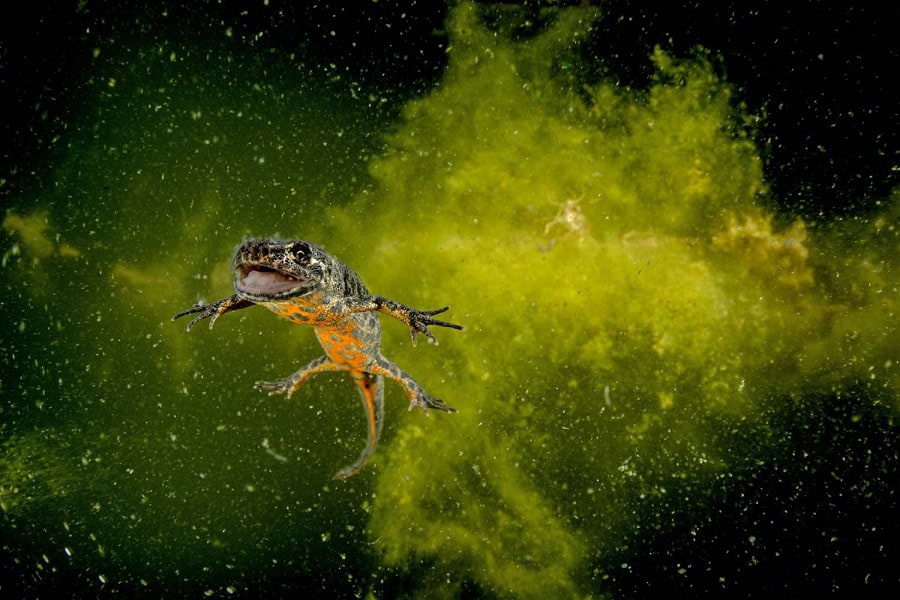
Macedonian Crested Newt
« During the Covid-19 pandemic with all its restrictions, I decided to photograph frogs in a nearby pond. The shoot took an unexpected turn when a Northern water snake (Nerodia sipedon) appeared with something in its mouth that didn’t look like a frog. Looking closer, I discovered it was a Macedonian crested newt (Triturus macedonicus). This unexpected encounter sparked a series of dives that led to the discovery of a small population of this species in the Serres region of Greece. »
Ranked in the top 10 « Other Animals » category – Hannu Laakso – Finland
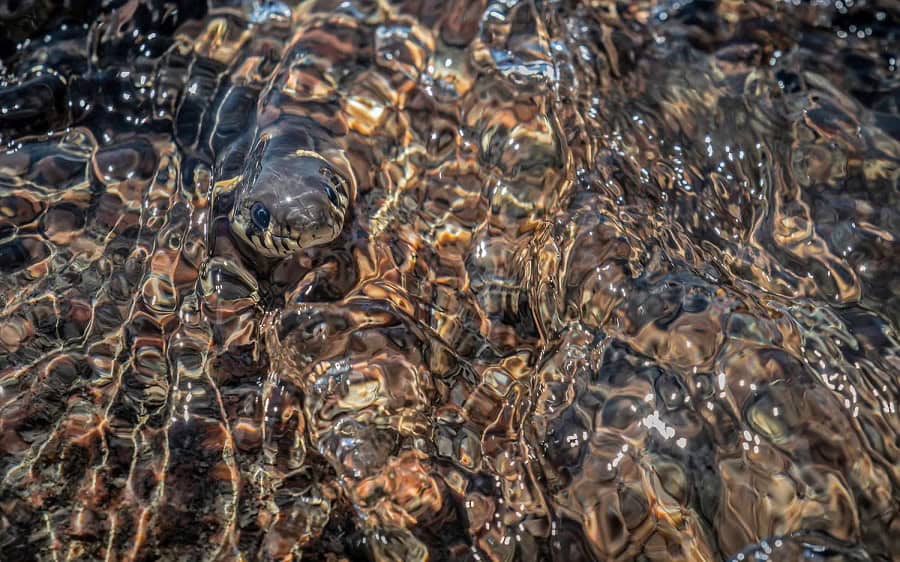
Grass Snake
« It was late May in Inkoo, southern Finland. The weather was pleasant, with an air temperature of 20 degrees and occasional sunshine. Grass snakes (Natrix natrix) are hungry after a long winter and fish energetically in the exceptionally clear seawater. This grass snake caught my attention as it eyed me closely and seemed to become increasingly curious. I managed to approach the animal and take a few shots before it disappeared into the sea. »
Ranked in the top 10 « Other Animals » category – Andrea Pozzi – Italy
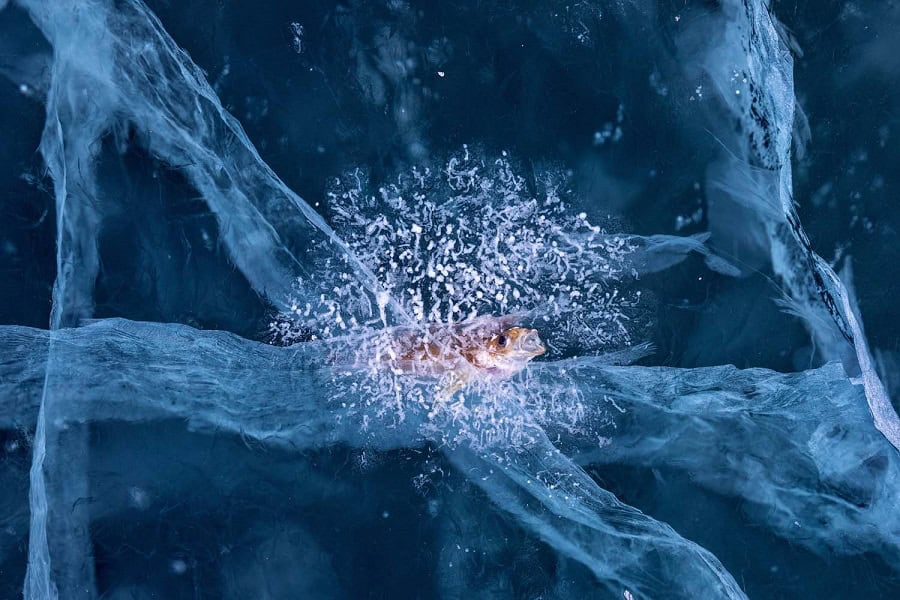
Captured
« I took this photo on an incredibly cold winter morning on the frozen surface of Lake Baikal in Siberia. It shows a small fish trapped in the ice, turned into a work of art, like an insect caught in amber. On the coldest days in January, winter temperatures in this region can reach -40°C due to strong winds. It seems almost surreal to think about the dynamics that led this animal to such an absurd death… »
Ranked in the top 10 « Plants and Fungi » category – Iuliia Vtiurina – Russia
Dark Water
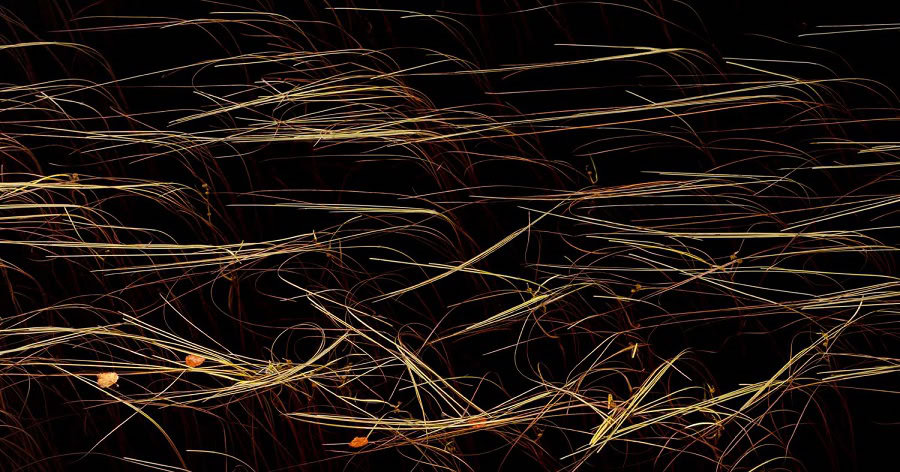
« On the Kola Peninsula, autumn paints its pictures in the dark waters of lakes. The intertwined living and dead leaves resemble a complex pattern on a black background. Standing on a rocky spur, I admired this work of art: the work of the most skilled master – nature. And what I saw, I wanted to share with everyone. »