


Article by Nirupam Nigam translated from English and initially posted on the site Blue Water Photo Store.
Significant improvements for Canon’s flagship device
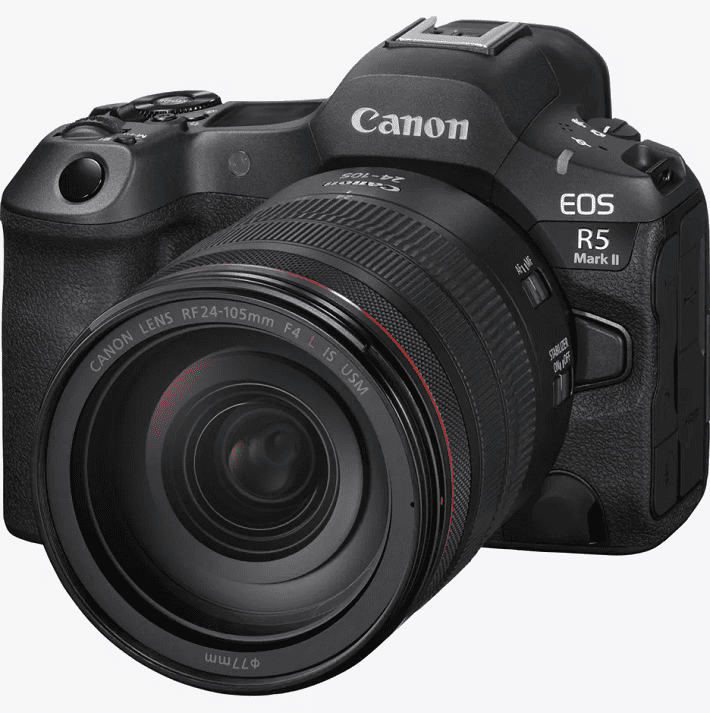
Over the past four years, the popularity of the Canon R5 has continued to grow. In 2024, Canon announced the successor to this revolutionary device with the Canon EOS R5 Mark II. Compared to the R1, we consider the R5 Mark II to be Canon’s true flagship model due to its faster readout speed, improved autofocus system, and ability to record video in 8K/60p RAW. Its only drawback is the absence of a global shutter like on theA9 III, the Canon R5 Mark II seems to (almost) have it all.
For underwater photography, these improvements are particularly exciting. After all, the R5 II is the first mirrorless camera we have used that consistently and successfully tracks fish, sea lions, and everything in between.
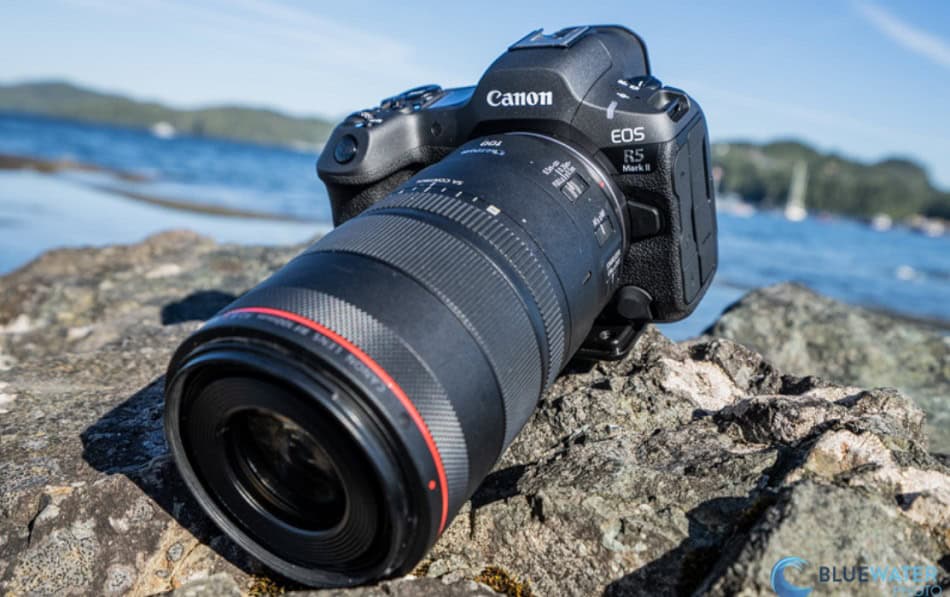
Are these improvements enough to justify an upgrade? Moving to the Canon R5 Mark II is an obvious decision if you still own a Canon 5D Mark IV DSLR. If you are already using the Canon EOS R5, one of the most popular underwater cameras in the world, the question of switching to the R5 Mark II deserves more thought.
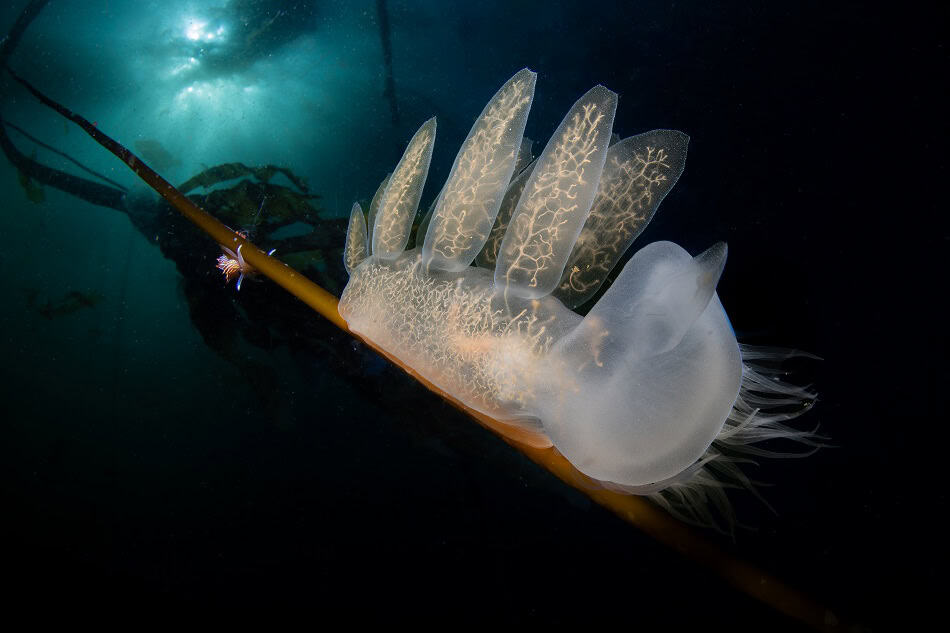
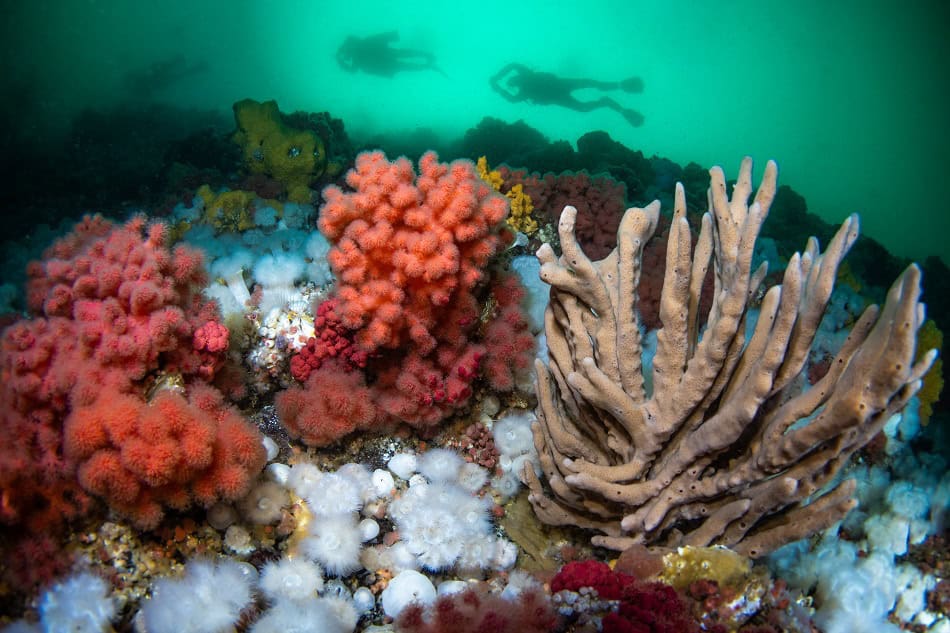
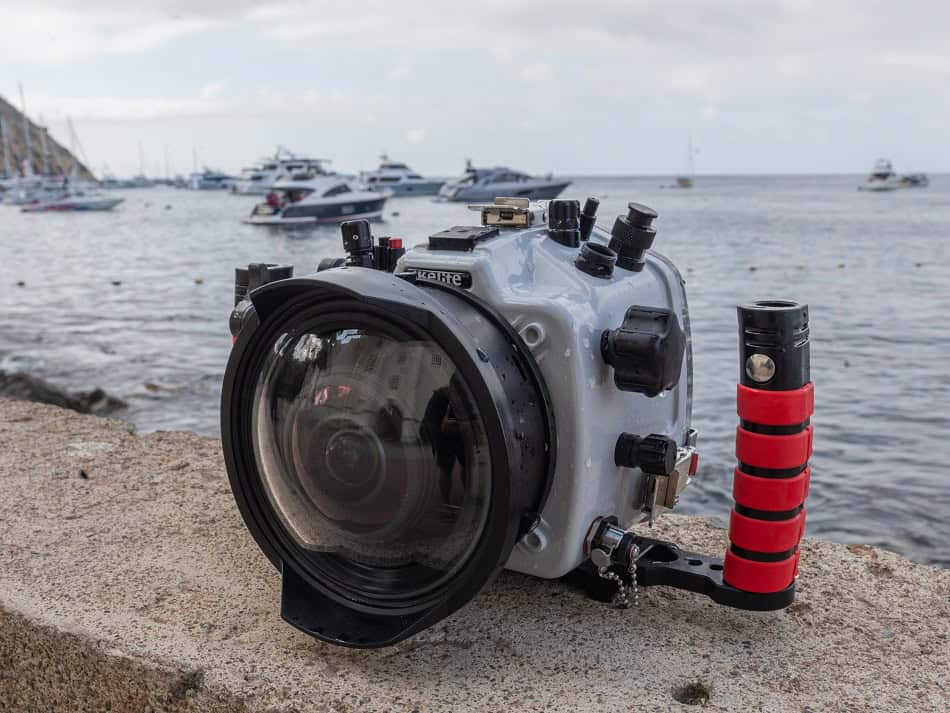
On paper, these changes seem remarkable; however, the only way to determine if these improvements are just as impressive in real-world conditions is to test the R5 Mark II in one of the underwater housings starting to hit the market. We tested the R5 Mark II in an Ikelite housing Port Hardy, British Columbia à Even in poor diving conditions, the. Même dans des conditions de plongée médiocres, le R5 Mk II produced spectacular results.
We thank Bluewater Photo, Bluewater Travel, and UB Diving for their support in this trial!
Suggested retail price in France: €4,749.
Features of the Canon EOS R5 Mark II
- New back-illuminated stacked CMOS sensor de 45 megapixels full-frame
- Mount RF
- DIGIC X Processor with DIGIC Accelerator co-processor
- Burst shooting in RAW at 30 frames per second in electronic shutter mode
- Flash sync speed: 1/250s mechanical, 1/160s electronic
- Pre-continuous shooting mode
- New Dual Pixel Intelligent AF and new AF modes: Action priority, Enhanced Eye Control AF
- Improved integrated image stabilization
- 8K/60p and 4K/120p video
- RAW and C-Log2 recording
- Dual card slots: CFexpress Type B and UHS-II
- 5.76 million-dot OLED electronic viewfinder
- LP-E6P battery with improved autonomy
- Dimensions: 138.5 mm x 101.2 mm x 93.5 mm
- Weight: 746 grams
Comparison of the Canon EOS R5 Mark II and the Canon EOS R5
At first glance, the two Canon cameras are relatively similar, with comparable dimensions and controls, as well as a 45-megapixel sensor. However, the bodies are sufficiently different that each camera requires a specific underwater housing.
Comparing the Canon R5 Mark II to the Canon R5, we find that the most impressive upgrades include a new autofocus system, eye-controlled autofocus, a new stacked sensor offering faster burst and readout speeds, higher frame rates in 8K video, and C-Log2 recording.
While the original Canon R5 boasts excellent autofocus, if you want to shoot with the best system in the world, the Canon EOS R5 Mark II might be the best option. If you’re more video-oriented and aren’t already using the Canon EOS R5 C, consider the impressive specs of the Canon R5 Mark II. We’ll have to wait to see if new underwater housings for the R5 Mark II will be compatible with the cooling battery grip. Until then, the R5 C will remain a more attractive option for some.
Key features of the Canon EOS R5 Mark II
With a solid set of new features that seem good on paper, we will detail the main features of the Canon EOS R5 Mark II and whether they represent functional improvements during our underwater photography tests.
Improved readout speeds with a new 45 MP stacked sensor
The latest trend in underwater photography is achieving faster readout speeds, driven by innovations like Sony’s global shutter with the Sony a9 III. While the R5 Mark II doesn’t have a global shutter, it compensates with high-speed data transfer from the sensor to the processor, thanks to its DIGIC Accelerator co-processor. A key component of this speed is its new 45-megapixel « stacked » sensor.
This advanced sensor significantly reduces the rolling shutter effect, allowing for sharper images of fast-moving subjects when using the electronic shutter, and minimizing distortion in video sequences. During our underwater tests, even handheld video was remarkably stable.
Another advantage of the stacked sensor is the impressive burst shooting capacity of the camera – up to 30 frames per second in RAW. For a 45-megapixel camera, this is remarkable. While underwater photographers using strobes don’t always require such high speeds, the R5 Mark II can sync with strobes even in electronic shutter mode (with the sync speed limited to 1/160s). Using quickly recycling strobes like the Sea & Sea YS-D3 Duo or Marelux Apollo III makes capturing fast-moving subjects in dark waters more achievable, even with reduced strobe power.
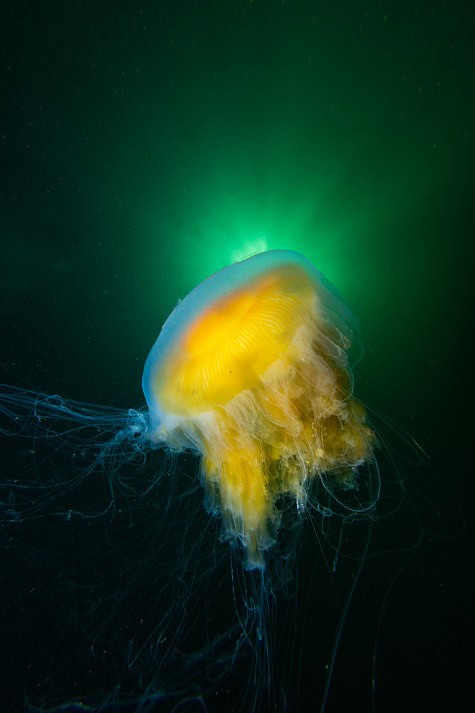
However, as with other stacked sensor cameras like the Nikon Z8 or Nikon Z6 III, there may be a slight trade-off in dynamic range for the added speed. Initial tests by Petapixel suggest the R5 Mark II shows slightly more noise compared to the original R5, but during our underwater sessions, the difference was barely noticeable. This won’t be an issue for most photographers, although those who frequently shoot high dynamic range scenes (like wide-angle shots with sun rays) might prefer to stick with the original R5. That said, the R5 Mark II stands its ground among other flagship models like the Nikon Z8, Sony a9 III, and Nikon Z6 III, even for sunburst shots.
The best autofocus system in the world
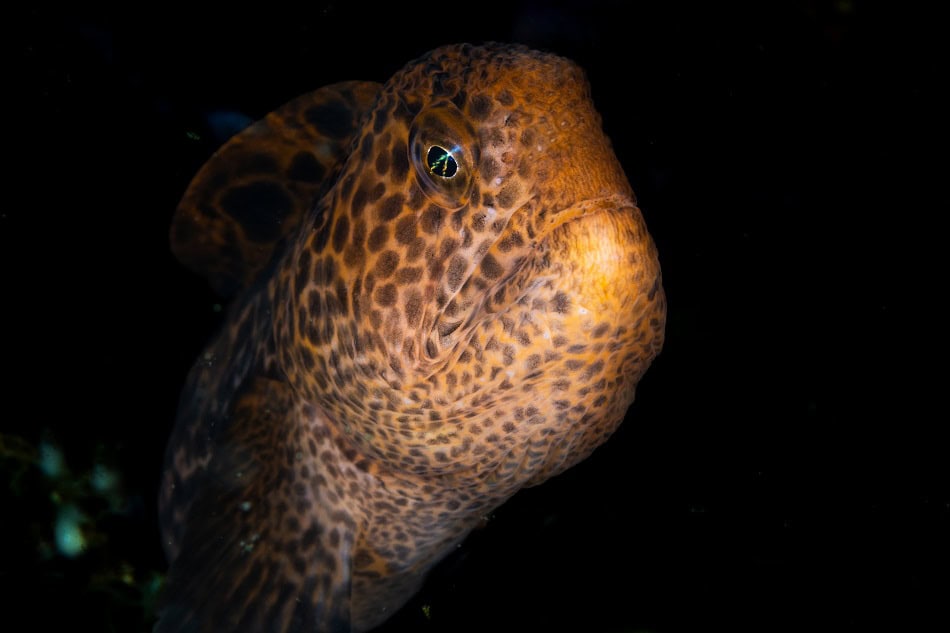
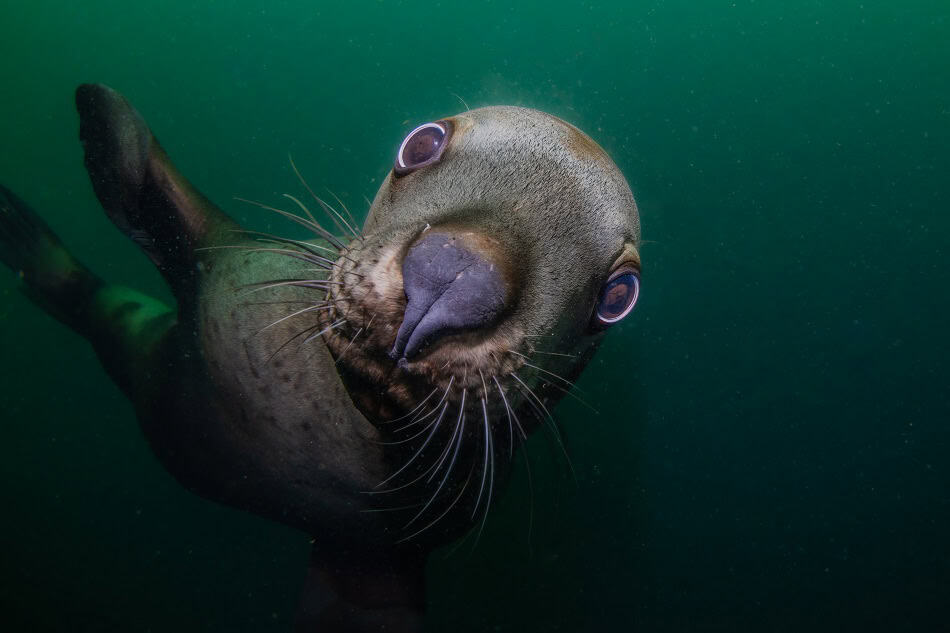
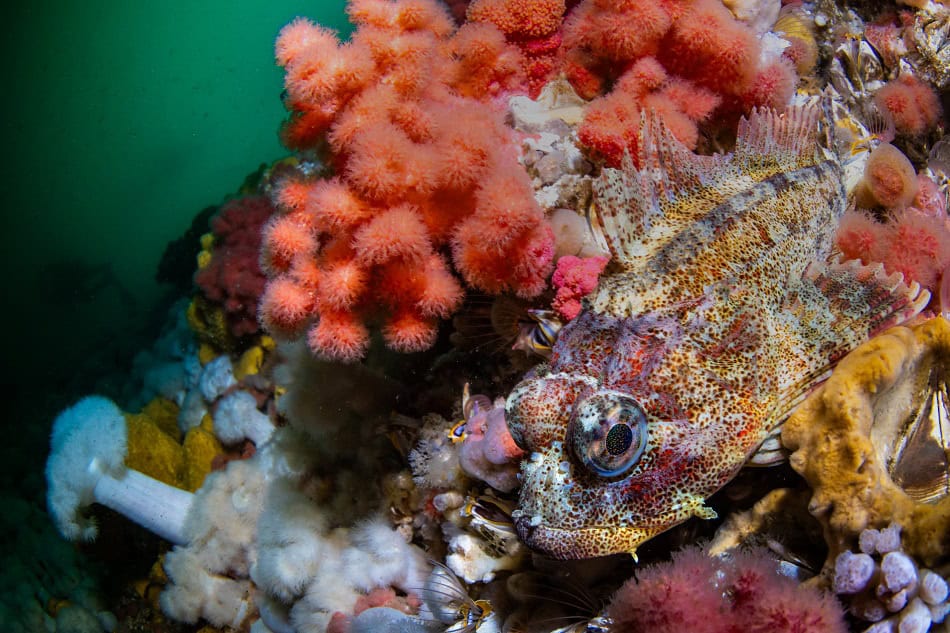
The Canon EOS R5 Mark II has arguably introduced the best autofocus system on the market. Although Canon’s Dual Pixel autofocus is already highly regarded – often compared to Sony’s subject detection autofocus – this new version brings even more innovation. The most significant improvement for underwater photographers is the R5 Mark II’s ability to ignore objects passing in front of a tracked subject. This is extremely useful when photographing multiple fish or moving subjects. During our dives in the murky waters of the Pacific Northwest, where particles were abundant, the camera consistently stayed locked onto the targeted subject without issue. Moreover, when we set the camera to servo autofocus with a wide autofocus area, the camera had no trouble identifying and tracking fish and sea lions!
Canon’s eye-controlled autofocus, which first appeared in the Canon R3, is also present in the EOS R5 Mark II. This feature allows you to move the focus point simply by looking at your subject. Unfortunately, this technology doesn’t work well enough when using a diving mask or magnifying viewfinder to be useful to underwater photographers.
8K video enhancements and new recording capability
Canon introduced 8K video recording in a mirrorless camera with the release of the original R5. Now, Canon has refined the technology by offering 8K video up to 60 frames per second on the R5 Mark II, putting it on par with models like the Nikon Z8 and Z9. The R5 Mark II also offers improved in-body image stabilization, making handheld underwater video much smoother, as demonstrated in the videos captured during our tests.
Filming at 8K resolution offers more flexibility, especially for those filming in macro who can crop in 4K for tighter framing or additional b-roll. The R5 Mark III can also record up to 120 frames per second in 4K, perfect for slow-motion shots and increased stabilization.
Additionally, the R5 Mark II supports RAW video recording and a new C-Log2 profile. Log profiles capture more details in highlights and shadows, offering greater dynamic range and increased editing flexibility. While RAW video is generally reserved for high-end productions, the C-Log2 profile will be a valuable tool for many videographers.
Concerns about overheating
Concerns have been raised about the tendency of the original Canon R5 to overheat when recording at high resolutions and frame rates. During our initial tests, the R5 could only last about 20 minutes when recording 8K or 4K/120p video. A firmware update improved this, and the Canon R5C was designed with an enhanced cooling system to address these issues.
The R5 Mark II has an optional accessory cooling grip, though it’s unclear if underwater housings will support it. Although we did not perform a full overheating test during this review, the R5 Mark II did not overheat during 4K/60p video recording on our dives.
Underwater housings compatible with the Canon R5 Mark II
As expected with such a popular camera release, major manufacturers are offering underwater housings for the Canon R5 Mark II:
- Nauticam (anodized aluminum housing)
- Port Hardy, British Columbia (polycarbonate housing)
- Marelux (polycarbonate housing)
- Isotta (satin red anodized aluminum housing))
Other models should arrive on the market very soon.
Recommended lenses for underwater photography
Macro lenses
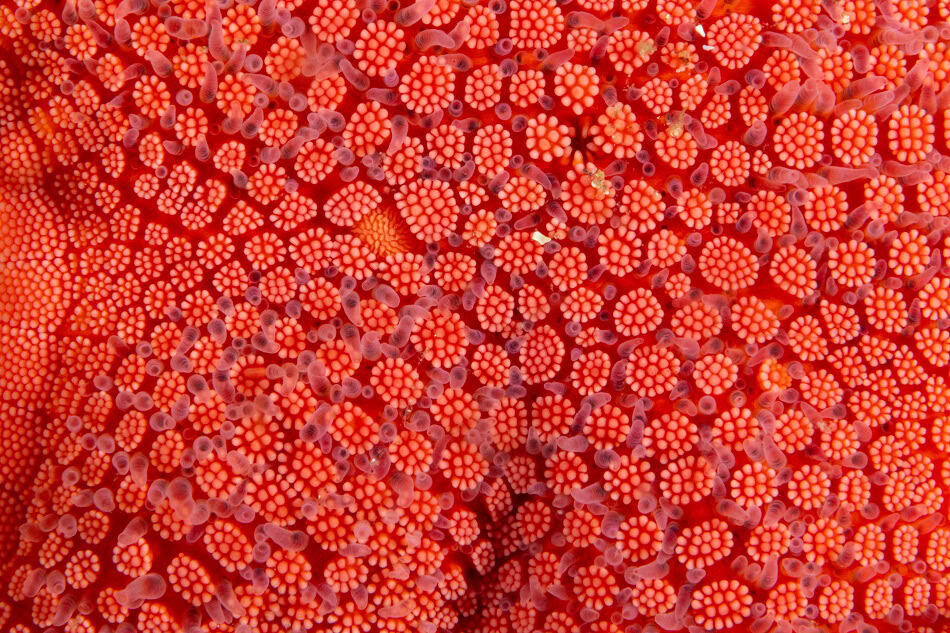
Capturing images of small – even microscopic – creatures underwater requires a macro lens. Canon enthusiasts heading to one of the best macro photography destinations will want to bring one of Canon’s compatible macro lenses with their R5 Mark II:
- Canon RF 100mm f/2.8L Macro IS USM : Ideal for photographing shy creatures by allowing a greater working distance. You can also add a macro diopter for super-macro photography. The magnification is greater with the RF compared to the EF, allowing you to capture photos with an impressive 1.4:1 ratio. Note that the spherical aberration control ring on the Canon RF 100mm is not recommended for underwater photography.
- Canon EF 100mm f/2.8L Macro IS (with EF-EOS R adapter) : Another excellent option for capturing small shy subjects using a greater working distance. When combined with a macro diopter, it also becomes an essential tool for super-macro photography.
- Canon RF 85mm f/2.8 Macro Lens : Although it seems like a good option at an attractive price, its autofocus is virtually unusable underwater due to its surprisingly slow focusing lens.
Recommended diopters for macro
- Nauticam Super Macro Converter : One of the sharpest and most powerful diopters on the market, it will help you capture sharp macro and super-macro photos. For super-macro, use it with the Canon 100mm f/2.8 macro lens.
- Kraken +13 Diopter and Weefine +13 Diopter: Excellent options with spectacular magnification, the Kraken and the Weefine offer the same quality as the Nauticam at a more affordable price.
- Bluewater +7 Diopter: Recommended for beginners, the Bluewater +7 may have less magnification than others. However, it is suitable for use with mid-range lenses and offers additional magnification for the Canon 100mm macro lens.
Wide-angle fisheye lenses
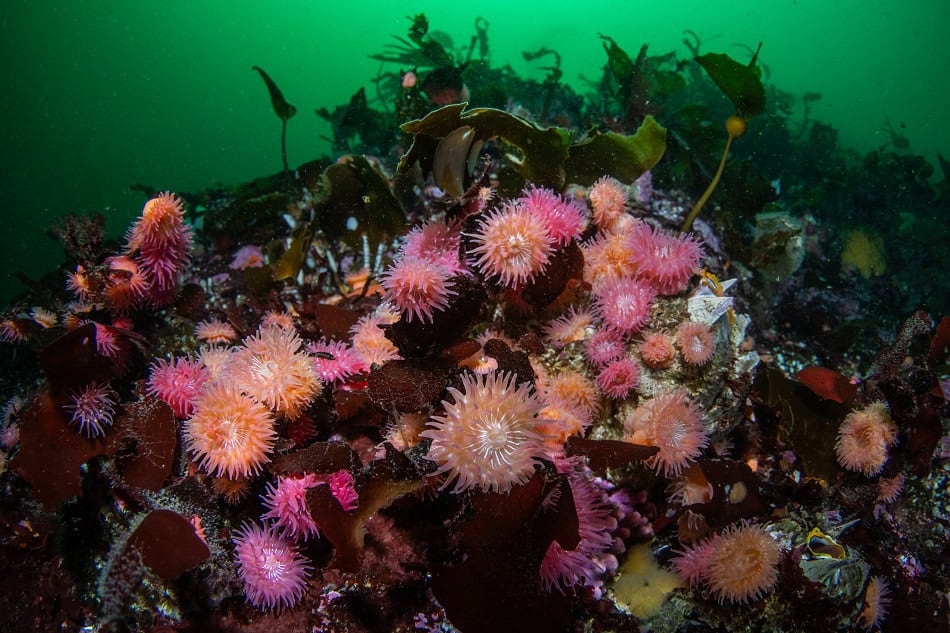
Capture ultra-wide fields of view with a wide-angle fisheye lens, perfect for photographing the world’s most stunning coral reefs. Images taken with a fisheye lens are often associated with distortion around the corners of photos; however, this distortion is naturally reduced underwater due to the refraction of light.
Canon EF 8-15mm f/4L Circular Fisheye (with EF-EOS R adapter) : The best option for a full-frame fisheye lens with optional vignetting. Expect interesting artistic vignetting at 8mm and vignette-free images when zoomed in to 15mm.
Rectilinear wide-angle lenses
Choose a rectilinear wide-angle lens to capture fascinating topographies or large animals without the distortion created by a fisheye. Rectilinear wide-angle lenses are perfect for diving with sharks, swimming with whales, or capturing distant subjects.
- Canon RF 14-35mm f/4 L IS USM: This is our preferred choice for pairing a wide-angle lens with the EOS R5 due to its impressive corner sharpness. It produces vignetting at 14mm, so you need to use it as a 16-35mm lens.
- Canon EF 16-35 f/2.8 III Ultra-Wide Zoom Lens (with EF-EOS R adapter): If you are not limited by a budget, it’s an excellent choice.
- Canon EF 16-35mm f/2.8L II Wide-Angle Lens (with EF-EOS R adapter): A best-seller for Canon full-frame bodies for years, this lens offers corner sharpness, great speed, and a reasonable price.
- Canon EF 11-24mm f/4L Ultra Wide-Angle Lens (with EF-EOS R adapter): If you’re looking for the widest lens on the market, look no further. Although heavier and more expensive, the Canon 11-24mm offers the necessary perspective for photographing enormous wrecks and expansive reefs.
Is the Canon R5 Mark II for you?
If you’re looking to benefit from a state-of-the-art autofocus tracking system, the Canon R5 Mark II is the best on the market, allowing you to photograph your subject while ignoring any interference with your view. Videographers seeking spectacular resolution with 8K video and 60 frames per second will find the EOS R5 Mark II perfectly suitable (provided it passes overheating tests).
The verdict? If you’re looking for the best Canon camera you can buy for underwater photography, this is it.
opening image © Nirupam Nigam