


Capturing the magic of the moment when two worlds meet, air and water, is an exciting photographic challenge. Nicolas Barraqué unveils his secrets to mastering this delicate art and taking breathtaking shots.
The « half-air half-water » image fascinates, as it offers a unique perspective, a visual bridge between the known and the unknown. While the idea seems simple, its execution is surprisingly complex. Get ready to discover the pitfalls to avoid and tips to adopt.
Mastering Essential Equipment
- The lens and the dome: the winning duo. A wide-angle lens is crucial for capturing both the aerial and underwater landscape. But it’s the dome that truly makes the difference.
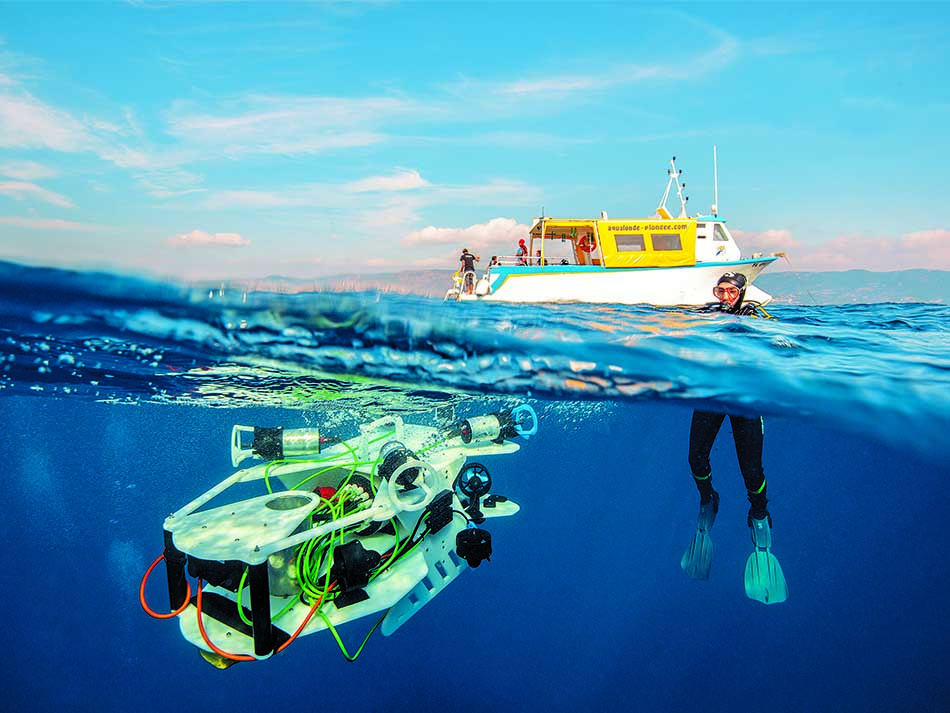
Large dome, greater ease: A large-diameter dome simplifies managing the waterline, making it natural and sharp. It also improves the buoyancy of your device.
Small dome, big challenges: With a small dome, the slightest ripple becomes a major obstacle.
Glass vs. Acrylic: Prefer glass, it repels water more effectively and resists scratches better.
Compact and wide-angle: An adaptable wide-angle lens can work on a compact camera but requires technique, patience, and good weather conditions.
Stability: Your Underwater Ally
If the half-air half-water photo is your main goal, opt for minimal equipment: fins, mask, and snorkel. Lighter and more manageable, you will gain ease and respect for the marine environment. A stabilizer vest or board can help float the device.
Settings: The Art of Choosing the Right Mode
Manual or Automatic? The eternal debate…
Did you enjoy this excerpt?
Read the full article.
READING TIME ≈ 6 min
Dive into the heart of PLONGEZ! Magazine
To enjoy this article and its exclusive content, a modest participation is required.