


Imagine yourself floating in caverns filled with crystal clear water, where light dances and reveals ancient limestone formations: stalactites, stalagmites, majestic columns, enigmatic fossils, and sometimes even prehistoric remains. Cave or cenote diving offers a unique photographic playground to immortalize these spectacular underwater landscapes.
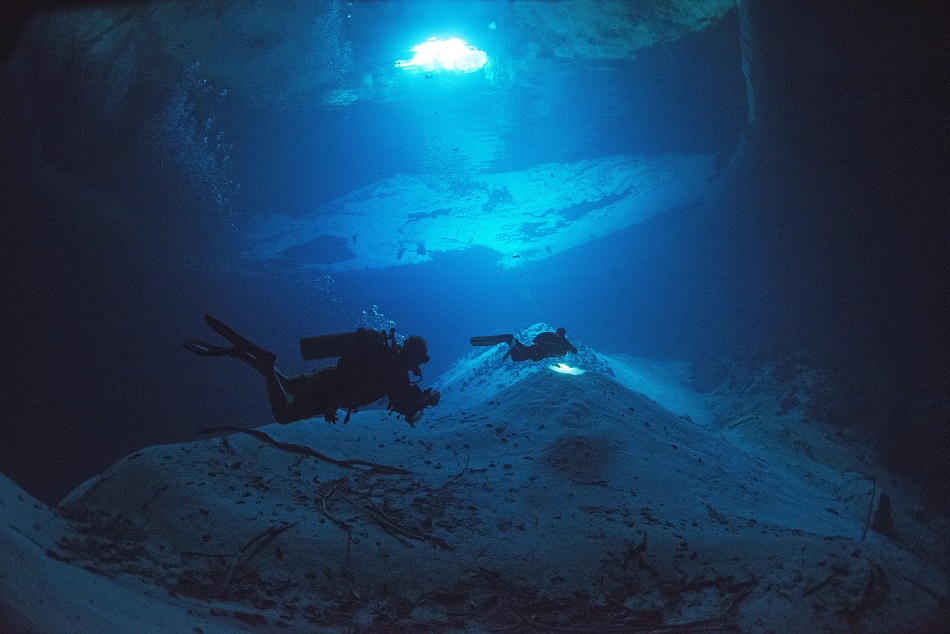
No need for sophisticated caving equipment or complex setups. With minimal experience and keeping in mind the golden rule of always seeing a blue light area, you can capture striking images of these extraordinary environments. While the Yucatán cenotes are known for their accessibility, other sites closer to you also deserve to be explored with your camera.
1. The Right Equipment and Lens: The Key
In this mineral universe, choosing the right gear is crucial. A wide-angle lens or optical accessory is indispensable for capturing the scale of the scenes and highlighting both your buddy and the surrounding rock formations. Beware the « fisheye » effect which can distort straight lines. Place your main subject in the center to minimize this distortion.
Did you enjoy this excerpt?
Read the full article.
READING TIME ≈ 6 min
Dive into the heart of PLONGEZ! Magazine
To enjoy this article and its exclusive content, a modest participation is required.