


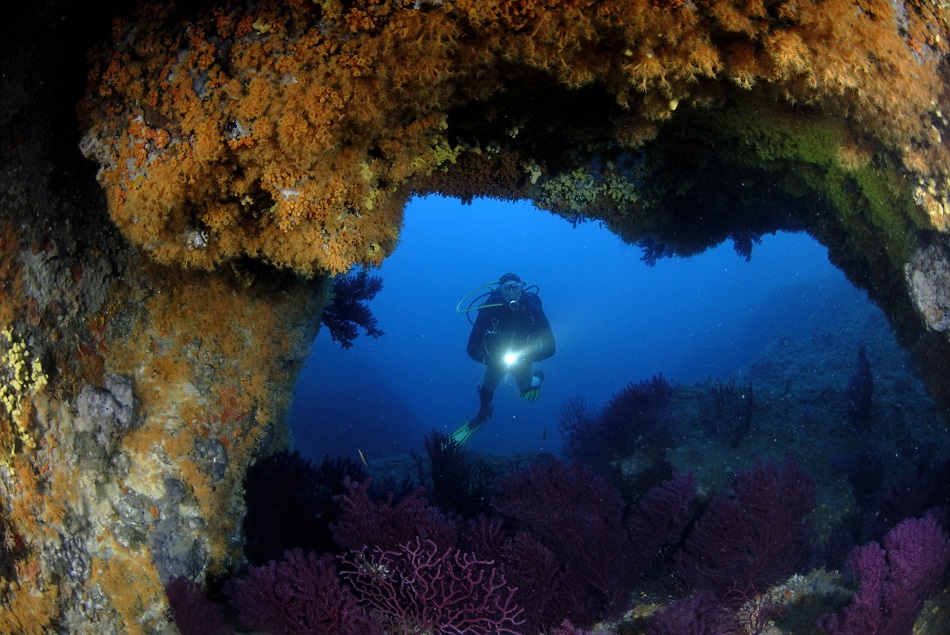
Capturing the atmosphere of a dive, the dizzying aspect of a drop-off, the richness and colors of a coral reef, or the beauty of a freshwater landscape can be a challenge. Capturing an atmospheric image requires a skillful blend of elements. Here are valuable tips to achieve it.

1 – Loss of color
Water acts as a filter, dulling colors and creating monochromatic photos. This phenomenon, known as selective absorption, results from the vibrations and deformations of water molecules related to light absorption. Red, for example, loses a third of its intensity after one meter, disappearing completely at 4 to 5 meters. To restore these colors, the use of artificial lighting is often essential.
2 – Choose the right equipment
To capture atmospheric images, it is crucial to use a lens offering a wide field of view. Opt for a 20 mm lens or more, like a 16 mm fisheye for SLRs. Flashes or lamps will illuminate the foreground. In shallow and bright environments, filters (red, orange, or magenta) can be useful, as long as no additional lighting is used.
Did you enjoy this excerpt?
Read the full article.
READING TIME ≈ 5 min
Dive into the heart of the Magazine DIVE!
To enjoy this article and its exclusive content, a modest contribution is required.