


Night diving is a unique experience that allows you to discover a completely different underwater world. By sacrificing the evening aperitif, you immerse yourself in darkness to capture original shots of crustaceans, nudibranchs, and other marine wonders. Here are 15 tips to optimize your night photography.
Safety First
Night diving involves adhering to specific rules. Familiarize yourself with the topography of the site during the briefing and don’t forget your backup light. Be aware of your surroundings, especially other divers and sea urchins, which can be hard to see in the dark. If you are a beginner, it’s best not to bring your camera on your first night dives.
1. Equipment Choice
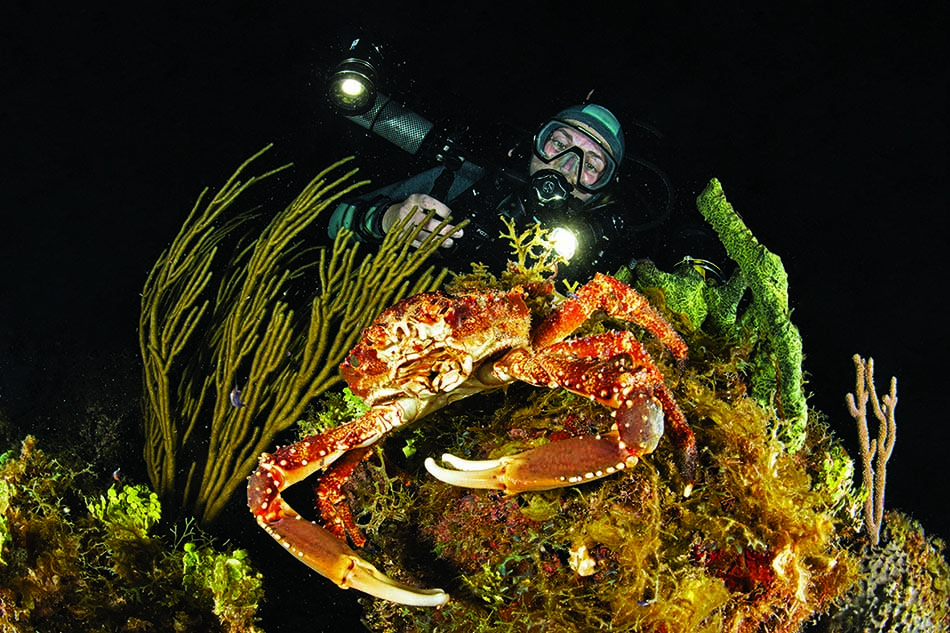
Night vision is limited to the beam of your light. The macro mode is often the best choice. For a DSLR in a housing, a 60 mm lens is suitable for medium-sized animals, while a 105 mm is ideal for photographing nocturnal behaviors from a distance. Macro diopters can also be used for smaller subjects. A wide-angle lens may be appropriate for capturing large animals feeding under the diver’s light.
2. Shutter Speed and Aperture Choice
To avoid motion blur, opt for a high shutter speed, such as 1/125 or 1/160. For aperture, f/16 or f/22 settings are ideal for achieving the desired effect. Don’t hesitate to increase to 800 or 1600 ISO for a better balance between speed and aperture.
3. Focusing
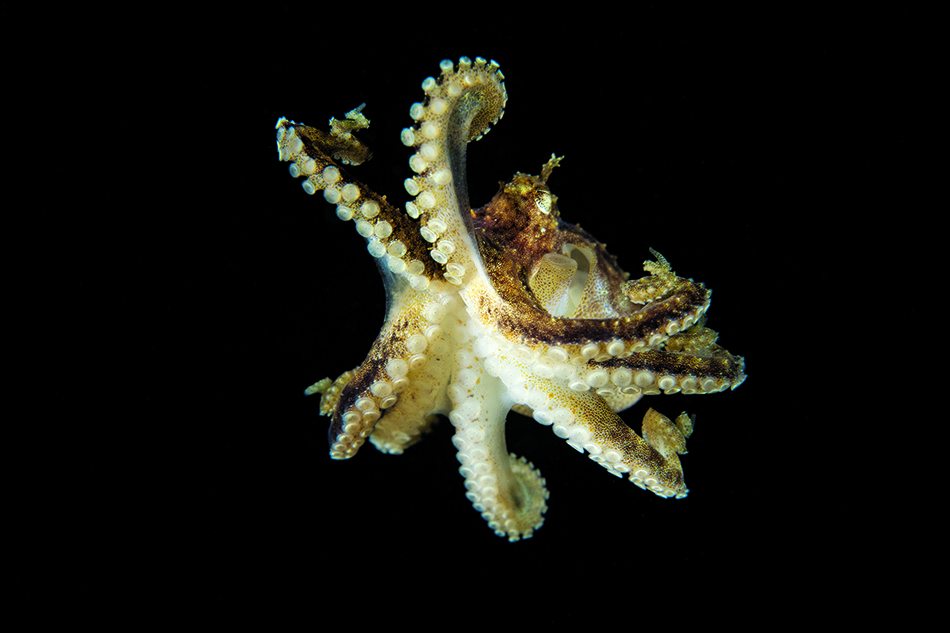
Use a focus light to help the autofocus lock onto your subject. Prefer continuous focus mode if your camera allows it. For large animals, setting your focus to hyperfocal before the dive can facilitate capturing the image.
Did you enjoy this excerpt?
Read the full article.
READING TIME ≈ 05 min
To enjoy this article and its exclusive content, a modest contribution is required.