


The professional dive instructor training has undergone many transformations over the last 60 years, and the evolution continues. Let’s explore together the key steps of this transformation.
1974: The Era of Three-Degree BEES
In 1974, the establishment of State Sports Educator Certificates (BEES) with three degrees marked a turning point. Obtaining this certificate became mandatory for teaching. Each degree required two exams: a common core and a specific one. Candidates often prepared alone, focusing their efforts on passing the exams rather than preparing for the profession itself. Obtaining the three degrees could be done sequentially.
The 80s: The Emergence of Short Training Courses
Between 1980 and 1990, the bodies responsible for the BEES exams offered intensive fifteen-day training courses. Two formats emerged: a concentrated training just before the specific exam, favoring cramming, or an initial week followed by another just before the exam, encouraging experimentation between the two. This marked the beginnings of internships in companies.
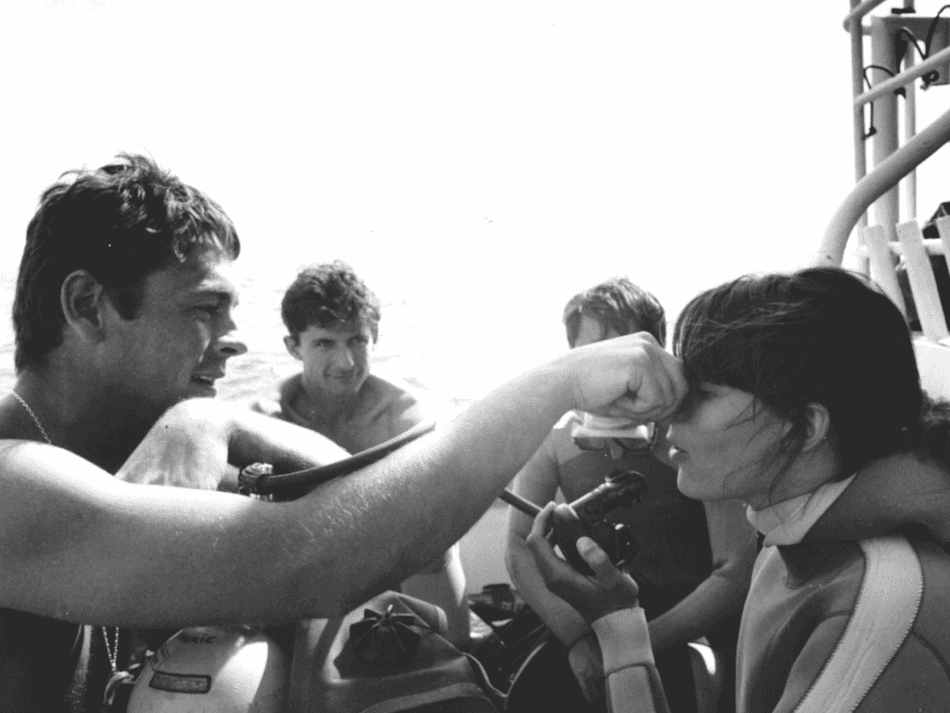
The 90s: Longer Training Formats
Starting in 1986, centers offered ‘specific’ training in diving, totaling 400 to 500 hours, sometimes incorporating the 2nd level (the ancestor of level 4), supplemented by the 170 hours of the common core. The BEES remain accessible via a one-time exam, leaving trainees the choice of these longer training courses. Funding solutions quickly appeared, encouraging eligible individuals to benefit from them.
1996: The Modular BEES 1
In 1996, the state, drawing on the experience of long training courses, made a specific modular training course in diving compulsory, comprising 480 hours, including 5 UF (training units) and a 100-hour internship in a diving center. This marked the birth of alternating training. Direct access to the one-time exam was removed. The UFs targeted the key skills of the instructor profession. From 2005, pathways for federal instructors and additional training for RSTC instructors (PADI, NAUI…) were implemented. Private organizations were authorized by the state to organize these professional training courses.
2003: The Concept of Specific Environment
Following the European sports exception granted to diving in 2000, the state created in 2002 the concept of ‘activities conducted in a specific environment,’ including diving in a list of 10 activities. Only a training from the Ministry of Sports is now valid. In 2003, nine CREPS were approved to train diving professionals in France and the DROM-COM. Professional training funding organizations became more involved. The list of approved CREPS was reduced to five in 2017: Bordeaux, Montpellier, PACA, Antilles-Guyane and La Réunion, renewed in 2022.
2012: The Major Diploma Reform
In the 2010s, the three-degree BEES were replaced by the BPJEPS (professional certificate for youth, popular education and sport), the DEJEPS (State diploma in JEPS) and the DESJEPS (higher State diploma in JEPS). This reform introduced direct access to each diploma, removed the common core, transformed UFs into UC (capitalizable units), and systematized the alternation between OF (training organizations) and companies (at least 700 hours in OF and 500 hours in companies for a DEJEPS, for example). Grades were replaced by ‘validated’ or ‘not validated,’ with a retake option. The professionalization of training was reinforced, focusing on the skills of the profession. The BP, DE, and DES in diving were created in 2013, and the BEES diving was definitively abolished (holders retain their prerogatives). Apprenticeship training gained importance, placing the company at the heart of the system.
2017: An Adjustment of Training
This year marked the second stage of the reform, with changes in professional diving diplomas. The BP JEPS went from 10 to 4 UC and was divided into two options: ‘without scuba’ and ‘with scuba,’ increasing its prerogatives. The 2012 DEJEPS (E4) was split into a DEJEPS with reduced prerogatives (E3) and a complementary certificate (CC) ‘deep diving and tutoring’ to become E4. A mandatory recycling every 5 years was introduced for new diplomas and the former ones, including the BEES. Traditional funders (Region, Pôle emploi, OPCA…) gave way to apprenticeship, the CPF (Personal Training Account), and special schemes (Sésame, Parcoursup, Transition Pro…).
2022: New Changes on the Horizon
For reasons of re-registering professional diplomas in the RNCP (National Directory of Professional Certifications) or in the Specific Register (RS) and in the context of the professional training reform, the current diplomas are being rewritten, with new modifications expected for 2023!
This article, originally written by Alain Delmas for the PLONGEZ! print edition, has been adapted for the web.