


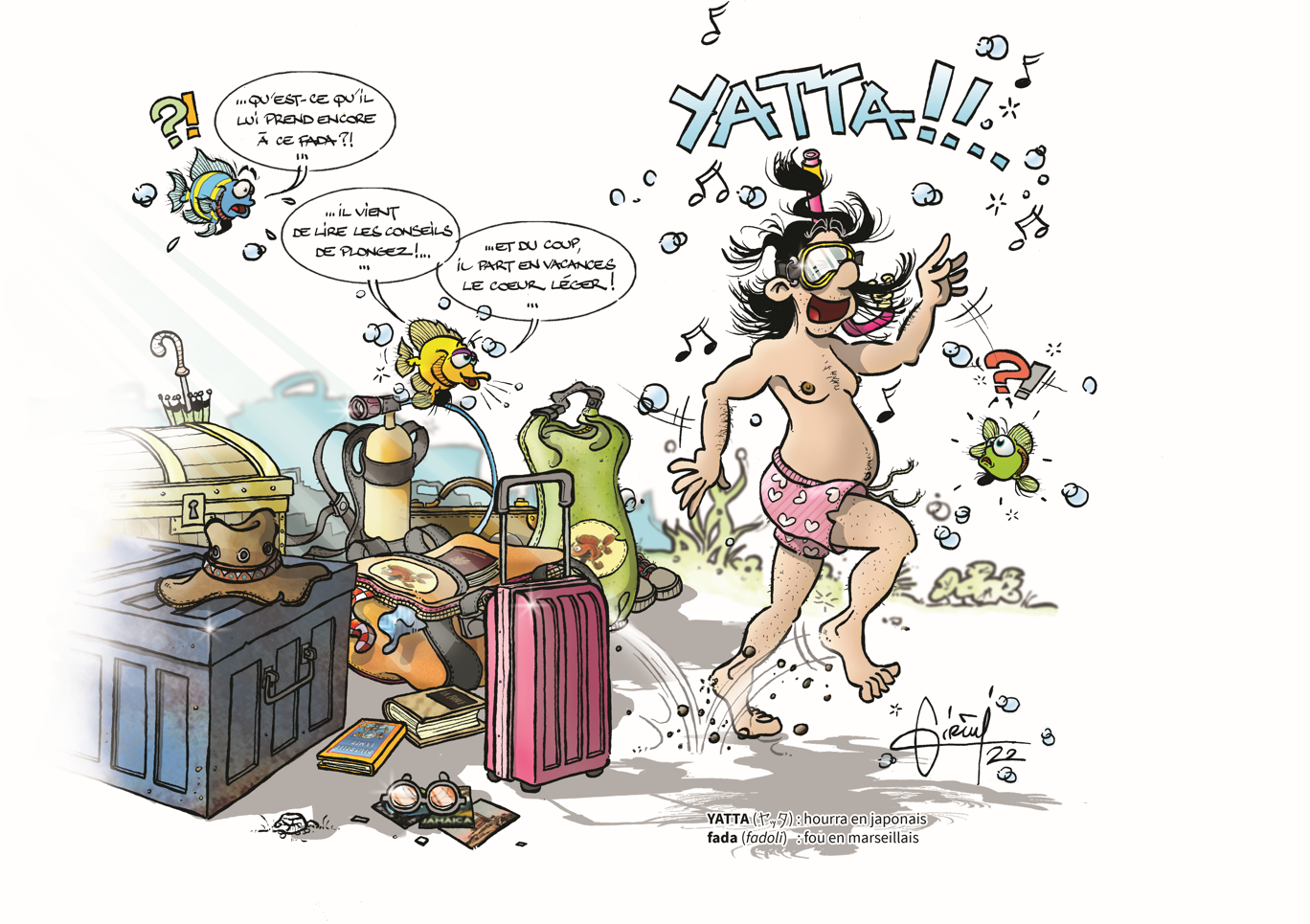
Finally, vacation time! After these complex past years, it’s time for diving! Bags are ready, gear is packed, and the sea is waiting for you. To avoid any inconvenience, here are some valuable tips before your departure.
Choosing your diving destination wisely
Your choice of destination depends on several factors: your level, your preferences, and the species you wish to observe.
- Level and experience: Beginners (Level 1 or Open Water), choose shallow and easy sites. Experienced divers can explore drift dives, deep dives, or wrecks.
- Marine life: If you dream of « big creatures, » the Bahamas or Polynesia are ideal options. For bio and macro enthusiasts, Asia is a true paradise of biodiversity.
- Weather and budget: Consider the local weather. Note that summer in Europe corresponds to winter in the southern hemisphere, with its potential monsoons and cyclones. Establish a precise budget, as some trips can be costly.
- Supplementary activities: Think about non-diving activities, especially if you’re traveling with family or non-divers. For instance, the Maldives offer the opportunity to observe manta rays with just a mask.
Preparing your diver’s luggage
Diving gear can quickly become cumbersome. Anticipate additional fees related to heavy or bulky luggage. Some airlines are stricter than others.
- Luggage fees: Find out! A diving license may sometimes entitle you to a free or reduced fare additional luggage.
- Fragile equipment: Carry your regulators, dive computer, tablets, and cameras in the cabin.
- Lights and batteries: Check the rules regarding the transportation of lights and batteries (hold or cabin, disconnected or not). LED systems may be an exception.
- Weight distribution: Distribute heavy items in your pockets or carry-on bag to lighten your main luggage.
Essentials not to forget
Prepare a complete first aid kit and don’t forget the important documents.
- First aid kit: Include bandages, compresses, disinfectant, antihistamine, Imodium, and medications against « traveler’s diarrhea. »
- Sun protection: Sunscreen and after-sun care (Biafine or equivalent) are essential.
- Headwear: Protect yourself from the tropical sun with a hat or cap.
- Seasickness: If you’re prone to seasickness, consult your doctor or pharmacist to find a suitable solution.
- Equipment: Spare batteries for lamps and flashes, power strip, and US adapter if needed.
- Documents: Passport (valid 6 months after return), visas (to be requested in advance), and certification cards.
- Safety: Scan your documents and email them to yourself: in case of loss, you’ll easily find them. Check your travel and repatriation insurance.
- Entertainment: A book or magazines can be useful during travel.
Dive with peace of mind: take your time!
After a period without diving, readjust yourself gradually.
- Gentle resumption: Plan one or more « cool » dives to get back into the rhythm.
- Guided dive: An initial guided dive allows you to get familiar with the sites and benefit from the advice of local guides.
- Avoid extremes: Avoid deep dives on the first day. If you’re tired from the journey, postpone the first dive to allow your body to acclimate.
- Moderation: Do not exceed 3 dives per day, and plan for a rest day every 5 to 6 days.
- Discovery: Take advantage to discover the local culture, gastronomy, monuments, and natural parks.
Other tips for a successful vacation
A few additional precautions for an optimal stay.
- Air conditioning: Avoid thermal shocks by setting the air conditioning no more than 5 degrees below the outside temperature.
- Ears: Rinse your ears after each dive, especially in warm or cold waters.
- Descent: Never force during the descent. It’s better to cancel a dive than to get an ear infection.
This article, originally written by Antoine Mettra for the print edition of PLONGEZ!, has been adapted for the web.