


Observing the slow ballet of a manta is an unforgettable experience for ocean enthusiasts. After decades of decline, these majestic creatures are now attracting the attention of NGOs and researchers who strive to better understand them and protect them from the threats they face.
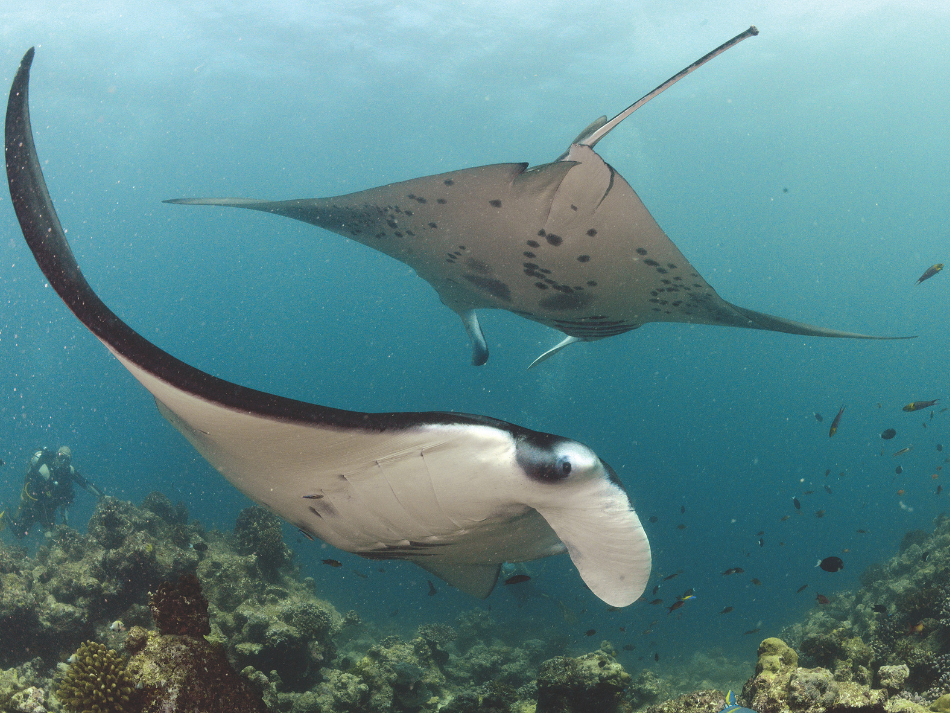
A few years ago, mantas were reclassified: the genus “Manta” was replaced by “Mobula.” The Manta birostris, or oceanic manta, and the Manta alfredi, the reef manta, are now known as Mobula birostris and Mobula alfredi. Although this change is significant for scientists, it does not alter the nature of these two fascinating species. The oceanic manta can reach nearly two tons and exceed eight meters in wingspan, while the reef manta averages three meters. These dimensions have inspired many legends, such as the idea that these rays could capsize boats or swallow divers.
Did you enjoy this excerpt?
Read the full article.
READING TIME ≈ 4 min
Dive into the heart of PLONGEZ! Magazine
To enjoy this article and its exclusive content, a modest contribution is required.