


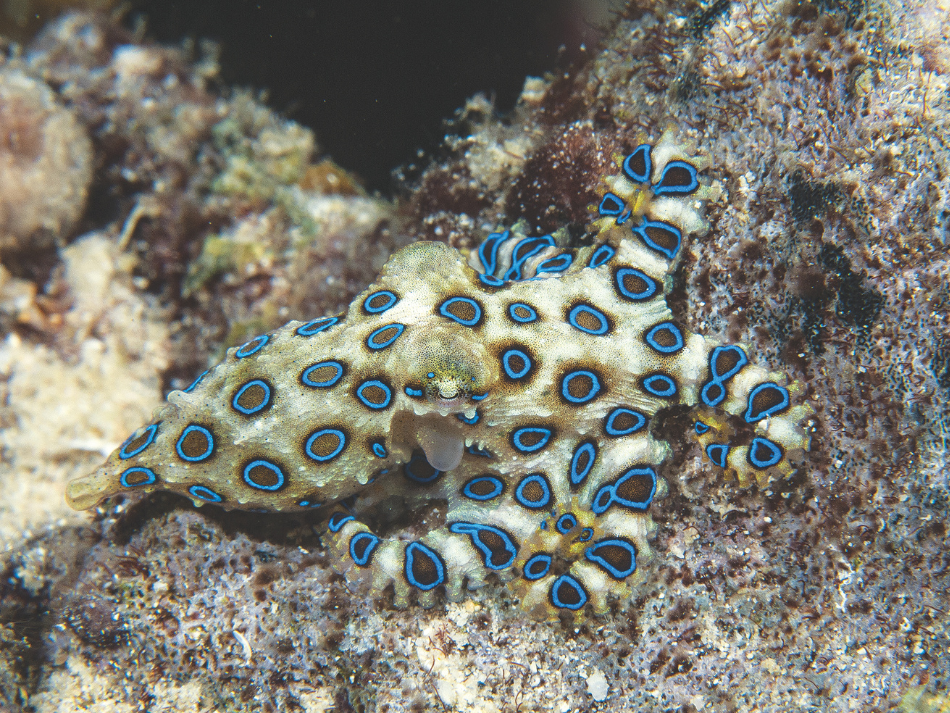
The blue-ringed octopus, the weever fish, and the stonefish share a common trait: it is much better to admire them without ever touching them. The toxic substances they produce are among the most formidable in the marine animal kingdom, and their methods of administering them to their prey — or defending against predators — are incredibly diverse. For passionate divers and sea lovers, understanding these mechanisms is essential for diving safely.
Venom, toxin: what are we talking about?
Before going any further, let’s clarify the vocabulary. Should we talk about venom or toxin? In reality, these concepts are closely connected. The venom is a toxic liquid, produced by certain animals via a specialized organ (such as glands) and injected into the body of a prey or predator, usually by a sting or bite. The toxin, on the other hand, is a toxic substance produced by a living organism; it gives the venom its pathogenic capability.
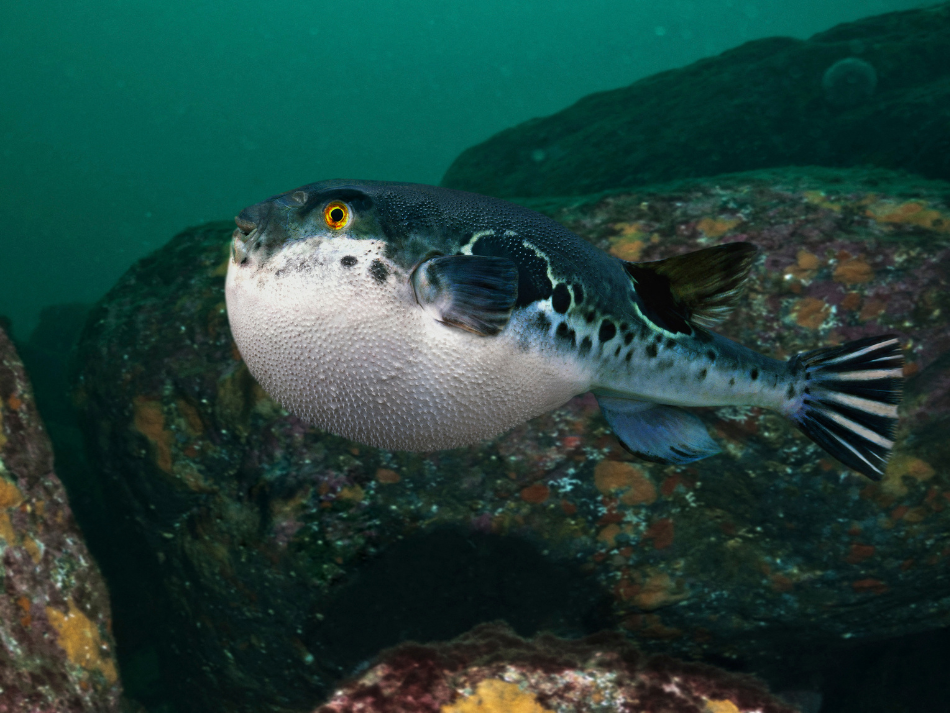
Thus, many marine animals secrete venom made up of various toxins, each with specific effects. When a venomous animal injures a human or another creature via its specialized organ (stinger, dart, etc.), it is referred to as anenvenomation..
Did you enjoy this excerpt?
Read the full article.
READING TIME ≈ 9 min
Dive into the heart of the PLONGEZ! Magazine
To enjoy this article and its exclusive content, a modest contribution is required.