


GPS point: 41°30.519′ N / 9°23.586′ E
Southern Corsica is renowned for its exceptional diving sites. South of Porto-Vecchio, in open sea, the Cerbicale Islands archipelago harbors the formidable Toro Danger, a site that combines a magnificent underwater setting with abundant wildlife.
A natural sanctuary
A nature reserve, this archipelago is the last land before Italy and includes four small islands and several rocky islets, all uninhabited. These islands provide an ideal refuge for seabirds such as:
- Shag cormorants
- Cory’s shearwaters
- Storm petrels
- Audouin’s gulls
They also shelter some reptiles, such as European pond turtles and Hermann’s tortoises, as well as rare amphibians like the Sardinian discoglossus and the Moorish gecko. However, it is underwater where the most prolific wildlife is found.
A fascinating underwater world
Located 700 meters east of Toro islet, the beacon marks the Toro Danger. A hundred meters north, two rocky plateaus rise to just three meters beneath the surface. Divers usually start their descent between these two formations before exploring either plateau.
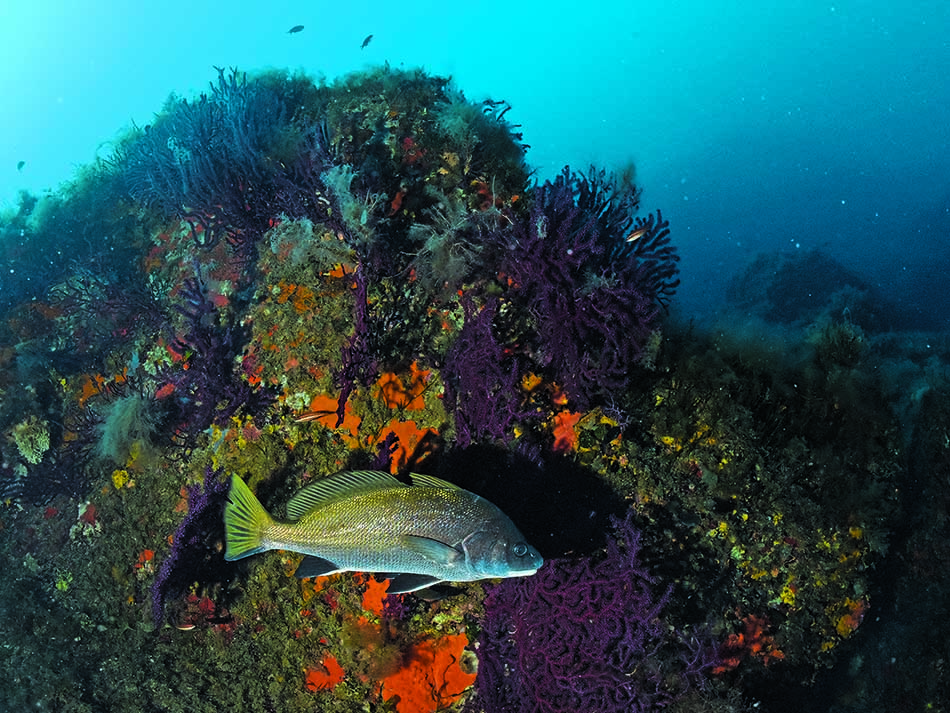
The canyons formed by blocks are adorned with yellow encrusting anemones (Parazoanthus axinellae). Among the observable species, you can find:
- Sponges
- Bryozoans
- Gorgonians
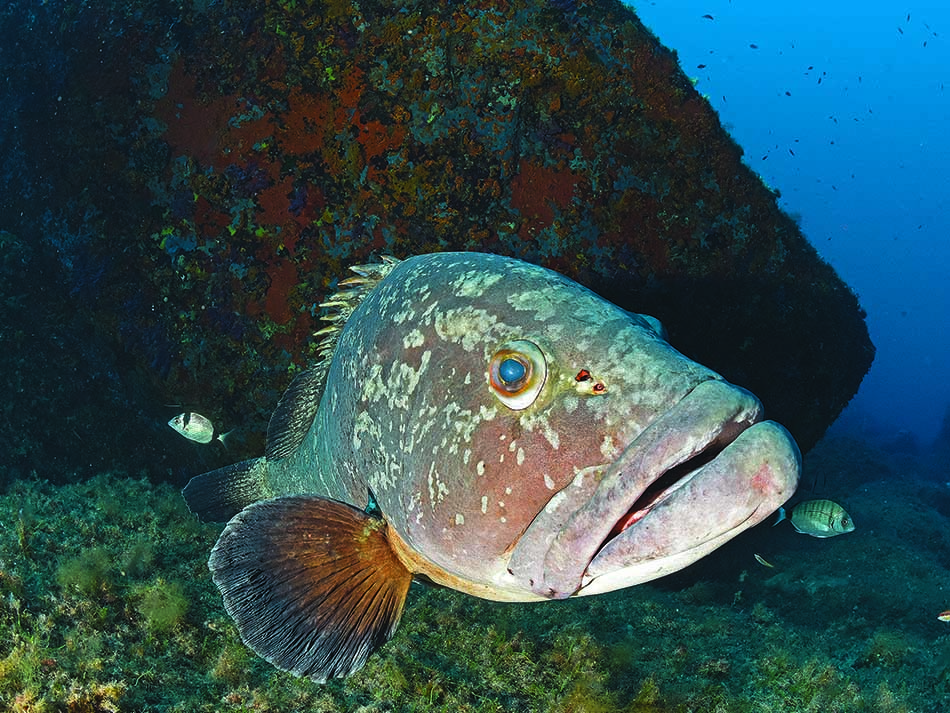
Between the rocks hide moray eels (Muraena helena), forkbeards (Phycis phycis) and numerous brown meagres (Sciaena umbra). This site is also home to a large number of dusky groupers (Epinephelus marginatus), both juvenile and adult, as well as goldblotch groupers (Mycteroperca rubra) recently spotted.
Pelagics and crustaceans
The site’s remote location promotes encounters with pelagics such as:
- Barracudas, which hunt at night
- Dentex (Dentex dentex)
Lucky divers may spot loggerhead turtles. Crustaceans are also well represented, with lobsters hiding in the rocks and spider crabs (Maja squinado) coming up to breed between February and June. The males, in defense mode, stand tall against intruders, offering a photo opportunity.

An abundance of wrasses
The dive often ends on the rock heads with a stunning view of wrasses, gathered by the dozens. Among these, you can distinguish:
- Common wrasses (Coris julis)
- Royal wrasses
- Peacock wrasses (Thalassoma pavo) with vibrant colors
Seabreams and salema, surrounded by clouds of damselfish, complete the picture. At the deepest point, the site reaches 36 meters, while the rocks emerge at 3 and 4 meters. Accessible to all levels, the site also allows for snorkeling. The Corsican waters, famed for their clarity, offer exceptional visibility, but remain vigilant against currents.
Practical information
All local diving clubs, departing from Porto-Vecchio, Saint-Cyprien, Palombaggia, and Santa Manza, organize trips to this site. Favorable weather is essential to fully enjoy it. Note that landing on the islands and any collection (fishing and hunting) are prohibited.
After the dive
Upon surfacing, the bay of Porto-Vecchio and its surrounding landscapes offer a varied playground. The historical architecture, with its citadel and Genoese fortifications, deserves an extended visit. Stunning beaches with a Seychellois look, like Palombaggia, Santa Giulia and Cala Rossa, with turquoise waters and white sand, await you. For hiking enthusiasts, the surrounding forests and rivers, like the Piscia di Galluwaterfall cascading over 80 meters, promise breathtaking views.
This article, initially written by Isabelle Croizeau for the print edition of PLONGEZ!, has been adapted for the web. Images © Nicolas Barraqué