


The cenotes of Yucatán in Mexico exert an irresistible fascination. These natural wells reveal access to flooded underground networks, silent witnesses of prehistory and Mayan civilization. Rich in a captivating past, they now offer an exceptional exploration ground for divers of all levels, from beginners to tek diving experts. Embark on an unforgettable exploration!
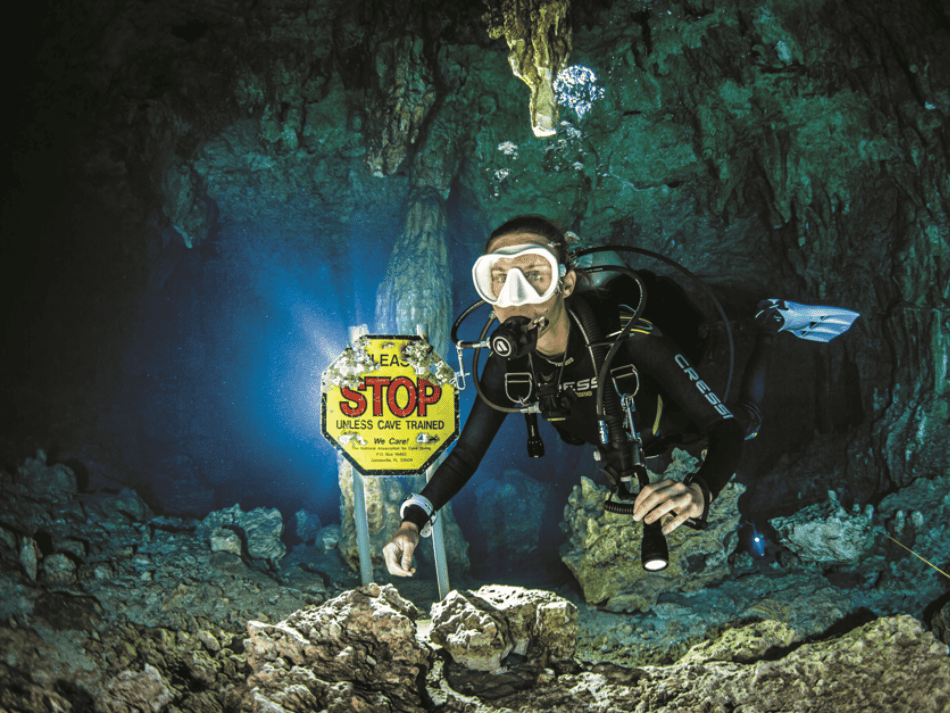
Cenotes: A Vertiginous Dive into Prehistory
The Yucatán Peninsula is home to over 4000 cenotes and caves. For nearly a million years, rainwater has sculpted the limestone plateau, creating a labyrinth of underground galleries where remnants of extinct species and human bones rest.
The Genesis of Cenotes: A Journey of 210 Million Years
To understand the formation of cenotes, we must go back to the time of Pangea, 210 million years ago. It’s here that the foundations of the Yucatán Peninsula began to form. In the Late Cretaceous (between 100 and 66 million years ago), tectonic movements uplifted the peninsula’s platform, plunging it under a shallow sea. For 145 million years, an accumulation of marine sediments created a limestone rock layer 300 to 1000 meters thick. A million years ago, glaciations lowered ocean levels, revealing the Yucatán Peninsula as we know it today.
Did you enjoy this excerpt?
Read the full article.
READING TIME ≈ 5 min
Dive into the Heart of PLONGEZ! Magazine
To enjoy this article and its exclusive content, a modest contribution is required.