


This year, we commemorate the anniversary of the Messerschmitt Bf 109 crash, a famous German fighter aircraft that crashed off the coast of the Planier Island in 1944. Today, this wreck lies at a depth of 45 meters. This historic diving site has become a popular destination for sea and history enthusiasts. Eighty years after this significant event, let’s discover together the stories and mysteries surrounding this wreck that continues to captivate diving enthusiasts.
Marseille: A Historic Port City
Marseille, an emblematic port city in the south of France, has held a strategic position in the Mediterranean for centuries. During World War II, its location made it a focal point for both Axis and Allied forces. Numerous military air bases were established around Marseille, with fighter planes and bombers conducting crucial missions for the outcome of the conflict.
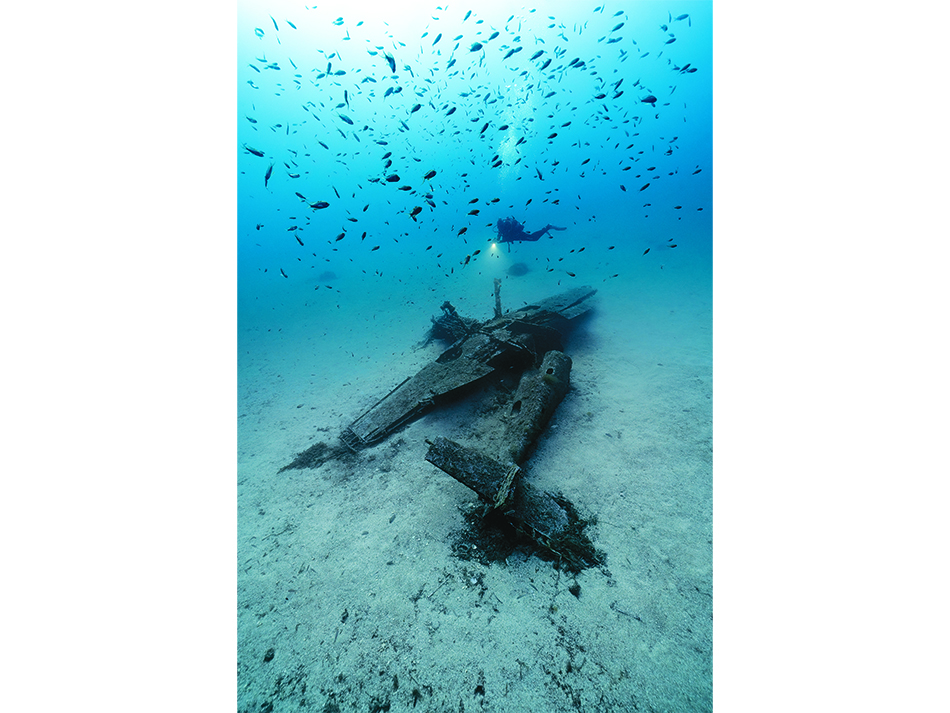
The skies and surrounding seas were the scene of intense battles, leaving behind a multitude of wrecks. This intensity of military operations also resulted in a concentration of wrecks in the region, making Marseille particularly rich in underwater history. Furthermore, several Allied and enemy missions took place near the coasts, with, for example, American planes like the P-38 Lightning regularly conducting reconnaissance.
The Planier Lighthouse: Guardian of Wrecks
About ten kilometers from Marseille, the Planier islet is the site of one of the most notable lighthouses in the Mediterranean. This rocky formation, with its dangerous shoals, has caused the loss of many ships through the ages. Divers can explore several wrecks, notably that of the cargo ship Chaouen, wrecked in the 1970s, and the Dalton, known for its appearance in the film The Silent World by Jacques-Yves Cousteau.
Among the World War II aircraft wrecks, the Messerschmitt Bf 109 is by far the most renowned. Shot down during the battles, this aircraft has become a reference for Marseille divers.
A Dive into History: The Messerschmitt Bf 109 Wreck
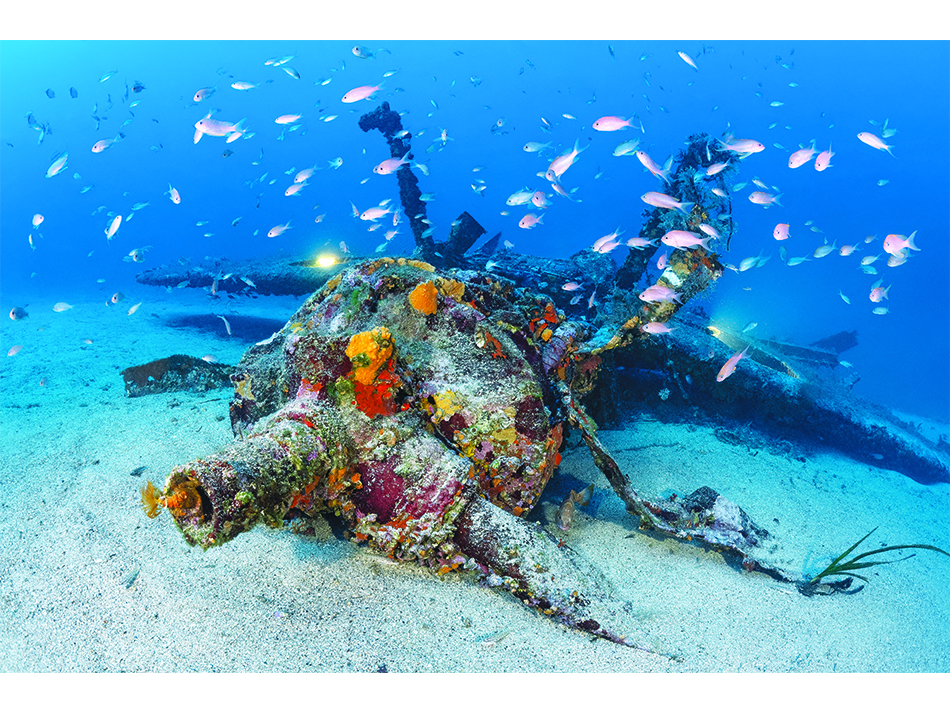
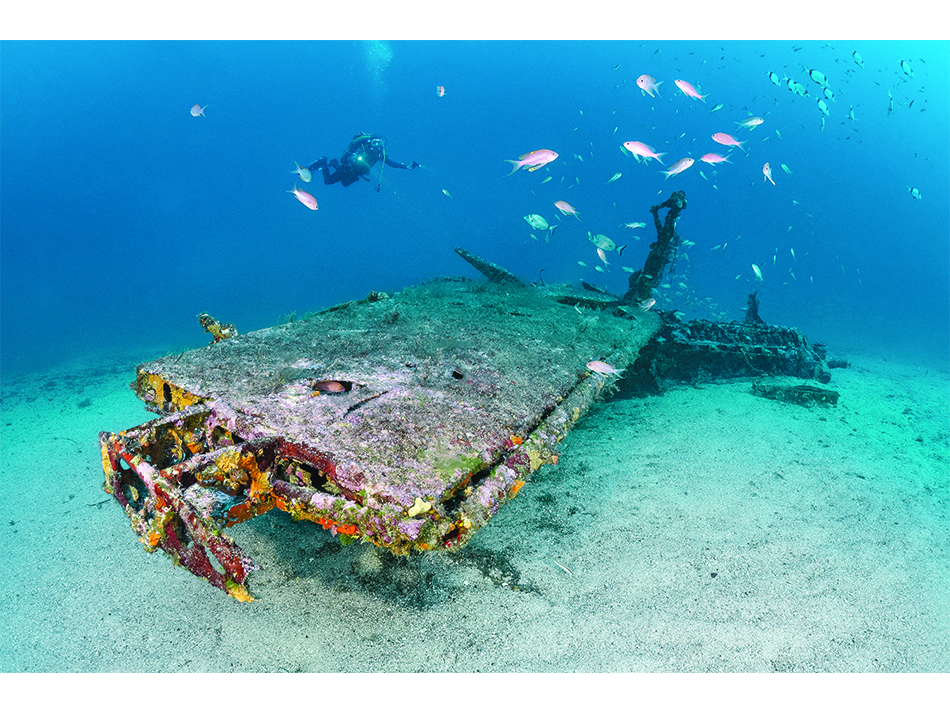
The aircraft, piloted by Hans Fahrenberger, a Hauptmann in the Luftwaffe, rests upside down on a sandy bottom at a depth of 45 meters. Although originally intact, the wreck was damaged by attempts to raise it by divers in the past. Currently, the tail and empennage are detached from the fuselage.
More precisely, this aircraft is a Bf 109 G-6 model, an improved version of the previous Gustav models. This fighter was armed with MG 131 machine guns and an MK 108 cannon, giving it impressive performance. With a wingspan of 9.87 meters and capable of reaching a speed of 550 km/h, it was formidable during aerial combat.
Today, the wreck is in a state of dilapidation, affected by forced landings, fishing nets, and acts of looting. Only one propeller blade remains visible, and the rest of the structure shows signs of degradation. However, both wings are still firmly attached to the fuselage.
Practical Information for Divers
Access to the Messerschmitt site is reserved for level 3 divers as a minimum or those possessing the PA-60. Two methods allow reaching the wreck: a drop on site after marking, or mooring at the northern face quay of the Planier island. Starting from the quay, you need to cover about a hundred meters towards the wreck, along the rock and down a submarine wall until reaching the necessary depth to see the wreck.
It is inhabited by a variety of fauna, including conger eels and moray eels, making the dive even more enriching. It is advisable to spend some time above the wreck to admire its structure and the biodiversity it shelters.
The Moving Testimony of the Pilot
Hans Fahrenberger, after a brilliant career, met a tragic fate on March 7, 1944. As a flight instructor, an alert forced him to take off quickly to intercept American bombers. After an aerial battle, he was forced to ditch under difficult conditions and miraculously survived, escaping to the surface thanks to his parachute.
In 1993, Hans returned to Planier, accompanied by a film crew, to find his aircraft. This event symbolizes the reconciliation between former adversaries and reveals his love for aviation, beyond the war context.
His life and story are documented in the book 90 Wrecks in Marseille and Its Region, co-written by Jean-Pierre Joncheray and his wife. Their work has helped preserve this memory for future generations.

Reading to Learn More
- The Sleep of the Wrecks and Odyssey by Patrice Strazzera
- 90 Wrecks in Marseille and Its Region by Anne and Jean-Pierre Joncheray
With this dive into the history of the Planier Messerschmitt, we connect to a rich past while preserving the memory of events that have shaped our world.
This article, originally written by Fabrice Dudenhofer for our print edition, has been adapted for the web.
IMAGES © Fabrice Dudenhofer