


For two decades, each September is dedicated to the census of three important marine species: groupers, corbs, and noble pen shells. These operations take place in the calanques and around the islands of Marseille. Twenty years after this initiative began, let’s assess the observed changes.
A Positive Assessment for Groupers and Corbs
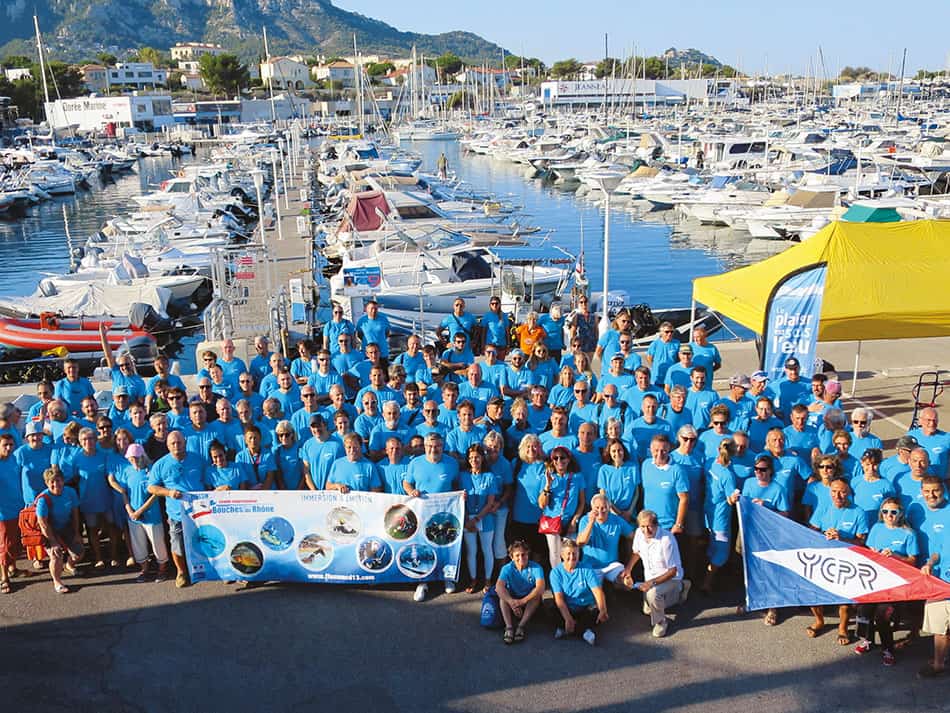
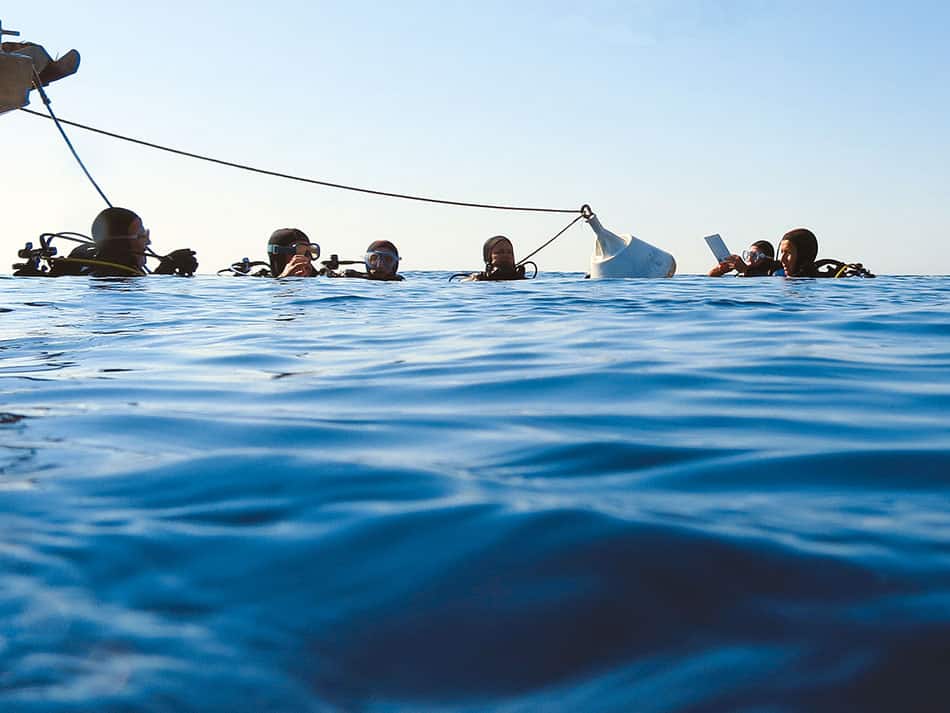
“During the first edition,” recalls Sandrine Sauge-Merle, project manager for CODEP 13* and its subaquatic environment and biology commission, “we observed only one grouper and no corbs!” This year, thanks to the participation of 175 divers across 22 sites, the numbers show significant progress. Between the islands of Riou, Plane, Jarre, Maïre, as well as Planier, and the calanques of Sormiou and Morgiou, 591 groupers and 127 corbs were counted. “After 20 years, we have a solid temporal reference and a precise understanding of the sites,” adds the organizer.
Population Growth: The Effects of Protection Measures
Since 2013, France has implemented a moratorium protecting the dusky grouper (Epinephelus marginatus) every 10 years and the brown meagre (Sciaena umbra) every 5 years, banning their spearfishing. These measures, as elsewhere, seem to bear fruit. Groupers are now widely present, with an increase of 140 individuals compared to the previous census. The corb population, meanwhile, remains stable, perhaps reaching a threshold, as it is similar to the 2021 census (the 2022 edition was canceled due to bad weather).
« It is crucial to continue these censuses, » insists Sandrine Sauge-Merle, « in order to demonstrate the effectiveness of protection measures. » Moreover, observations show that corbs, once limited to a few sites, are now spreading throughout the area. « Contrary to claims by some opponents of the moratorium, they do not displace other species. Biodiversity remains essential, » she emphasizes.
The Noble Pen Shell: A Dismal Observation
Unfortunately, no noble pen shells (Pinna nobilis) were recorded. Despite a slight increase a few years ago, the epizootic that affected this species seems to have destroyed that hope. « We found none this year, » laments the organizer. « However, we observed Pinna rudis. »
This species, smaller and sturdier with more pronounced spines, seems to resist the parasite that decimated the noble pen shell. These observations are important to determine if it will eventually replace the noble pen shell in our underwater landscapes. Professor Nardo Vicente, a specialist in the species and present since the first edition, was also there.
The Importance of Citizen Science
“The strength of volunteers,” insists Sandrine Sauge-Merle, “is their ability to mobilize in large numbers simultaneously, offering researchers a comprehensive snapshot at a specific moment.” Sandrine Ruitton (researcher at the Mediterranean Institute of Oceanography and member of the Grouper Study Group) emphasized this during the operation. Although marine biologist teams conduct regular counts in the Calanques National Park, their limited resources prevent them from being present simultaneously at all sites and require them to cope with seasonal environmental variations.
This is the essence of citizen science: providing researchers with extra eyes and time. “While strictly adhering,” specifies the organizer, “to the observation protocols established by professionals, specifically Eric Charbonnel, scientific coordinator of the Côte Bleue Marine Park and a member of the GEM.”
*Departmental Committee of Bouches-du-Rhône of the FFESSM
This article, originally written by Isabelle Croizeau for the printed edition of PLONGEZ!, has been adapted for the web.
Photos © Eric Porché.