


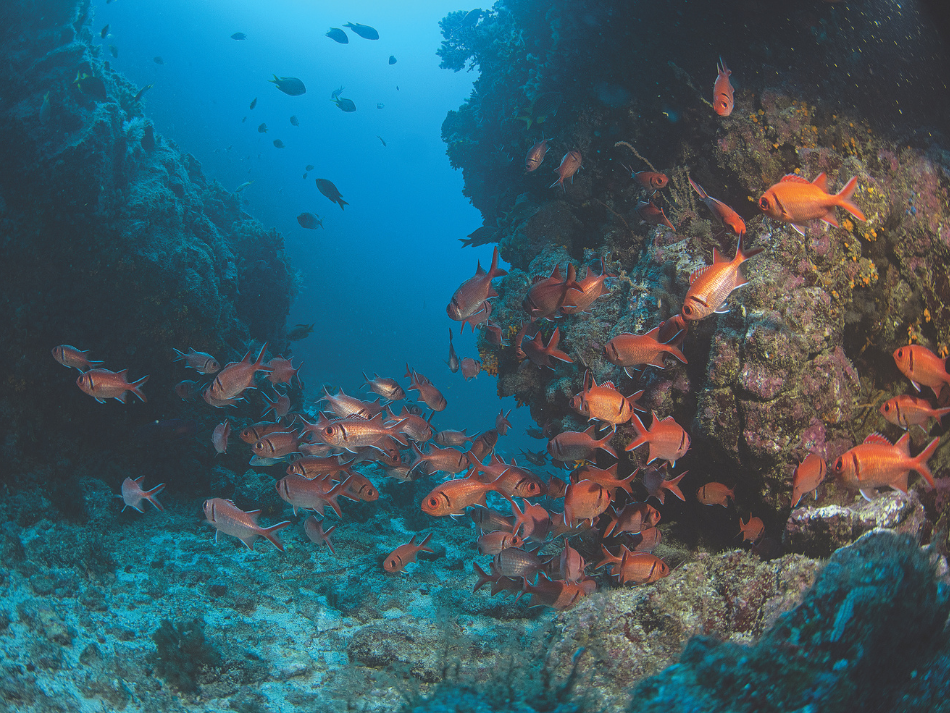
The last stronghold before the Atlantic, the Cape Verde archipelago, made up of volcanic islands, offers divers unique and surprising experiences. Each island unveils its own treasures: in the west, Sao Antao fascinates with its diverse rays, São Nicolau attracts with its dizzying, almost unexplored drop-offs, Sal impresses with its extraordinary kingdom of caves and, finally, the isolated beaches of Santa Luzia become, every year, the setting for the nesting of loggerhead turtles.
Sao Antao: paradise of rays and the deep blue
At the extreme west of Cape Verde, the island of Sao Antao reveals its wild character. The villages of Tarrafal and Monte Trigo, nestled at the foot of the Topo da Coroa volcano (2000 meters altitude), offer privileged access to a rich and often unknown marine fauna. Here, the depths drop rapidly into dizzying abysses, favoring encounters with rare and majestic species.
Meeting the rays of Tarrafal
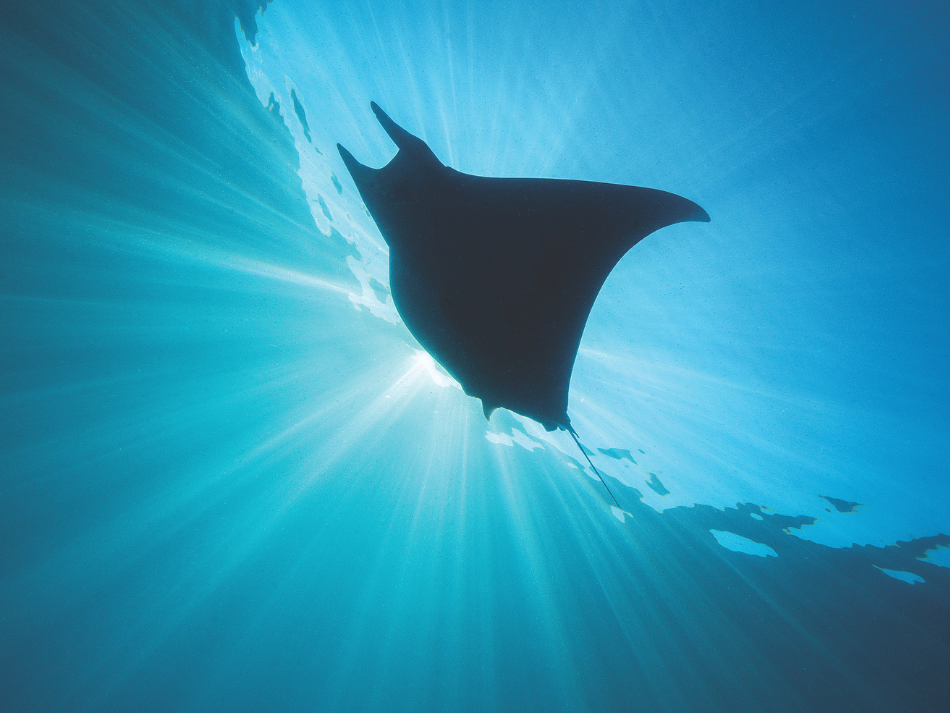
Off the black sand bottoms, several species of rays regularly come to evolve. The most spectacular remains the manta ray (Mobula birostris, formerly Manta birostris), an ocean giant that can reach over 5 meters in wingspan. Frequent a few meters from the coast, it offers a breathtaking spectacle, sometimes in a small group, near the beach of Tarrafal.
On these same volcanic bottoms, local fishermen willingly share their knowledge. They point out the presence of the ‘viola’, or guitar rays. These species appreciate the sedimentary substrates rich in food, sharing their territory with many stingrays, also relatively unobserved under other latitudes. Particularly secretive, they discreetly move under the anchored boats.
This unique contrast between unfathomable depths, shallow areas, marine currents and sheltered zones creates a precious ecosystem and also attracts an enigmatic species: a ray much more discreet than the manta, but just as fascinating, is regularly observed on this exceptional stretch of coast.
Did you enjoy this excerpt?
Read the full article.
READING TIME ≈ 7 min
Dive into the heart of PLONGEZ! Magazine
To enjoy this article and its exclusive content, a modest contribution is required.