The Exposub Festival in Neuchâtel has started and showcases the winning photos of its competition, throughout the summer by the lake. Discover this beautiful 2022 list of winners!
Freshwater
1st prize – Lionel Houde (France)
« We are in Holtzheim, a small village in Alsace in a gravel pit near the Rhine. During an evening dive in September while ascending, I observe unusual activity with a lot of commotion near the surface, as night falls. One pike just attacked another and grabs it by the gills. I can’t get closer because the seagrass is too dense… but slowly the pike descends and approaches me with its prey as if to show it to me… What luck, I take about fifteen shots over twenty minutes. The pike gradually turns its prey to swallow it quietly hidden in the seagrass. »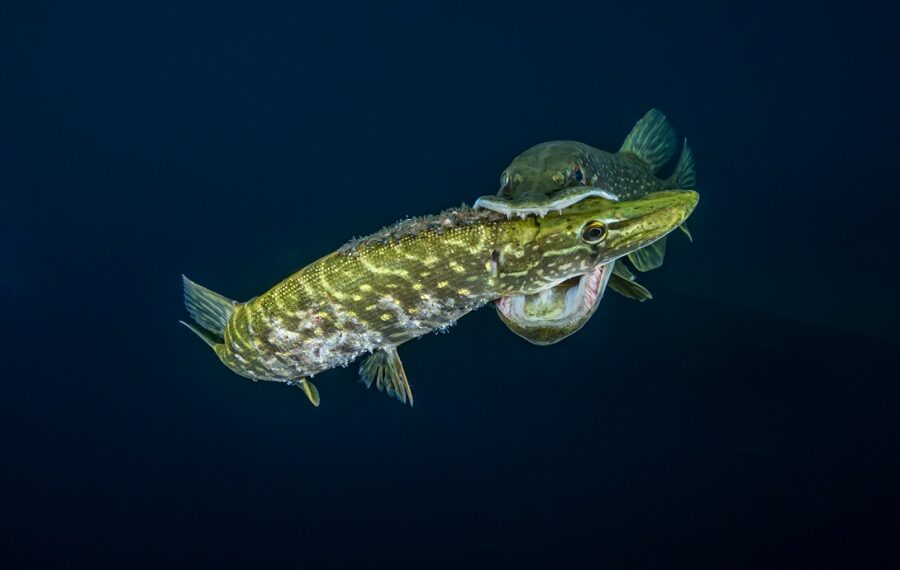 1st prize freshwater. © Lionel Houde / Exposub 2022[/caption]
2nd prize – Peter Schultes (Germany)
« Underwater photography has been my passion for almost 35 years. Every dive with the camera is different, almost like a hunt. What presents itself in front of my lens can be exciting and unpredictable. For some time now, I have been working with different lenses and extension tubes. I photographed the common toad (Bufo bufo) in April with a water temperature of 4°C in a local quarry. For this photo, I used a 60mm macro lens and a so-called ‘magic’ tube. It seems as if the toad will slip into the lens. But that’s not the case. Every time I dive, it is important for me to leave no trace and not to disturb the animals while I take pictures. »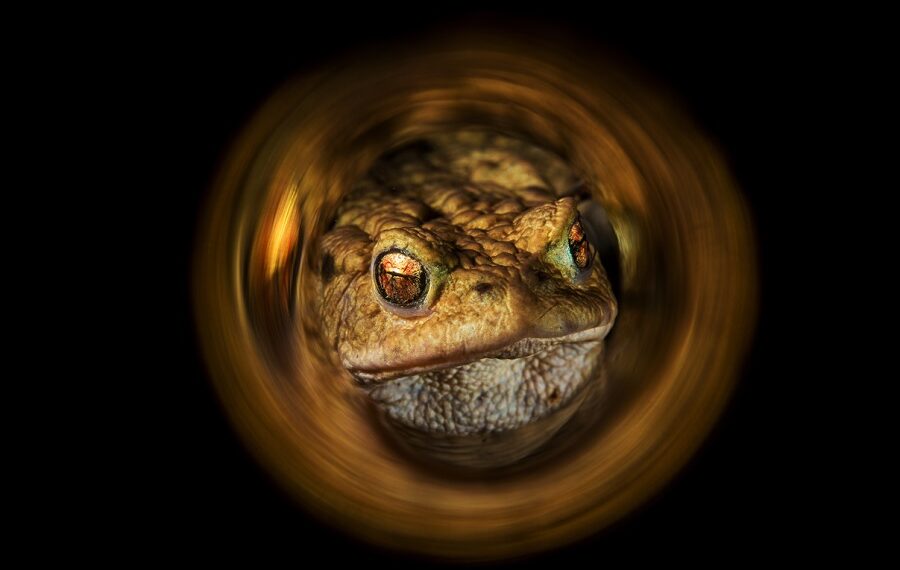 2nd prize freshwater. © Peter Schultes / Exposub 2022[/caption]
3rd prize – Damir Zurub (Croatia)
« This photo was taken in the Angelita cenote in Tulum, Mexico. This cenote is special because the water in it is not connected to other caves, leaving the trees and flora untouched. The photo shows a diver floating weightlessly just above the sulfur cloud surrounded by trees. »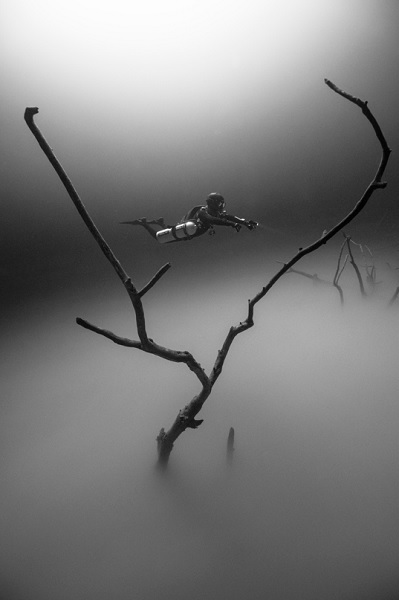
Blackwater
1st prize – Luc Rooman (Belgium)
« The photo was taken at Raja Ampat on the Wedding cake dive site. It was the very last night dive of the cruise. I was diving in open water with a lamp, far from the reef, to be able to take pictures of this beautiful squid. »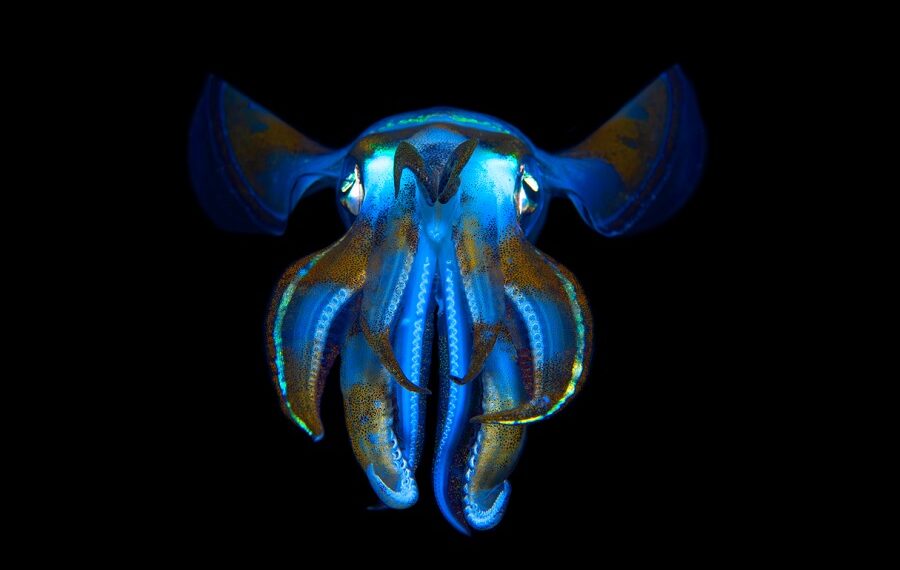 1st prize blackwater. © Luc Rooman / Exposub 2022[/caption]
2nd prize – Tobias Friedrich (Germany)
« The Paper Nautilus was photographed during a night dive in Anilao, Philippines. This small octopus lives its entire life in pelagic waters. This individual was clinging to a small palm leaf and measured about 2 centimeters. »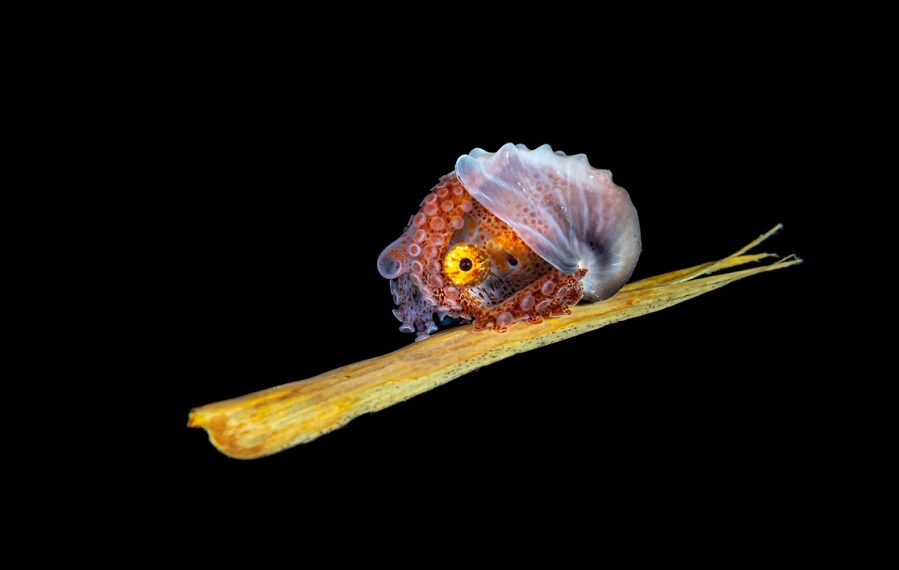 2nd prize blackwater. © Tobias Friedrich / Exposub 2022[/caption]
3rd prize – Raffaele Livornese (Italy)
« The image shows a juvenile Wunderpus photogenicus , taken during a night dive in Anilao, Philippines. It is a special kind of dive where the oceanic plankton is attracted by lights placed for this purpose. You will then see many plankton predators, such as the juvenile octopus. »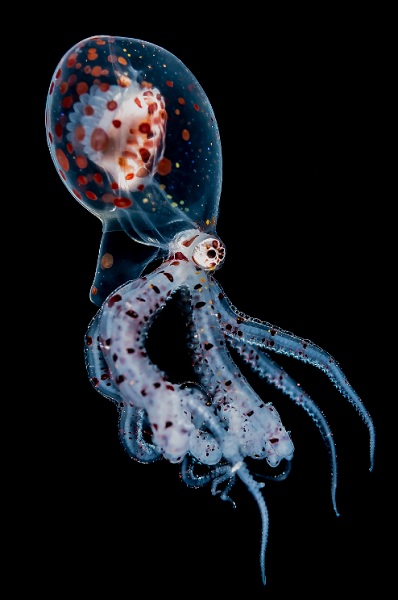 3rd prize blackwater. © Raffaele Livornese / Exposub 2022[/caption]
Sea duo
1st prize – Tobias Friedrich (Germany)
WIDE ANGLE
« This iceberg was photographed in East Greenland. The water temperature in this Arctic region was -1.8°C. All divers must wear dry suits as well as thick underwear to stay dry and withstand the cold. Additionally, safety is very important, as dives take place under a closed ice ceiling with only small openings through which divers can enter and exit. »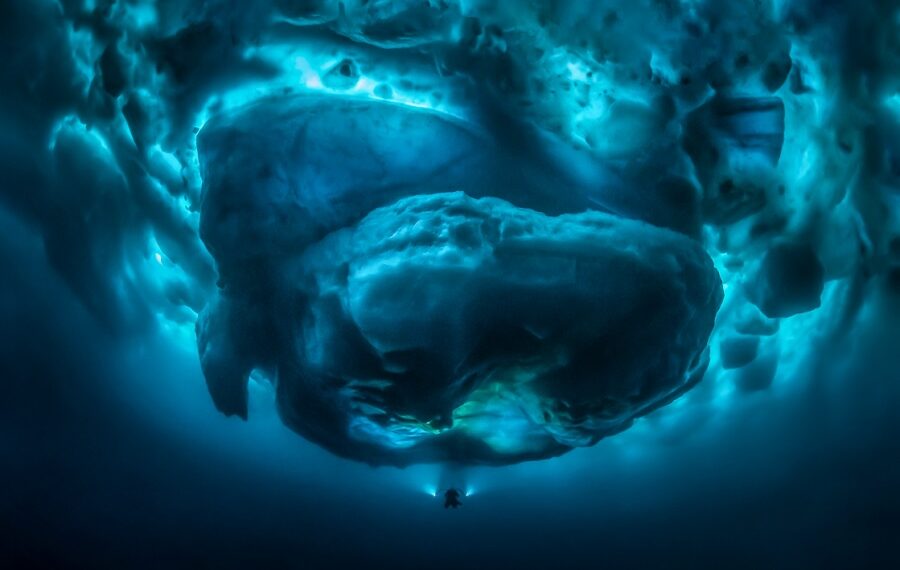 1st prize sea duo. © Tobias Friedrich / Exposub 2022[/caption]
MACRO
« This species of scorpionfish, called Rhinopias, was photographed on the island of Bali using a ‘snoot’, a light shaping device that allows only a little light to pass onto the subject. Rhinopias can be of different colors and rarely swim, but rather crawl on the bottom waiting for their prey. »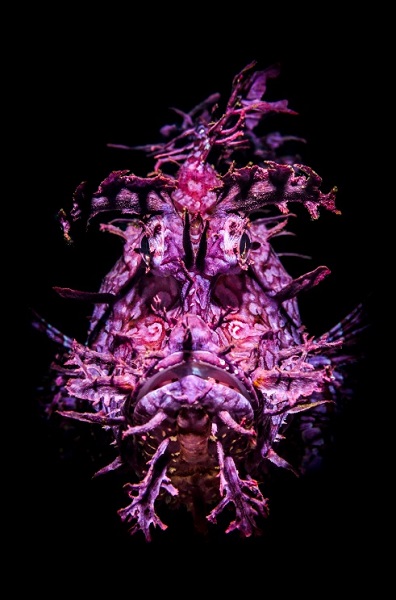 1st prize sea duo. © Tobias Friedrich / Exposub 2022[/caption]
2nd prize – Henley Spiers (United Kingdom)
WIDE ANGLE
« A gannet swims in an artistic hail of bubbles created by the diving seabirds. Every year, 40,000 gannets visit the nearby cliffs to lay and care for a single egg while fishing for food nearby. These incredible birds, plunging into the icy water faster than an Olympic diver, have developed inflatable cushions in their heads and chests to survive these repeated impacts. Underwater, the noise is thunderous, the white and streamlined torpedoes pierce the surface. I wanted to create a new image of these beautiful seabirds and decided to try capturing their movement with a slow exposure. The speed of the gannets led to countless failures, but in this image, we maintain a strong visual contact with the bird. »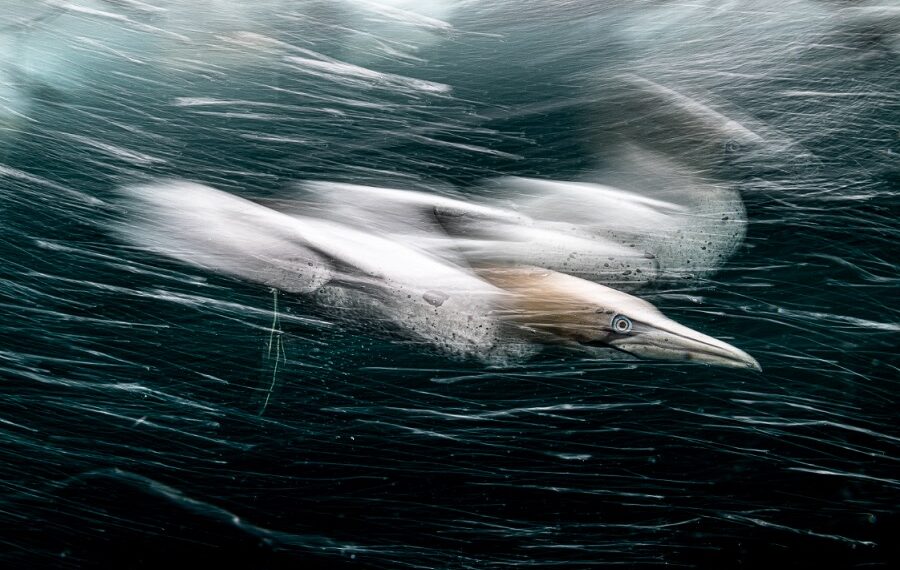 2nd prize sea duo. © Henley Spiers / Exposub 2022[/caption]
MACRO
« Blue and yellow, vulnerable, but fierce, the ribbon eel, which resembles a dragon, is one of the smallest of the moray eels and has an unforgettable presence on the reef. The intentional movement of the camera, combined with a slow shutter speed and selective lighting, produces this more abstract view of the ribbon-eel. »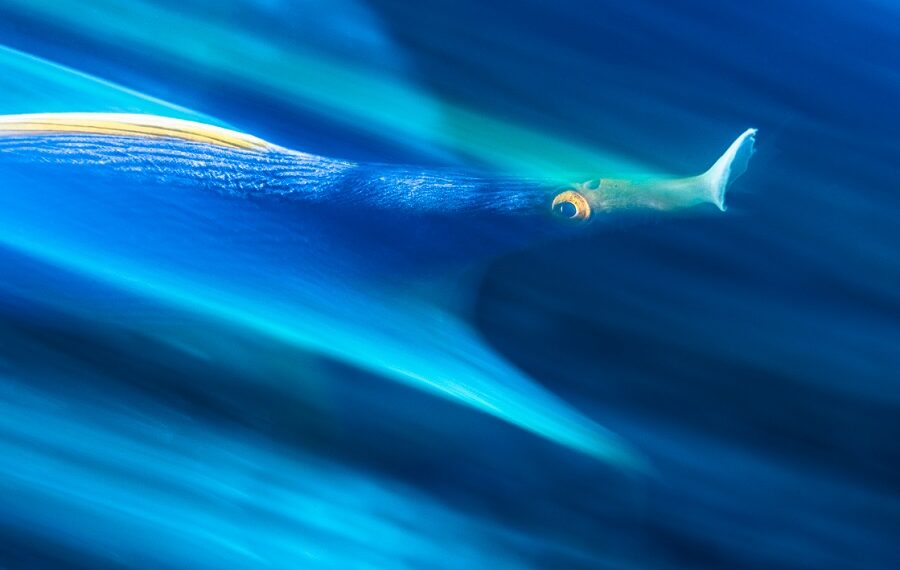 2nd prize sea duo. © Henley Spiers / Exposub 2022[/caption]
3rd prize Enrico Somogyi (Germany)
WIDE ANGLE« This photo was taken early in the morning just after sunrise in the shallow waters of Moalboal where you can find many healthy corals. I used a circular fisheye lens to capture as much as possible of this beautiful reef. »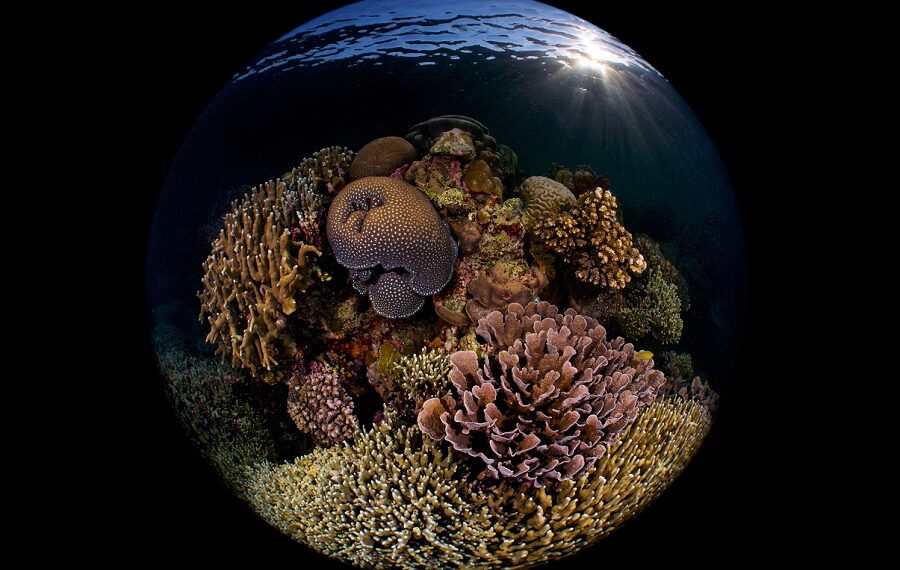 3rd prize sea duo. © Enrico Somogyi / Exposub 2022[/caption]MACRO« For this photo, I used a 50-year-old manual Trioplan lens. This lens is famous for its air bubbles. It was difficult to photograph with this lens, as to achieve beautiful bubbles, you have to use an almost completely open aperture. You then have a very shallow depth of field. But the effort was worth it. »
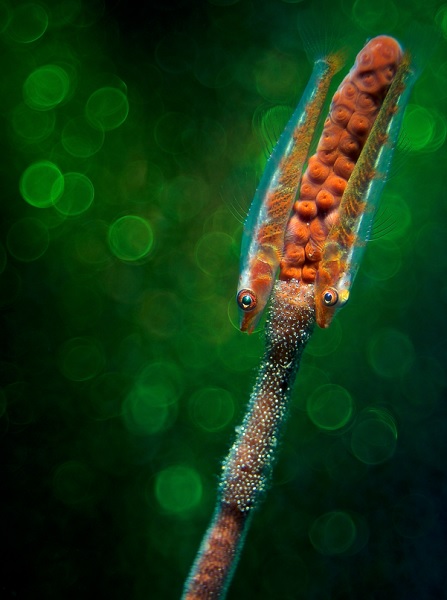 3rd prize sea duo. © Enrico Somogyi / Exposub 2022[/caption]
favorites
Gatien Cosendey (Switzerland)
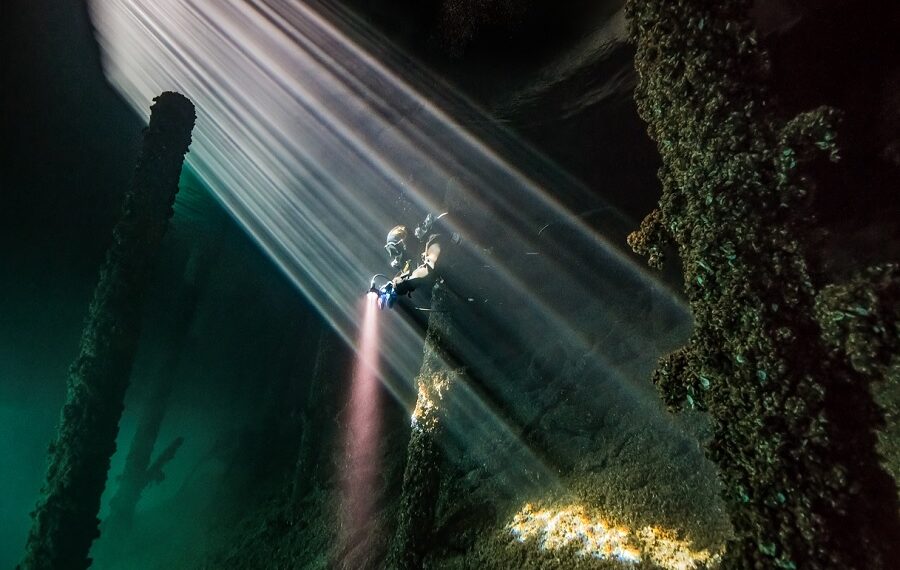
« The photo was taken under the Perdonnet dock in Vevey, on Lake Geneva. No animals in this photo, but an excellent diver and model: Lei Meichtry. The Perdonnet dock is a type of bridge built above the lakeshore in the 1930s. It succeeded a wooden dock, constructed at the end of the 19th century and collapsed shortly after. The steep slope of the bottom, composed of loose alluvium discharged by the nearby Veveyse river, made the construction of this structure difficult. The wooden scaffolding that was used for its construction is still visible under the lake’s surface today. Divers can enjoy slaloming between the vertical and horizontal wooden poles. In winter, the sun, low on the horizon, penetrates through side skylights and creates sumptuous plays of light in the ambient penumbra. The site, due to its shallow depth and easy access, can be admired by both expert and beginner divers. »Marc Berset: « This image is my favorite because the photographer plays with the sun’s rays, the diagonal of the image, and the diver emerging from beneath the docks! All in harmony and ambiance very lacustrine as we like to see in our Swiss lakes. »
Fabien Michenet (France)
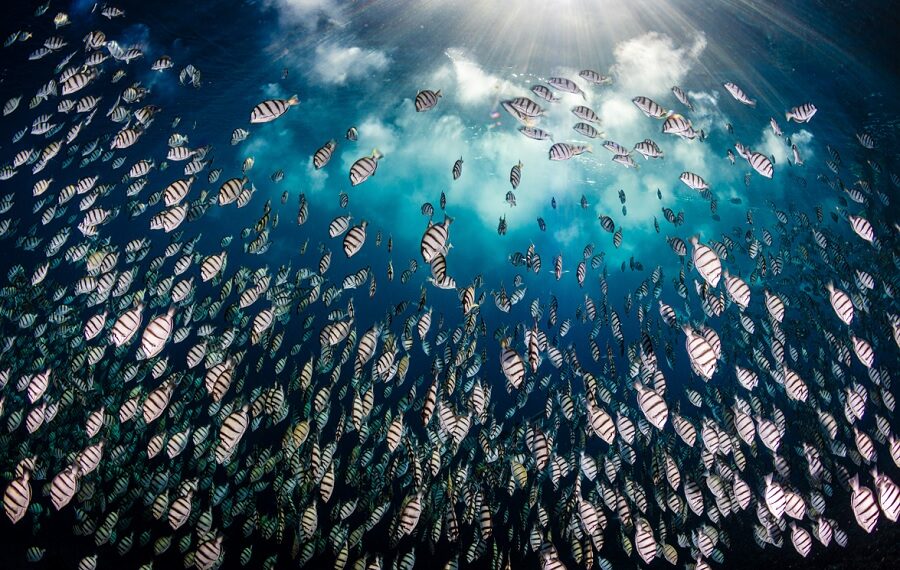
« On days of new moons and full moons, if the current and swell conditions are favorable, convict surgeonfish gather in some favorable locations of the Fakarava atoll passes. Hundreds of surgeons will gradually congregate in increasingly restricted space to form a compact school, until late in the afternoon when in a moment the females launch toward the surface to release their eggs which will be immediately fertilized by the males in the same movement. Then the strong current will quickly disperse the clouds formed by the fertilized eggs towards the vastness of the Pacific Ocean. To be mobile and capture as closely as possible the brief moment of spawning, I took my series of images while freediving. This image shows the moment immediately after spawning when the school returns to the bottom to be less vulnerable to the particularly numerous shark attacks in this area. »Daniel Strub: « I was struck by the dynamic of the photograph. The contrasts are dazzling with the sun’s rays, and the timing of the shot is exceptional. »
Franco Tulli (Italy)
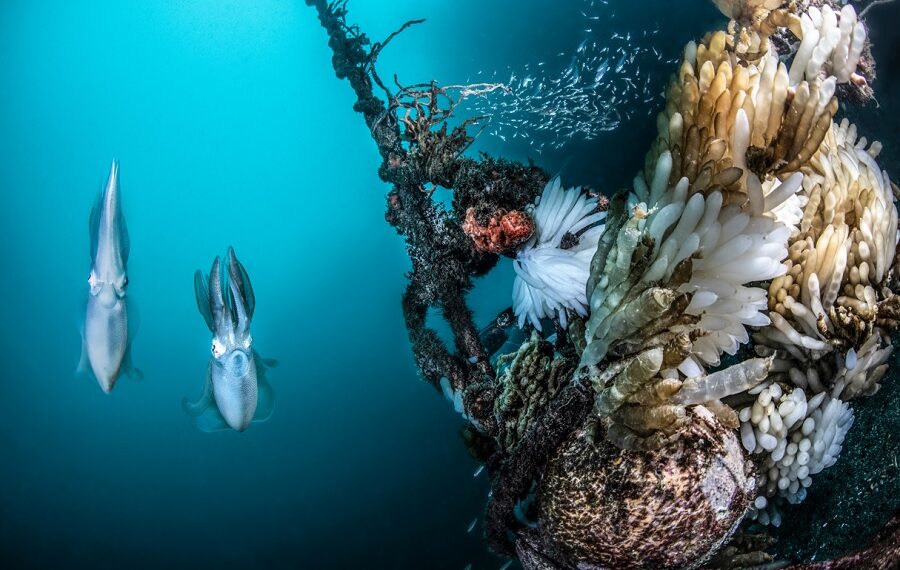
« The sea always holds great surprises, and while it is quite common to find squid eggs in the most unexpected places, often beaten by the currents, like along this mooring line, it’s not so frequent to observe large squids (Sepioteuthis lessoniana) suddenly appearing like a squadron of fighters; some to defend the group, others to perform the task mother nature has entrusted to them: oxygenating the eggs and ensuring their protection. »Pauline de Coulon: « I particularly like this photo, the shades of blue and colors make me want to dive into it. I find the dynamic of the shot particularly beautiful with the eggs in the foreground, the adults in motion in the second, and the vastness of the ocean around. This image sensitizes me to the richness of the blue planet and the importance of protecting it in its entirety. »
Gabriel Barathieu (Mayotte)
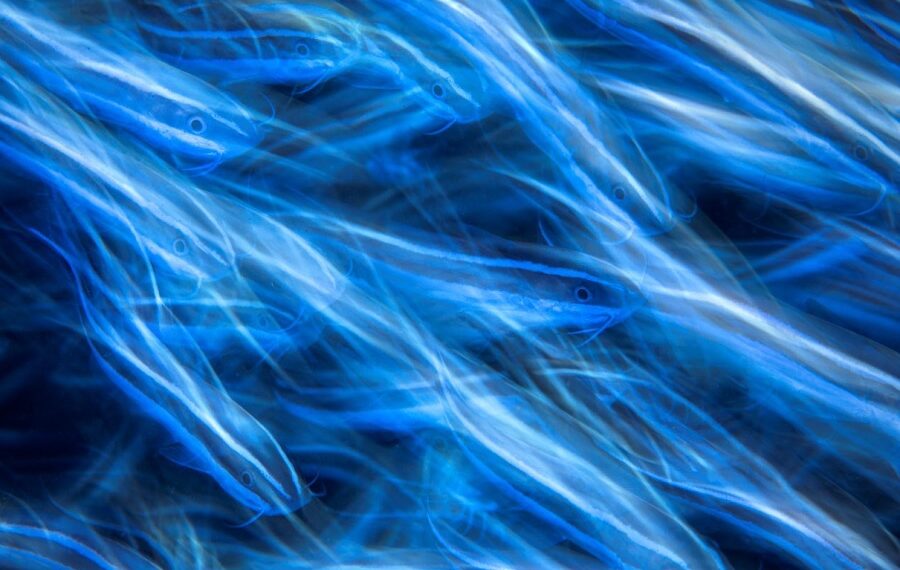
« A school of striped eel catfish (Plotosus lineatus) from the reef of Mayotte photographed at night using slow motion and stroboscopic flash firing (flashes during exposure) that produces this particular rendering. This species prefers seagrass meadows and detrital sandy bottoms of coral reefs and lagoons down to about 50 meters depth. Juveniles prefer shallow coastal waters. »Neil Villard: « I have been particularly touched by this image; I love images that generate emotion above all, even before our brain interprets the image and can identify what it is. Technically, these blurs are perfectly controlled, they accentuate the movement of the fish, but what is particularly impressive is the different textures and dimensions that emerge from this image composed of blacks and blues. » Techniquement, ces flous sont parfaitement maîtrisés, ils accentuent le mouvement des poissons, mais ce qui est particulièrement bluffant c’est les différentes textures et les dimensions qui ressortent de cette image composée de noir et de bleus. »
Damir Zurub (Croatia)
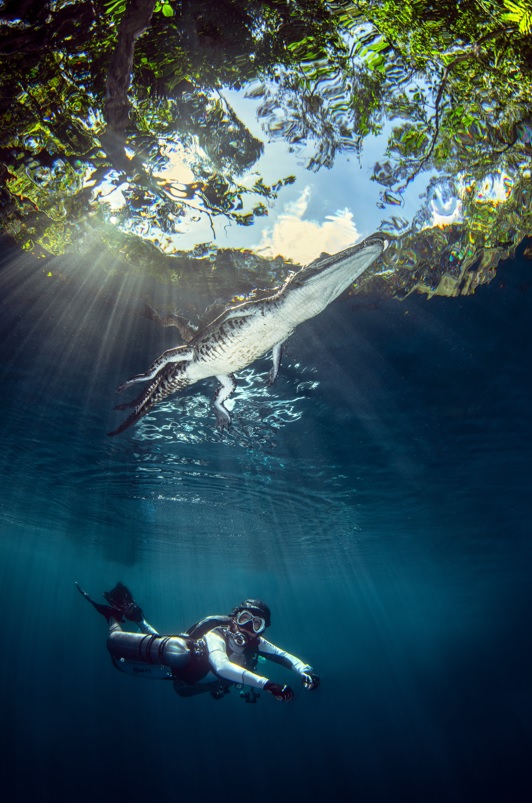
« This photo was taken in the Angelita cenote in Tulum, Mexico. The photo was taken at the moment the crocodile dived. The idea was to capture the admiration of a diver sharing the water with such an animal. »Antoine Janssens: « I really like this photo because it tells a story. It is not just an animal in its natural environment, but a sharing, a cohabitation between wildlife and us humans. Something that I believe should be greatly improved in the coming years. »
Mathieu Macias (New Caledonia)
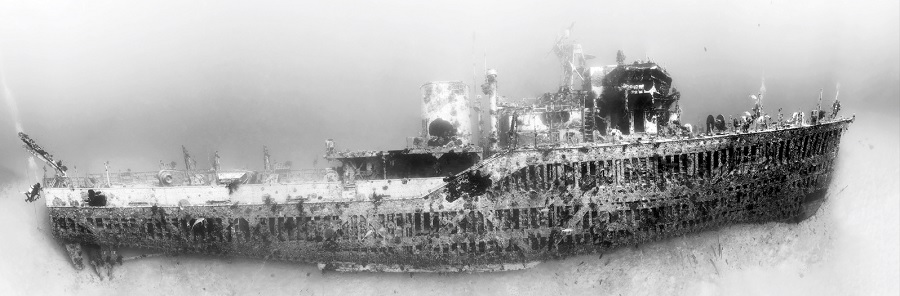
« This is a panoramic of the wreck ‘Dieppoise’ at Boulari pass in Nouméa (New Caledonia). I have dived on this wreck several times before creating this panoramic. It is located in an area where visibility is rarely good and although I find this wreck very charming, I have always been frustrated not to be able to see it in its entirety. The idea of making a panoramic then formed. That day I dived with a small group of friends, which allowed me to really do things the way I wanted. The wreck is sitting on a 28m bottom, but to have a good overall view, I had to be at the bridge level or slightly above. I therefore chose to position myself at 18m in open water to take the shots. It took me 45 minutes and 5 passes to make a single correct assembly. A very interesting technical challenge that results in an image impossible to achieve otherwise. » Dieppoise passe de Boulari à Nouméa (Nouvelle-Calédonie). J’ai plongé plusieurs fois sur cette épave avant de faire ce panoramique. Elle se trouve dans une zone où la visibilité est rarement bonne et bien que je trouve cette épave très sympathique j’ai toujours été frustré de ne pas pouvoir la voir en entier. L’idée à donc germée de faire un panoramique. Ce jour-là j’ai plongé avec un petit groupe d’ami, ce qui m’a permis de faire vraiment les choses comme je le souhaitais. L’épave est posée sur un fond de 28m, mais pour avoir une bonne vue d’ensemble il me fallait être au niveau du pont ou légèrement au-dessus. J’ai donc fait le choix de me mettre à 18m en pleine eau, pour réaliser les prises de vues. Il m’a fallu 45 minutes et 5 passages pour arriver à faire un seul assemblage correct. Un challenge technique très intéressant qui donne une image impossible à réaliser autrement. »
The Jury: « In selecting this photo, the entire Jury wanted to highlight the originality of the shot and the complexity of the work of superimposing about fifteen images. Furthermore, the presence of divers provides a great sense of the size of the wreck. »
Alessandro Grasso (Italy)
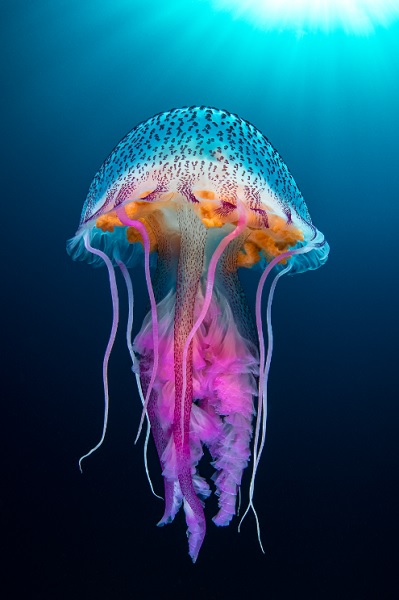
« That day, many animals passed before my lens carried by the strong current, but my attention was focused on this specimen of jellyfish. I immediately noticed its bright colors and beautiful tentacles. I then started photographing it against the light to try to bring out the colors and its transparencies. »Fabrice Chapuis: « When I had to choose a ‘favorite’ image, this one immediately caught my eye. This jellyfish is elegant with its frilly dress and flamboyant colors. It exudes a lot of grace and purity. The underwater world is wonderful, and we must protect it. »
Pierre Jean Beaux (France)
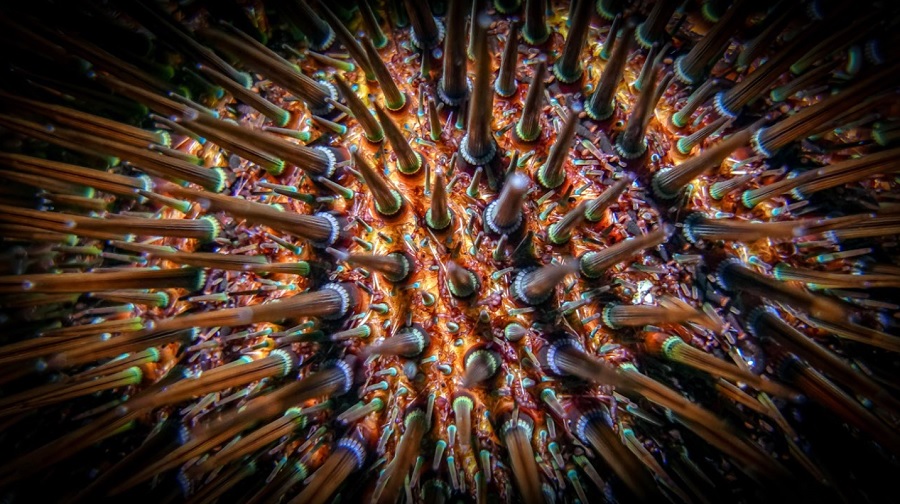
« This image represents a purple sea urchin (Paracentrotus lividus) taken at -10 m with a macro lens during a night dive in February 2022, off Centuri (Corsica). As we finished the dive heading towards the starting beach, I saw a few urchins under a large rock. Out of curiosity, I decided to screw on my macro lens to shoot one of them. Very satisfied with the initial results, I refined my settings and improved my stabilization to reach the shot you see today. » Michaël Frascotti: « Festisub has always wanted to highlight a subtle blend of realism (scientific approach) and creativity (artistic approach) in the photos selected and presented. This image of a sea urchin highlights the beauty of detail while suggesting a pictorial work. For sure, passersby will be intrigued by this aesthetic and original photograph. »