


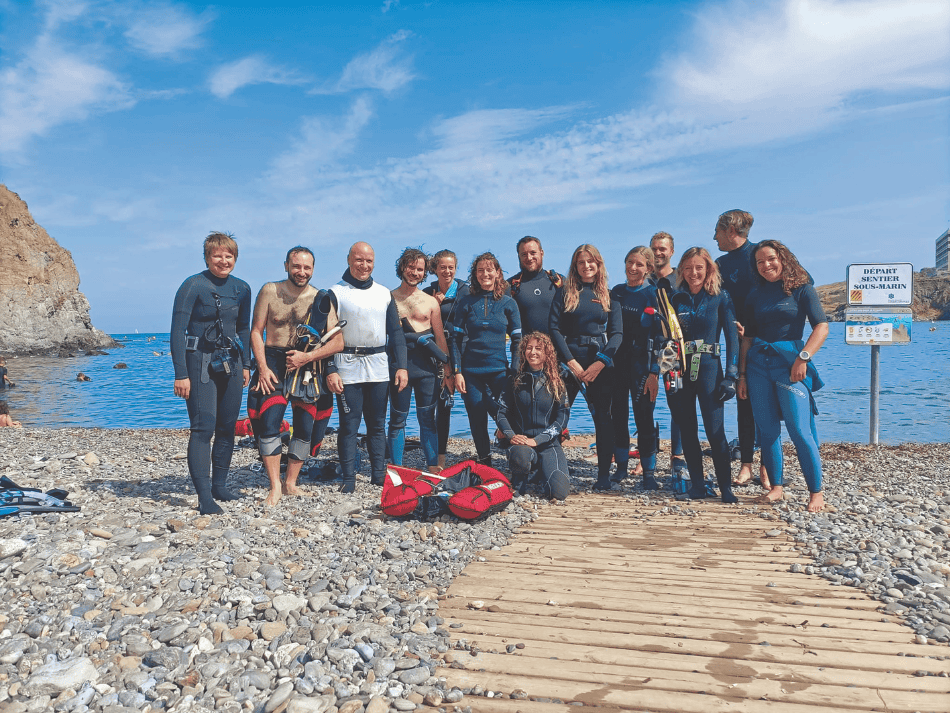
Recently, AILERONS association has welcomed apnea into its programs. For those who do not wish or cannot train in diving, observing species while freediving proves to be an accessible alternative. Equipped with fins, mask, snorkel, and wetsuit, new volunteers can join the team, thus lessening the burden of equipment sometimes deemed cumbersome.
The DIRAIPO program: an ideal framework
Although some programs, such as Grand Large, Diable de Mer, and Mercu Roussette, are geared towards studying species in the open sea, DIRAIPO is perfectly suited for freediving. DIRAIPO, which stands for Distribution of Rays in the Eastern Pyrenees, is a scientific project open to the public.
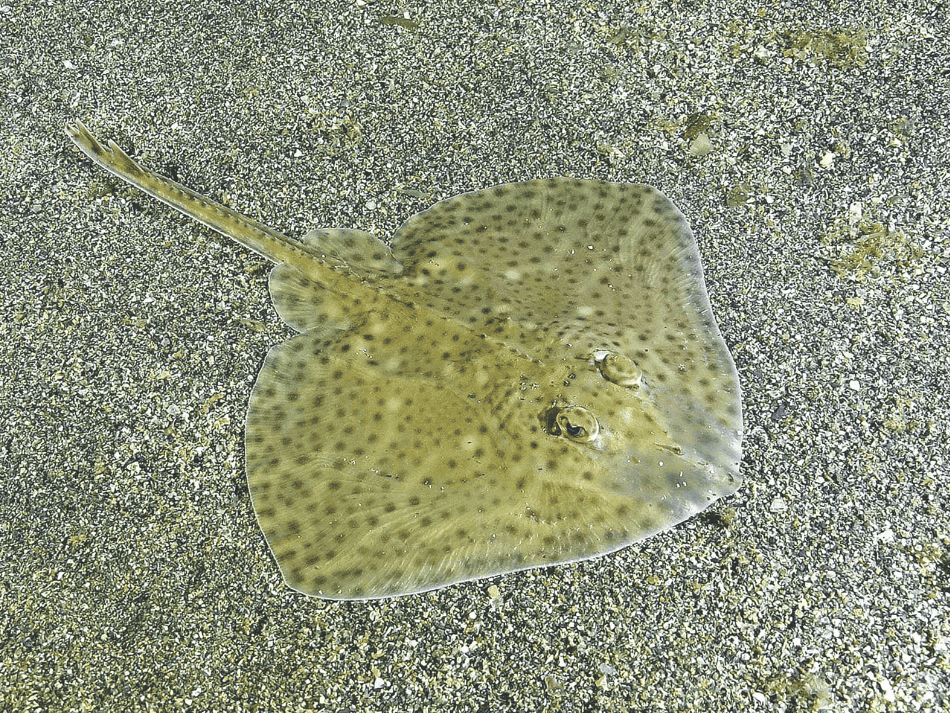
This program aims to inventory and count the rays in the Cerbère-Banyuls reserve. Since its launch in 2019, Clémence Laliche, holding a master’s degree in land planning, has led its organization, motivated by a strong desire to preserve marine biodiversity.
Objectives and Partnerships
The DIRAIPO program plans five missions per year until 2024, aiming to identify several species of rays and study their characteristics to strengthen their protection. For this purpose, AILERONS collaborates with DREAL Occitanie, OFB, and the Cerbère-Banyuls reserve, essential technical and financial partners for carrying out these missions. The observations take place in two distinct areas: the entirety of the reserve and a reinforced protection zone, where freediving is particularly pertinent. This zone, ordinarily closed to all activities, has been opened for AILERONS investigations, but uniquely for freedivers. This allows observing the wildlife while minimizing the impact on this fragile environment.
The endangered species: an alarming observation
These investigations allow close monitoring of the elasmobranch populations (chondrichthyans, or ‘cartilaginous fish comprising sharks and rays) in the Cerbère-Banyuls reserve. And the situation is concerning! Despite the apparent rarity of observations, the Mediterranean Sea hosts a wide variety of chondrichthyan species.
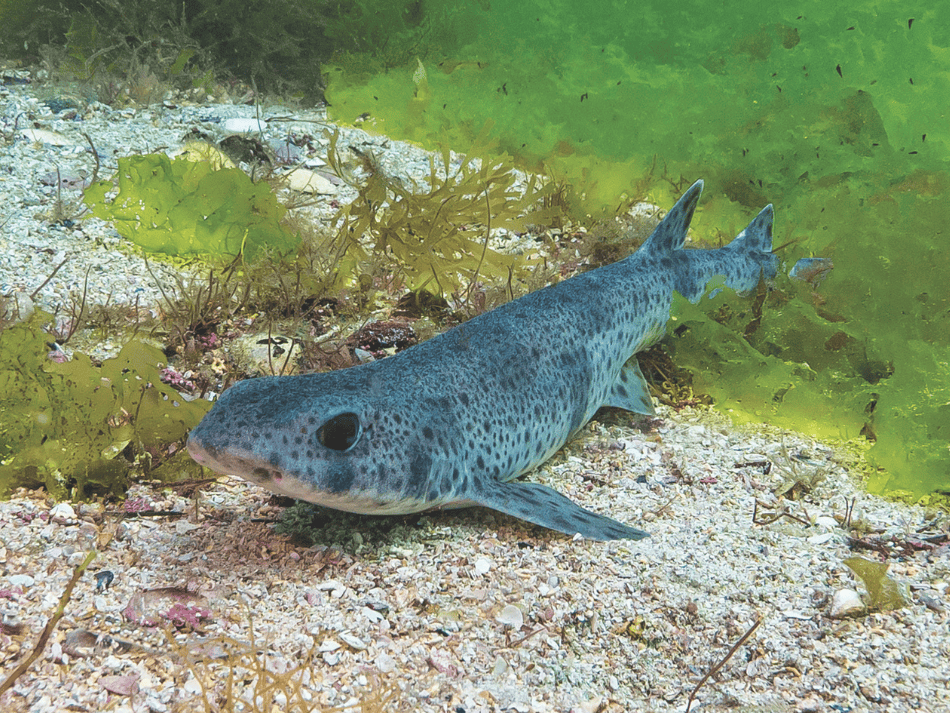
According to the IUCN, 74 species of cartilaginous fish reside in these waters, comprising 40 species of sharks, 32 species of rays, and one chimera. Unfortunately, sharks, rays, and chimeras are severely threatened. Currently, the IUCN estimates that 53% of them are at risk of extinction. Urgent measures are needed to preserve their populations and habitats: 20 species are critically endangered, and another 18 are threatened, most of which are not protected. No shark or ray is included on the list of protected fish in France, whether in the Mediterranean or the Atlantic.
Did you enjoy this excerpt?
Read the full article.
READING TIME ≈ 8 min
Dive into the heart of PLONGEZ! Magazine
To enjoy this article and its exclusive content, a modest contribution is required.