


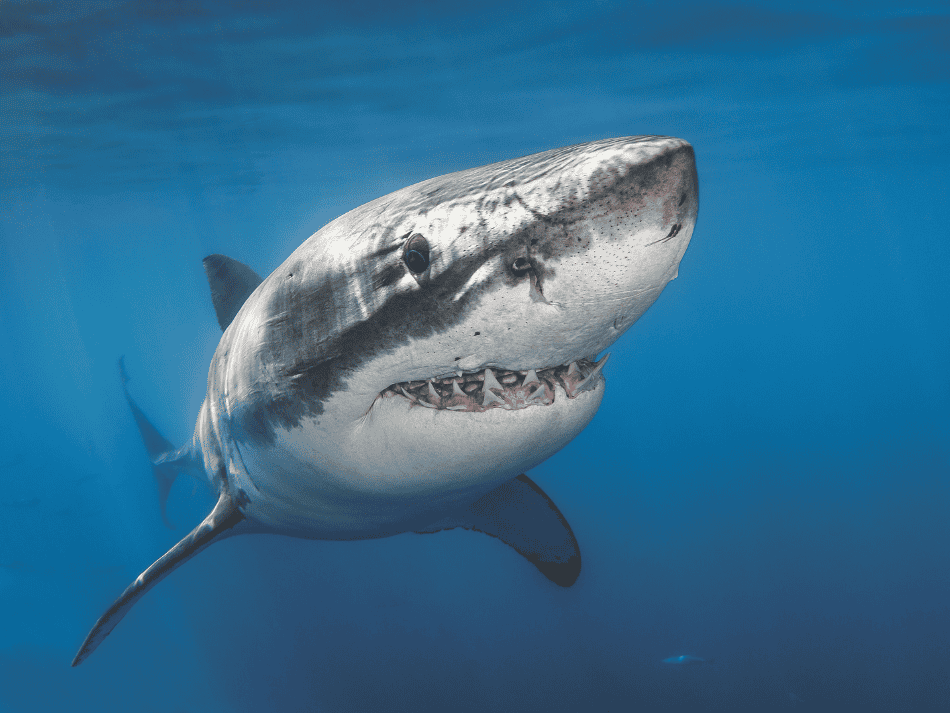
This lord of the oceans fascinates as much as it frightens. Divers’ attraction to the encounter with this mythical predator remains intact. To better understand this marine giant, whose populations seem to be declining, we interviewed Alessandro De Maddalena, a naturalist and globally recognized expert on the species.
Vulnerable Populations
Although precise numbers are lacking, the great white shark’s populations are declining in all oceans. The species, protected everywhere since South Africa’s pioneering initiative in 1991, remains faced with multiple threats.
- Cosmopolitan Distribution: Present in the Atlantic, Pacific, and Indian Oceans, it is one of the most widespread shark species.
- Exceptional Adaptability: It withstands extreme temperatures, from the Bering Sea waters to tropical coastal areas.
- Concentration Areas: The largest populations are found in South Africa, central California, Guadalupe (Mexico), New England, and South Australia. It is also encountered in New York Bay, the Strait of Sicily, in Japan, central Chile, New Zealand, and Madagascar.
- Philopatry: Great white sharks show a marked preference for certain places, where they stay or return regularly, especially for feeding and reproduction.
Gathering Points: Rather than following defined migratory routes, they converge on specific areas at certain times, attracted by their favorite prey.
Did you enjoy this excerpt?
Read the full article.
READING TIME ≈ 4 min
Dive into the heart of PLONGEZ! Magazine
To enjoy this article and its exclusive content, a modest contribution is required.