


Last May, during a business trip to Puerto Galera, in the Philippines, the opportunity arose to dive at night on a small local wreck. Curious and intrigued by this unprecedented experience, I decided to go for it: at nightfall, I would immerse myself in darkness for the first time, ready to discover the underwater world from a completely new perspective. Between excitement and apprehension, it was with my still somewhat inexperienced diver’s eye that I would explore this other nocturnal dimension of diving.
A Precise and Solemn Preparation
A passionate 52-year-old diver with only about fifty dives completed in two years, my underwater journey remains quite recent. Used to practicing photography on land, I am just beginning in underwater photography and focus my efforts on acquiring stability, confidence, and autonomy in the water.
As a precaution, for this nocturnal initiation, I choose to leave my camera housing on land. I want to fully savor the moment, without the complexity of additional equipment.
Although the expedition was organized the day before, it requires special attention, both on the organizational aspect and on habits to adapt, from the equipment to dive planning.
Essential Tips for Night Diving
Those who dive at night know it: certain tips make life easier. For example, positioning your flashlight on the pressure gauge makes it phosphorescent and therefore readable in the dark. The generally routine preparation of the equipment requires even more care here because once underwater, it is difficult, if not impossible, to correct any oversight.
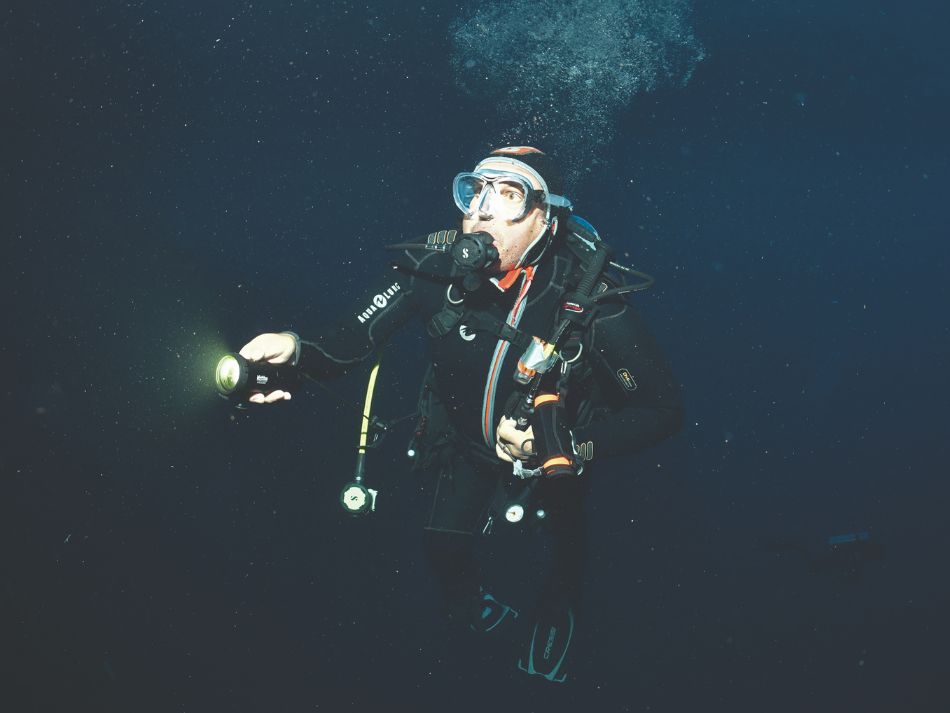
I pay extra attention, aware that the dark environment will occupy a large part of my thoughts, sometimes at the expense of checking details, such as closing the weight pockets!
Did you enjoy this excerpt?
Read the full article.
READING TIME ≈ 5 min
Dive into the heart of PLONGEZ! Magazine
To enjoy this article and its exclusive content, a modest participation is required.