


Since the mid 20th century, an incredible interaction has emerged between humans and sharks in the oceans around the world, sparking phenomenal interest. However, nothing in evolution prepared Man and shark for this unique encounter. How will these two predators, each from such different environments, react? What methods will they use to understand each other?
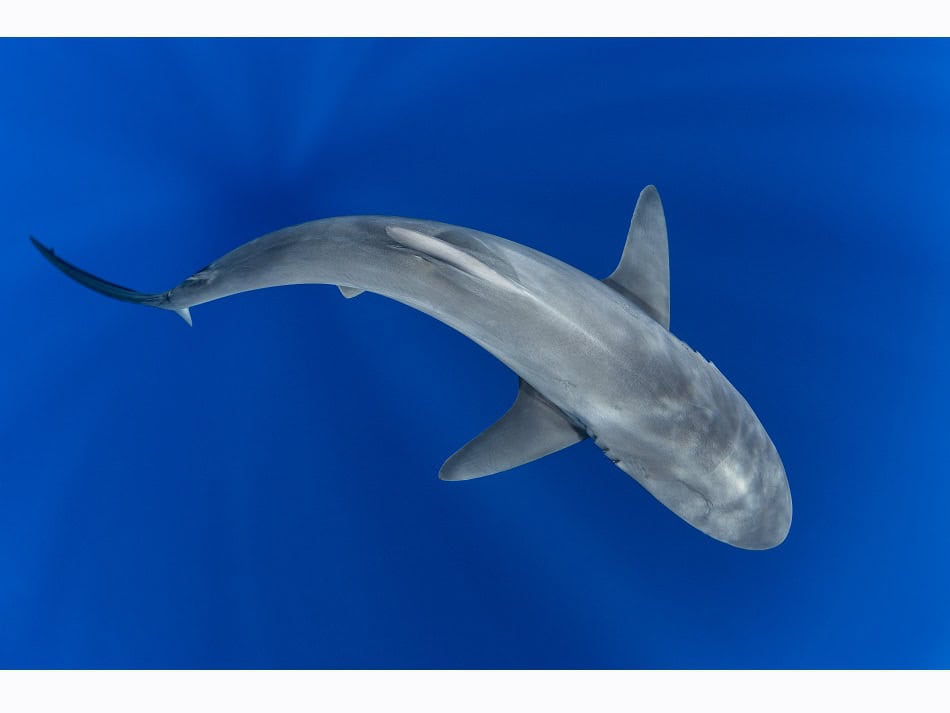
Understanding shark senses
To dive alongside sharks, it is essential to understand how they function. Let’s move away from the idea that sharks might perceive humans as we perceive them. Let’s embark on a sensory exploration to grasp the mystery surrounding their abilities.
The seven senses of sharks
Sharks have seven senses, two more than humans, finely tuned to the marine environment.
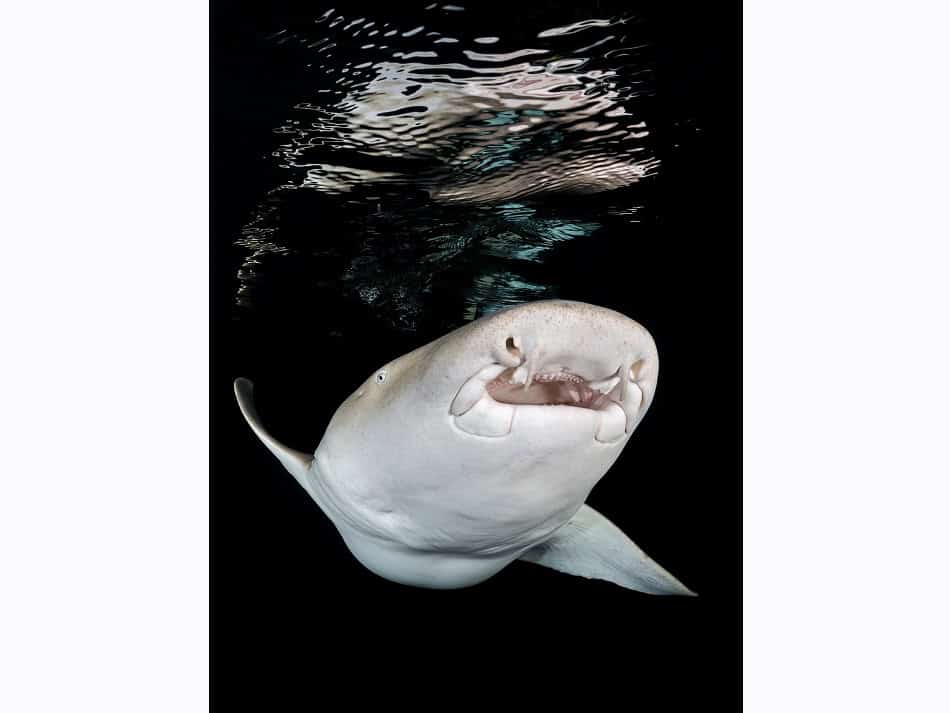
Long-range senses
- Hearing :
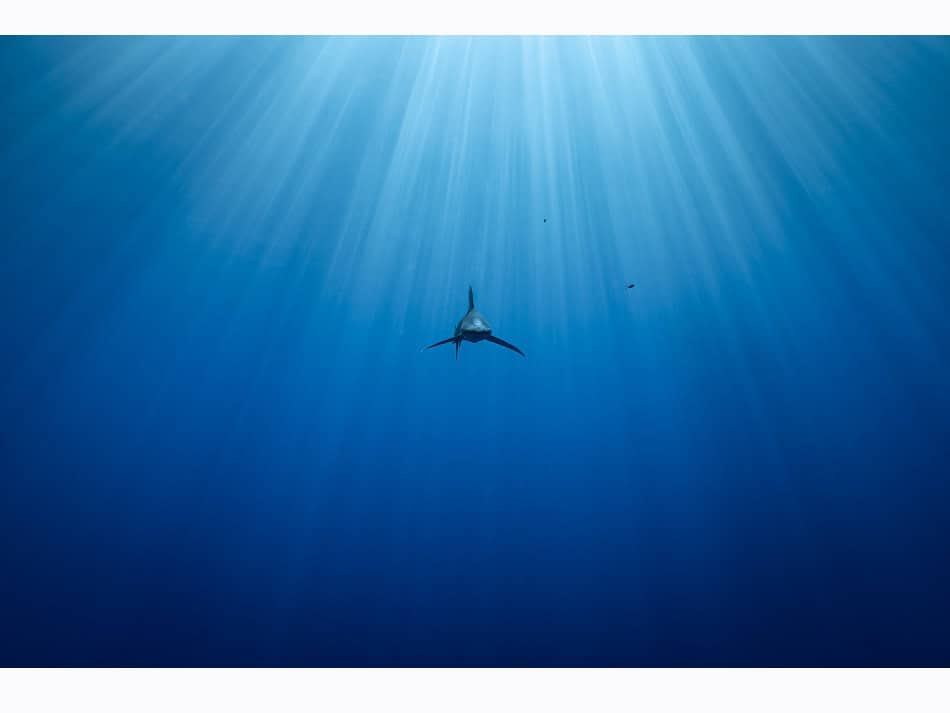
Sharks can hear sounds from a distance of more than 10 km. Before seeing a diver, a shark can already detect their approach by noise. The sounds of the underwater environment, such as the noise of boats, the splash of divers entering the water, or the sound of released bubbles, are stimuli that a shark perceives. This cacophony can generate various reactions: either approach or flee.
- The sense of remote touch :
The movements of divers create pressure waves in the water, which sharks can sense up to 200 meters. Depending on the frequency of these waves, a shark can interpret various messages. Short waves might indicate an animal in distress. Therefore, it is crucial for a diver to remain calm and control their movements to appear as neutral as possible.
- Smell :
Sharks are equipped with an exceptional directional sense of smell . They can follow a scent trail over 4 km. Humans, on the other hand, emit various odors, such as those from neoprene, sunscreen, and… urine. Studies reveal that sharks are not really attracted to human blood, but rather to pheromones. A cut or menstruation will not attract their interest, just as the electrolytes present in our urine.
Did you enjoy this excerpt?
Read the full article.
READING TIME ≈ 13 min
Dive into the heart of PLONGEZ! Magazine
To enjoy this article and its exclusive content, a modest contribution is required.