


The winners of the 13th Annual Ocean Art Contest were announced on January 16 in California. The prestigious international underwater photography competition, considered a global benchmark in the field, revealed the winners of its 2024 edition with a record participation of photographers from over 90 countries.
Fascinating shots, ranging from hypnotic macros capturing marine births to grandiose scenes of reefs and cenotes, testify to the beauty, fragility, and diversity of underwater ecosystems. These images inspire global marine conservation actions.
Discover all the winning photographs on the official website: Underwater Photography Guide.
The Best of the Competition
The highly coveted title of « Best in Show » was awarded to Eduardo Labat for his stunning photograph titled Dancing White Tips. Captured at Roca Partida, in the Revillagigedo Islands of Mexico, this black and white image shows a perfect choreography of white tip sharks moving in synchronization, like an aquatic ballet.
14 Categories to Stand Out
This year, the 14 competition categories offered exceptional visual treasures. Two stand out particularly:
- Black & White : A highly competitive category, highlighting the dramatic interaction between light and shadows in underwater photography.
- Conservation : The images presented in this category address crucial issues, such as capturing a shark caught in a ghost net, a poignant symbol of the damage caused by abandoned fishing gear. This theme aligns with the contest’s support of the organization Ghost Diving, dedicated to cleaning the oceans.
Also find images in the categories: wide angle, macro, animal behavior, portrait, cold water, nudibranchs, blackwater, digital art, fashion, and compact camera wide angle, macro, and animal behavior.
The Organizers and Jury of Ocean Art 2024
« This year’s Ocean Art contest is truly extraordinary ,” said Nirupam Nigam, contest organizer and president of Bluewater Photo, as well as editor-in-chief of Underwater Photography Guide. “ The talent and vision of our participants have set new standards in underwater photography. These images, far more than mere snapshots, touch millions of people worldwide and remind us of our collective responsibility in ocean conservation. »
This year’s jury included renowned experts such as Tony Wu, Marty Snyderman, and Mark Strickland. A special mention goes to Ipah Uid Lynn, Canon and Marelux ambassador, who brought an innovative perspective to the categories of Digital Art and Underwater Fashion.
Best in Show
“Dancing White Tips” – Eduardo Labat
« It was our last dive of the day, in the afternoon, as the sunlight was fading. At Roca Partida, most white tip sharks gather in small groups on the rocky formation. That afternoon, a large aggregation of white tips began to form, with dozens of sharks creating a tight group at an approximate depth of 8 meters. The sharks were not hunting and showed no aggressive behavior. After observing this rare event from the edge of the formation, I slowly ascended to hover just above. It was there that I took this photo. From above, the sharks seemed to swim synchronously in a circular motion. It was very beautiful to watch. I decided to use black and white for this photo, both for the geometric aspect of the formation in this style and for the natural contrast one can appreciate between the tips of the sharks and the rest of their bodies.
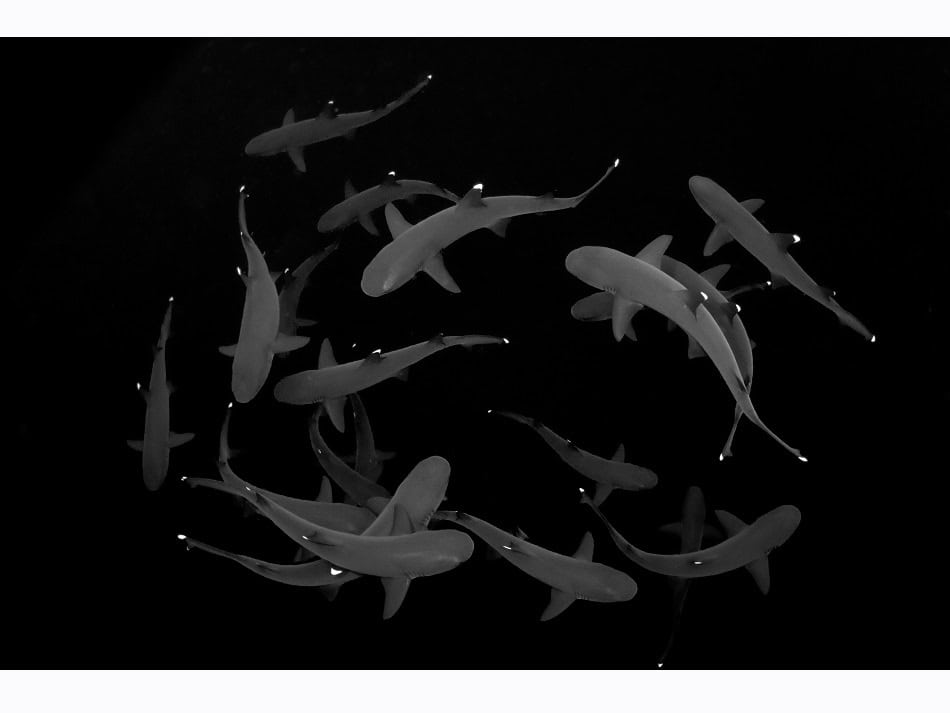
Best of show © Eduardo Labat / Ocean Art 2024
Wide Angle
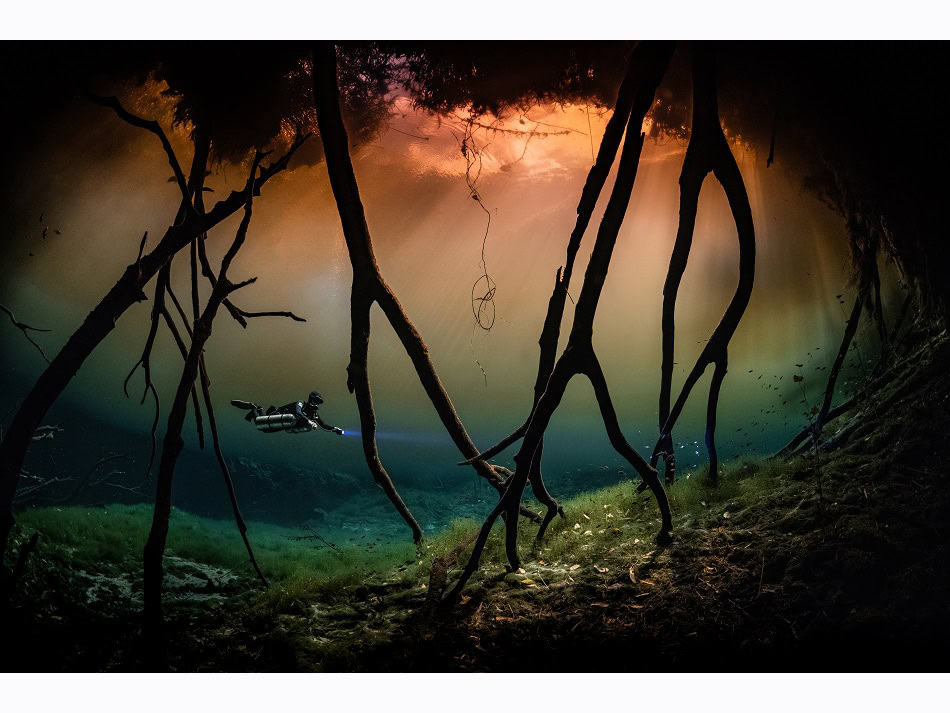
1st prize – Hwanhee Kim
« Light » is nature’s most beautiful gift. The week before this photo was taken, heavy rains fell on Cancun. Sediments and nutrients from the nearby sewage treatment plant were carried into the cenote, creating amazing colors due to the difference in concentration. Rain is usually a challenge for underwater photography, but in this case, it produced vibrant hues rarely seen underwater. The sunlight, with its strong vitality, pierced through the reddish waters, revealing a magical moment. The light served as a link between the land and the underwater world, as well as between nature and man. I felt privileged to witness this beauty and lucky to document it.
2nd prize – Julian Gunther
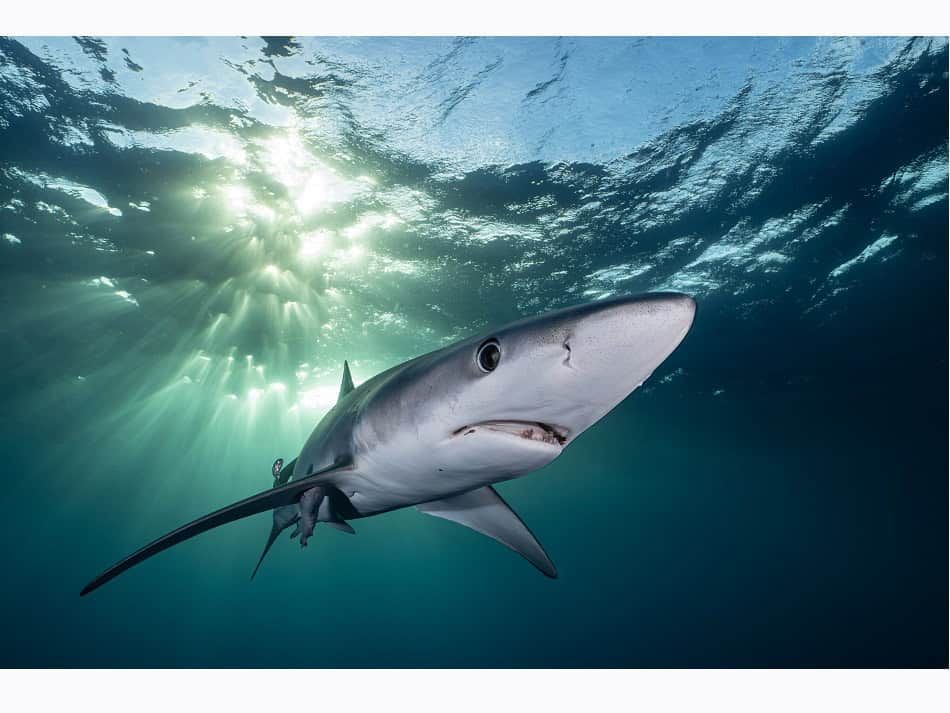
3rd prize – Todd Aki
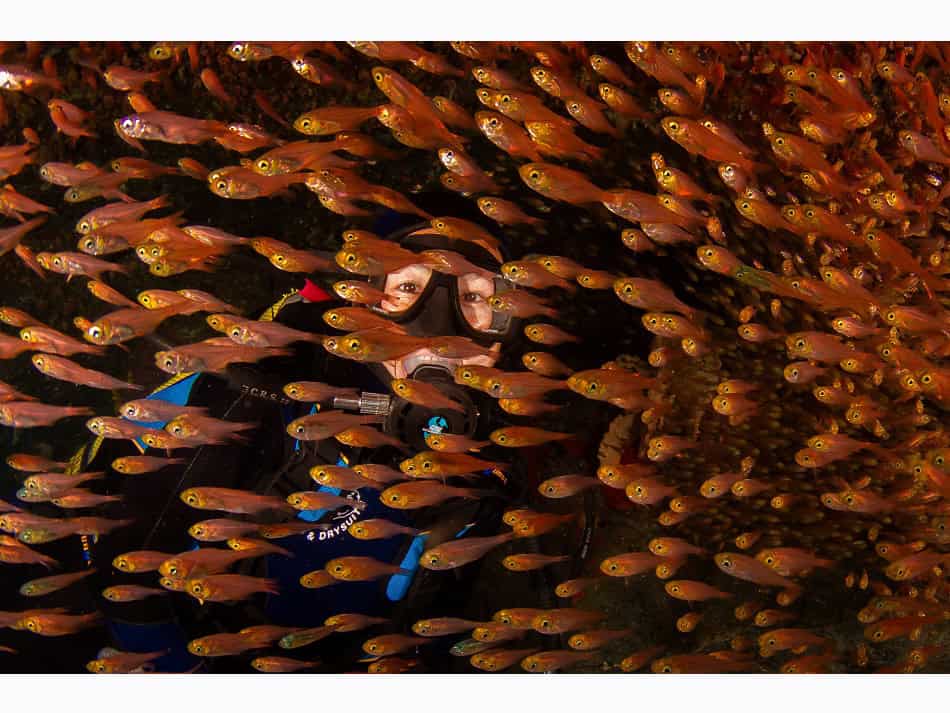
4th – Mehmet A. Gungen 5
5th – Julian Gunther
Honorable mention – Eduardo Acevedo
Honorable mention – McKenzie Spalding
Macro
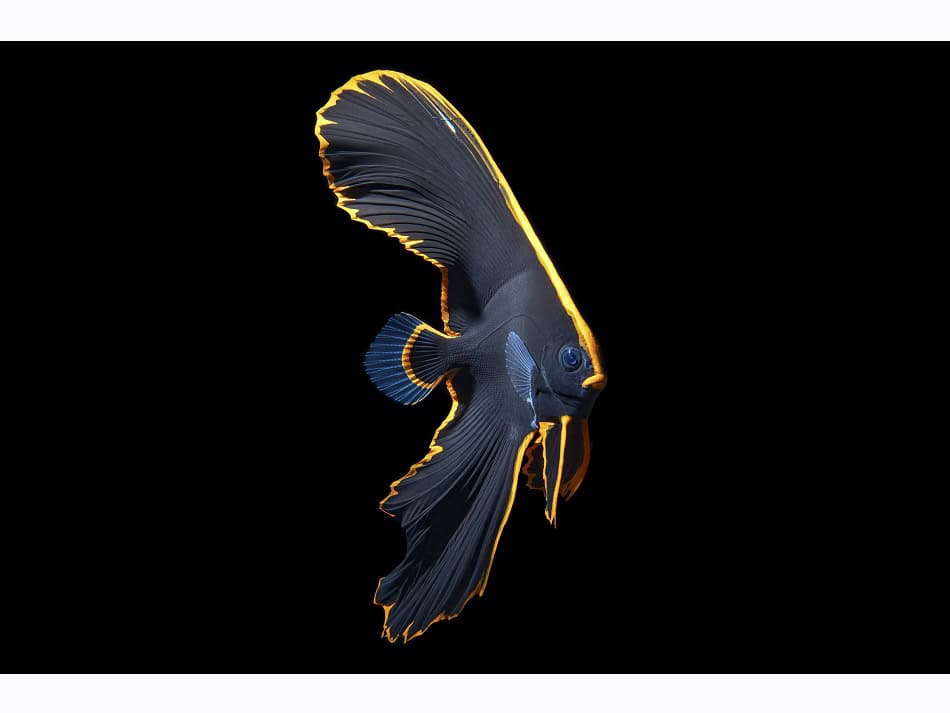
1st prize – Adam Martin
This juvenile Platax was found at a depth of 25 meters in Tulamben, Bali, Indonesia. A snoot was used to try to isolate the flash from the subject, not overly lighting the background. The lighting highlights the texture and structure of the fish’s body, emphasizing its graceful lines and vivid coloring.
2nd prize – Imogen Manins
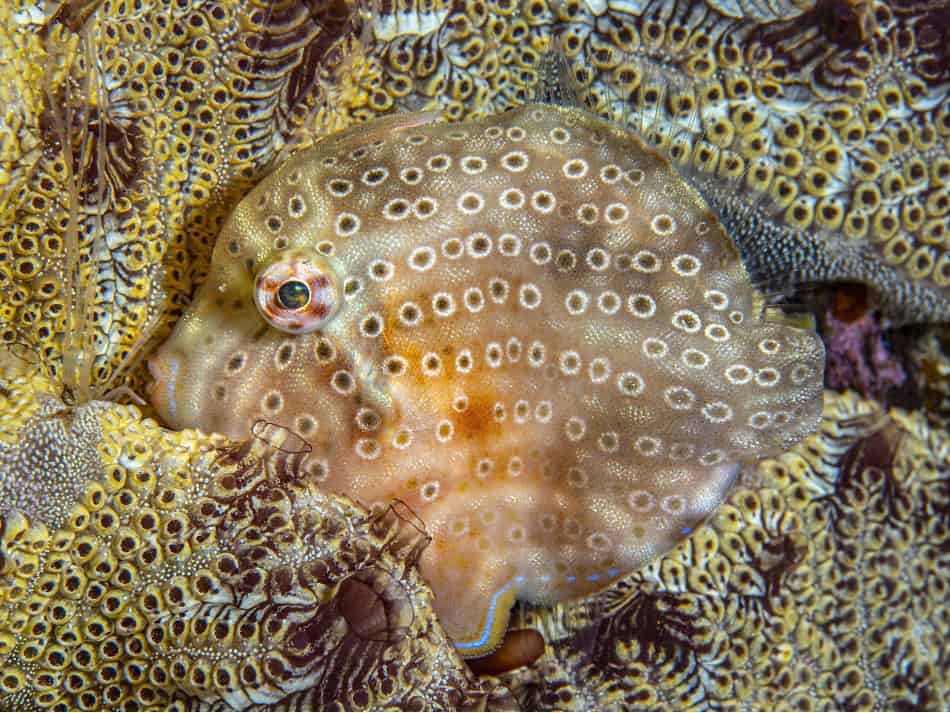
3rd prize – Claudio Zori
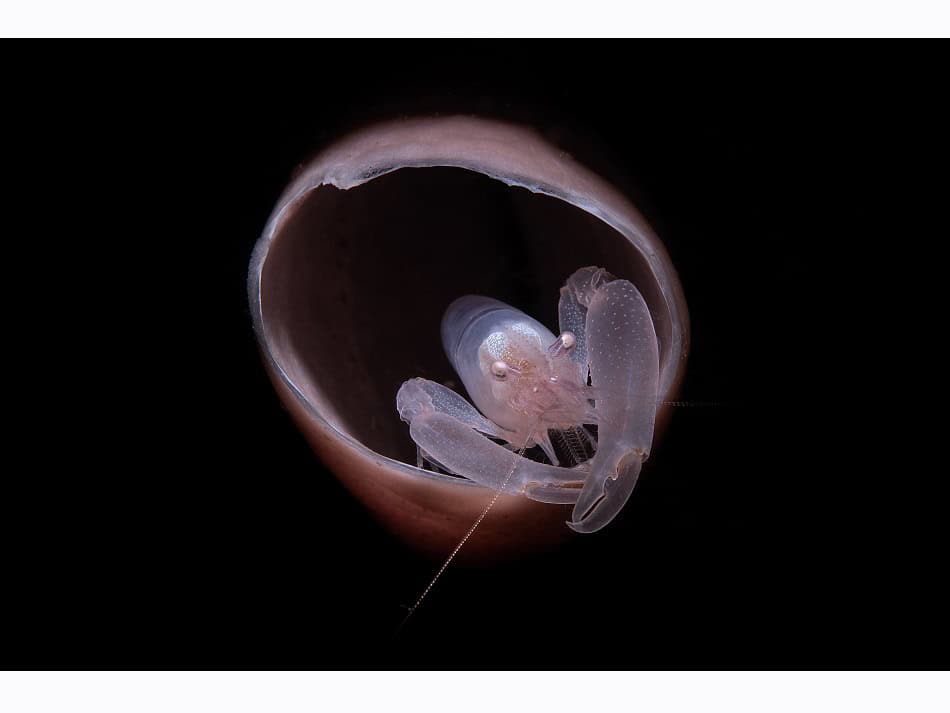
4th – Jeongin Kim
Honorable mention – Dr. Tom Shlesinger
Honorable mention – Suliman Alatiqi
Animal Behavior
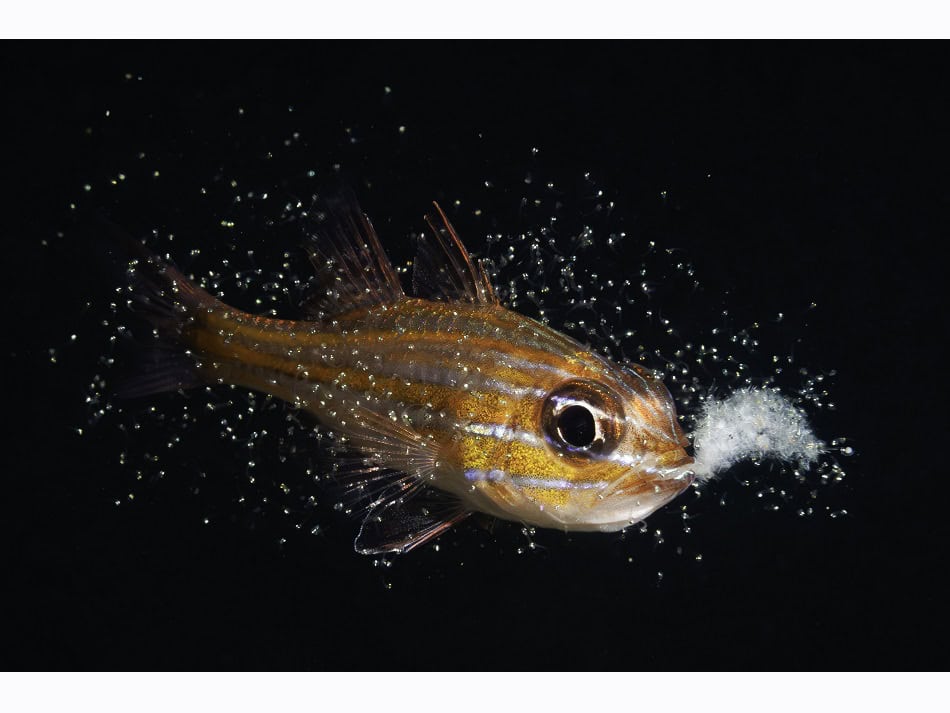
1st prize – Yoichi Sato
I was fortunate to capture the irreplaceable moment of tiny creatures hatching. On a summer night, while most creatures were soundly asleep, a Ostorhinchus properuptus male, having completed a week-long incubation period, gathered all his energy and, with a trembling motion, released a swarm of larvae from his mouth. To minimize stress, I observed the process under a dim red light. At the moment of hatching, I used red lighting with a special setting ensuring that the image captured the moment as naturally as possible.
2nd prize – Reiko Takahashi
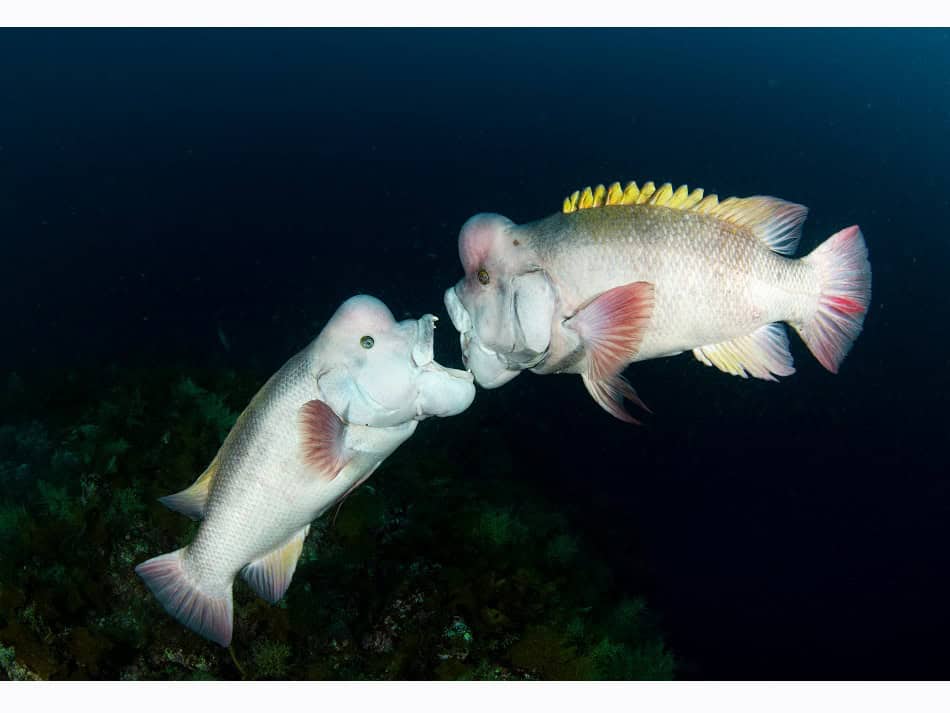
3rd prize – Kirsty Andrews
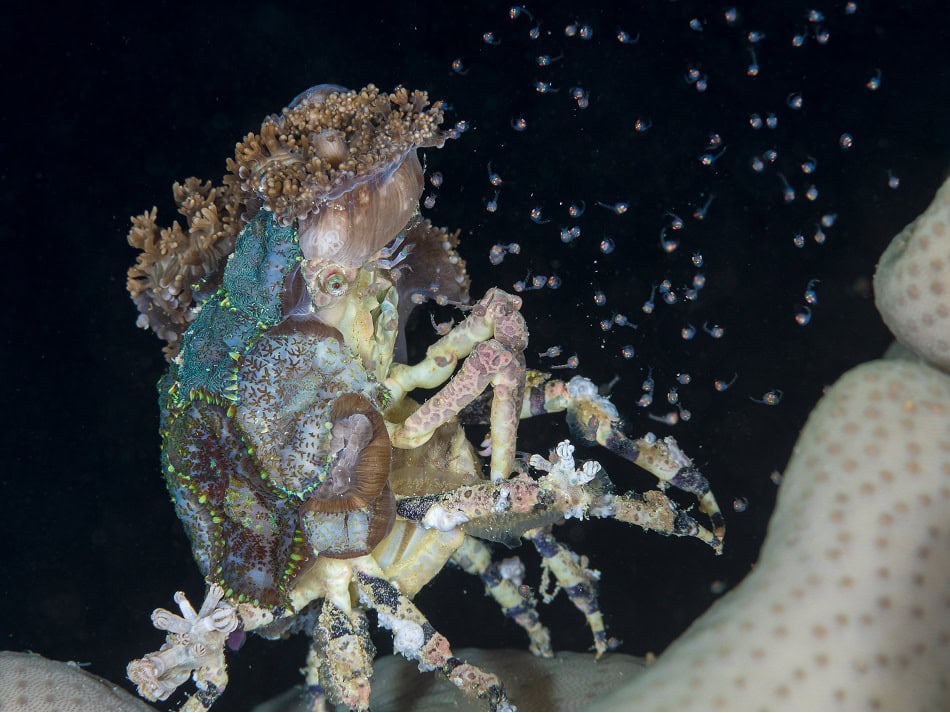
4th – Suliman Alatiqi
5th – Keigo Kawamura
Honorable mention – Ines Goovaerts
Honorable mention – Shuo-Wei Chang
Portrait
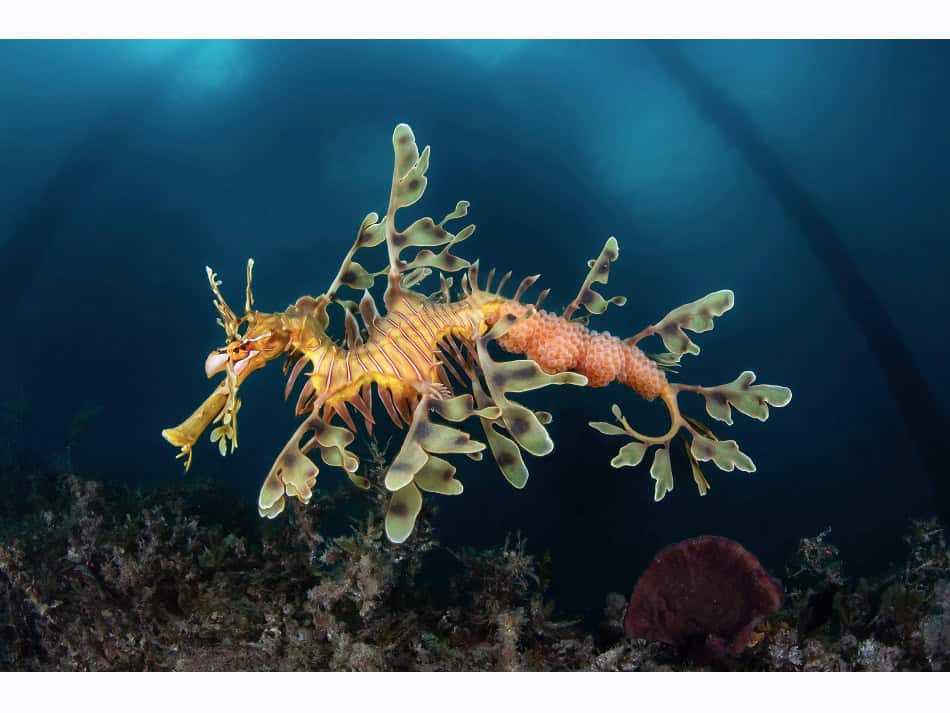
1st prize – Stefano Cerbai
I was on honeymoon in Australia, and among the many incredible places we visited, there was southern Australia, where I was lucky enough to dive and search for the elusive sea dragon – an animal I had dreamed of seeing for years. I was incredibly fortunate not only to find and observe one but also to photograph it carrying its eggs, which it was protecting on its back, near its tail. This unforgettable experience was truly a dream come true.
2nd prize – Eduardo Acevedo
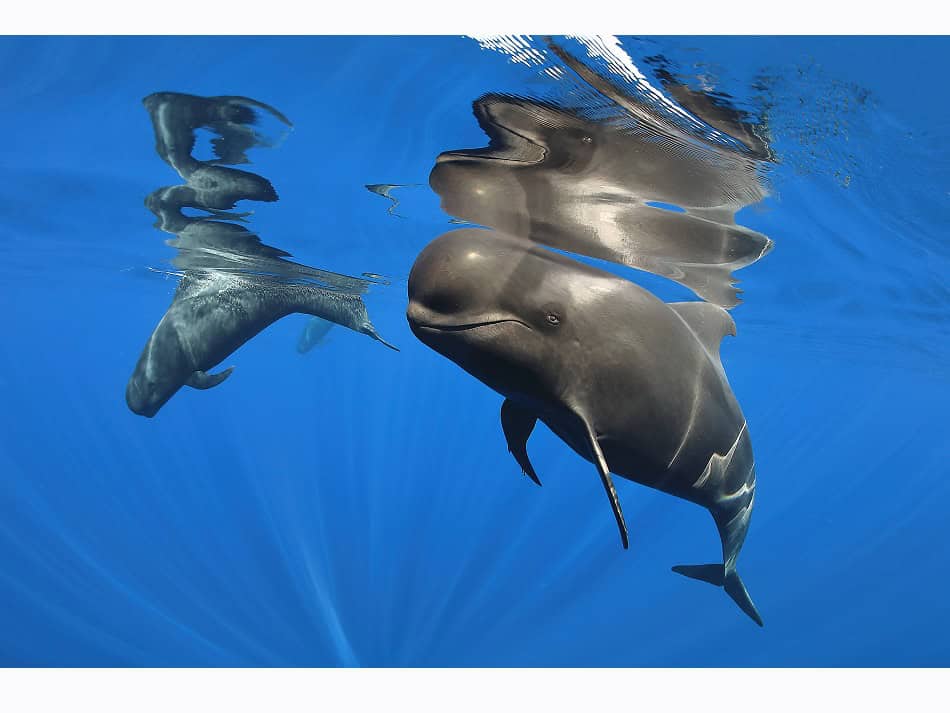
3rd prize – Martin Broen
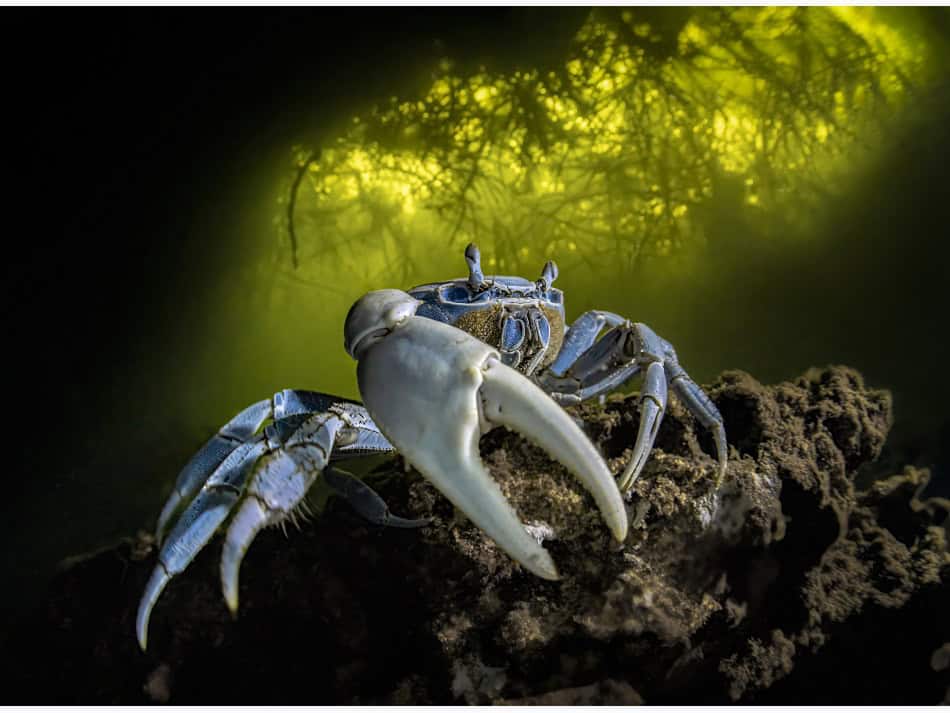
4th – Ariel Gliboff
5th – Ilaria Mariagiulia Rizzuto
Honorable mention – Olivier Clement
Honorable mention – Földi László
Cold Water
1st prize – James Emery
During a dive in Monterey, I was photographing the fields of anemones when I noticed a cormorant swimming toward us. To my great surprise, it began pecking at my wife’s head, who wasn’t fazed. I quickly swam to take a few photos, then the cormorant’s attention turned to the reflection in my camera’s viewport. It stayed with us for about 20 minutes, swimming up for air before returning to observe us. It was a unique and playful moment that gave me insight into the cormorant’s curiosity, and I was lucky to capture it.
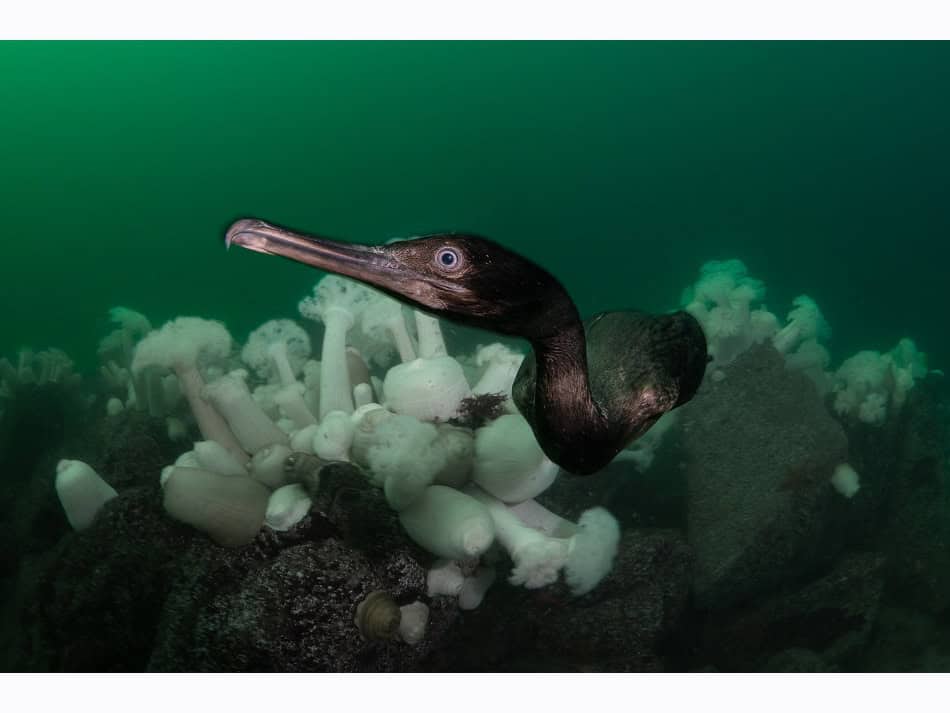
2nd prize – Kat Zhou
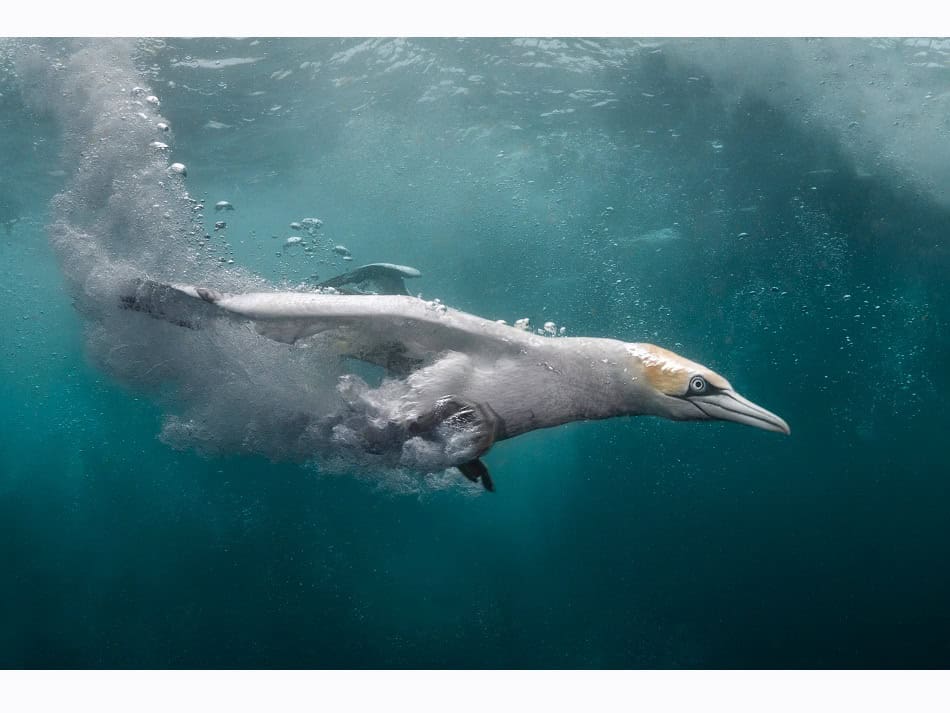
3rd prize – Jeongin Kim
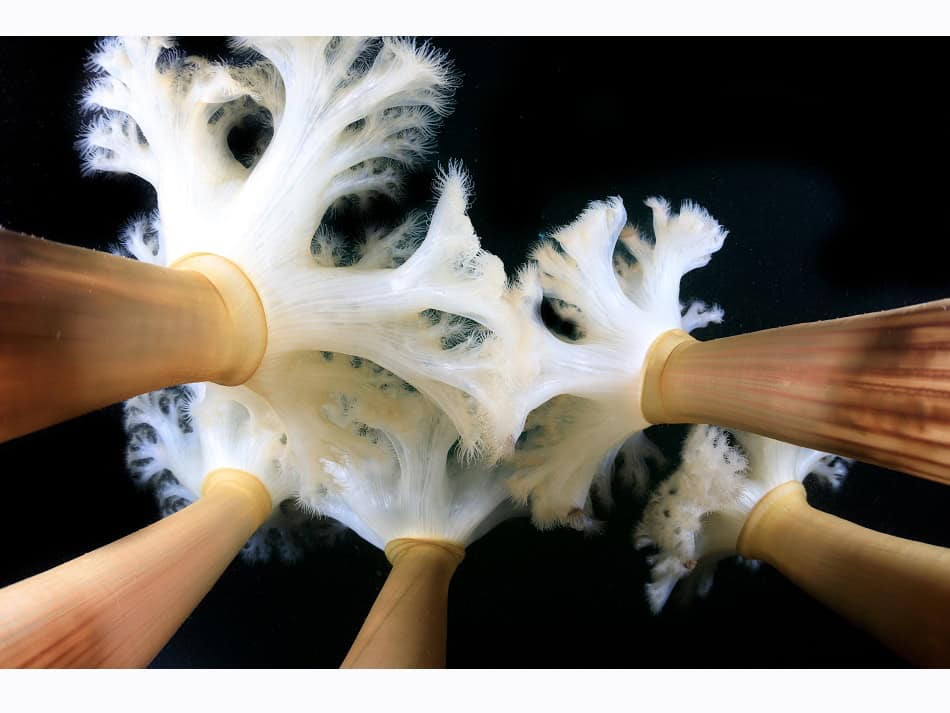
Honorable mention – Massimo Zannini
Honorable mention – Jill Crosby
Nudibranchs
1st prize – Borut Furlan
It was my first visit to Vancouver Island in October 2024 and my first visit to Canada. I didn’t have much knowledge about the area; therefore, I decided to use a wide-angle zoom for most of my dives. It turned out to be a good idea, as I got the chance to photograph a wide selection of subjects (except the tiniest ones). Reaching the kelp forest with the hooded nudibranchs (Melibe leonina), I was simply shocked. I had never seen so many nudibranchs in one place. There were thousands, and they were everywhere—on the bottom, on the kelp, and even swimming. I took hundreds of images of these nudibranchs, and this one is part of that series.
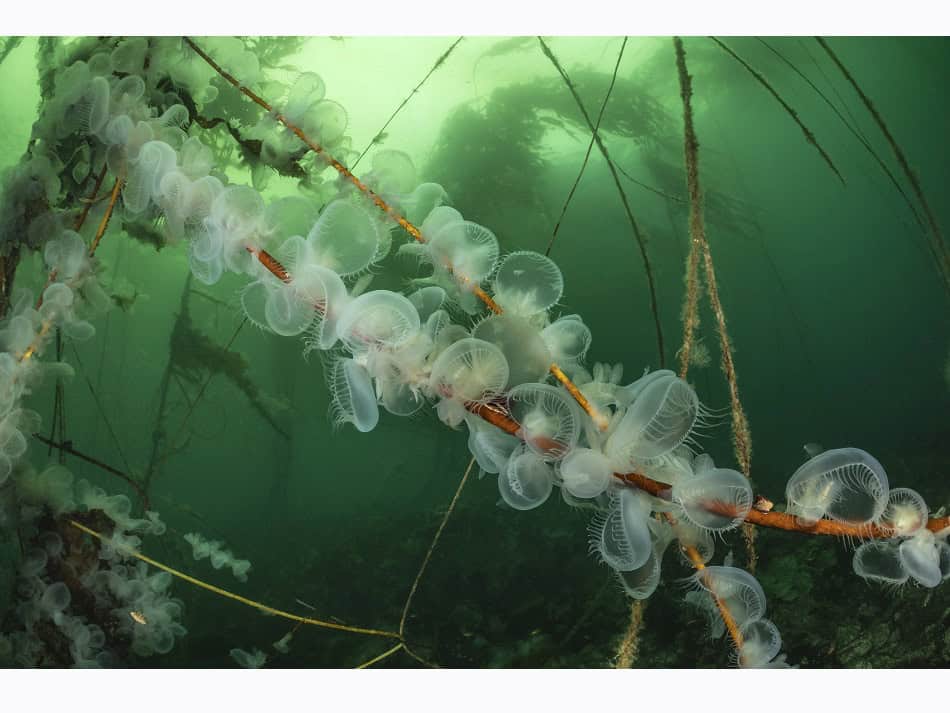
2nd prize – Jenny Stock
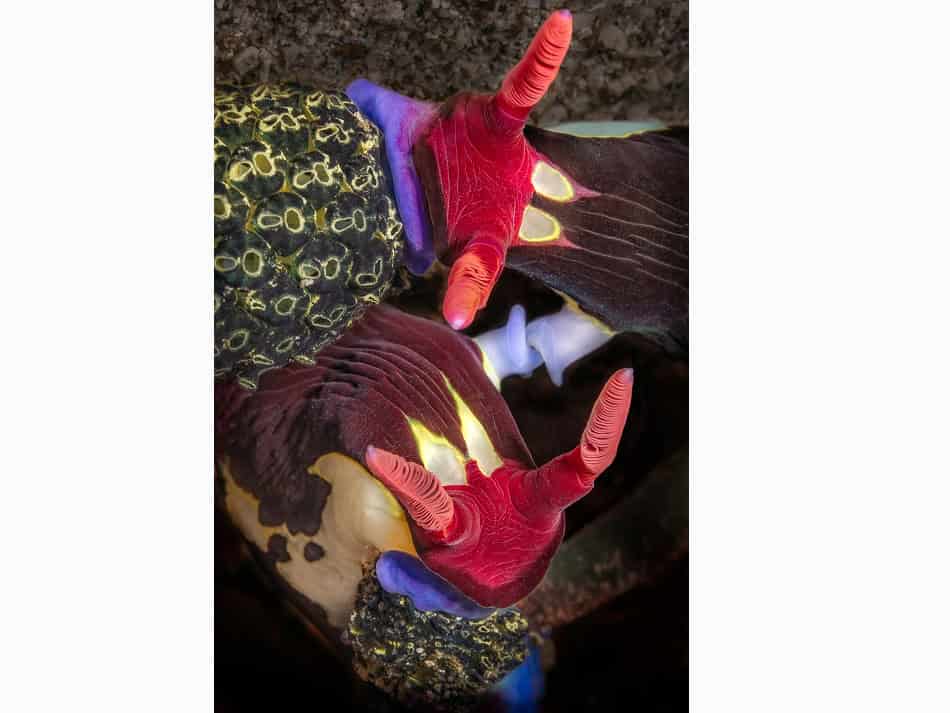
3rd prize – David Pleuvret
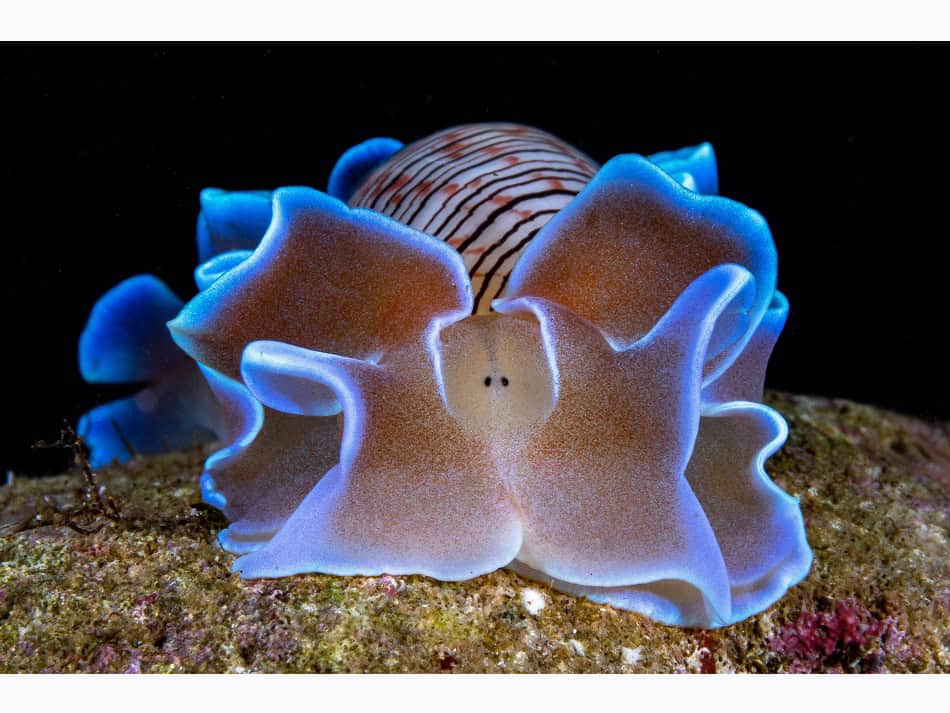
4th – Ken Keong Chong
Honorable mention – Mark Chang
Blackwater
1st prize – Kyungshin Kim
I took this photo during a blackwater dive in Anilao last November. I first noticed two squids stuck together and assumed they were mating. However, upon closer inspection, I realized one squid was eating the other, smaller one. These animals are known for their cannibalism, but it’s rare to witness them eating each other during a blackwater dive. I followed and observed them closely, managing to take a few photos. After about ten minutes, the color of the smaller squid, which was being devoured, started to pale. Eventually, it released a jet of black ink. Shortly thereafter, the squid that had finished eating slowly disappeared into the distance, while the squid that had become its prey sank into the dark depths of the sea.
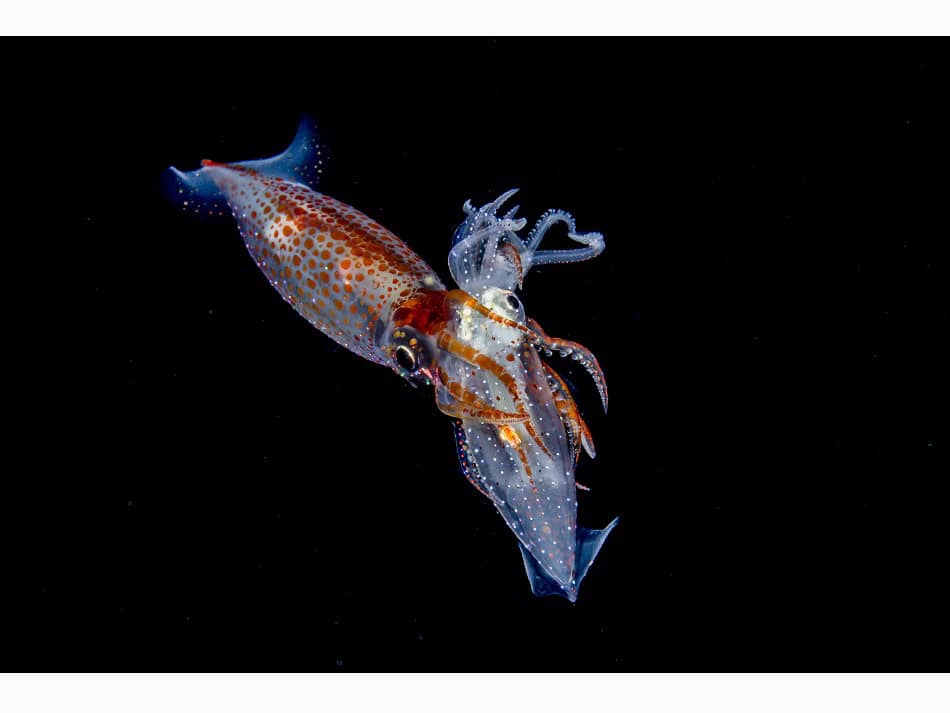
2nd prize – Kat Zhou
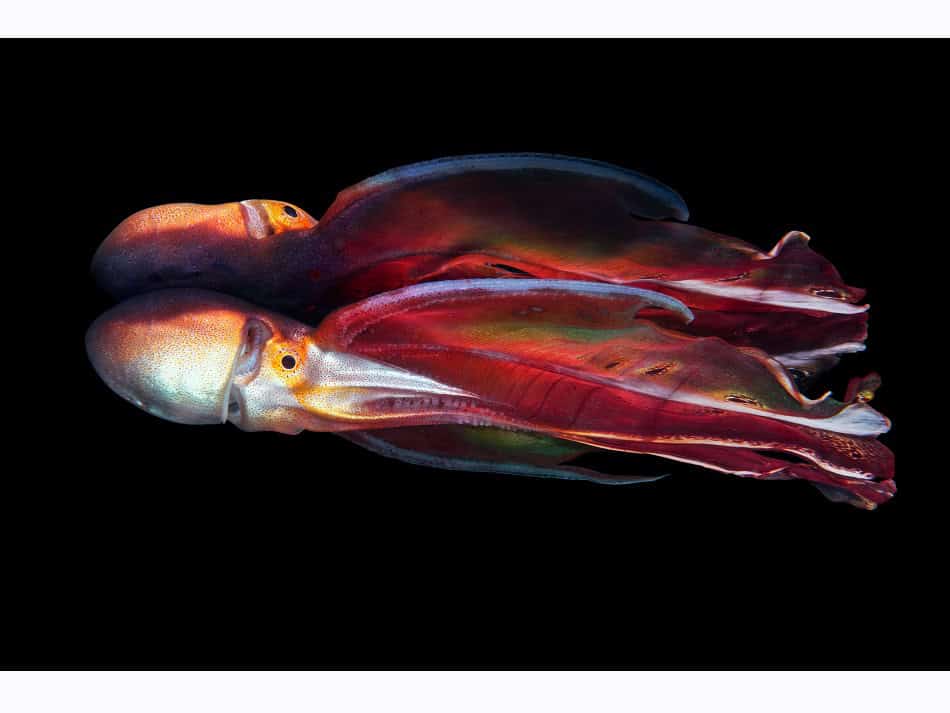
3rd prize – Yoichi Sato
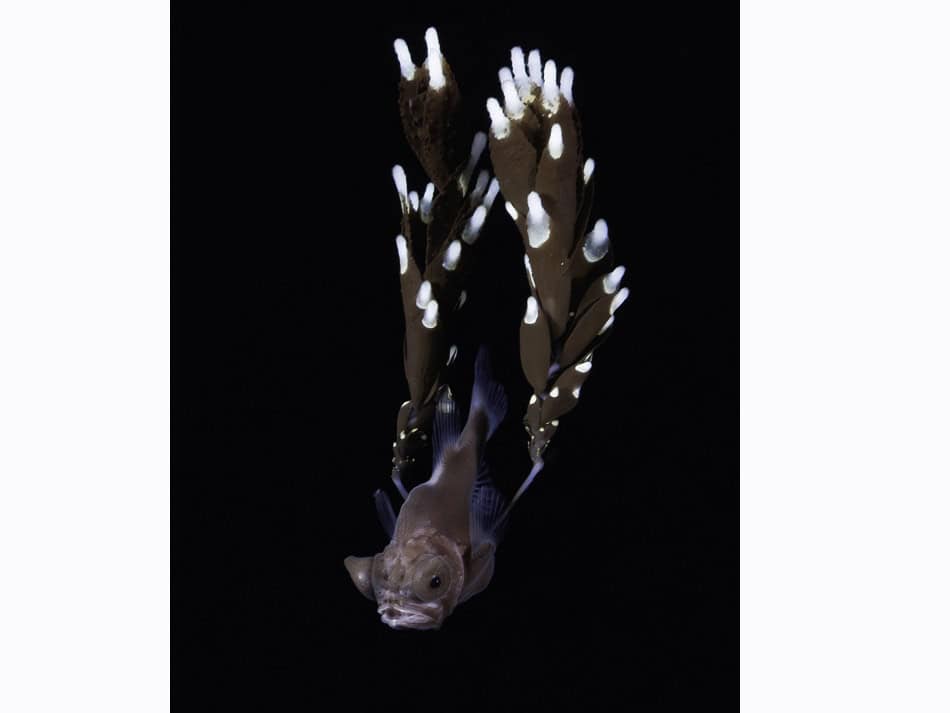
4th – Steven Kovacs
Honorable mention – Enrico Somogyi
Honorable mention – Bo Pardau
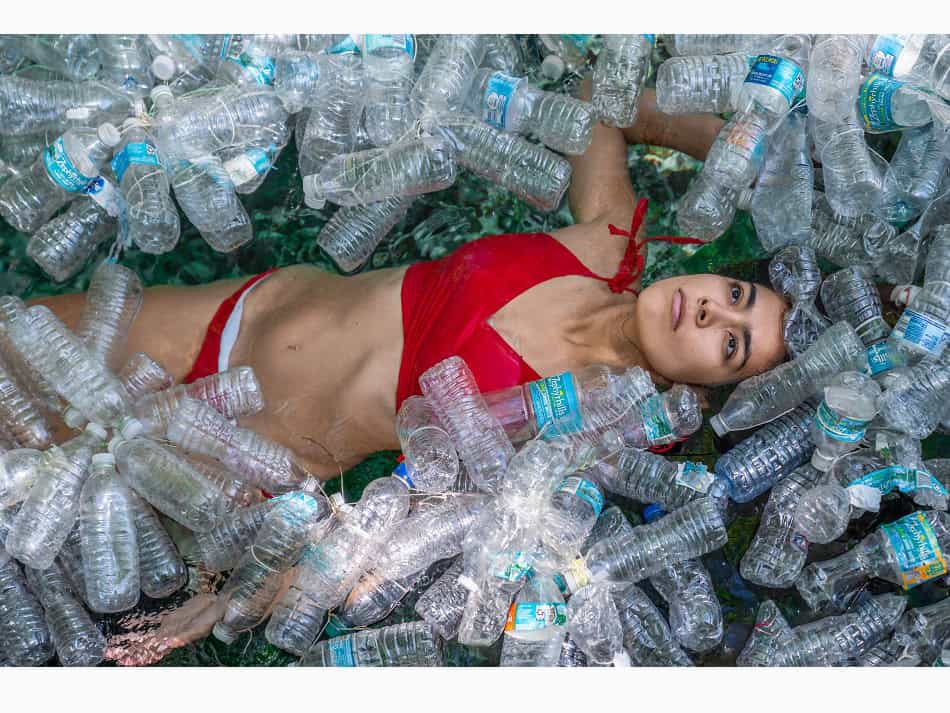
Conservation
1st prize – Kimber Greenwood
This image was created as part of a campaign by the Florida Springs Council to raise awareness about the impact of water bottling on local Florida springs. More than 300 water bottles are produced every minute in bottling plants, like those located minutes away from the spring where this image was taken. Not only do these bottles end up in landfills and introduce microplastics into our environment, but water bottling reduces the water from Florida’s underground aquifers, lowering water levels and flow, leading to the deterioration of springs and rivers. The bottles used for this image were provided by a local environmental activist who saved them from a local bottling plant’s production line. The images created for this campaign are used in ongoing social media and advertising campaigns encouraging people to choose reusable water bottles instead of plastic bottles that harm Florida’s local environment in many ways.
2nd prize – Tom Vierus
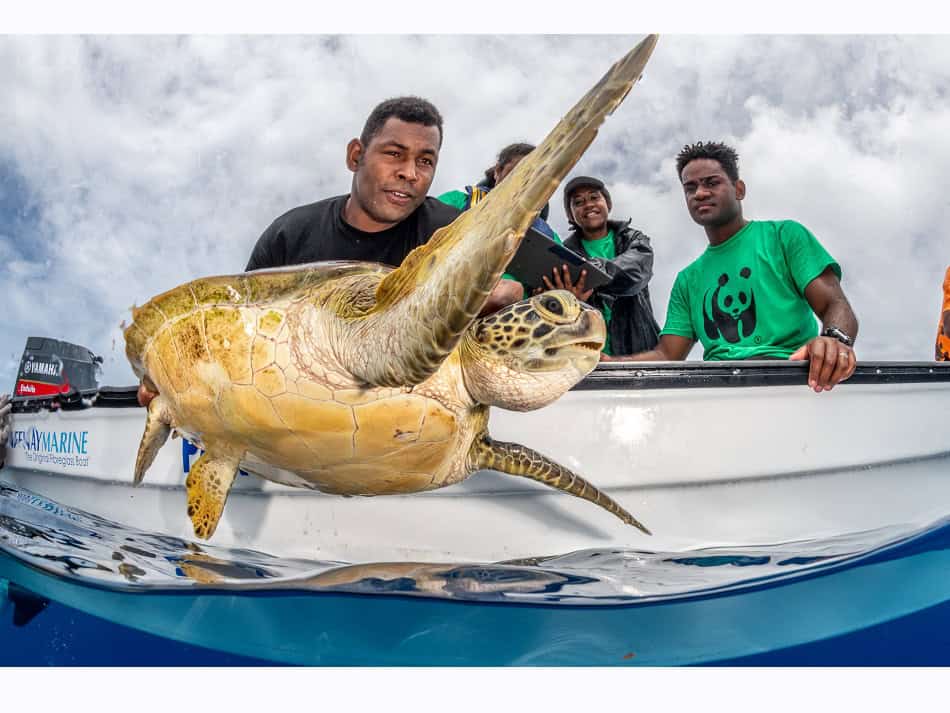
3rd prize – Dawn McDonald
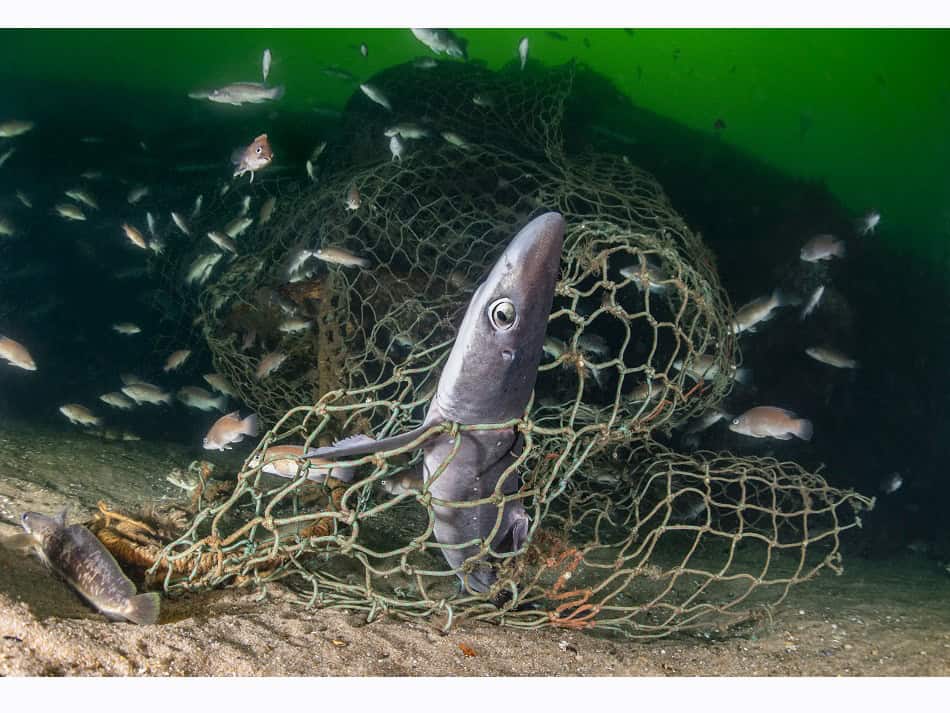
Honorable mention – Olivier Clement
Digital Art
1st prize – Unkoo Kim
The sea of Seogwipo, where I took this image, is a place dear to me, filled with warmth and precious memories. However, it is far from an ideal environment for underwater photography. The water is often murky, and currents are strong. While other places might face similar challenges, Seogwipo’s waters have been further affected by rising sea temperatures, a lack of subjects, and other factors making photography particularly difficult. I wondered how to create images that truly capture the beauty of the marine creatures inhabiting Seogwipo’s waters. The idea of using light as a background to highlight these creatures came to mind, and I set out to convey the breathtaking beauty hidden in Seogwipo’s challenging waters. I took this photo during the best season of the year. To capture a frontal image of the main subject, the blue hanagobi, I spent countless hours observing and approaching it. Many shots had to be discarded along the way. Imagining the dynamic interaction of the blue hanagobi with the bokeh lights, I used tools I had prepared in advance and a vintage lens modified to combine multiple exposures with bokeh images for a firework effect.
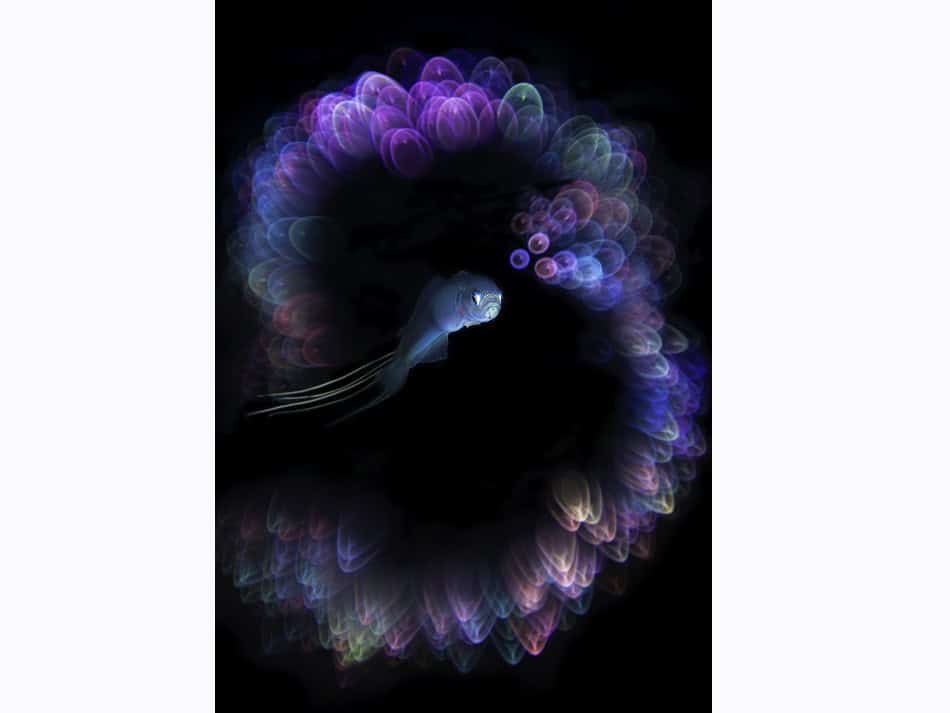
2nd prize – Jenny Stock
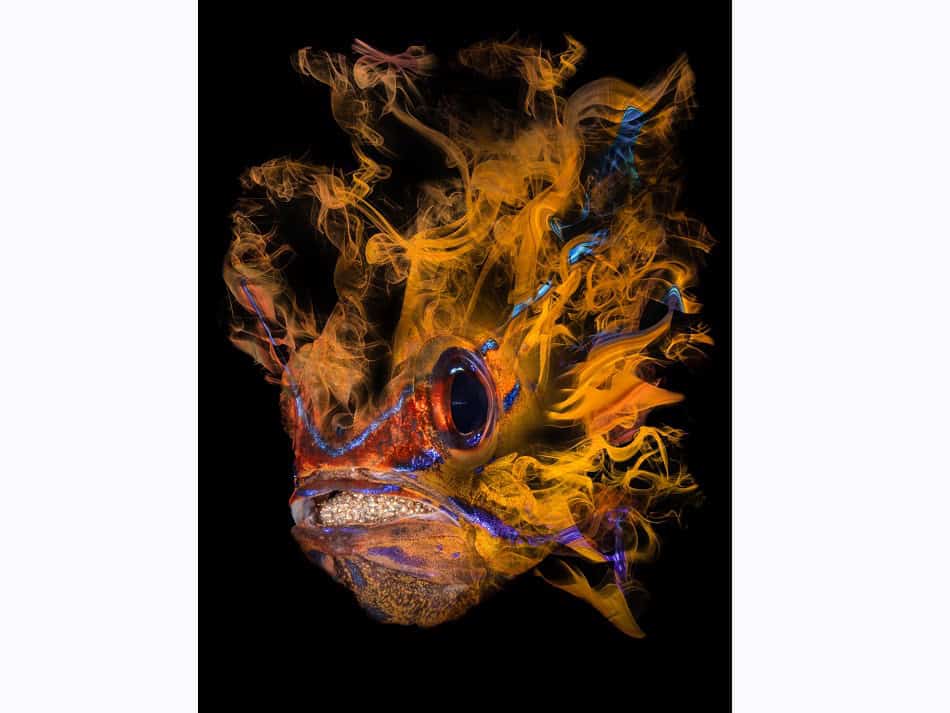
3rd prize – Lorenzo Terraneo
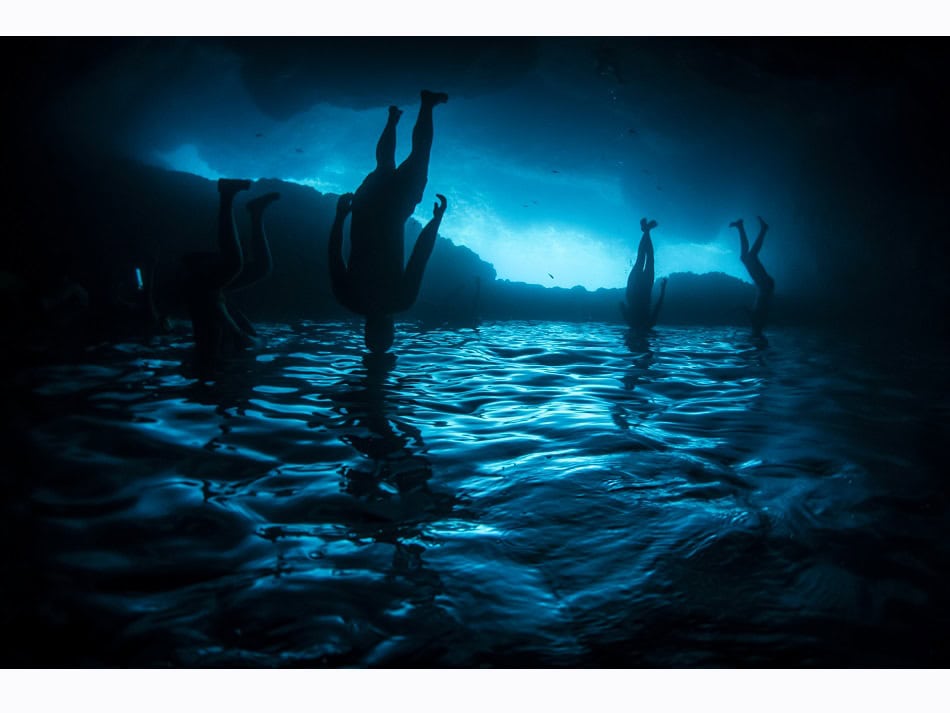
Black and White
1st prize – Eduardo Labat
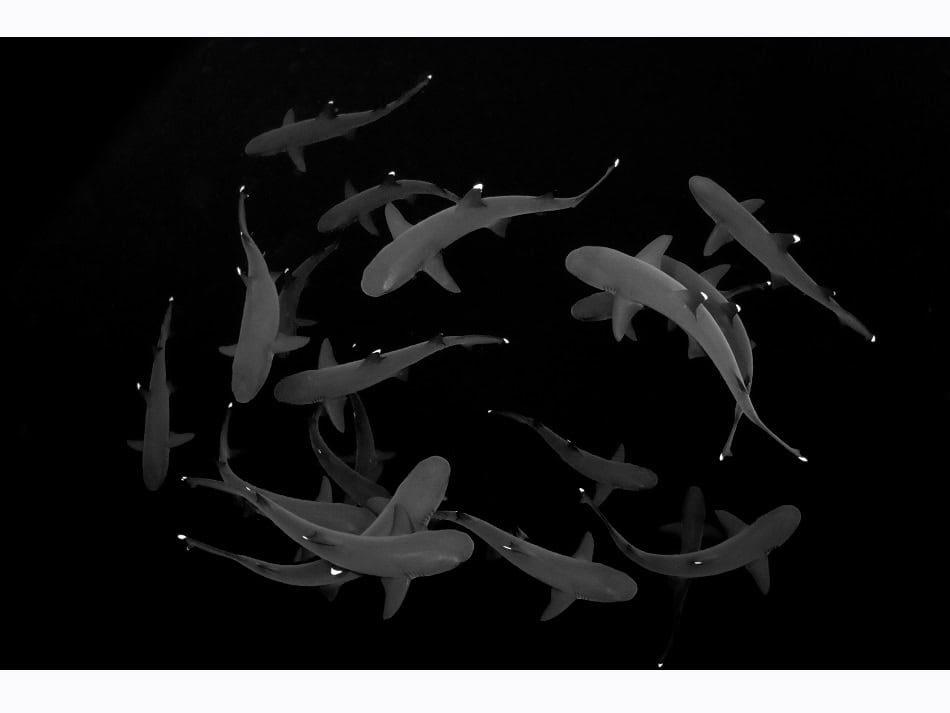
2nd prize – Sylvie Ayer
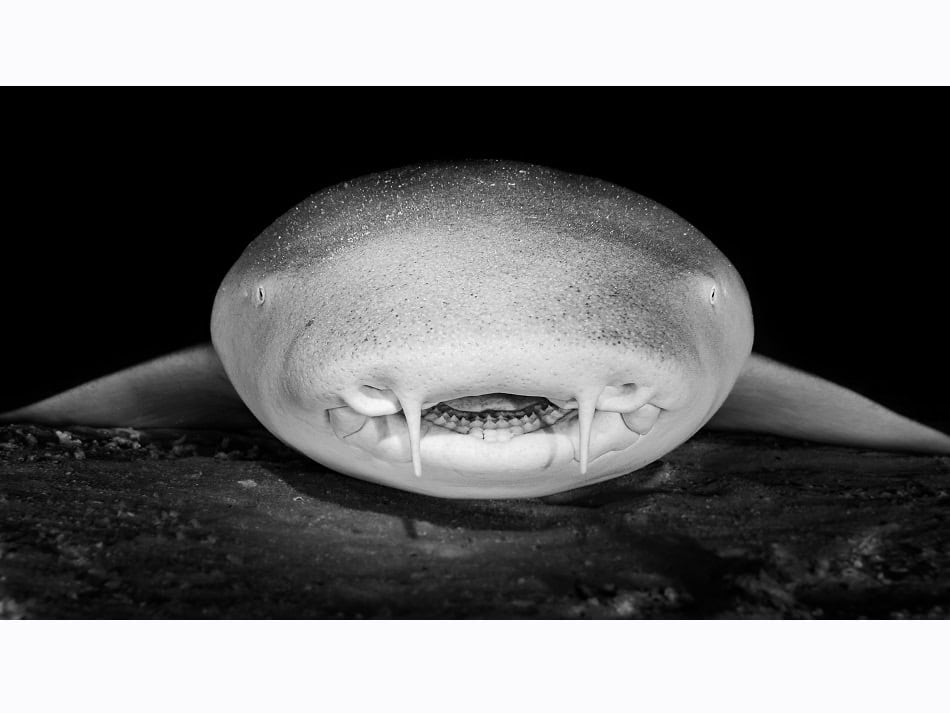
3rd prize – Borut Furlan
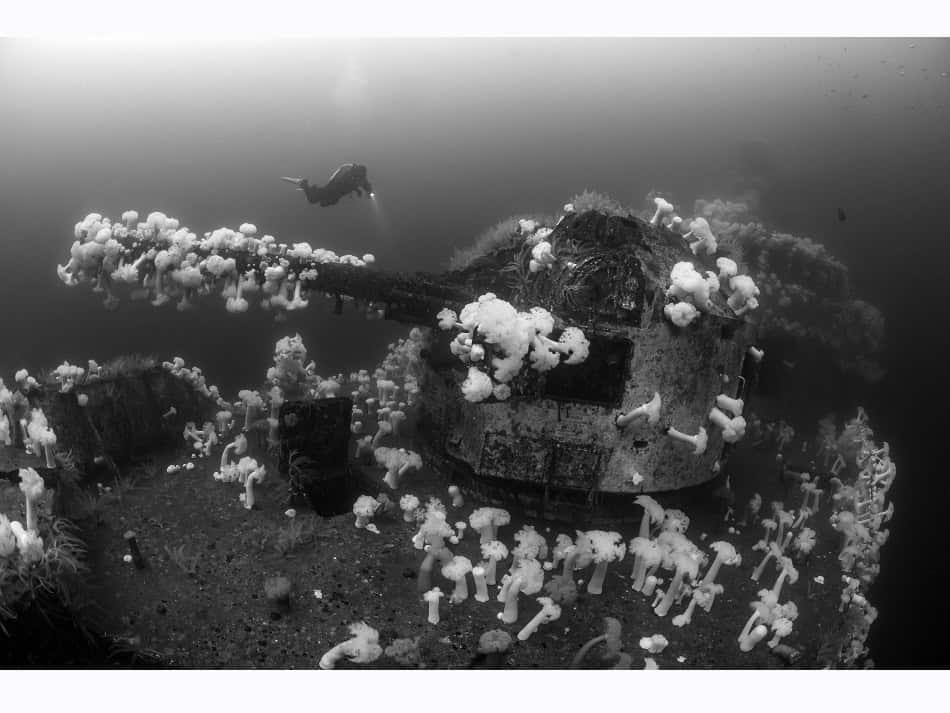
Honorable mention – Xaime Beiro
Honorable mention – Brittany Ilardi
Fashion
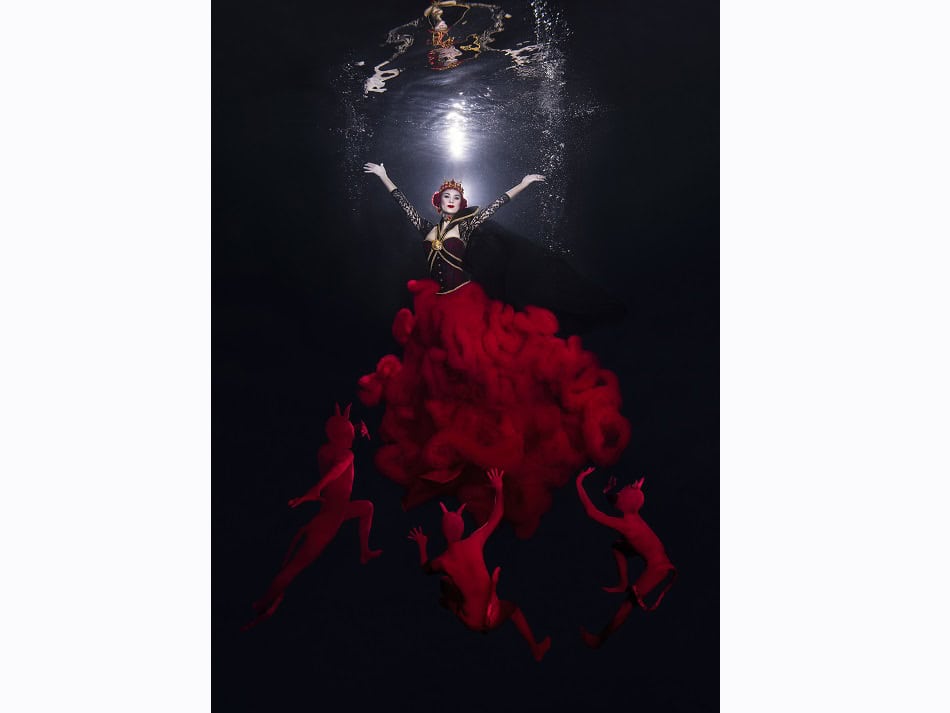
1st prize – Lucie Drlikova
Long live the Queen: Underwater photography of the Evil Queen, lifted by her demons, in the Snow White tale. This photo is part of my personal project Once Upon a Dream in Waterland, which I have been working on for 7 years. This project represents a return to my childhood dreams. All costumes, scenes, and props are handmade by myself.
2nd prize – Anna Aita
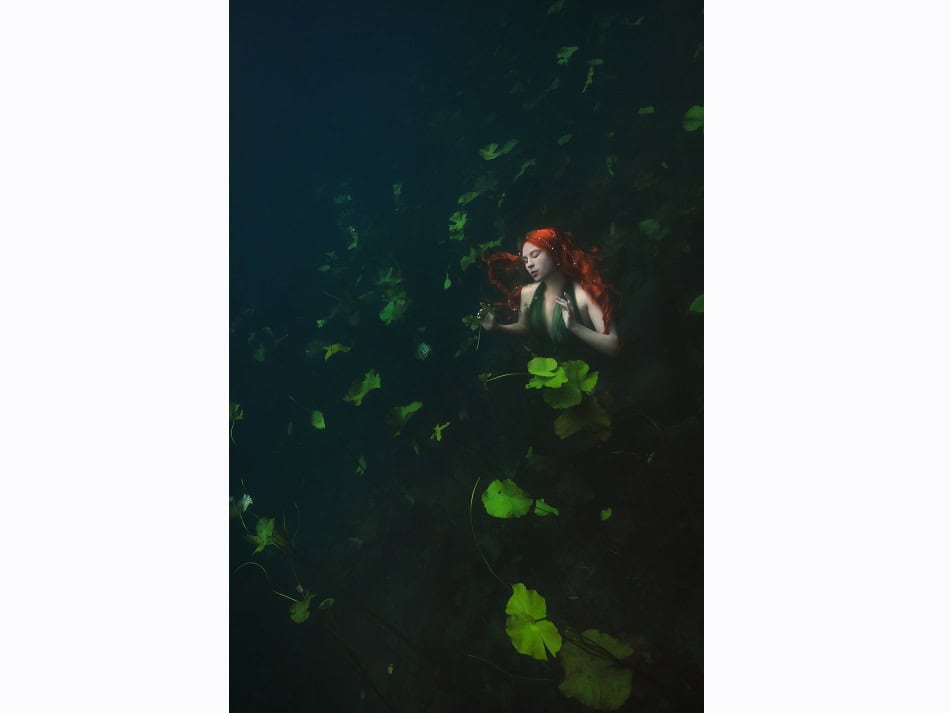
3rd prize – Claudia Weber-Gebert
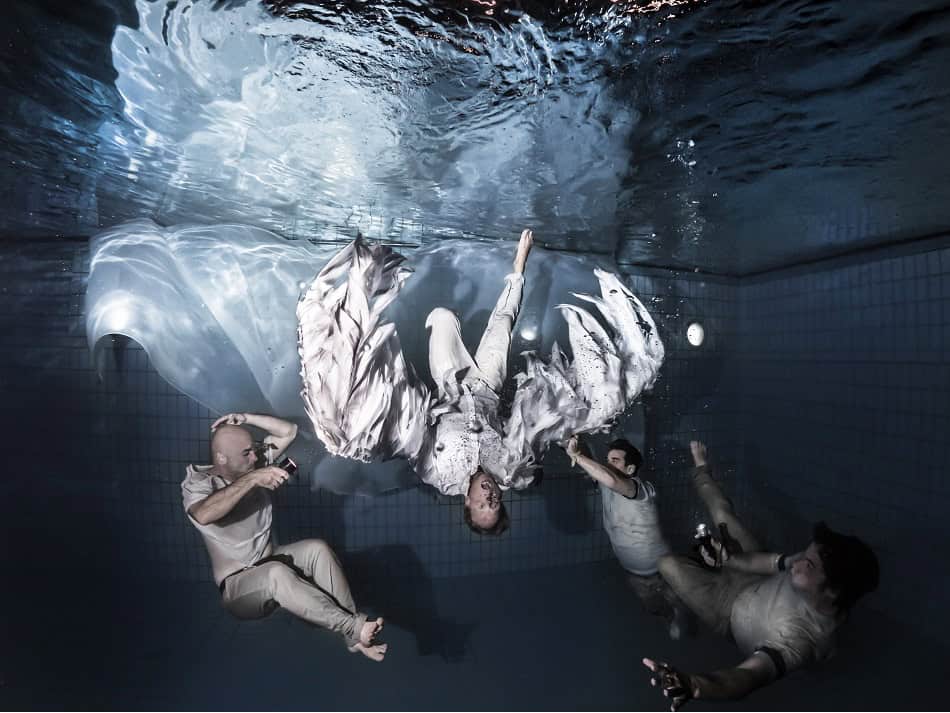
Compact Wide Angle
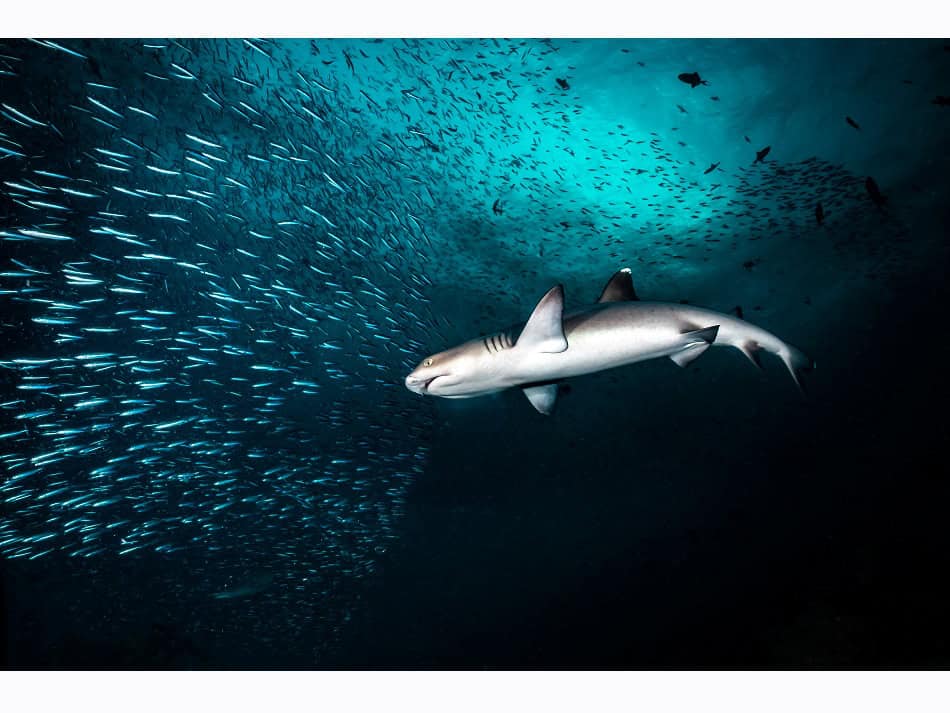
1st prize – Marco Lausdei
We are at one of the world’s most famous night dive sites: Maya Thila. I noticed a white tip reef shark moving cyclically, visibly attracted by a school of silver fish along the drop-off. Using a nearby rock for cover, I carefully hid and minimized my bubbles, trying to get as close as possible without disturbing the predator’s behavior. Once the shark became accustomed to my presence, I waited for one of its movements to bring it within flash range. I timed the shot to capture not only the shark but also the avoidant movement of the potential prey swarm. The photo was taken from below, intentionally including the sea’s surface to add depth and dimension to the image. Understanding the subject’s habits and behavior was key to the success of this shot.
2nd prize – Enrico Somogyi
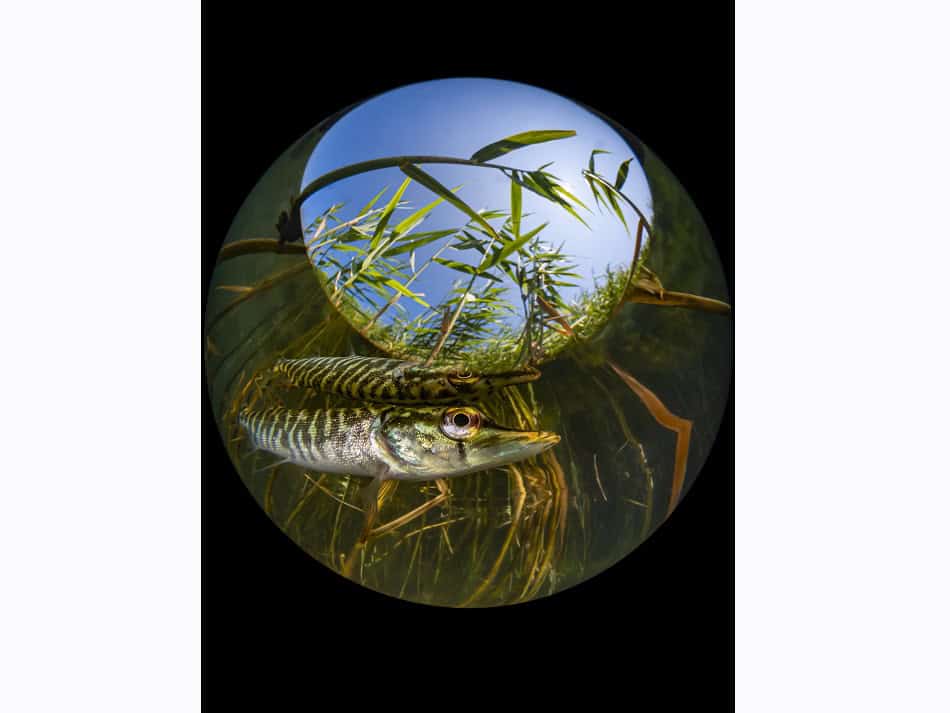
3rd prize – Marco Lausdei
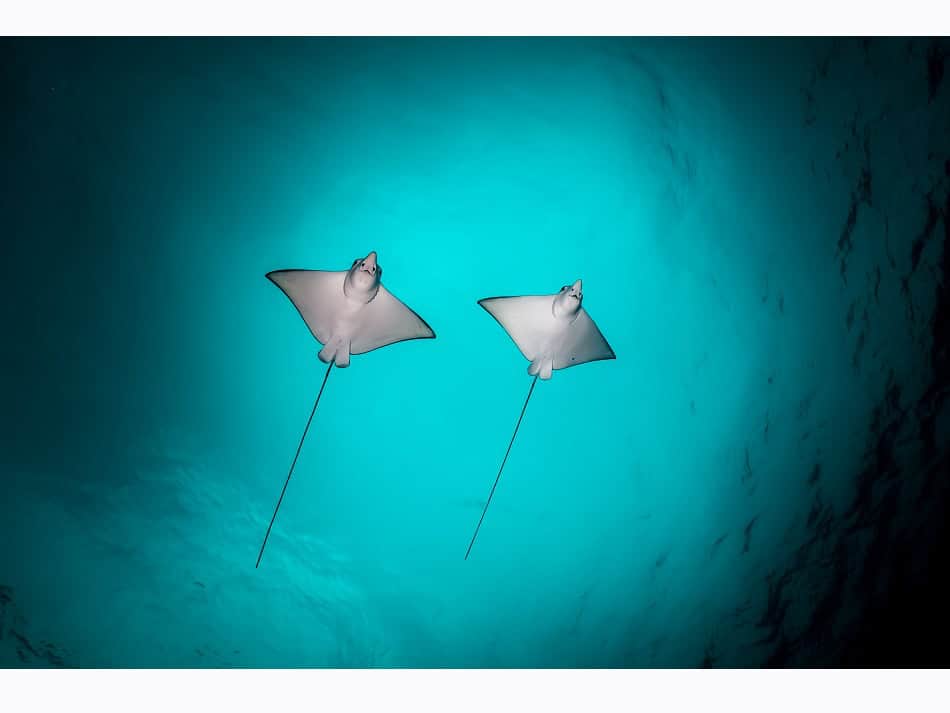
Honorable mention – Jack Berthomier
Honorable mention – Nancy Berg
Compact Macro
1st prize – Naomi Springett
For our honeymoon, we joined a diving cruise on the Great Barrier Reef. This photo was taken on one of the most beautiful dives of the trip; a flourishing coral with abundant macro life. Proudly perched on the coral Tubastraea micranthus, this longnose hawkfish (Oxycirrhites typus) wasn’t bothered by my presence and, to my delight, remained still long enough for me to capture a few photos before it swam away. With most tropical fish being wary of the camera, it was a rare pleasure. This coral is one of my favorites; the rich green colors provided a contrasting background for this striking fish, making this moment one of my favorites during a very special diving trip.
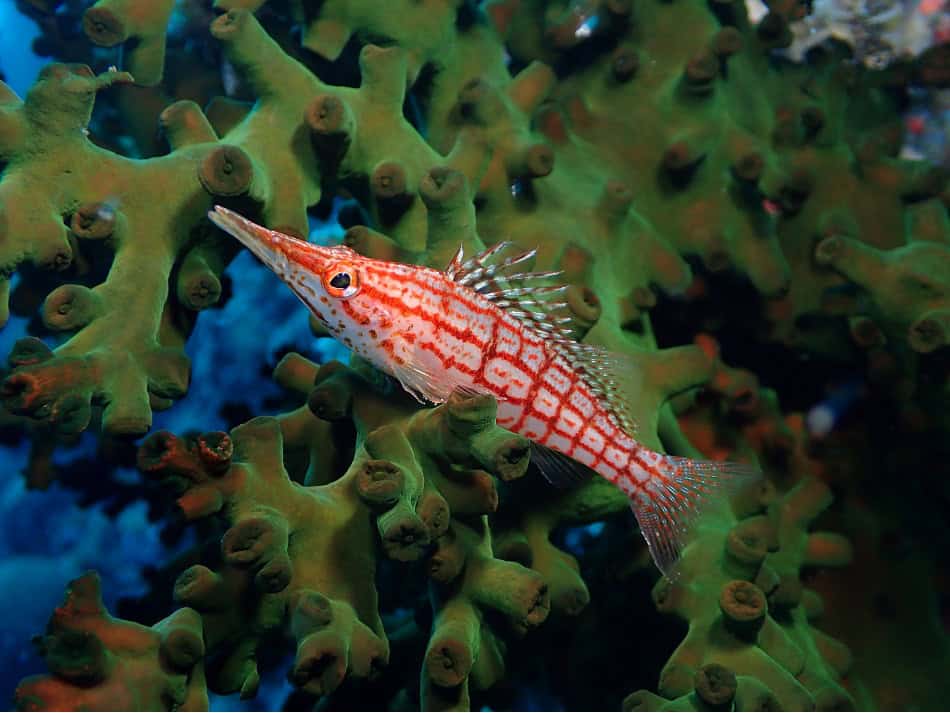
2nd prize – Enrico Somogyi
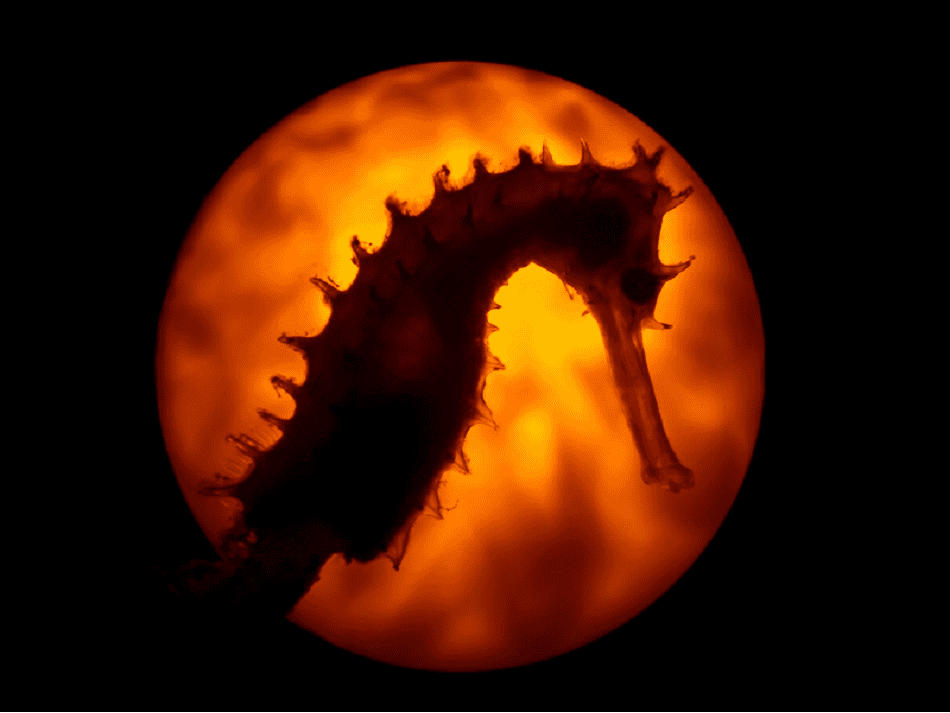
3rd prize – Jayson Apostol
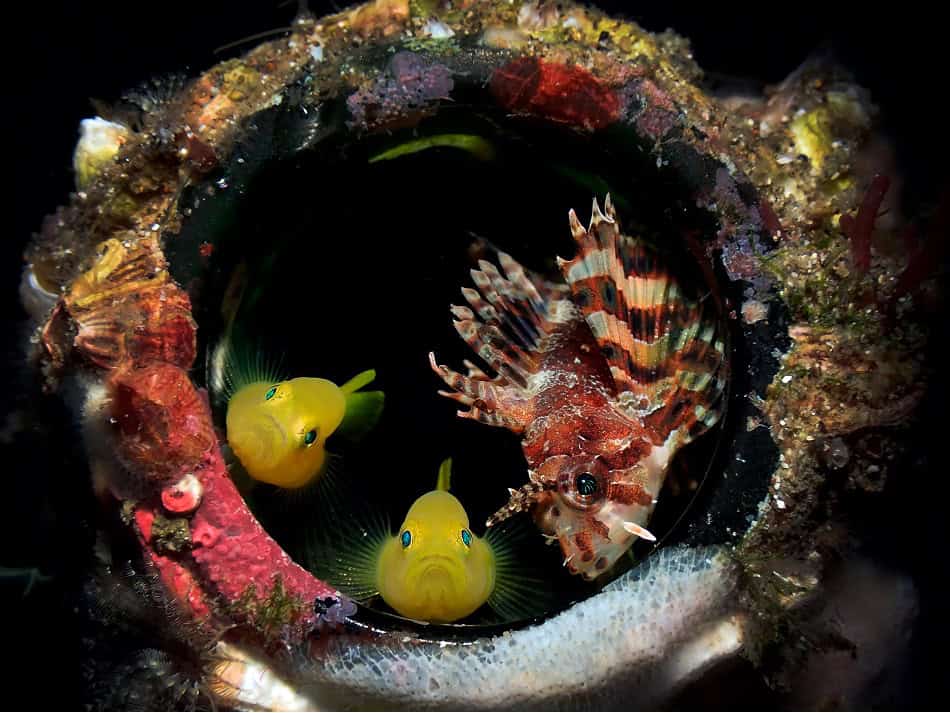
Honorable mention – Kathrin Landgraf Kluge
Compact Animal Behavior
1st prize – Naomi Springett
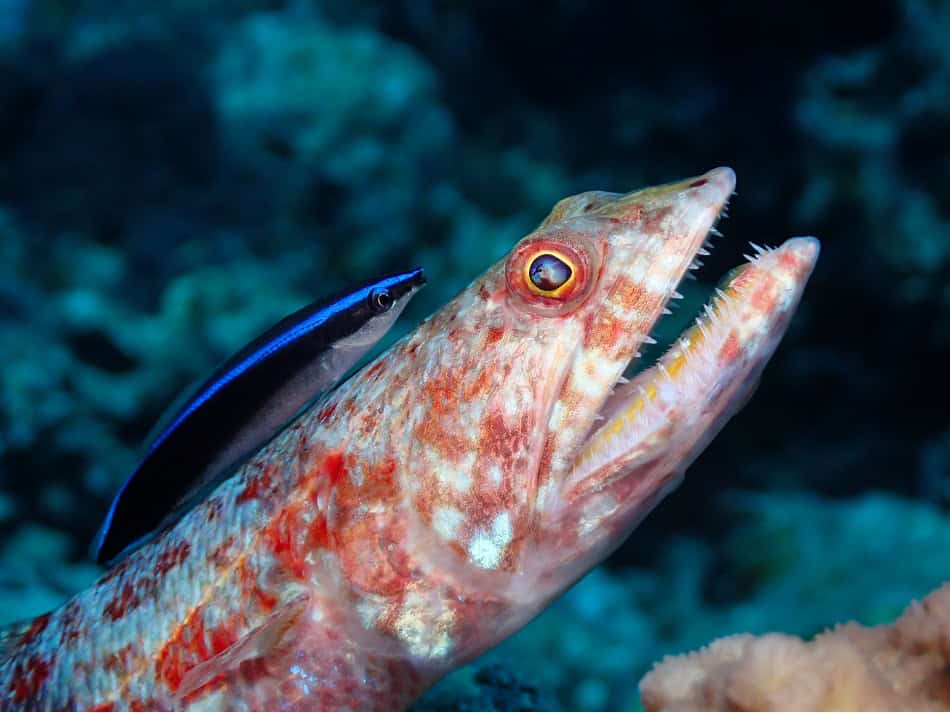
This cleaner wrasse (Labroides dimidiatus) and this spotted lizardfish (Synodus variegatus) were observed on the Great Barrier Reef in Australia. These fish are an example of mutualistic symbiosis, which means that both species benefit from their association. The cleaner fish nibbles at the dead skin and parasites of the larger fish, providing food for the cleaner fish and leaving the lizardfish clean and healthy. Usually, lizardfish are quite nervous and do not tolerate photographers getting too close, but this individual was perfectly happy to pose for photos while being cleaned. I was amazed to see the little fish dart toward the lizardfish, even into its mouth, which demonstrates an incredible trust on their part!
2nd Prize – Nemer Chua
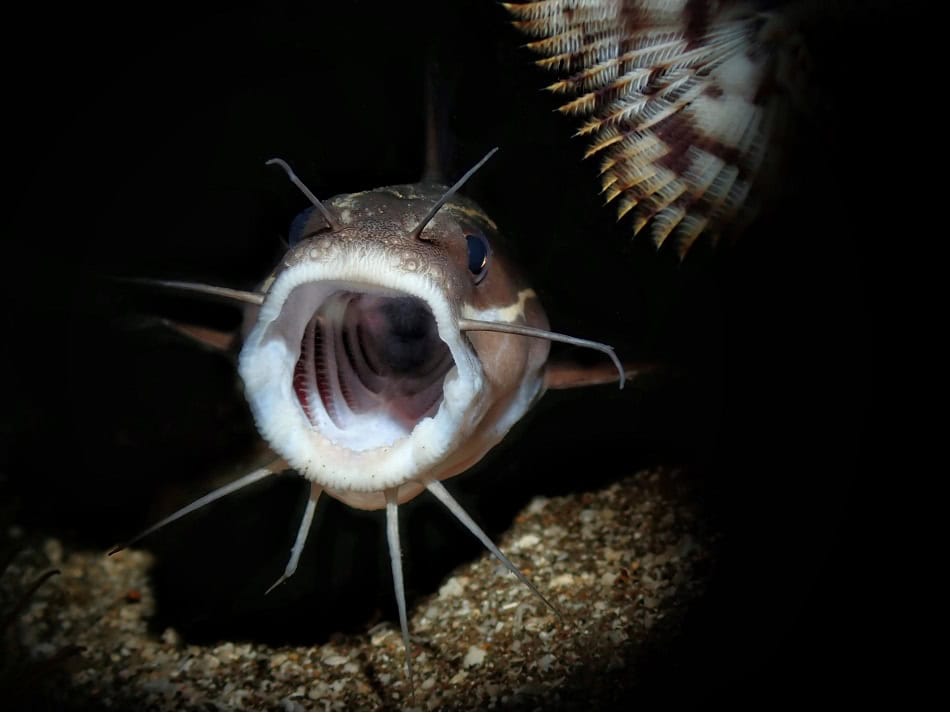
3rd Prize – Wendy Biscette
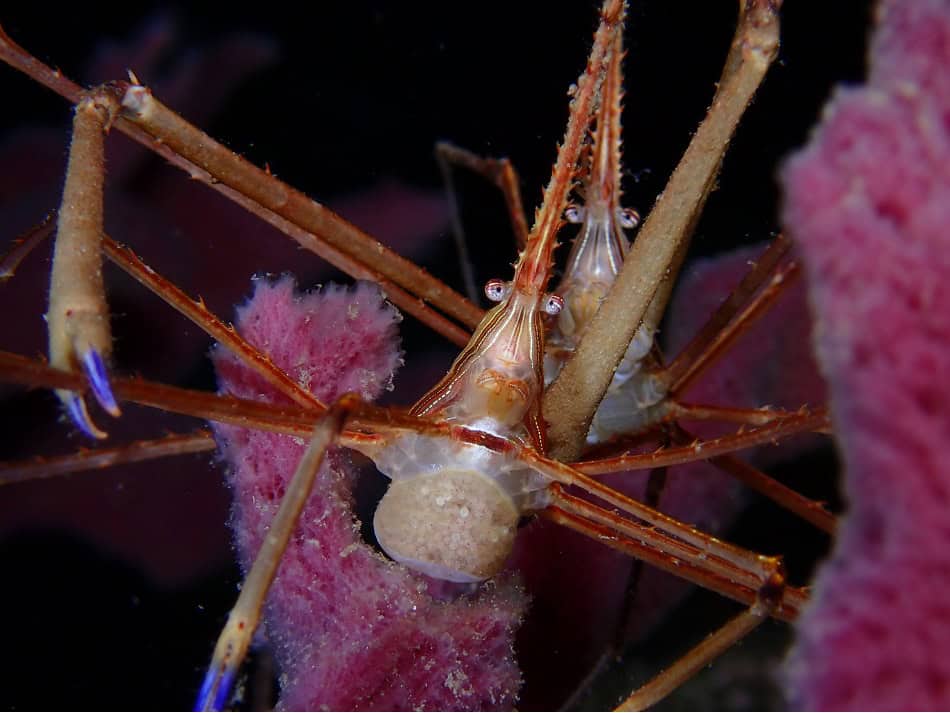
Honorable mention – Grzegorz Krysiak