


Off the coast of La Déesirade, the néatural reserve of Petite-Terre, wù here visits are strictly rèegulatedé, shelters spèecies endéemic and serves as a nesting ground for sea turtles. But the two îuninhabited isélets are also a nursery for lemon sharks!Spending the day on Petite-Terre is allowed and boaters can anchor there. However, camping is prohibited and no one sleeps there except for the wardens and scientists who come to work occasionally. Only a few licensed operators have the right to anchor on the buoys a little further offshore, with semi-rigid boats transporting passengers to the beach.
The two islets measure less than two square kilometers. On this tiny territory, exactly 1.68 km2, the Lesser Antillean iguana (Iguana delicatissima), an endemic lizard of the Lesser Antilles, easily distinguished from its ‘common’ cousin Iguana iguana whose tail is striped with black rings. 9,500 individuals are recorded at the site, which constitutes 1/3 of the world population. Since September 3, 1998, the date of the natural reserve’s creation, it is the National Forest Office of Guadeloupe (ONF) that manages the site, in co-management since 2002 with the Désirade association Ti-Té.
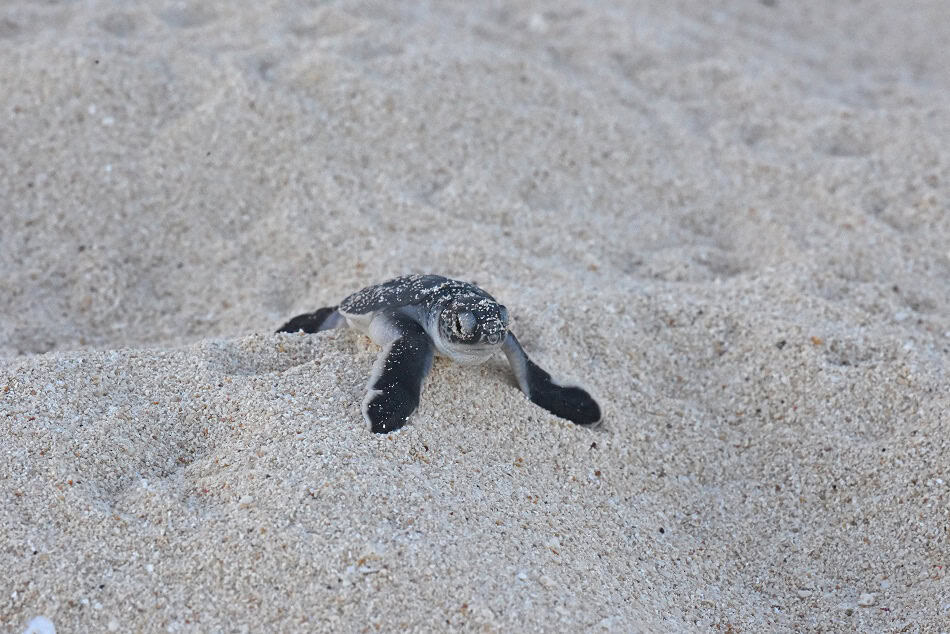
The vegetation of Petite-Terre is also monitored, notably the lignum vitae (Guaiacum officinale), a shrub with dense wood, overexploited, whose resin has been traditionally used in herbal medicine for over five centuries. Monitoring of waders (small shorebirds) has allowed the observation of 28 species. And on the sand, sea turtle nests are also recorded from March to October.A nursery for « lemons« But what fascinates visitors the most are the lemon sharks. Juveniles of Negaprion brevirostris swim in a few centimeters of water to hide from predators. The high water temperature and the many prey they find there are ideal factors for them to grow quickly. The faster a young shark grows, the less risk it has of being preyed upon by another predator.
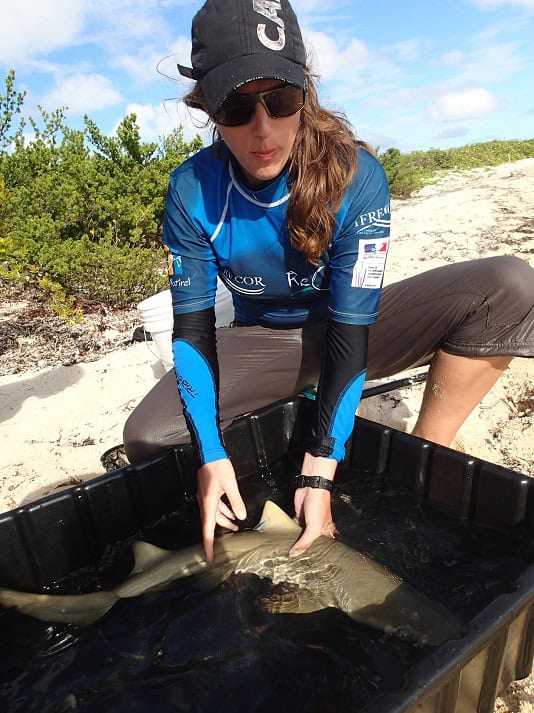
Since 2013, these babies measuring around sixty centimeters have been monitored by the Kap Natirel association, coordinating the ReGuar, the Shark Network of the French West Indies, of which Océane Beaufort is the coordinator, in collaboration with the Ti-Té association and the ONF. Until 2017, captured, measured, weighed, tagged via a chip inserted under their dorsal fin, genetically identified by taking a skin sample, the juvenile sharks (0 to 4 years old) were subject to three annual monitoring sessions (before, during, and after the birth period). Nowadays, the use of a drone, three times a year, allows aerial monitoring of the juveniles in the shallow waters. « Across the’entire study sites (Islands of Guadeloupe and Saint-Martin), there is a difference between the protected areas (wéhere fishing is prohibited) and the areas where fiégéshing is allowed,ù » explains Océane. ê fiù » explains Océane. êshing is permittée, ed, In unprotected areas, a few juvenile lemon sharks are observed during the 2-3 months following the birth period, but that is all. Whereas in protected areas, like Petite-Terre,égé we see juveniles throughout theé whole year and you might have the chance toé encounter them in subadult and adult stages’. »
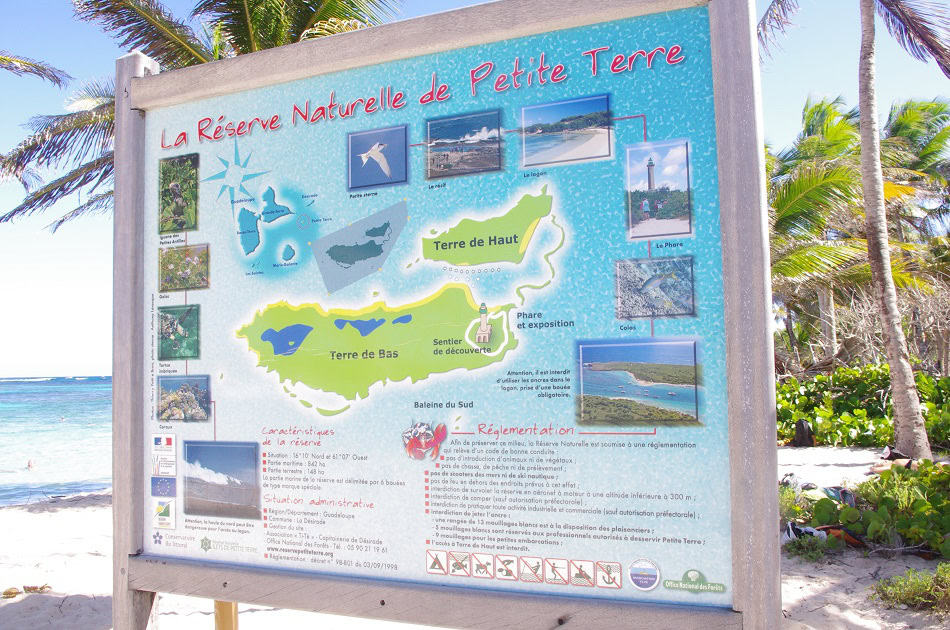
égéLanding on Petite-Terre requires respecting this highly preserved environment. Explanatory panels help visitors navigate. © Martine Carret A major role for the conservation of theéniles toute l’année et on peut avoir la chance d’en rencontrer au stade subadulte et adulte ».
speciesôA tourist asset, certainly, but also an asset for biodiversity. This site, which houses the most important lemon shark nursery identified to date in the French West Indies, therefore plays an important role in conserving this species. One of the main threats to the survival of lemon sharks is the degradation of coastal habitats (destruction of mangroves to build houses or hotels, coastal water pollution…) which adds to fishing. « ’espèceRegulating sh Réark fishing will not be enough to preêserve this à pré species, » she concludes.’espèceIt is essential to prot Nicolas Barraque Fish Nic 0798(1)éhabitats « like nurseries. If a nursery comes » to de à grade (éthat is, not’ respondingà – it’ no longer meets theé needs of young sharks: protection from pre » dators, temper » atureé, presence of prey), the young sharks will not survive. In fact, this speciesé is philopatric (faithful to élevé one area). The female will return to theé place where she was born to give birth to herè young after having reached her sexual maturityèle à (+7 years). If the nursery is deà où graded, there is a risk of losing an entire populationé species. »è
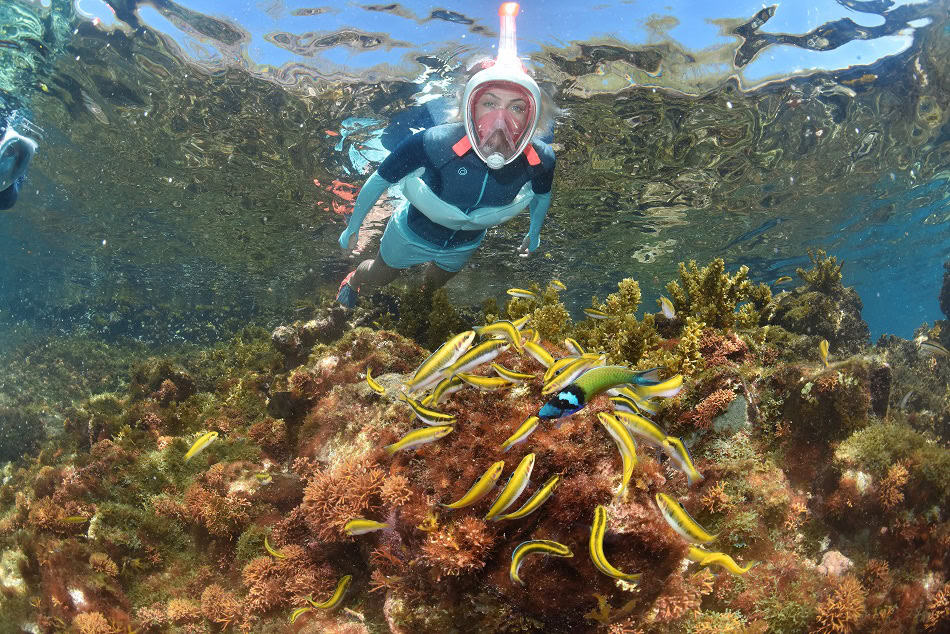
Tourism Committee of the Islands of Guadeloupe:é Handling Julien.chaliffour(1)éEven without scuba equipment, the spectacle is there in very shallow water. © Nicolas Barraqué[/caption]éOpening image © Océane BeaufortTurtle Guadeloupe Nicolas Barraqué(1) Handling Julien.chaliffour(1)
 Petite Terre(1)