The Oceanographic Museum of Monaco recently inaugurated a brand-new exhibition dedicated to the poles. Actress and director Mélanie Laurent, who has been committed to climate and ecology for years, is the patron of ‘Mission Polaire’.
The poles are a true indicator of the health of our planet. More sensitive to climate change and threatened by human activities, these extreme environments are rich in biodiversity and home to numerous species. The Arctic is even inhabited by populations that have adapted to its harsh conditions over centuries. The poles have fascinated explorers of all eras and, even today, they remain at the heart of numerous scientific research and adventures by seasoned explorers. Prince Albert I was one of those polar explorers, and later, his great-great-grandson, Prince Albert II, would follow in his ancestor’s footsteps, witnessing the changes that have drastically altered the polar landscapes. With this rich history, and with the aim of introducing the public to these distant, mysterious, and crucial poles, this exhibition is held for 2 years in the Oceanographic Museum of Monaco.
« I am proud, honored, and touched to be the patron of this exhibition and to see science and art come together to inspire everyone to instigate change and educate the new generation.
Did you know there’s no longer a place in the world without sounds from human activities? Nature only listens to us, it’s our turn to listen to it more!
Mélanie Laurent
5 spaces to discover the Poles
Your journey immerses you between the Arctic and Antarctica: an ocean of ice inhabited by humans and home to polar bears in the north, and a white continent, home to penguins and devoid of human presence except for a few scientists, in the south. Five spaces immerse you in these extreme environments:
Space 1
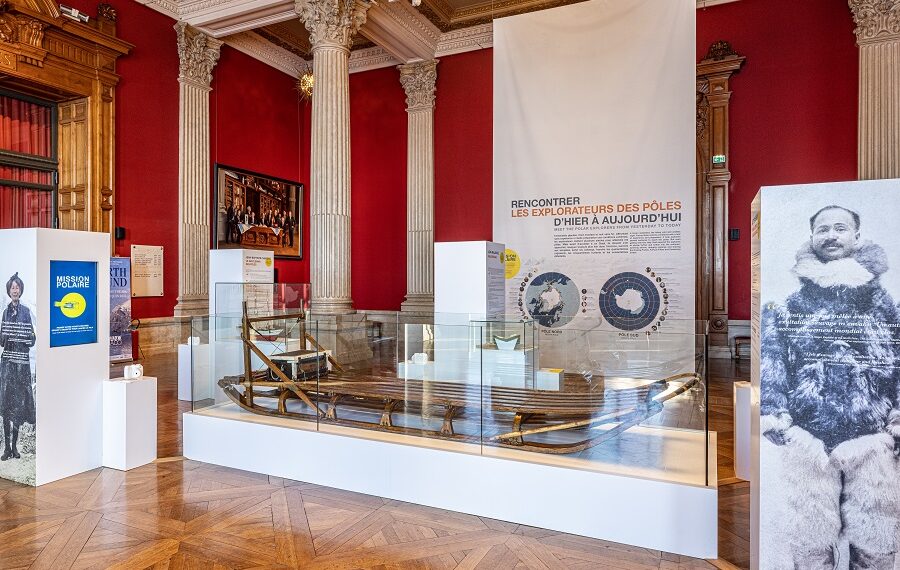
Discover the portraits and fascinating stories of a handful of explorers who have made history and contributed to enhancing our knowledge of the poles.
Space 2
Enter the world of the Inuits, Arctic people who have adapted to this extreme environment but are now threatened by climate change and disrupted by modernity.
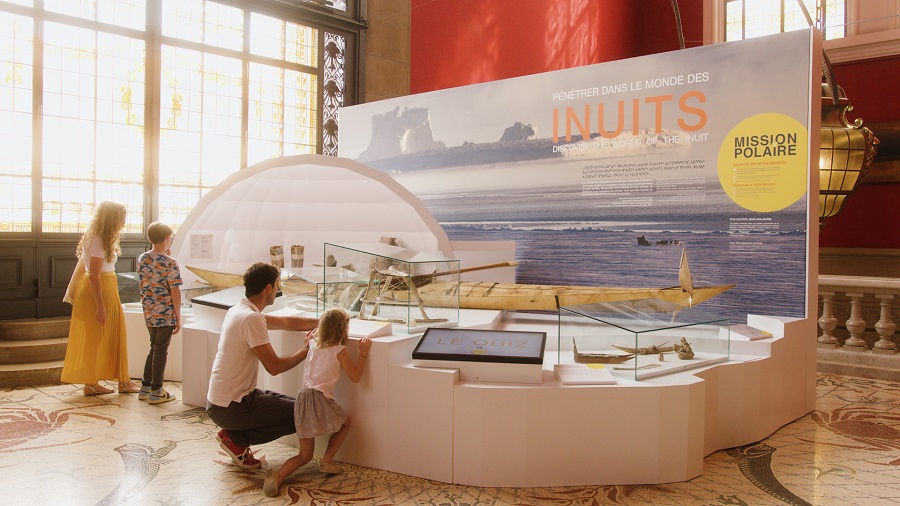
Space 3
Become aware of the differences between the two poles, the species that live there, the climatic upheavals occurring, as well as their vital role in planetary balance.
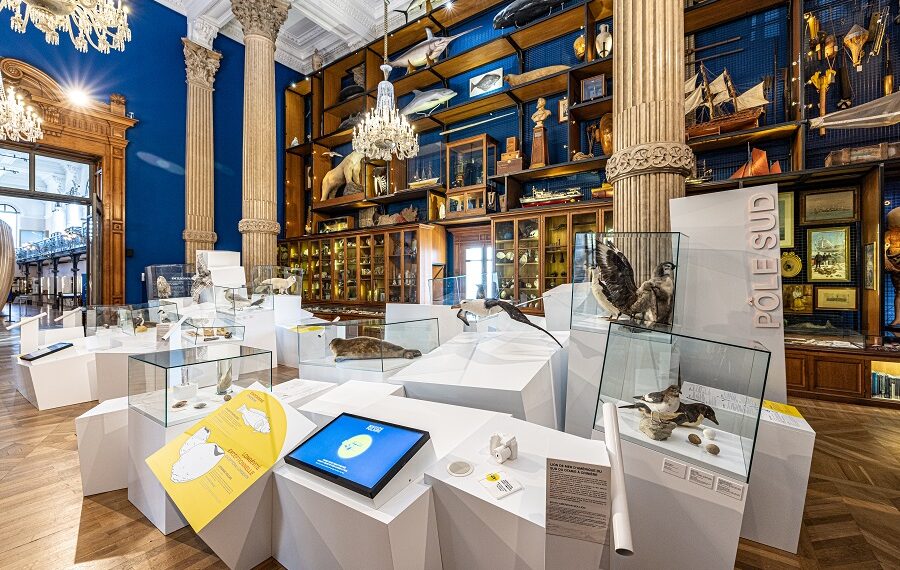
Space 4
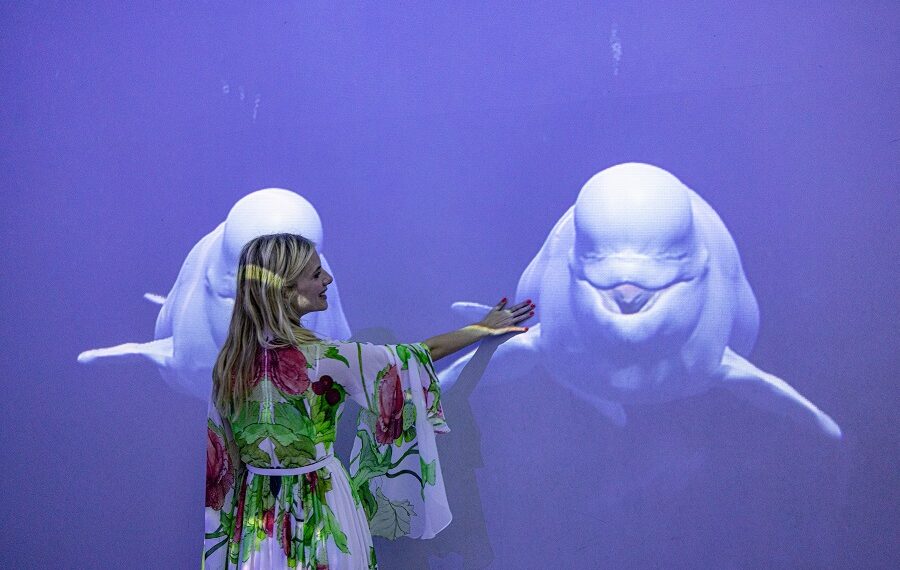
Immerse yourself in the poles through a unique space that takes you to meet 12 mythical species. On walls over 9 meters high and on the floor, the projected images are interactive, inviting the public to move and touch the surfaces to see them come to life.
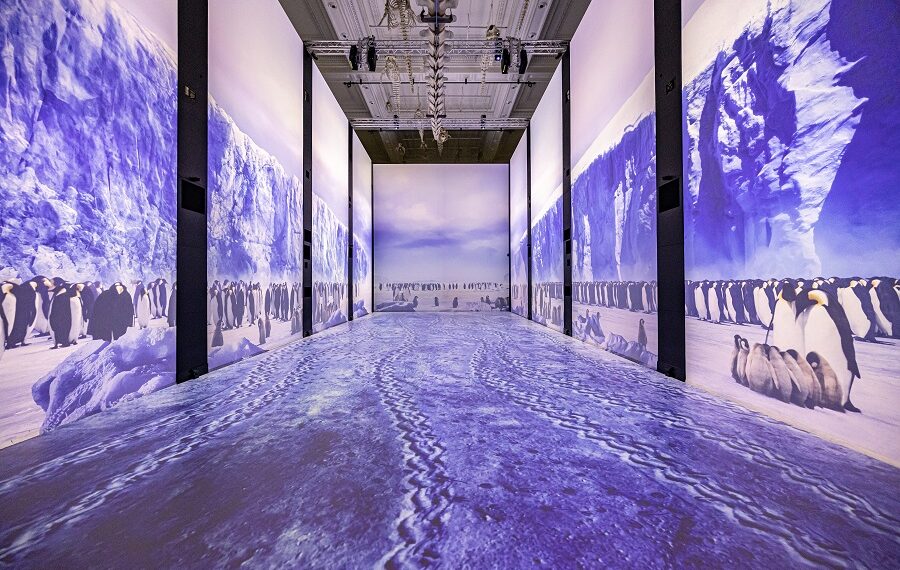
Space 5
Understand the challenges of scientific research by assessing the current knowledge of these extreme environments.
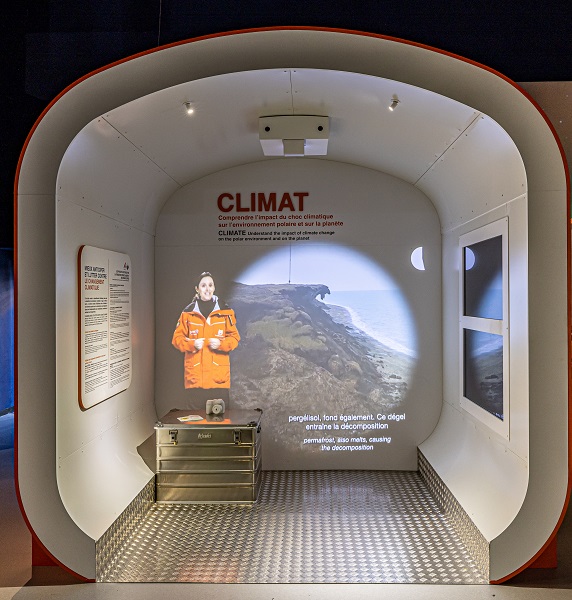
Visitor / reporter
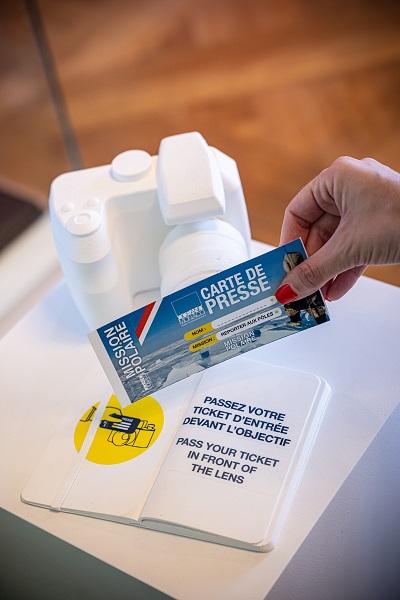
Throughout the journey, visitors, equipped with their entrance ticket in the form of a « press card » can interact and trigger additional videos and explanations to conduct a report. At the end of their visit, they submit their report at an interactive kiosk; they are also invited, if they wish, to support the actions conducted for the protection of the poles alongside the Oceanographic Institute and the Prince Albert II Foundation.