


The Sailfish of Isla Mujeres: A Spectacle of Speed
Every year, between January and February, Isla Mujeres, a few kilometers from Cancún, hosts a spectacular event: a unique « Sardine Run. » Millions of sardines gather for their migration, attracting a multitude of predators, including the impressive sailfish (Istiophorus platypterus).
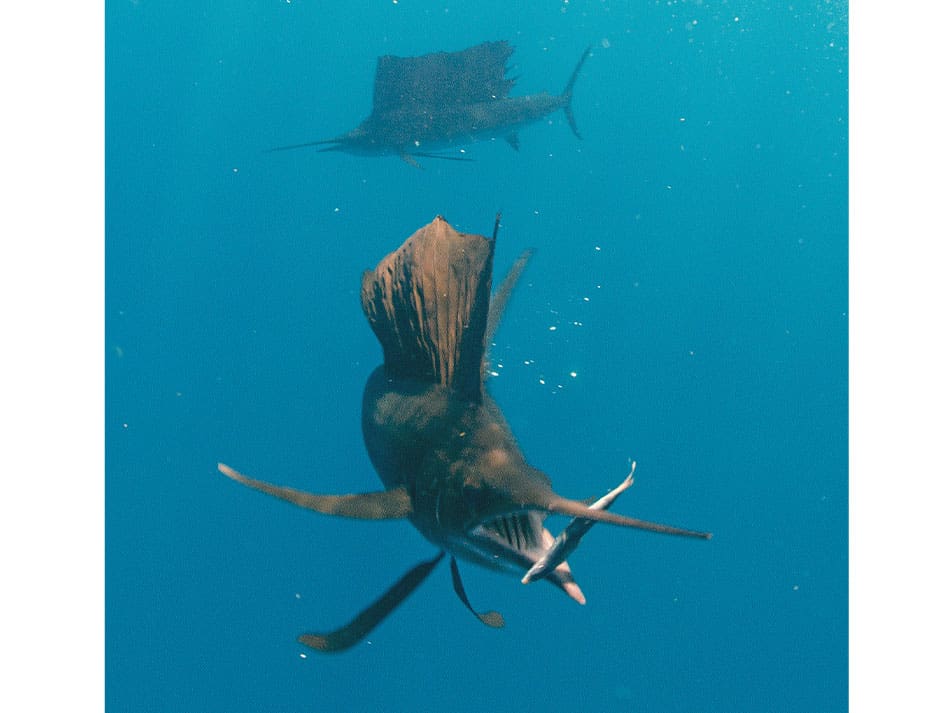
Observing these creatures requires several hours of navigation on the high seas, a physical challenge rewarded by an astounding spectacle. Sites are located through the activity of seabirds, also drawn to this feast. Approach is made with fins, mask, and snorkel (PMT), as the hunt occurs at the surface, ensuring excellent visibility.
The sailfish, the fastest fish in the world, can reach speeds of 110 km/h thanks to its sail-like dorsal fin. It uses its bill to stun sardines before consuming them. The ballet, orchestrated by dozens of sailfish, lasts only a few minutes but remains etched in memory.
Above water in Isla Mujeres
- Explore the underwater museum MUSA
- Visit the ruins of a Mayan temple
- Discover Tortugranja, the turtle farm
- Enjoy the tranquility of the island, away from the bustle of Cancún
Practical information:
- Time difference: -7h (summer), -6h (winter)
- Water temperature: 25°C (sailfish season)
- Ideal period: mid-January to end of February
- Equipment: fins, mask, snorkel (PMT)
- Budget: €150 (snorkeling trip) – booking essential
- Operators: Snorkeling excursions organized by locals
The Manatees of Crystal River: A Gentle Encounter in Florida
In winter, Caribbean manatees (Trichechus manatus) gather by the hundreds in the warm waters of Crystal River, north of Tampa. These marine mammals, distant cousins of dugongs and closer to elephants, are harmless and indifferent to human presence, provided observation rules are respected.
The Three Sisters Spring sanctuary, at the heart of the Crystal River National Wildlife Refuge, is a prime spot to observe these herbivores in their natural habitat. Approach is made in silence, respecting the animal. Though some tourists are tempted to touch them, it is crucial to avoid any interaction.
The Florida government implements protective measures for these vulnerable animals: combating pollution, regulating approach, and limiting boat speed to prevent collisions.
Above water in Crystal River
- Walk along the shores of Three Sisters Spring
- Explore the Everglades National Park (alligators, panthers)
Practical information:
- Time difference: -6h
- Water temperature: 21°C (manatee season)
- Ideal period: mid-November to end of March
- Equipment: snorkeling
- Budget: €60-85 (snorkeling trip)
- Operators: Animal-friendly supervised tours
The Marine Iguanas of the Galápagos: Unique Reptiles in the World
The Galápagos archipelago is home to an exceptional concentration of endemic species, including the marine iguana, the world’s only marine lizard. Different species, endemic to each island, can be found. These reptiles bask in the sun on rocks before diving to feed on algae.
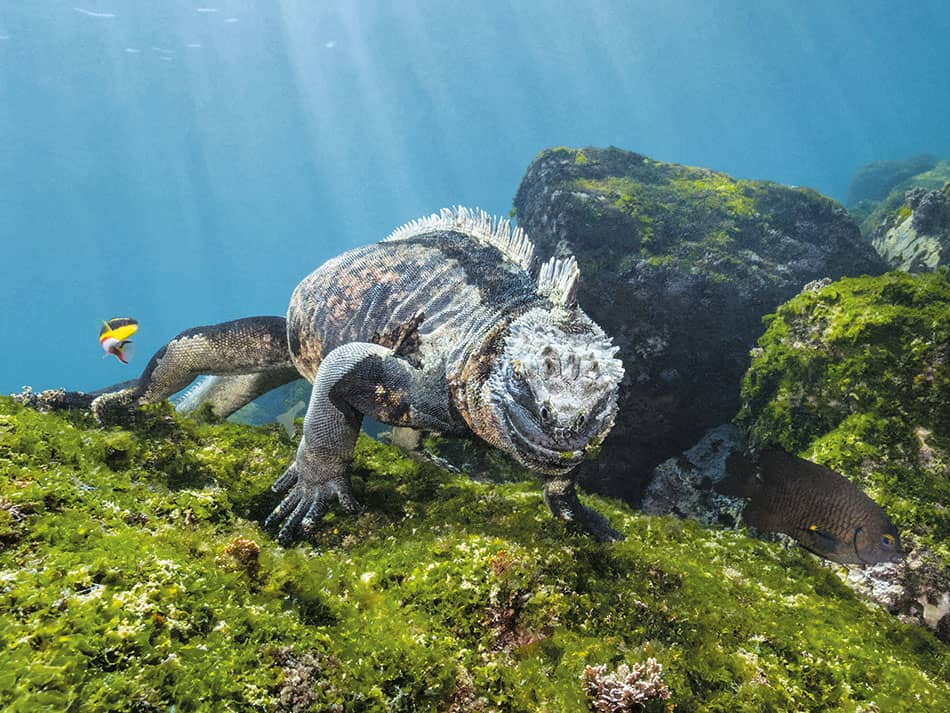
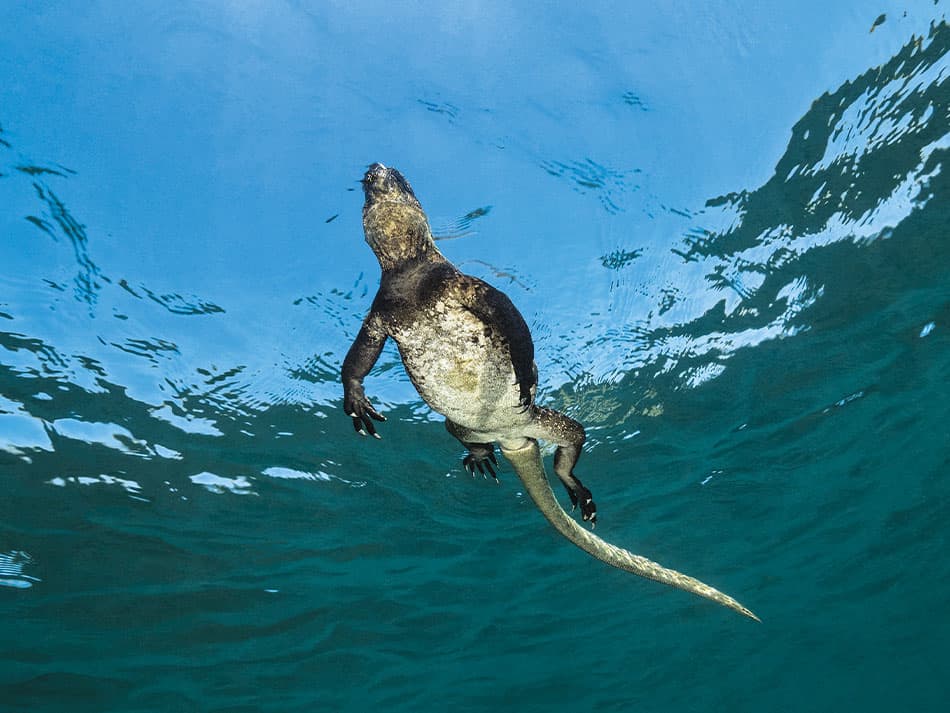
Despite their imposing size (up to 1 meter), they are herbivores and not shy, allowing divers to approach them at a reasonable distance. They move with agility underwater, clinging to rocks or swimming with their elongated bodies and undulating tails. They can hold their breath for nearly an hour and dive up to 15 meters deep.
Above water in the Galápagos
- Wildlife exploration cruises in the unique archipelago
- Check with your tour operator if dives with iguanas are included
Practical information:
- Time difference: -8h (summer), -7h (winter)
- Water temperature: 21°C (July to December), 24°C (January to June)
- Ideal period: all year round
- Equipment: 5 mm wetsuit
- Diving level: beginner to advanced
- Budget: Diving trip (from €4,500), cruise (from €5,800)
- Operators: Cruises organized by most tour operators
The Choice of Pros: Rare Encounters
Indonesia: Cruise to Raja Ampat with Oceanes (www.oceanes.com)
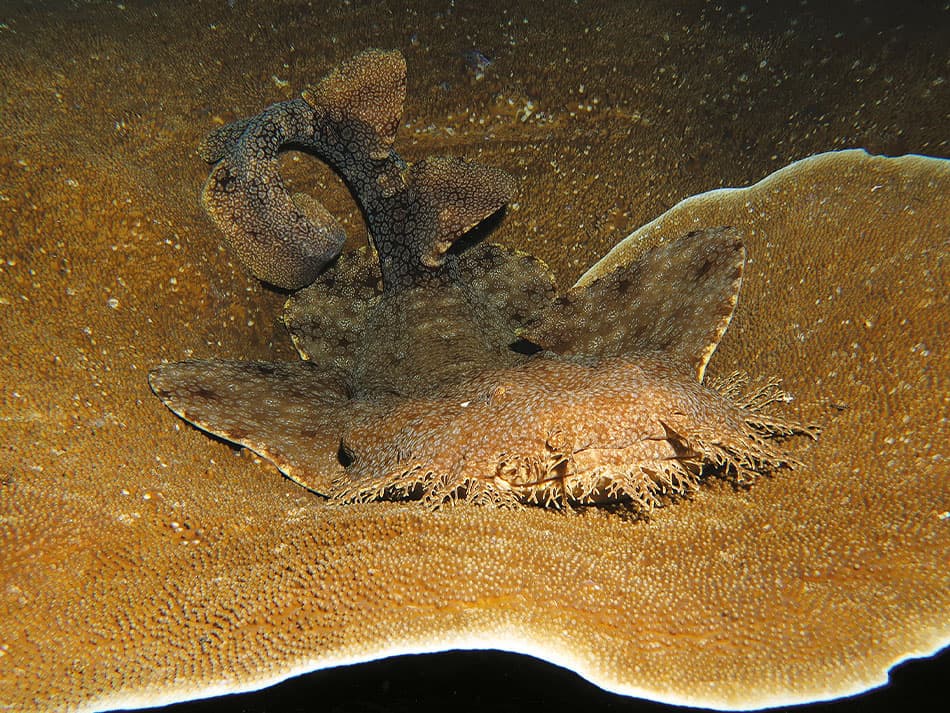
Édith recommends Raja Ampat for observing the wobbegong or bearded carpet shark, a specific species of the Indo-Pacific region, easy to approach and majestic. You can also observe, with more difficulty, the walking shark known as the epaulette shark, a shy and nocturnal endemic species. A 10-night cruise, full board, flights, 3 to 4 dives a day, from €6,000.
Philippines: Stay in Malapascua with Abyssworld (www.abyssworld.com)
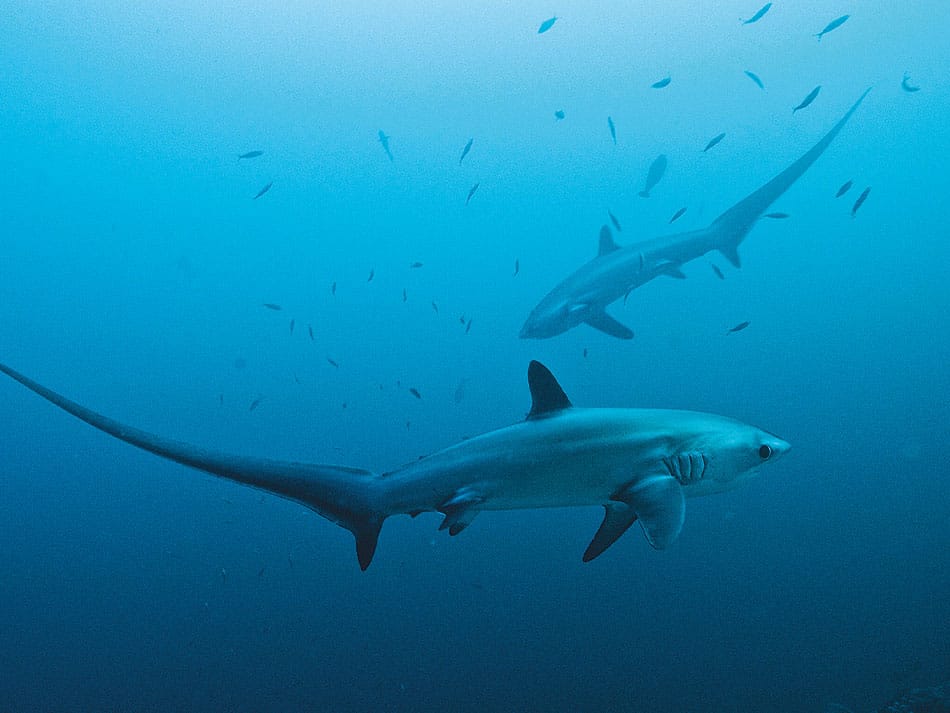
Christophe suggests Malapascua for observing the rare thresher shark, visible almost every morning. This solitary nocturnal predator is distinguished by its cylindrical body, copper color, and elongated tail. 12-night stay, full board, flights, and 22 dives from €3,240.
GPS coordinates:
- Mexico: 21°14’13”N – 086°44’06”W
- United States: 28°54’08”N – 082°35’33”W
- Ecuador: 00°37’43”S – 090°21’49”W
- Indonesia: 00°42’45”S – 130°18’12”E
- Philippines: 11°20’13”N – 124°06’56”E
This article, originally written by Margot Harty for the print edition of PLONGEZ!, has been adapted for the web.
Images © Nicolas Barraqué.