


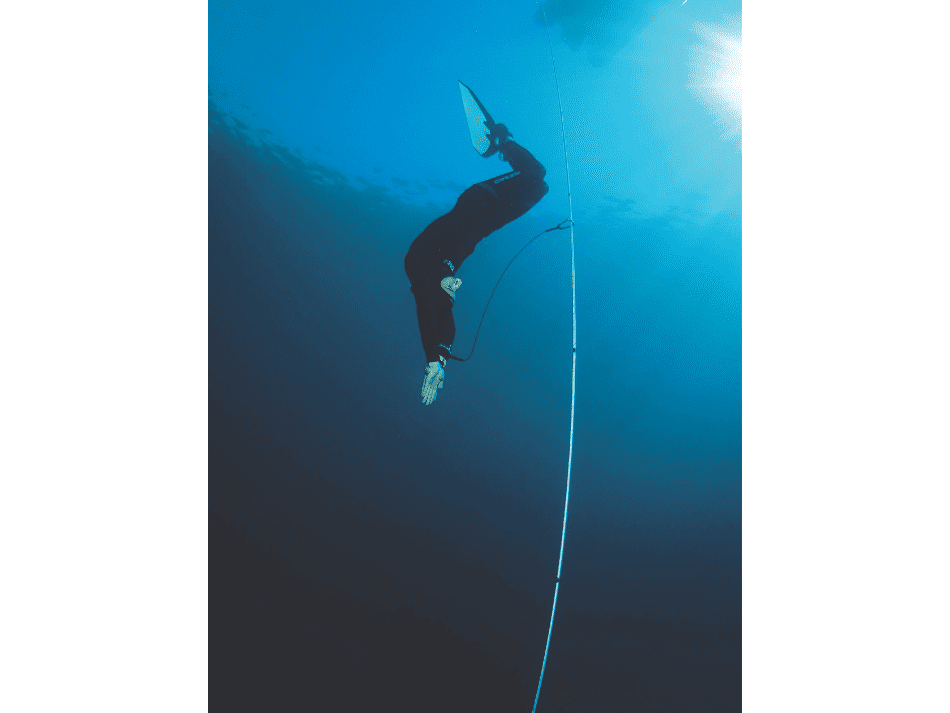
Divers in search of thrills, adrenaline seekers, spearfishers, or underwater hockey players, freediving comes in many facets. Whether for introspection, challenge, sensation-seeking, or even survival, sport diving offers much more than one might imagine. It also proves to be a valuable tool for advancing medical and scientific research.

Freediving: a word with multiple meanings
To illustrate the importance of this term, conduct a search for « freediving. » Most of the results will mention sleep apnea, a condition affecting a significant portion of the population: 7.9% of people aged 20 to 44, 19.7% of those aged 45-64, and 30.5% of those over 65, according to INSERM. This disorder, marked by nighttime breathing pauses, leads to worrying consequences such as hypertension, diabetes, and depression. However, it is important to note that the link between recreational and sleep apnea is purely terminological. This phenomenon hides many secrets to be explored.
Did you enjoy this excerpt?
Read the entire article.
READING TIME ≈ 5 min
Dive into the heart of Magazine DIVE!
To enjoy this article and its exclusive content, a modest contribution is required.