


Who hasn’t dreamed of throwing a few things in the trunk of their car and embarking on a fabulous adventure that opens up all kinds of possibilities? Going on a road trip means traveling according to your inspiration, your desires, and your encounters. It’s about immersing yourself without constraint in all cultures… and in all waters, fresh and salty. Let’s hit the road!
With no other ambition than to pique your curiosity, we offer you a non-exhaustive itinerary of must-see and more unusual spots in Europe. It’s up to you to create your own route, taking into account your level, your desires, and the season…
1. Scotland, moorlands and bubbles
To dive in Scotland, one must enjoy the chill and not fear murky waters or the tidal cycle. In the Orkney Islands in the north, you’ll find the legendary Scapa Flow spot, where, the day after World War I, 74 ships of the German fleet scuttled themselves. Several of them remain submerged (SMS Brummer, Cölin and Dresden, Tabarka…) and offer beautiful dives for autonomous divers.
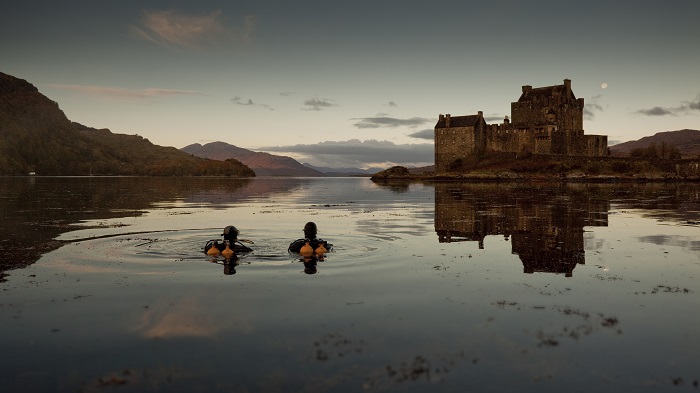
On the west coast, don’t miss the Mull Strait. Again, there are shipwrecks but also basking sharks, Minke whales, porpoises, seals, and otters. Further north, in the North West Highlands, the Scottish Wildlife Trust offers a nine-stage snorkeling route from Gairloch to Stoer. Not far from there, wrecks, caves, and walls covered with anemones await you on the Summer Isles. Finally, on the east coast, a stop in the fishing village of Saint Abbs is a must: the site of Cathedral Rock is one of the country’s most popular shore dives!
2. Authentic Adriatic
Croatia stretches a long ribbon of land along the Adriatic: nearly 1800 km of coastline, with hundreds of islands and islets added in. On sites where visibility can reach 50 meters, the Adriatic offers ideal conditions for all divers. In Rovinj, the first stop is a dive on the wreck of the Baron Gautch, a must in Croatia! Off the island of Cres, Mali Cutin offers varied landscapes in an explosion of life and colors. The exotic continues at Katedrala on the island of Premuda. This fairy tale cave is topped with a dome from which sunlight filters through. Other astonishing rock formations include the Kampanel on the islands of Dugi Otok and Vodnjak, off the coast of Hvar.
The south of Split is a playground for fans of drop-offs, canyons, and caves. On the Peljesac peninsula, dive on the small wreck of the German torpedo boat S-57, lying at 40 meters. In the marine park of Lastovo, the islet of Bijelac sits on two monumental pillars covered with gorgonians. On their flank, a cave adorned with starfish. Another beautiful drop-off is Lenga on the island of Mljet, which reaches a depth of 86 meters. From Dubrovnik, continue south to dive on the Mrkanjac reef in Cavtat. Finally, in Molunat, discover the wreck of the Kraiser Franz Joseph, which has been submerged for almost a century.
3. Switzerland, Austria, such fresh water
On your checklist for vacations in Switzerland or Austria, don’t forget fins, mask, and snorkel! Of course, you should adapt your equipment because, even in summer, the water is chilly. The sites are not limited to Lake Geneva. Lake Neuchâtel is considered to have excellent visibility. Boudry is the playground of Swiss divers. You’ll find numerous wrecks such as large plastic shark structures, ULMs, and dragons… at different depths. And of course, Ticino, in the rivers Maggia and Verzasca. The sites are shallow, the setting and visibility superb, perfect for admiring the trout. Also worth mentioning are the breathtaking Chillon dives, the wreck of the Hirondelle as well as the lakes of Zug, Lucerne, and Constance…
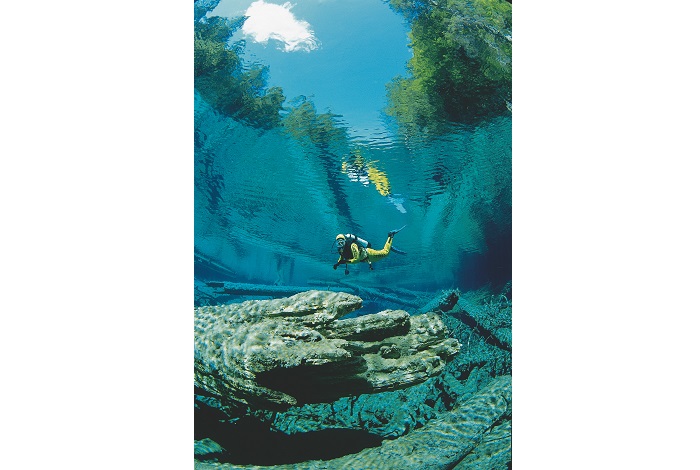
Further east, countless Austrian lakes await you. In Upper Austria, Attersee is the largest lake in the country: it offers numerous spots and abundant wildlife. The region also has the deep Traunsee (191 meters), yet accessible to divers of all levels. In the impressive Hallstättersee, the wildlife (pike, trout, perch, roach) thrives in a rocky landscape with submerged trunks. In Carinthia, there are no less than five lakes to practice your favorite hobby. The Weissensee is known for its milky white hue and ice dives in winter, as is the Wörthersee, the largest in the region. The water can reach 25°C in summer.
4. Italy: wrecks, islands… andiamo !
It’s difficult in a one to two-week tour to discover all facets of diving in Italy. Here is a selection of two must-sees, to which everyone is free to add their own stops.
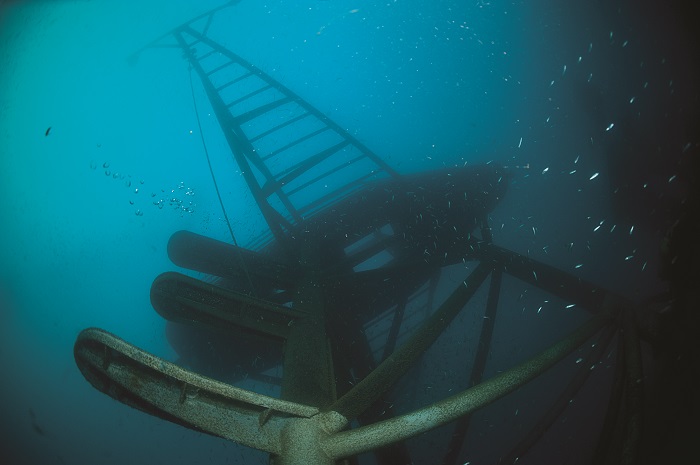
April 11, 1991, off the coast of Genoa. The tanker of the supertanker Amoco Milford Haven explodes with 140,000 tons of crude oil in its holds. The tanker sinks three days later. The wreck lies at a depth of 82 meters. Its enormous dimensions – 334 meters long, 50 meters wide – make it the largest in the Mediterranean. The deck is located within 30 meters, making the experience accessible to the widest audience. But the propeller is reserved for tekkies only. Beyond its enormity, this immense artificial reef is worth a visit for the wildlife it harbors: schools of damselfish, anthias, and bogues, large groupers… and, when the water is clear, patrols of dentex in the blue.
Further south, set in the Tyrrhenian Sea off the coast of Sicily, the island of Ustica is accessible via a fast ferry from Palermo, Trapani, and Naples. Protected by a marine reserve since 1986, the sites scattered around the island are the most beautiful in Italy. Barracudas, amberjacks, parrotfish, and sea bream are abundant on the reliefs dotted with caves and in exceptionally clear waters.
5. Portugal, little-known depths
Closer to us than Madeira and the Azores, about a hundred kilometers north of Lisbon, Peniche is one of the largest fishing ports in the country. 10 miles offshore from the coast lies the Berlengas archipelago, a UNESCO biosphere reserve. On these landscapes, you can observe amberjacks, triggerfish, sea breams, but also congers and sunfish. Autonomous divers won’t want to miss Baixa do Broeiro: schools of bogues and mackerels are joined by tuna and bonito during the warmer months.
Further south awaits the small town of Sesimbra. An abundant and varied fauna, joined by tropical species in summer, finds refuge in a maze of canyons and caves as well as on the wreck of the River Gurara. Stops are also possible in Sines, Porto Covo, and towards the island of Pessegueiro, for snorkeling enthusiasts. Upon arriving in the Algarve, don’t miss a dive on the artificial reefs formed by the Portuguese fleet off Portimão, as well as the rock formations of Sagres, Albifeira, and the caves of Lagos.
6. Greece, dives into history
From the Ionian Sea to the Aegean Sea, Greece, with its hundreds of islands, boasts more than 15,000 km of coastline. Wherever you go, the sea is never far, clear and always warm. It is sometimes criticized for being less fishy than in our latitudes. But the beautiful underwater landscapes harbor groupers, lobsters, scorpionfish, and other moray eels. Due to the heat, tropical species also roam here, such as parrotfish and turtles. The luckiest might even catch a glimpse of the Mediterranean monk seal, which takes advantage of the local topography to hide in the numerous caves. This is the case in Epidaurus, where Yves Le Jannou has taken over the Epidive center: « We have an immense underwater cavern. It’s truly beautiful, with stalactites, stalagmites… sometimes you see a large seal there that must weigh around 200 kg ». The Gulf of Epidaurus has about forty sites, including the Talaipot wall, its field of pen shells, its amphorae, and the wreck of theAventis III.
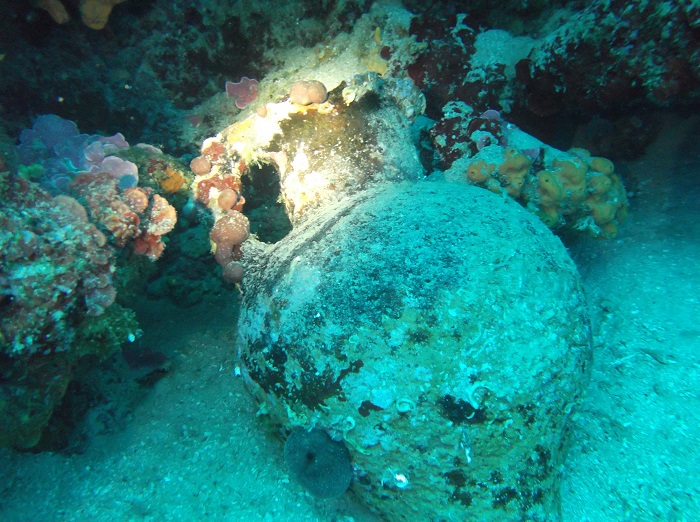
Over time, seismic activity has altered the Hellenic coasts to the point of submerging several coastal villages. Thus, it is possible to dive on Pavlopetri, in the Peloponnese. Submerged under four meters of water, this sunken city is believed to date from the Bronze Age. The ancient city of Epidaurus also welcomes snorkelers.
7. Spain, aquatic fiesta
Just a few kilometers after crossing the border, put on your buoyancy jacket to submerge from L’Estartit.The small seaside resort faces seven islands, Les Medes, protected by a marine reserve. The fifteen sites in the sanctuary are accessible to divers of all levels. In addition to the abundance of fish – curious groupers, eagle rays, silver scabbardfish, barracudas – Les Medes offer a memorable underwater playground: crevices, caves, walls, tunnels, including the immense Dofi cave.
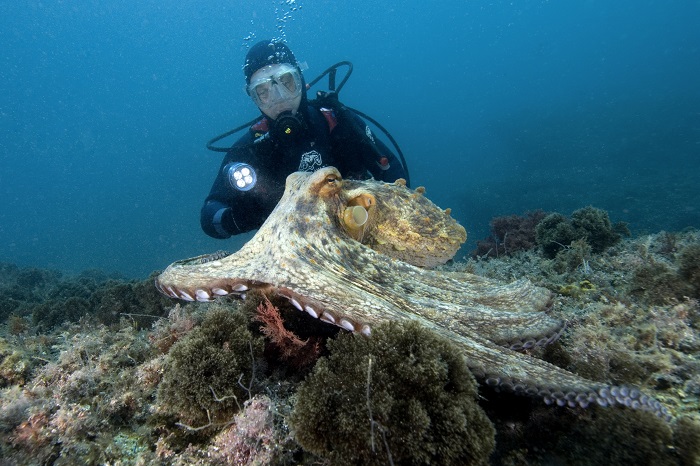
Close to Coma-Ruga in the province of Tarragona, make a stop in the Masia Blanca reserve, which houses a dense community of invertebrates: cuttlefish, octopuses, great pearl oysters, but also groupers, dentex, forkbeards, sea bream… Two hours of navigation are needed to reach the Columbretes Islands, located offshore from Castellón. The spectacle of the four volcanic islands, with their arid cliffs plunging into dark waters, is majestic. Underwater, red coral, abundant encrusting wildlife, an abundance of groupers and dentex, schools of wrasse, swarms of chromis and sars with blackheads make every dive feel like too little time underwater. Then head to the Isla de Tabarca. Over green meadows of posidonia, you will come across a flight of sea hares. On the side of the Hormigas Islands, sunfish and eagle rays join the party. Wreck enthusiasts will not miss diving on the remnants of the transatlantic Sirio..
8. Sardinia, the great lady of the Mediterranean
In Italy, Sardinia is a diving destination in its own right. The neighbor of Corsica sets the tone from its northern coast for a dive into the Maddalena archipelago and the Lavezzi reserve. On the eastern coast, near Olbia, the sites of the island of Tavolara are very interesting: the Secca del Papa rises from 40 to 16 meters. There you can find gigantic gorgonians, groupers, and a large quantity of fauna. Some caves in the Gulf of Orosei are magnificent, filled with stalactites and stalagmites of all colors.
To the southwest, the island of San Pietro also features caves – don’t miss the Cattedrale – drop-offs, beautiful sites for beginners, and a wreck: the Eurobulker. The Gulf of Cagliari also has several deep wrecks, many of which date back to World War II: the Romagna, le San Marco and the SS Loredan, which rests at 64 meters deep, wrapped in gorgonians.
9. The Channel Islands, your car goes offshore!
Reef dives for all levels, drop-offs around Guernsey and Sark… the destination offers hundreds of spots and wrecks. Unfortunately, most remains located less than 30 meters deep suffer from violent winter storms. But below the 45-50 meter mark, many of the structures dating back to World War II are much better preserved (the M480 at 50 meters, the Stella at 45 meters, the Rouen at 58 meters…). Dives here are sporty and chilly, and snorkeling enthusiasts will not be left out, particularly in Havelet and Portelet bays as well as on Grandes Rocques Beach.
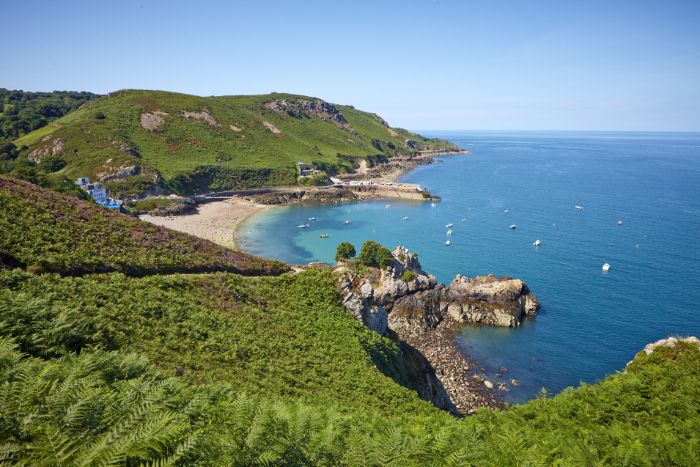
Around Jersey, it’s equally abundant. From the shore, Bouley Bay offers varied fauna: nudibranchs, crabs, lobsters, sea bass, and even seahorses. On a boat trip, drifts take you along walls covered in sun anemones frequented by dogfish. There are also beautiful wrecks like La Mauve, le SS Heron et Schockland…
10. Montenegro, Albania, Bosnia, a trio off the beaten path!
Three destinations rarely featured in diving guides. Yet, Montenegro has 90 km of coastline on the Adriatic, from Novi to the island of Bojana. Many spots consist of wrecks, like the Spitfire MK9 (32 meters) in the Bay of Kotor, or the French destroyer Dague,which can be observed near Bar. At more than 70 meters, the Zenta sits upright on the seabed. Among the popular sites accessible to all, the aptly-named Blue Cave, and the vestiges of the port of Bigovica.
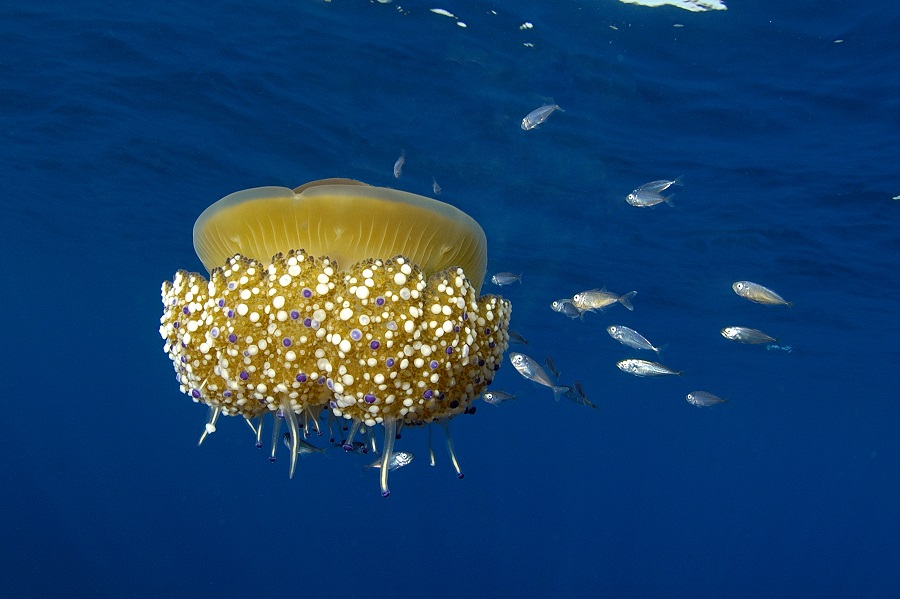
In the Karaburun Peninsula in Albania, wildlife lovers will try to spot the Mediterranean monk seal. In the Bay of Valona, scrap metal enthusiasts dive on the Po, an Italian hospital ship sunk in 1941. Speleologists will head inland to discover the magnificent cavities of Viroit, Skotini, and Petranik.
As for Bosnia-Herzegovina, it only has 21 km of coastline. Neum is the only seaside city where one can submerge in saltwater. But diving is possible in several lakes, including winter ice diving. In the Una River, Unaquarius offers speleo expeditions as well as speed river diving… an unusual activity filled with adrenaline.
Don’t forget before leaving…
Consult tourist offices, information mines, as well as diving centers from the destinations you visit to prepare your trip.
●
Book your dives in advance as much as possible to avoid being left high and dry once on site.
●
When packing, don’t forget: GPS, camera, passport, certification cards, logbook, insurance and medical certificates.
●
Find out about the facilities that will welcome you to determine if you need to travel with all your equipment.
●
The transportation of compressed air and gas is regulated. If you plan to travel partially by air or sea (especially by ferry), check with the carriers.
Original text by Jessica Engel