


Since the release of the movie « Finding Nemo » in 2003, the clownfish has gained unprecedented fame, becoming one of the most coveted fish in the world. Divers exploring the waters of the Indo-Pacific can easily recognize this small fish with vibrant colors, usually orange with white stripes, which takes refuge in sea anemones. It is important to note that around thirty species of clownfish exist, all grouped under the genus Amphiprion.
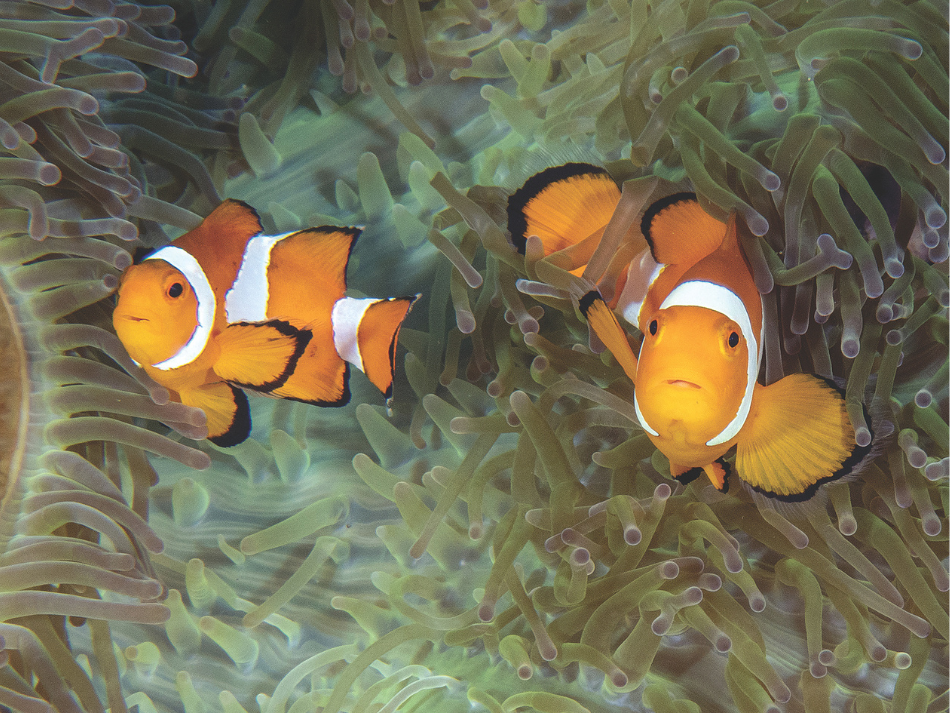
Color as protection
The name « clownfish » not only designates a colorful aspect; it also indicates a behavior. Their livery, ranging from bright orange to paler shades, communicates a bold message: « Don’t be afraid of me, but know that I am dangerous! » These fish feel safe in their host anemone, which, with its stinging tentacles, offers them protection. In general, each species of clownfish lives in exclusive symbiosis with one or a few varieties of anemones.
These fish are known for their territoriality and curious behavior. When a threat arises, they dive into their refuge, coming out only to observe the intruder, reminiscent of children playing « hide-and-seek. »
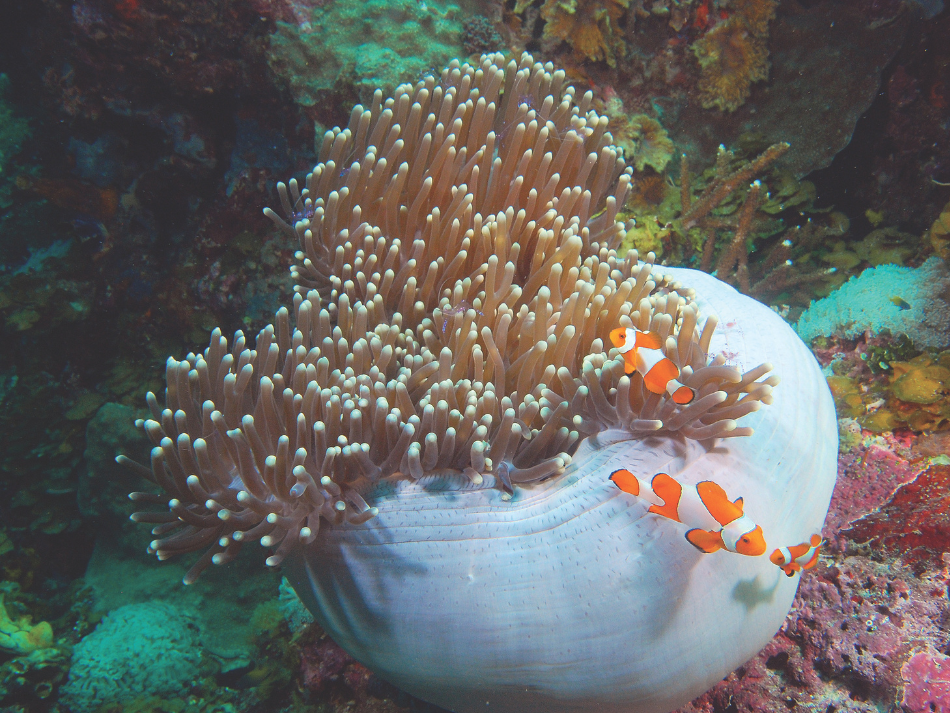
In addition to their diet, which includes plankton, clownfish benefit from the protection of their anemone, which keeps them safe from predators. Surprisingly, the anemone does not perceive the clownfish as an intruder. This phenomenon is explained by mutual acclimatization: the fish and the anemone get accustomed to each other through a process similar to mithridatism.
Did you enjoy this excerpt?
Read the full article.
READING TIME ≈ 4 min
Dive into the heart of PLONGEZ! Magazine
To enjoy this article and its exclusive content, a modest contribution is required.