


New shipwrecks discovered in Corsica: between History and underwater adventure
Over the past few months, numerous shipwrecks have been revealed in Corsican waters, some purely by chance, others thanks to the vigilance of enthusiasts relying on valuable clues. These recent discoveries offer divers the opportunity to explore, during their next stay on the Isle of Beauty, sites still untouched or with an unknown history. Here’s an overview of the most remarkable wrecks that have recently emerged from the Corsican depths.
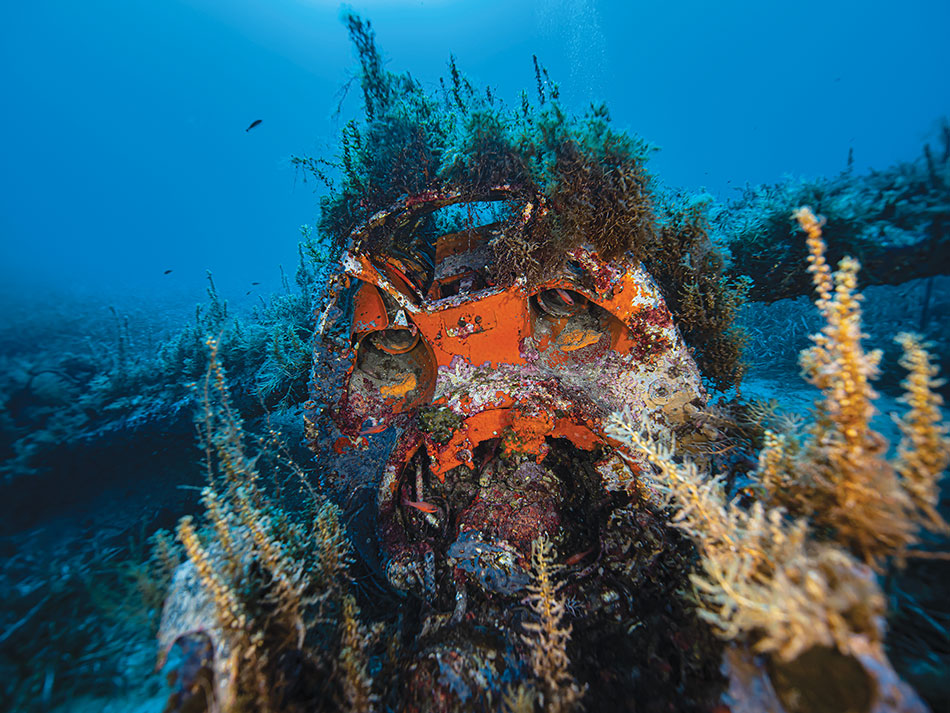
The P-47 Thunderbolt: a unique relic of World War II
The discovery of the P-47 at Cap Corse
In July 2020, Michel Astolfi, a fisherman in Macinaggio, accidentally discovers a wreck while retrieving his net caught on metal, off the tip of Cap Corse. Back on land, he shares his experience with Stéphane Ramazzotti, president of the club Capi Corsu Diving (Cap Corse Immersion). Quickly, a team sets out to inspect the wreck and confirms that it is indeed an overturned aircraft resting about 30 meters deep, in perfect condition – a rarity in this type of discovery.
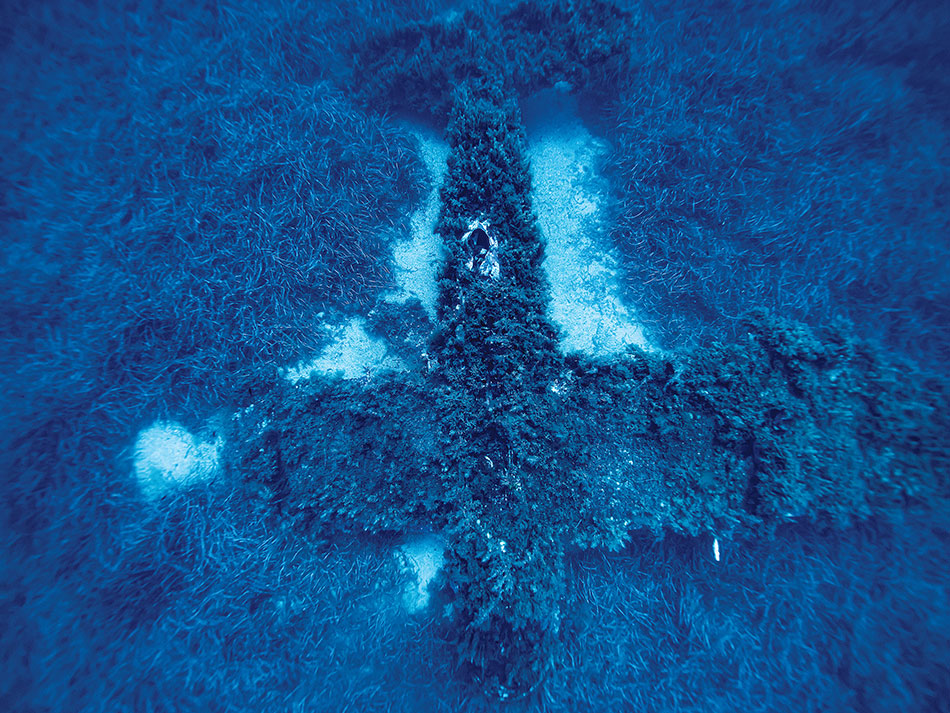
Identification and exceptional condition of the wreck
After an initial exploration conducted by club members, a team consisting of Pierre-Jean Micaelli, Alain Touzet, Laurent Ricquiers (Corse Images Sous-Marines), researcher Dominique Tadei and Tony Viacara begins the identification. Through image collection and archive analysis, they establish that it is a Republic P-47 Thunderbolt, a famous American fighter-bomber from World War II.
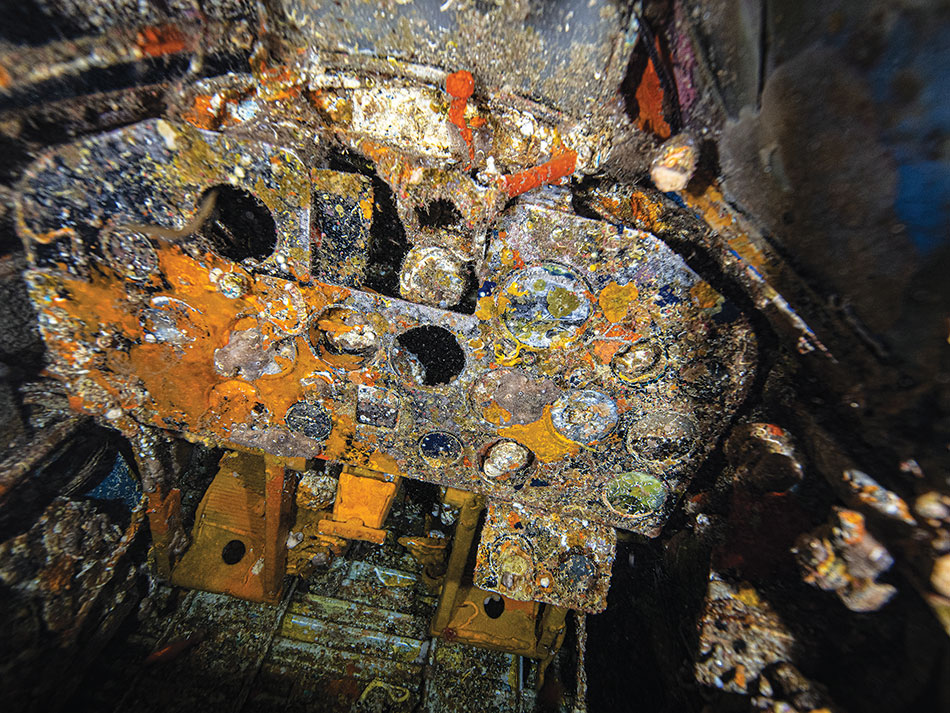
“It’s incredible to have this site just fifteen minutes from navigation,” says Tony Viacara, one of the first to photograph the wreck. Among the intact elements are the canopy, seat, dashboard instruments, armament, and radio. A crucial detail guides the identification: red paint appears on the tail, a characteristic mark of the famous African American squadron of the Tuskegee Airmen (100th Fighter Squadron, 332nd Fighter Group), nicknamed the “Red Tails”.
The Tuskegee Airmen: a historic squadron
Founded in 1941 in Tuskegee, Alabama, the birthplace of Rosa Parks, this squadron is the first composed solely of African American pilots, resulting from the “Selective Training and Service Act of 1940”. From 1941 to 1946, nearly 1000 pilots were trained and carried out more than 1,500 missions in North Africa, the Mediterranean, and Europe. Their major contribution to the war effort was achieved at the cost of heavy sacrifices (66 pilots killed in action, 32 prisoners after being shot down).
The discovery of the P-47 completes the census of the unit’s aircrafts that disappeared off the coast of Corsica. According to Dominique Tadei, it most likely belonged to Lieutenant Earl Sherard, future pioneer in pediatric neurosurgery, later portrayed by Morgan Freeman in the TV movie Fight for life.
Did you enjoy this excerpt?
Read the full article.
READING TIME ≈ 7 min
Dive into the heart of PLONGEZ! Magazine
To enjoy this article and its exclusive content, a modest contribution is required.