


With its immense protected and preserved lagoon, its endless coral reef inhabited by numerous species, and its pleasant climate year-round, New Caledonia is considered by many divers as a true underwater paradise. And, on land, it offers just as many riches!
1- The largest closed lagoon in the world
Surrounded by the world’s second-largest coral reef, measuring 1,600 km long, the incredible 24,000 km2 lagoon – of which 16,000 km2 has been listed as a UNESCO World Heritage Site since 2008 – encircles Grande Terre. New Caledonia is also protected, since 2014, by the Natural Park of the Coral Sea: the largest marine protected area of France, covering 1.3 million square kilometers!
Beneath the surface…
2- The paradise of corals
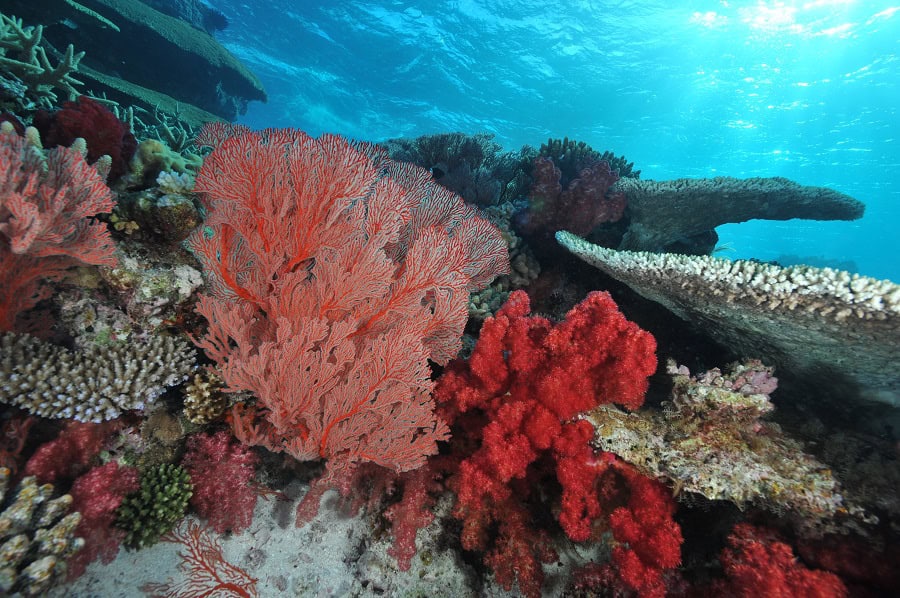
Fringing reef, barrier, coral islets, open sea reefs… Corals are everywhere, showcasing spectacular diversity: staghorn, acropora tables, massive, encrusting as well as beautiful gorgonians… The fortunate ones may witness the coral spawning in November, off Hienga Islet.
3- An impressive fauna
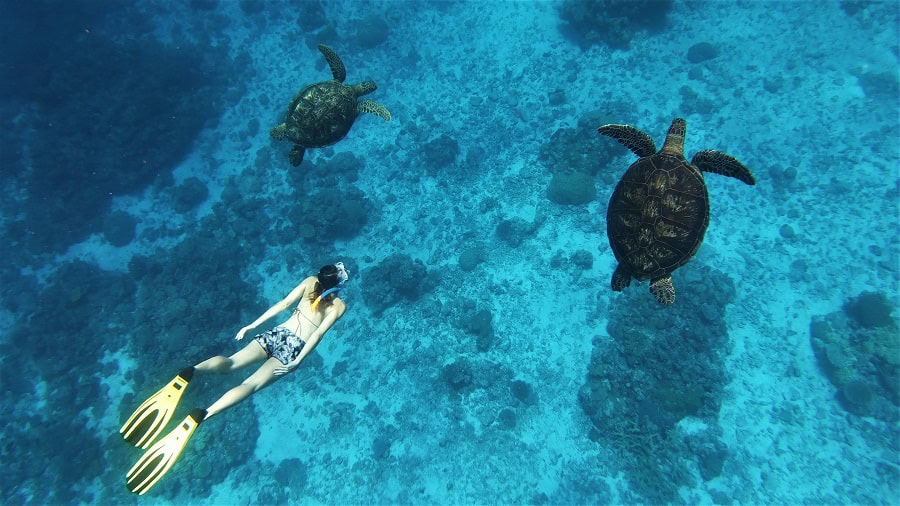
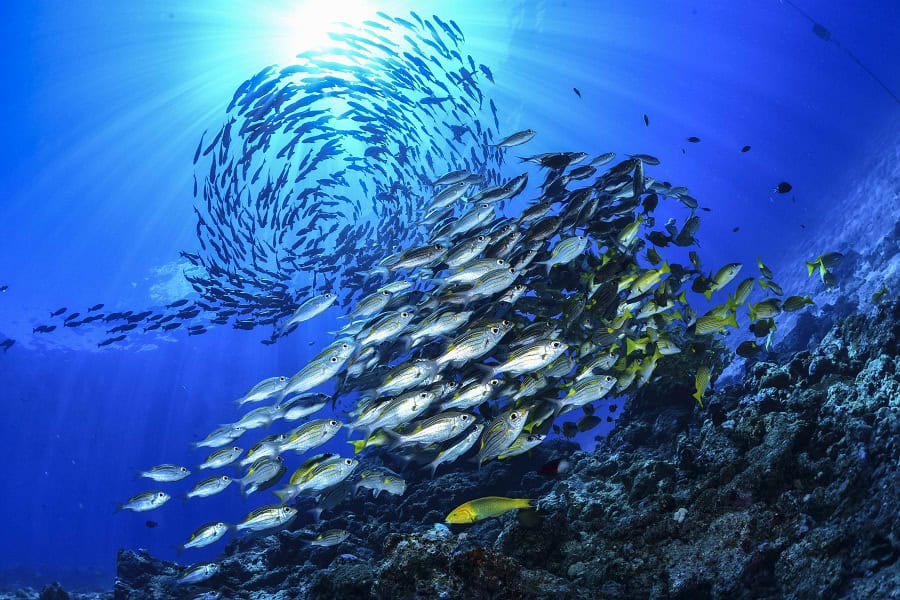
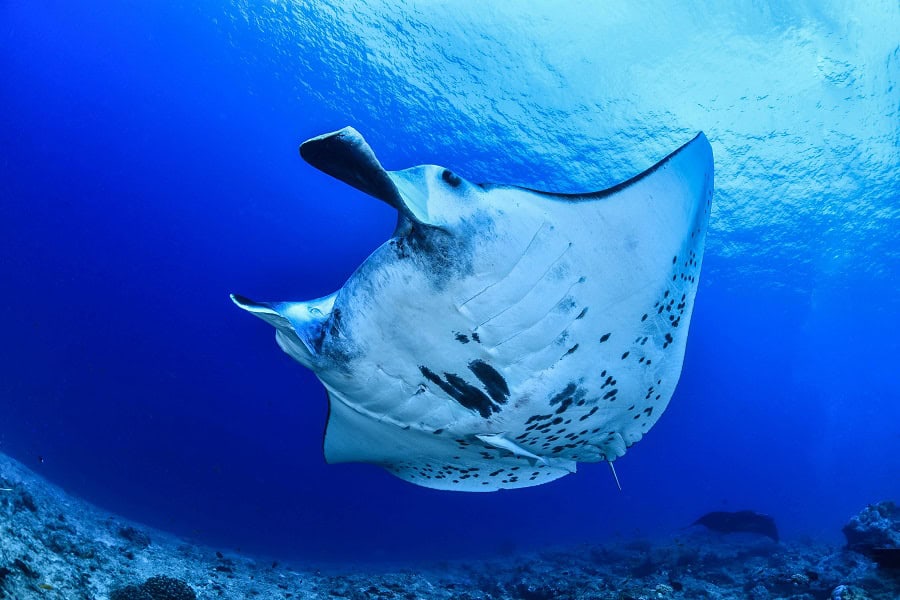
Between the passes, the reef, and the blue, fish, invertebrates, pelagics… the Caledonian seabeds teem with life. You’ll encounter butterflyfish, parrotfish, surgeonfish, triggerfish, turtles, eagle rays, and mantas… Dolphins, dugongs, and humpback whales also join the spectacle.
4- A diversity of underwater landscapes
Discover drift dives amidst a multitude of species in the passes (Boulari, Dumbéa…), explore mangroves and rugged seabeds with rocky needles, pinnacles, caves, crevices as well as drop-offs and coral gardens.
5- A hundred dive sites
From north to south of Grande Terre, off theIsle of Pines or Lifou, Lifou, one of the four Loyalty Islands, you can dive almost anywhere with a hundred listed dive sites and numerous clubs to accompany passionate divers, amateurs and experienced alike.
6- For beginner to advanced divers
The largest lagoon in the world offers endless exploration possibilities, accessible at all levels! For beginners, many sites in the lagoon are protected and very shallow, ideal for dive training, re-entry immersions, and even for non-divers who can try snorkeling. For more experienced divers, immersions in the passes, along deep drop-offs, and some drifts offer varied experiences, always with great encounters on the program!
7- Wrecks for all levels
A few wrecks will delight metal lovers. The most famous one is the Dieppoise, sitting upright at 26 meters deep, around which numerous fish can be observed. Others are accessible like the Sun Burnt Country and the Snark.
8- The paradise islands for diving
Around the Isle of Pines, dive into crevices, caves, and passes, also on reefs, and observe leopard sharks, turtles, eagle rays. At Lifou, colorful dives let you move among gigantic, life-filled gorgonians.
… with your head above the water!
9- Exceptional landscapes
Discover the bush, the Lékiny cliffs, the drowned forest, lush landscapes, waterfalls, mountains… Dive into panoramas full of colors with white sandy beaches, the blue sky alongside the turquoise shades of the lagoon and the deep blue sea, the black limestone rocks contrasting with the red earth covering much of the archipelago, but also the full palette of greens: from the lagoon’s waters to mangroves through dense forests and grassy savanna…
10- A variety of activities
From the air in ULM, helicopter or parachute, at sea aboard a boat or practicing water sports (kayak, paddle, surf, kite…) or on land via numerous hiking trails, accessible on foot, by mountain bike, rock climbing or horseback, there are a thousand ways to discover New Caledonia.
Practical: water 25°C on average from December to April, 23°C from May to November – best season to dive: all year round – equipment: 3 to 5 mm wetsuit – diving level: beginner to confirmed. For more information: visit the New Caledonia Tourism.
The Plongez! interview
Bastien Preuss, a gaze on the stunning depths of the « Rock »
In the heart of the world’s largest lagoon, which he ardently defends, the diver Bastien Preuss juggles photography, 360° films, 3D mapping, and sharing with the general public!
What was the dive that triggered it all for you?
In the year 2000, off Wellington (New Zealand), a short outing almost from the shore! The water was between 12 and 14 degrees. It was a very rocky place where crayfish and abalones hid. With only my level 1, diving occasionally, I thought it was really time to step things up and explore elsewhere, a bit further north, in New Caledonia, in warmer waters! At that moment, I remembered, as a child, always being absorbed in an atlas at home, my finger on New Caledonia! Subconsciously, I’ve always kept it in the back of my mind. Over the years, everything quite naturally came together.
Today, anchored on the « Rock », has its lagoon become your daily garden?
Yes, I truly feel at home in what can be considered a paradise on earth. The day I arrived on the atoll of Ouvéa, I felt as though I was back, at times, in Hoedic where I spent my childhood holidays. The people, very few in number, live simply, mainly from fishing. I never tire of the beauty of this place, in an almost deserted XXL lagoon which I can see, step by step, thanks to my 360° photographer’s eye with a six-lens camera. Alone, or guiding groups as part of my company, I dive there about 500 times a year, and over time, I’ve had to reference around 200 sites I know almost like the back of my hand. Now, I don’t want to leave and I strive to put my technological knowledge at the service of its biodiversity.
What do you think makes the Caledonian lagoon so rich?
The architectures and ecosystems are very varied between mangroves, coastal reefs, proximity to the open sea with, sometimes, mountains in the background of crystal-clear stretches. The sites are idyllic, easily accessible, many located between 20 and 40 meters, little frequented by humans, but rich in phenomenally varied marine fauna in very clear water: rays, giant groupers, dugongs, decorator crabs, barracudas, turtles, sperm whales and fin whales in open sea, up to nautilus which I particularly follow. Amidst paradisiacal anchorage sites, the encounters are endless.
Has New Caledonia become the Mecca of underwater photography for you?
Yes, especially since according to the seasons and hours, the light offers incredible variations. I love facing this nature, I love capturing it, trying to enhance it to share it so as not to live this experience alone in my corner. A bit like an artist, I try to stage, highlight, illuminate, and I sometimes even feel like a part of this universe! The places and encounters are so unique, magical, breathtakingly beautiful that I feel like their guardian. Just like this lagoon, the possibilities seem endless to immerse future generations in its heart. My goal remains unique: to raise awareness of its exceptional riches to preserve them. Whenever I can, I love giving back as much as possible to the island that has brought me so much, as it makes me so happy!
Interview conducted by Sophie Greuil,
complete interview available in issue #47 of Plongez!
opening image on the Isle of Pines. © Donnaventura / NCTPS