


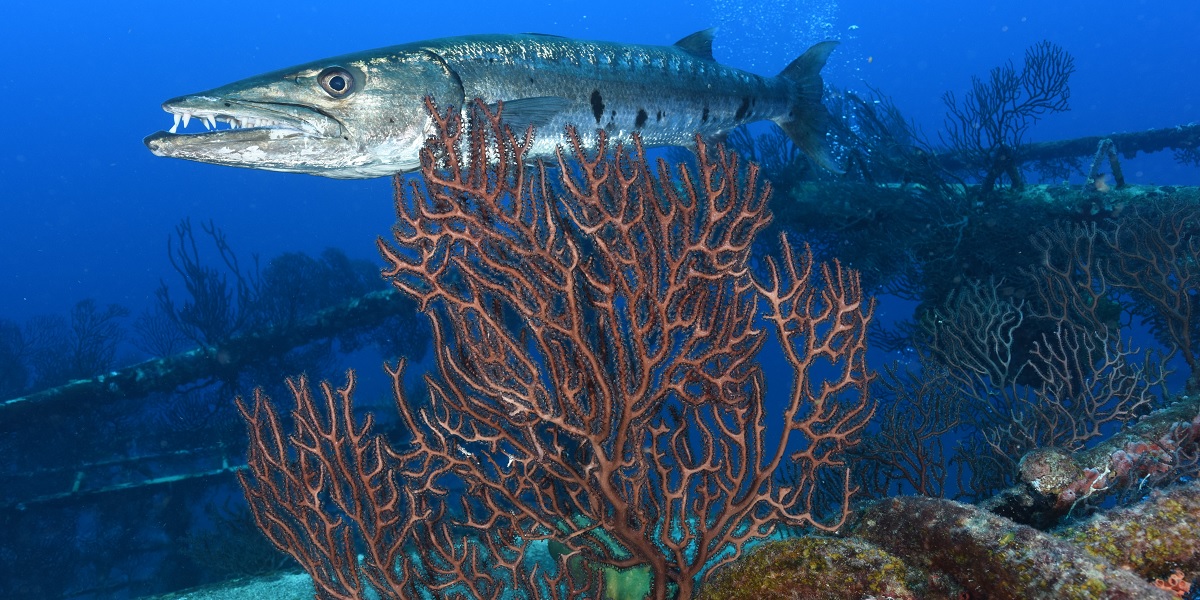
13 km² for one, 21 km² for the other: members of the Caribbean Netherlands with Bonaire, Saba, and Statia are among the smallest islands in the Caribbean. Far from mass tourism, these volcanic islands offer divers pristine waters preserved by two marine parks.Underwater…Dives around these two islands are certainly among the most beautiful in the Caribbean. Drop-offs, coral gardens, muck-dives, wrecks (in Statia), or even hot springs (in Saba). If the waters are so colorful and lively, it’s notably thanks to the Saba Marine Park and the St. Eustatius National Marine Park. Around each island, the dive sites are all listed and equipped with buoys to anchor the boats. In Saba, the volcanic terrain makes it a true paradise for divers. Peaks, crevices, and caves are colonized by the typical Caribbean fauna: angelfish, barracudas, groupers, tarpons, nurse sharks, and stingrays. In Statia, the landscapes have been sculpted by ancient lava flows from the Quill volcano. But the highlight remains the wrecks and their many relics: anchors, cannons, hull structures… An absolute must-see is the wreck of the Charles L. Brown is one of the largest in the Caribbean. As for the Chien Tong, it serves as the backdrop for one of the most beautiful night dives in the world: dozens of turtles use it as a hotel to rest. The marine park has implemented a protection program for the three species that come to lay eggs on the island’s beaches: green, hawksbill, and leatherback turtles.More recently, the island has recovered from the hurricanes Irma and Maria by discovering a new wreck that enriches its underwater museum…
…and on land.No white sandy beach with coconut trees on the horizon, no shopping center… Steep cliffs for Saba, black sand beaches for Statia, both islands are renowned for their dormant volcanoes and rich tropical forest. They offer dozens of hiking trails on the slopes of their respective volcanoes: Mt Scenery in Saba, which at 887 meters is the highest point in the Netherlands, and the Quill in Statia. Both discovered by Christopher Columbus in 1493, Statia distinguished itself in the 18th century by becoming one of the busiest ports in the world. It’s easy to step back in time by strolling around the island (ruins, typical colonial houses…) and diving (galleon wrecks, anchors…). On the culinary side, whether it’s a quick lunch at Para Mira in Statia or a dinner with grilled lobster on the terrace of Scout’s Place restaurant in Saba, there’s no doubt you’ll enjoy a meal with « local flavor. »PracticalTime difference : – 6 h in summer, – 7 h in winter.Water temperature : from 26°C in February-March to 30°C in summer.Best season : from November to May.Dive equipment : 3 mm wetsuit.Dive level : from beginner to advanced.Getting there : a direct flight connects Paris to Saint-Martin in 9 hours, followed by a short 12 to 15-minute hop to Saba or Statia (Winair company).Dive center in Saba: Sea Saba
Freediving center in Saba: Saba Freediving School
Dive center in Statia: Scubaqua