


The Human Diving and Underwater Intervention Expert Center (CEPHISMER) conducted a saturation dive at a depth of 200 meters, between March 18 and March 28, 2025. This operation, which required the use of an electronic diving rebreather, marks a significant advancement in the field of military underwater interventions.
The History of Saturation Diving
Since the late 1970s, the French Navy has been involved in the experimentation of saturation diving. The goal is to develop suitable protocols, test equipment, and deepen knowledge about the physiology and cognitive abilities of divers at great depths. Captain Aymeric, second-in-command of CEPHISMER, emphasizes the importance of establishing clear and applicable protocols for all, in order to provide a comprehensive and ready-to-use concept for the units.
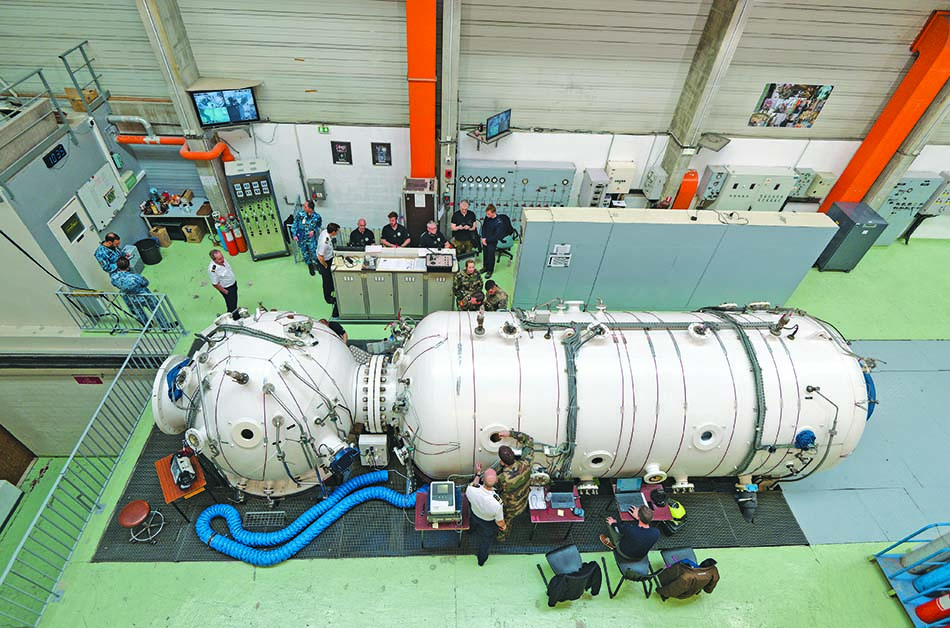
The Hyperbaric Center CH 500
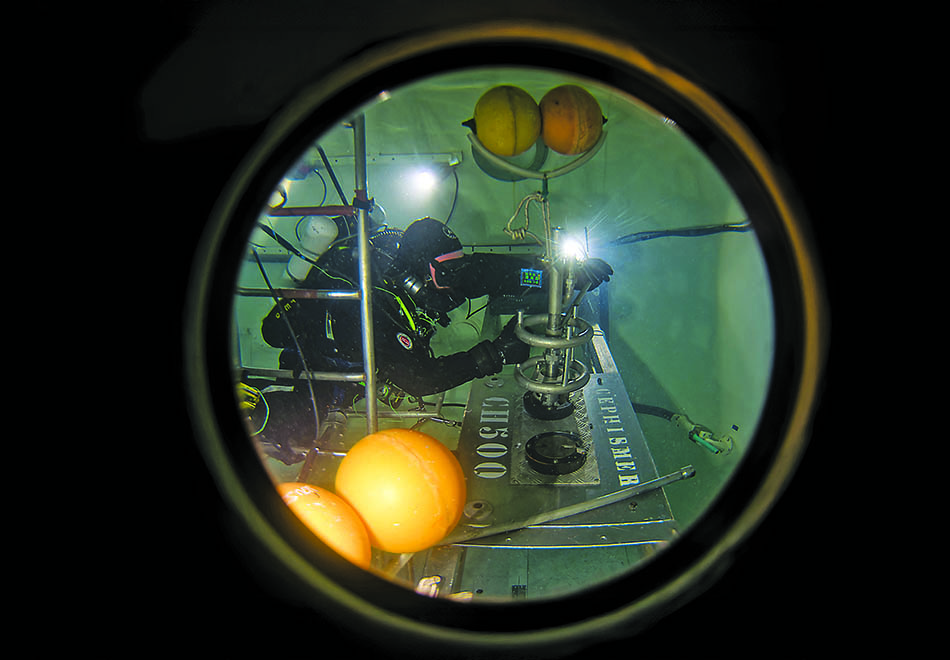
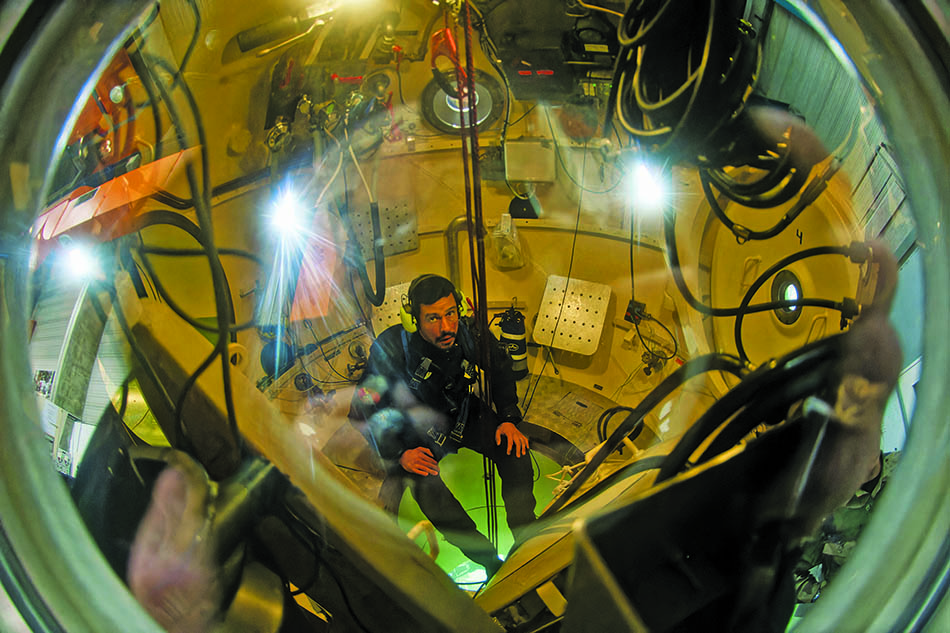
To successfully conduct its training and tests, CEPHISMER has a hyperbaric center, the CH 500. This 66 m³ chamber, capable of reaching a pressure equivalent to 500 meters, allows for the safe simulation of underwater missions. It consists of three elements: a living and hygiene space of 30 m³ for four divers, an adjacent 8 m³ turret, and a 28 m³ water tank for exercises.
The ENTEX Experimental Dives
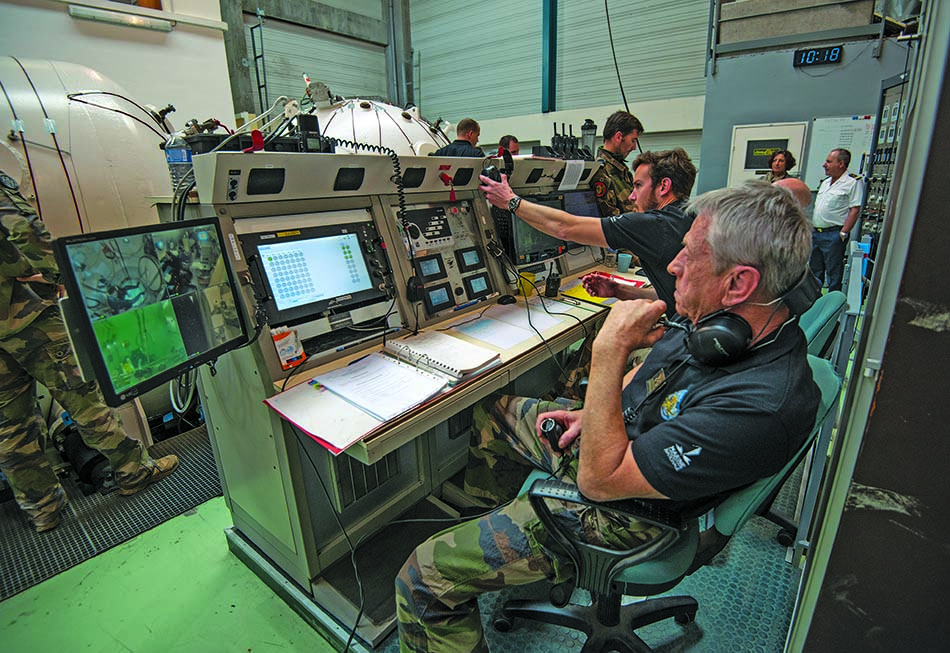
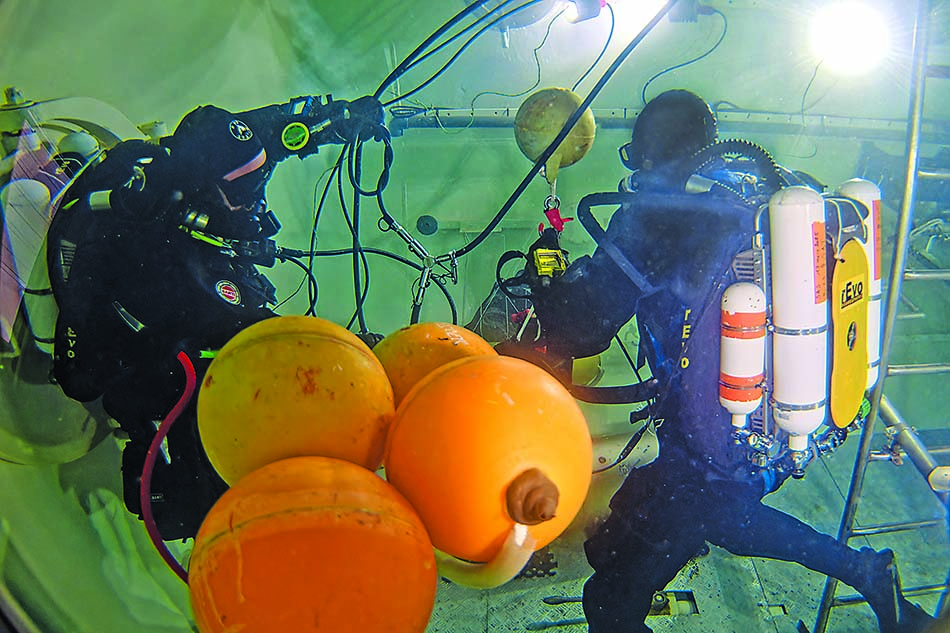
The ENTEX program (ENTTraining EXperimentation) has allowed for several experimental dives, including one in 2024 at 100 meters. This dive served to revalidate the protocols and maintain the skills of the personnel. In 2025, the ENTEX 50 mission was launched to reach 200 meters, specifically testing the use of the electronic rebreather rEvo, in collaboration with the diving center « Plongée TeK Marseille. »
The Procedure for the 200-Meter Dive
On March 18, 2025, four divers, including Chief Master Franck and Corvette Captain Romain, were pressurized at 10:00 AM. They reached 200 meters in 4 hours and 30 minutes, remaining at this depth (21 ATA) for 56 hours in a heliox atmosphere. During this time, three incursions into the wet chamber were conducted, allowing the divers to perform practical exercises, such as implementing a submarine ventilation and depressurization system (SVDS) and securing sensitive objects.
Medical Monitoring
The hyperbaric specialist doctor, Lucile, monitored the health of the divers throughout the operation. The high-pressure nervous syndrome, caused by breathing heliox at great depths, poses a major risk. Lucile conducted various neurological and clinical examinations to assess the impact of the dive.
The Ascent and Future Objectives
After 56 hours at 200 meters, the ascent took 7 days and 12 hours, with a linear decompression procedure. The divers returned to the « floor » of CEPHISMER on March 28, welcomed by their families and the technical team.
Currently, the mine clearance divers operate up to 80 meters, while robotic means can reach 2,000 meters. The future objective is to reach 250 meters in saturation for divers, corresponding to the operational domain of the SVDS, and 6,000 meters for other technical means.
Conclusion
Corvette Captain Arnaud Le Béguec, commander of CEPHISMER, emphasizes the importance of this world first: « This is the first time a saturation dive has been conducted at a depth of 200 meters using an electronic rebreather. We are aware of the need to further improve the equipment to push the physiological limits of our divers. » Experiments like ENTEX 50 are part of the continuity of advancements made by the pioneers of scuba diving.
The Interest of Saturation Diving
Saturation diving, which can last several days, allows the diver to work outside a hyperbaric chamber while remaining safe. Unlike incursion dives, the duration of desaturation does not vary based on the time spent underwater. This type of diving is reserved for professionals and military personnel with the necessary infrastructure.
A Legacy of the « Mousquemers »
CEPHISMER is the direct descendant of the Underwater Research Group (GRS), created in 1945. It is attached to the staff of the naval action force and consists of about sixty sailors, working on innovative projects for the future of scuba diving.
The Mission If You Accept It
- Total duration of the dive: 10 days.
- 55 hours at 200 m depth.
- Heliox atmosphere: 2% oxygen and 98% helium.
- Three incursions into the wet chamber with exercises in operational situations.
- Cognitive and physiological tests after each dive.
- Duration of the ascent: 7 days and 12 hours.
This article, originally written by Hervé Colombini for the print edition of PLONGEZ!, has been adapted for the web.
Photos: Hervé Colombini and French Navy