


Several paths allow combining engagement in the French Navy with diving, either full-time or coupled with another profession. We take you on a tour of demanding training programs where rigor and determination are essential values. But at the end of it all, you get careers that leave plenty of room for passion!
Becoming a diver in the Navy means enrolling today in the long tradition of diving pioneers. Everywhere in the premises of the school in Saint-Mandrier, the portrait of Philippe Tailliez and his eternally benevolent gaze remind us of their legacy. Even if for many young divers his name means nothing, it is to him – along with his comrades Jacques-Yves Cousteau and Frédéric Dumas – that we owe both the development of scuba diving and the creation of what would become CEPHISMER, the Human Diving and Undersea Intervention Cell, which manages all military divers and the creation of the diving school.
All trainés à Saint-Mandrier
All, whether they belong to the Navy or other military branches, are trained at the diving school in Saint-Mandrier. The historic site of the peninsula was not chosen by chance. Besides the logistical support provided by the presence of the naval base, it is also the only port in continental Mediterranean facing north, particularly sheltered by the Toulon harbor, protecting it from the prevailing winds, allowing for a year-round workable water plan. The training area, on grounds from 6 to 25 meters deep, offers an ideal learning place.
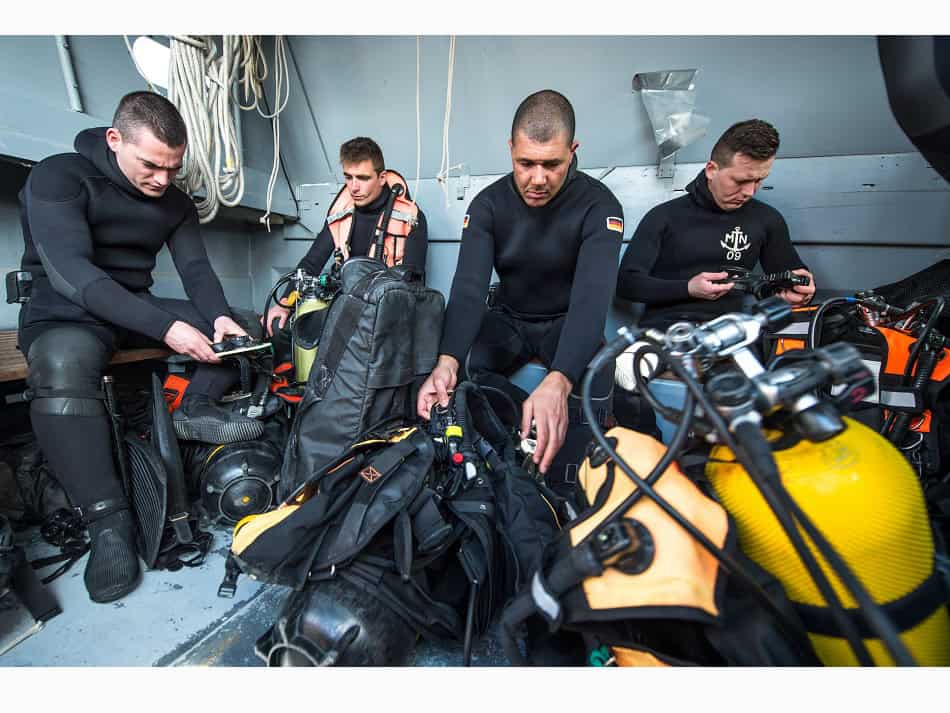
It hosts the board diver course, common to all military branches, directorates, and services, from the Directorate General of Armaments (DGA) to the Armed Forces Health Service (SSA), including the Gendarmerie, Army, or Paris firefighters (BSPP), with 5 sessions of 40 students per year; but also demolition divers and combat swimmers courses, along with numerous complementary training sessions.
“ For me, divingée n’is ’a vector, explains frigate captain Jérôme Pernot, head of the diving school, and I ask them, for those who haveéjà dovein the civilian d’to forget what’they have learned. It is not about’doing’exploration with them, but real’military intervention à visé. ”. To achieve this, 70 permanent staff, 30 reservists, plus about thirty people from health personnel and logistical services in support, directly or indirectly supervise the students.
“ I expect from them moral strength, humility, rigor, and a life discipline, insists their commander. Let us remember that we must operate in a hostile environment. ” The diving school and the military diving expertise center (CEPHISMER) work in a permanent relationship to evolve training to better fit the field reality. The instructors’ profile, present for a limited period of two to three years before joining another unit, also ensures never diverging from the concrete imperative of their professions. “ I consider it essential, in a concern for the ongoing evolution of our training and performance research, that we maintain, in liaison with CEPHISMER, a careful watch on the methods used in civilian tech diving. They have made a huge leap forward, and I think we have much to gain from maintaining a close relationship between our two worlds ”explains the commander. “ Certainly, our school has profoundly modernized since 1953, but we still rely on the pioneering spirit of the Ancients, on values of engagement,he continues
, it’s what must primarily take root in the minds of all who pass through here.
Board diver
All diving and military career combinations mandatorily require going through the board diver course. For some, it is an end goal in itself, for others, a step in their training: all have six weeks to prove themselves and obtain the valuable certification.
Plongeur démineur
Dans la continuité des précurseurs
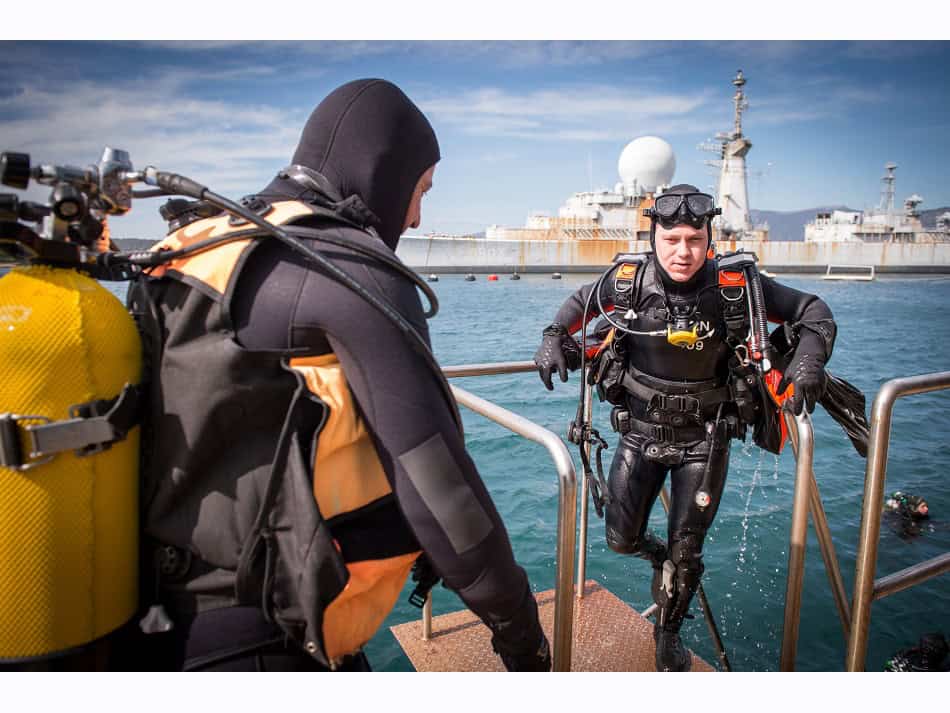
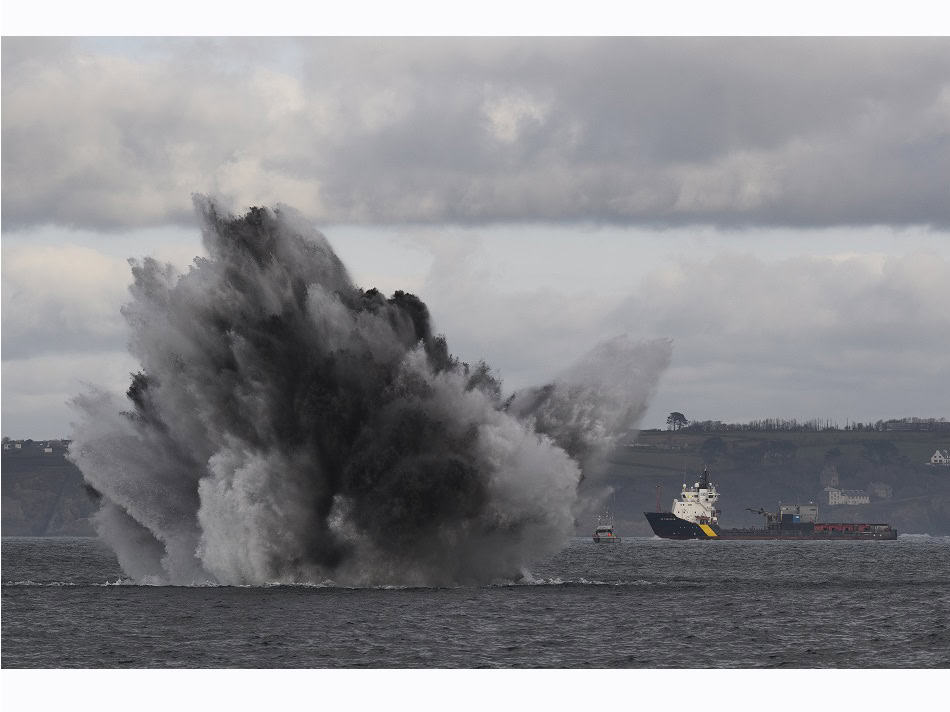
Les plongeurs démineurs, contrairement aux plongeurs de bord, viennent apprendre un métier à part entière. Leur formation dure 10 mois, entre plongée à l’air jusqu’à 50 mètres, utilisation du recycleur CRABE jusqu’à 80 mètres et apprentissage des techniques de déminage.
Plongeur d’hélicoptère
Des sauveteurs hors norme
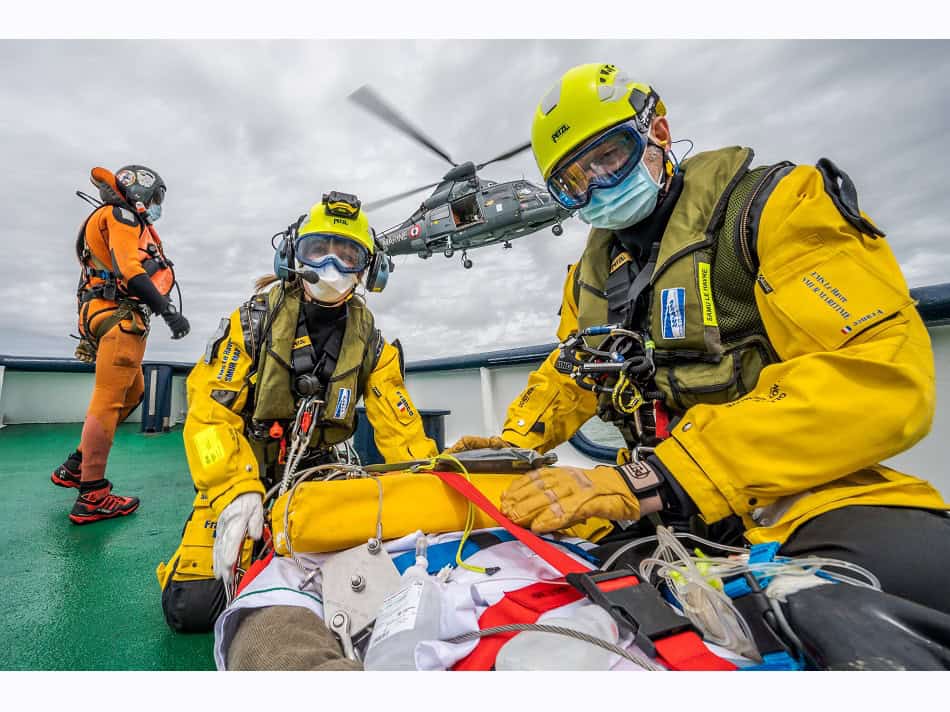
Ils sont environ 70, répartis sur les bâtiments de la Marine nationale, à être titulaires de la certification qui leur permet d’intervenir en mer à partir d’un hélicoptère. Des conditions très particulières qui supposent un apprentissage ciblé, entre hélitreuillage, plongée et secours aux victimes.
Nageur de combat
Des combattants d’élite
Ils ne sont qu’une poignée à obtenir chaque année la certification de nageur de combat. Ils rejoignent alors le Commando Hubert, spécialisé dans les interventions sous-marines les plus sensibles, du contre-terrorisme à la libération d’otages, en passant par le renseignement ou la destruction d’objectifs. La 98ème session de formation s’est déroulée en 2022, 70 ans après la création des nageurs de combat.
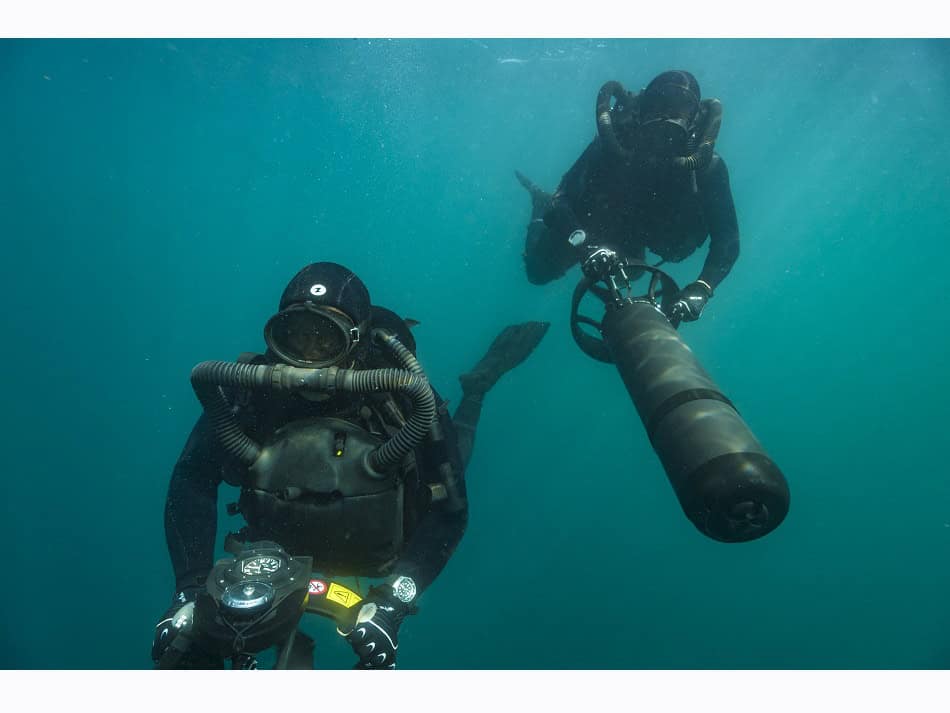
Divers in all military branches’armée
Currently, approximately 2,250 divers are spread across all military branches. About 50 in the Air Force, as well as in the Health Services, approximately 300 in the Army including the Paris firefighters, about 200 in the Gendarmerie. The French Navy’s board divers are about a thousand, the clearance divers around 300, and the combat swimmers about 100. Add to this the helicopter divers, about 70, and those of the Maritime Gendarmerie, about 60.
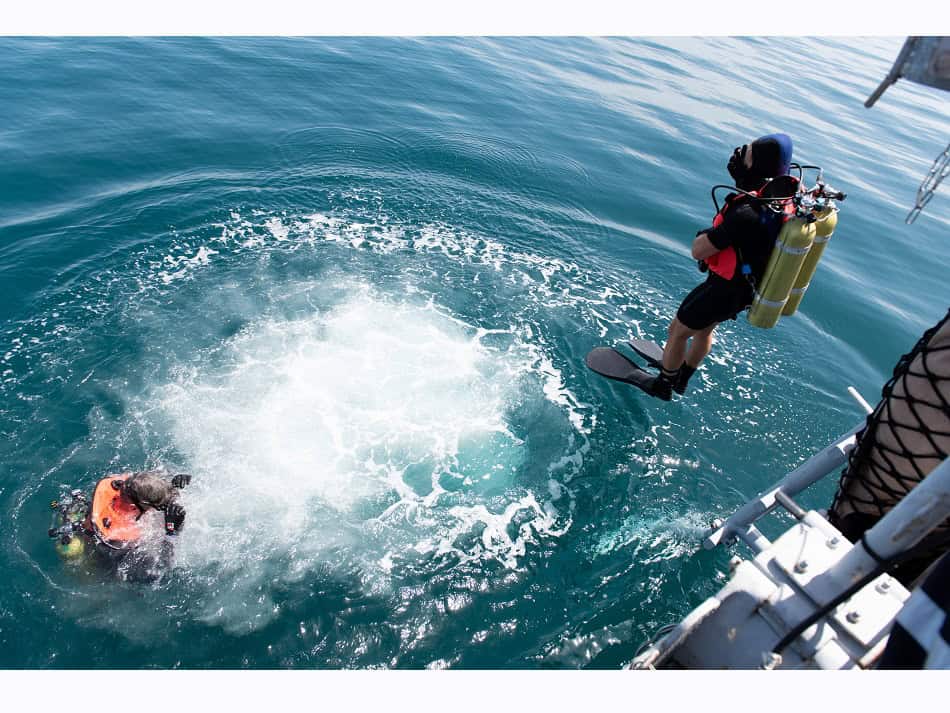
The feminization of professions
Since 1993, the board diver, clearance diver, and helicopter diver training have been open to women. In the Navy, there are about fifteen female board divers and four female clearance divers. The first female helicopter diver is currently stationed in Hyères. However, there are still no female combat swimmers to date. While the marine commandos, from which the Hubert Commando recruits, have been open to women since 2001, none have yet joined these units.
Où s’Who to contact for more information?
To join the Navy, you need to contact a CIRFA (Armed Forces Information and Recruitment Center). Several of them are spread across the territory. Their contact details are available on the Navy recruitment website: www.lamarinerecrute.fr
opening image © Benjamin Papin / marine nationale / Défense