


A sound journey close to the scientists
« Plongeon » is an immersive podcast that takes its listeners to the heart of scientific missions dedicated to the oceans. Three protagonists pace each episode: a scientist, a high school student, and Margaux Bédé, co-creator of the podcast. Thanks to an ultra-realistic sound atmosphere (sound effects, discussions, sounds added in post-production), the listener finds themselves plunged into the adventure as if they were there. This podcast is aimed at nature, exploration, and environment enthusiasts.
A total immersion into a research mission
Each episode highlights a mission conducted a few months or years ago. From the Kerguelen Islands to South Africa, through Mayotte or the Côte d’Azur, listeners follow the three protagonists in their research: aboard a ship, during dives on a wreck, handling research equipment, or aboard a submarine.
Beyond scientific discoveries, « Plongeon » gives access to the behind-the-scenes of researchers’ work and shares lived anecdotes, recreated with captivating sound staging. The trio relives the highlights of a mission from a Parisian studio, “we often laugh, sometimes cry, it’s a very spontaneous exercise” explains Margaux, “The scientists are delighted and sometimes moved to relive this mission that marked them!”
A captivating episode on the exploration of an ancient wreck
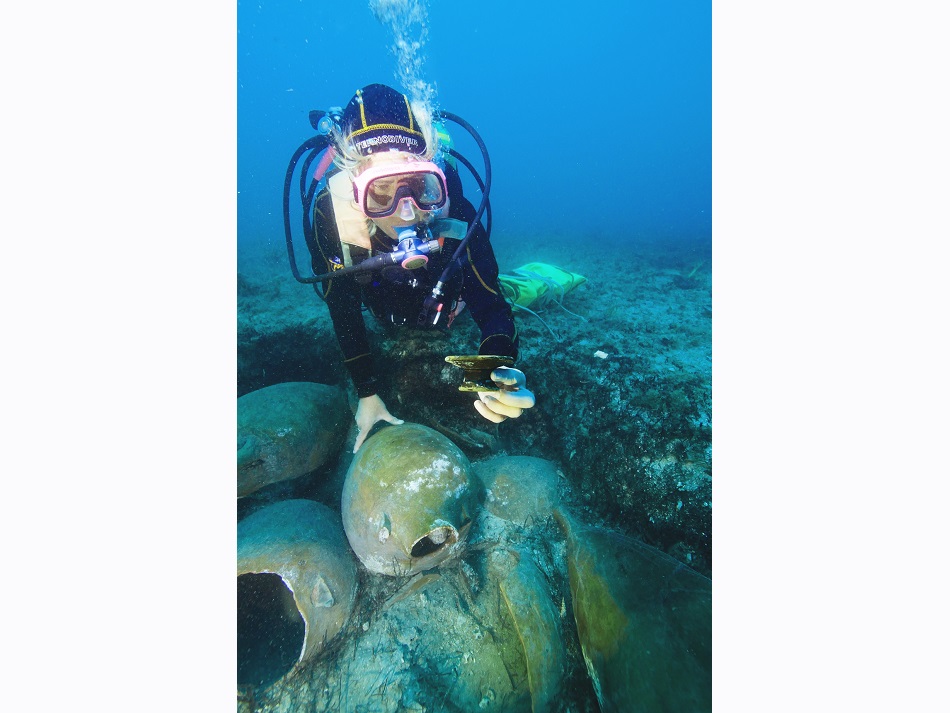
The latest episode plunges listeners into the discovery of an ancient shipwreck with Anne Joncheray, an underwater archaeologist. The three women explore an exceptional underwater site and uncover amphorae, thus restoring a fascinating historical adventure. Anne takes us through the discovery and excavation of the Fort Royal wreck, north of Sainte-Marguerite Island, and explains how it was discovered and excavated. The episode is also an opportunity to learn more about the profession of an underwater archaeologist, an extraordinary occupation.
Thorough preparation for a successful immersion
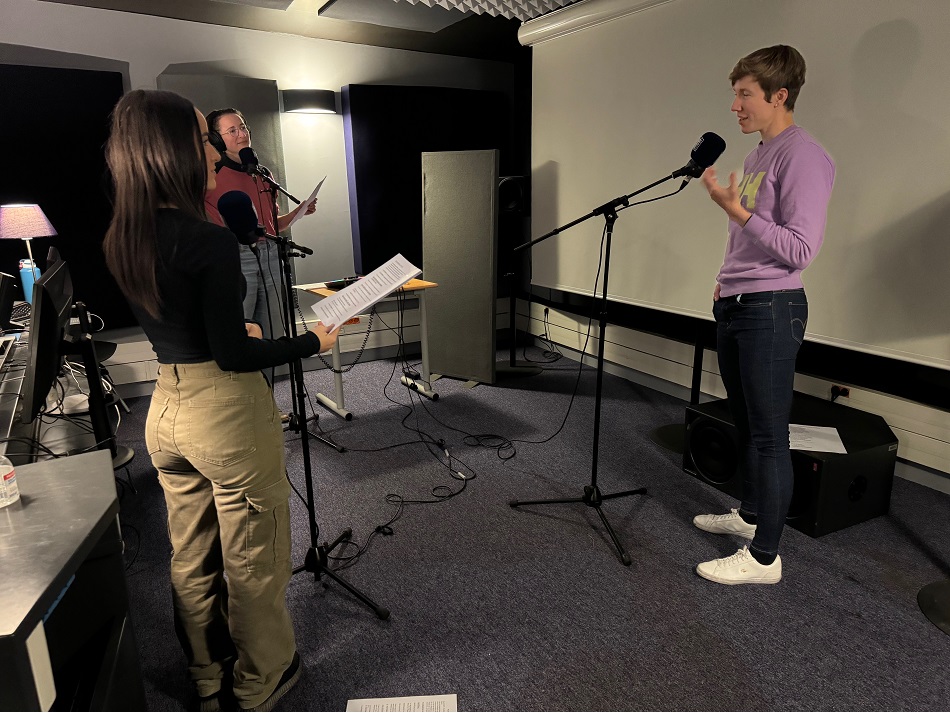
Before recording, the guest scientist talks with Margaux for an hour to present the mission, share anecdotes, and reveal the behind-the-scenes of their work. A high school student, having prepared questions in advance with his class, then joins the discussion.
The recording takes place in the studio, where the participants stand to promote natural and spontaneous interactions. Margaux guides the exchanges, leaving ample room for improvisation to recreate the atmosphere of a real scientific expedition.
In post-production, immersive sounds (waves, dives, discussions) are integrated from recordings made by researchers, recordings by Margaux, or sound libraries. But sometimes, specific sounds are missing, which must be recreated or replaced. « For example, recounts Margaux, in the episode with Anne Joncheray, we needed the sound of an underwater archaeology tool, but we had no recording. Anne told me that this sound resembled that of a mower, so we added a mower noise… and the result is astonishing to listen to!«
The use of 3D sound, a major innovation of the podcast, further enhances the auditory experience. With suitable equipment, the listener can hear the waves coming or perceive a voice differently depending on the orientation of their head, for a total immersion.
For Margaux “recording in the studio not only allows for optimal sound rendering but also limits the carbon footprint while giving a second life to past missions through these captivating stories”.
An educational and interactive podcast
Since its launch, « Plongeon » has collaborated with senior students from Darius Milhaud high school and their passionate biology teacher. Every year, a new class participates, and each episode features a different high school student asking prepared questions. Their spontaneity and sometimes unexpected questions enrich the exchanges and make science accessible and engaging.
Margaux insists on the presence of high school students in the podcast because scientists naturally adapt their speeches to this young audience, explaining their work with pedagogy and clarity. This approach aims to raise young people’s awareness of scientific research and perhaps inspire vocations.
Margaux, a journalist passionate about the oceans
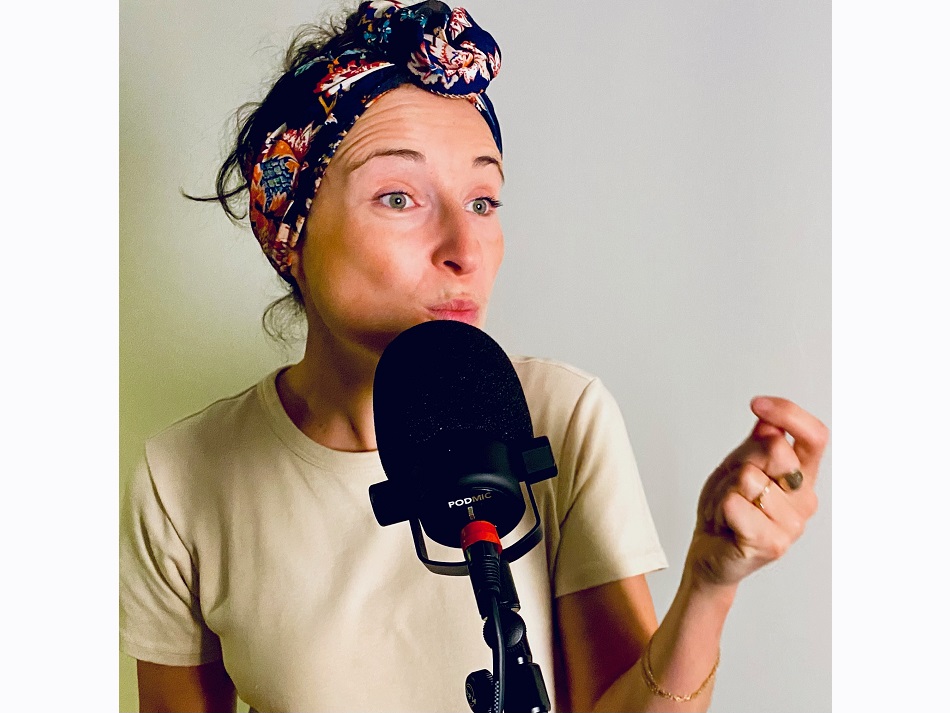
Margaux Bédé is a radio journalist, reporter for Radio France, and former collaborator of RMC. Three years ago, she co-founded « Renée Prod » with Quentin Pommier, a production studio highlighting environmental issues. Passionate about the oceans forever, she wanted to create a podcast valuing the work of scientists while making it accessible to the general public.
A podcast supported by committed partners
Broadcast every last Thursday of the month during the school year, « Plongeon » is now in its third season. Each year, it is produced in partnership with a foundation or association committed to ocean protection. This season, « Plongeon » collaborates with 1Ocean, an initiative led by photographer Alexis Rosenfeld, with whom an exclusive episode was made on underwater photography.
Each season thus includes a special episode highlighting a committed personality, but not a scientist, to offer a different perspective on the oceans. This is the case with the episode with Anne Joncheray. “There will always be a section related to the environment” says Margaux.
The next episode: heading to underwater caves
The next episode will explore the chemical landscape of underwater caves and take us to the creeks for another fascinating dive. A scientific adventure not to be missed!