


The prestigious ceremony rewarding wildlife photographers took place last night in the UK and revealed the winners of each category. The grand prize for Photographer of the Year 2023 was awarded to the Frenchman Laurent Ballesta. It is the second time he has received this title!
Selected from 49,957 entries from 95 countries, the winners of the prestigious Wildlife Photographer of the Year competition by the Natural History Museum were unveiled today at the 59th edition of this award ceremony in South Kensington.
The flagship exhibition Wildlife Photographer of the Year presenting the award-winning images will open on Friday, October 13, 2023, at the Natural History Museum in London. It will go on tour in the UK and abroad, including in Australia, Belgium, Canada, Denmark, France, Germany, New Zealand, and Singapore.
Laurent Ballesta, Photographer of the Year
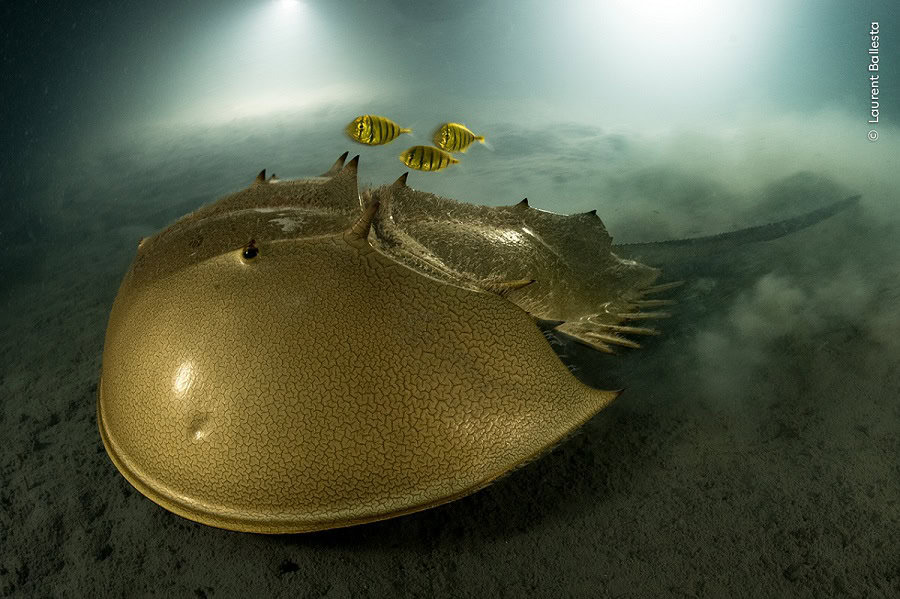
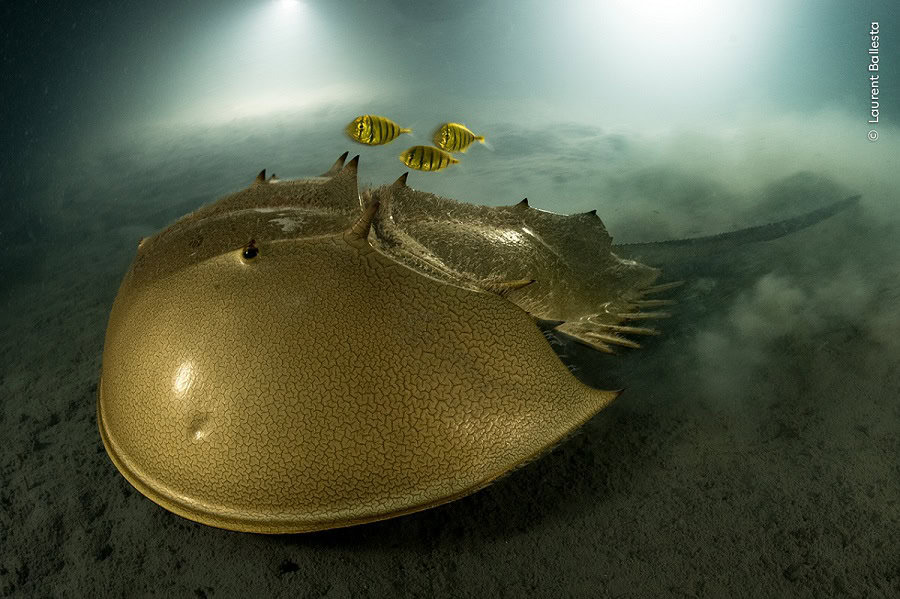
The French photographer and marine biologist Laurent Ballesta received the Wildlife Photographer of the Year 2023 award for ‘The golden horseshoe,’ an eerie image of a horseshoe crab accompanied by a trio of golden trevallies.
The tri-spine horseshoe crab has survived for more than 150 million years, but today it faces habitat destruction and overfishing for its food and for its blue blood, used in vaccine development. However, in the protected waters of Pangatalan Island, the Philippines, there is hope for its survival.
Jury president and editor-in-chief, Kathy Moran, states: « Seeing a horseshoe crab in its natural habitat, in such a hauntingly beautiful way, was astounding. This is an ancient species, highly threatened, but also vital to human health. This photo is luminescent« .
Laurent is only the second photographer in the fifty-nine-year history of the competition to receive the Grand Title twice. He was first awarded in 2021 for his intriguing image of camouflaged groupers emerging from a milky cloud of eggs and sperm in Fakarava, French Polynesia.
Young Wildlife Photographer of the Year 2023
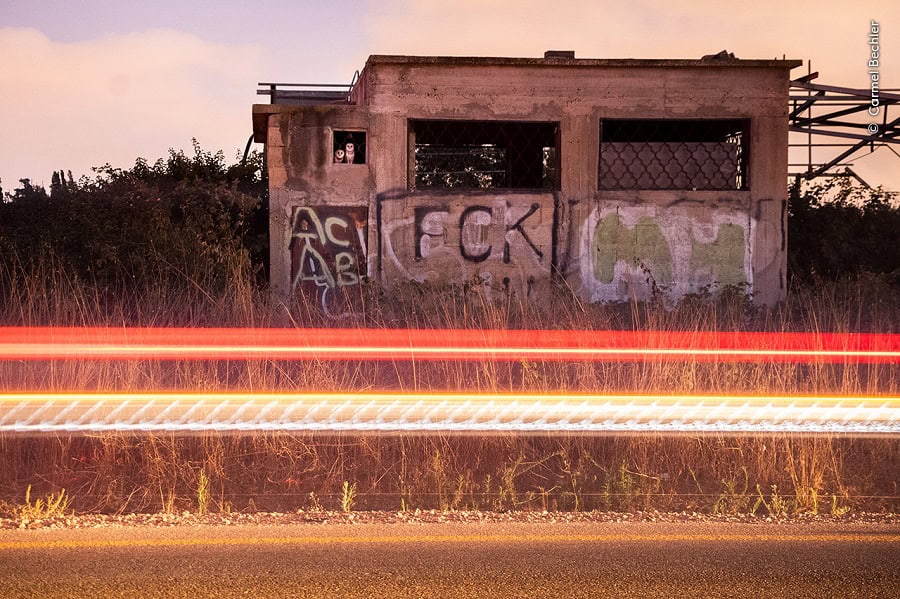
Carmel Bechler, 17, from Israel, received the Young Wildlife Photographer of the Year 2023 award for his ‘Owls’ road house,’ a dynamic frame of barn owls in an abandoned roadside building. Using the family car as a hide, Carmel made the most of natural light and long exposures to capture the light trails of passing traffic.
Carmel was only 11 when he started photographing wildlife, and this is the first time he has received an award in this annual competition. « I hope to share with my photos the beauty of the natural world around us, even in places where we least expect it; we just need to open our eyes and minds« , says Carmel.
This photograph has so many layers in terms of content and composition. It both screams ‘habitat destruction’ and ‘adaptation,’ raising the question: If wildlife can adapt to our environment, why can’t we respect theirs« , says Kathy Moran.
The two grand title winners were selected from 19 astounding category winners showcasing the rich diversity of life on Earth. In an intensive process, each submission was judged anonymously by an international panel of experts on its originality, storytelling, technical excellence, and ethical practices.
Doug Gurr, director of the Natural History Museum, comments: « While inspiring absolute awe and wonder, this year’s winning images provide compelling evidence of our impact on nature, whether positive or negative. Global promises need to turn into action to reverse the trend of nature’s decline« .
The sixtieth Wildlife Photographer of the Year competition will be open to photographers of all ages, nationalities, and levels of experience. Entries will begin on Monday, October 16, 2023. As this significant anniversary approaches, Wildlife Photographer of the Year has announced the composition of the international jury of industry experts, the waiver of entry fees for over 100 countries, changes to the competition rules, and a new prize to further encourage hopeful stories about the natural world.
Discover the full winners list here.
Animals in their Environment Award – Life on the Edge by Amit Eshel, Israel
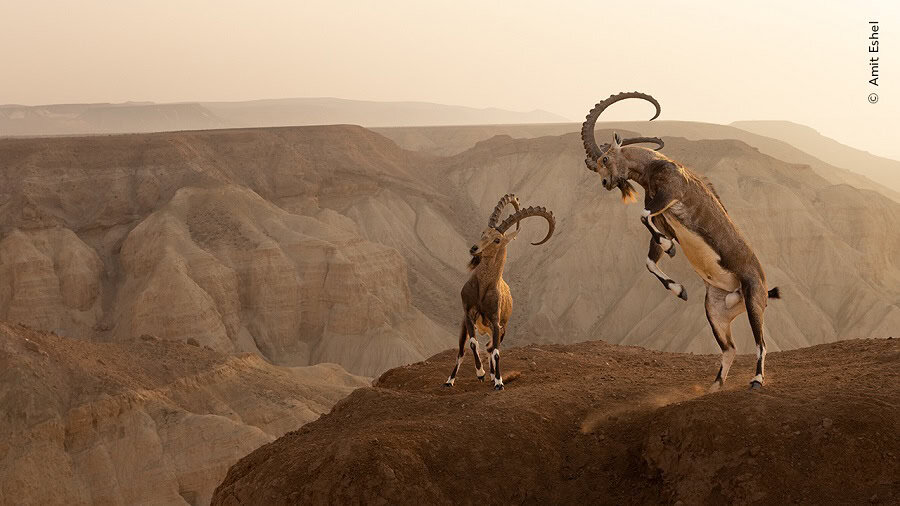
Amit Eshel witnesses a spectacular showdown between two Nubian ibex on a cliffside.
After hiking to a vantage point on top of the cliff, Amit slowly approached, using a wide-angle lens to frame the action of two Nubian ibex clashing against the dramatic backdrop. The fight lasted about 15 minutes before one male conceded and the pair separated without serious injury.
As the mating season approaches, part of the males’ fur darkens and their neck muscles thicken. Rivals rise on their hind legs and strike each other’s heads. Their horns sometimes shatter on impact.
Location: Zin Desert, Israel
Portrait Award – The Face of the Forest by Vishnu Gopal, India
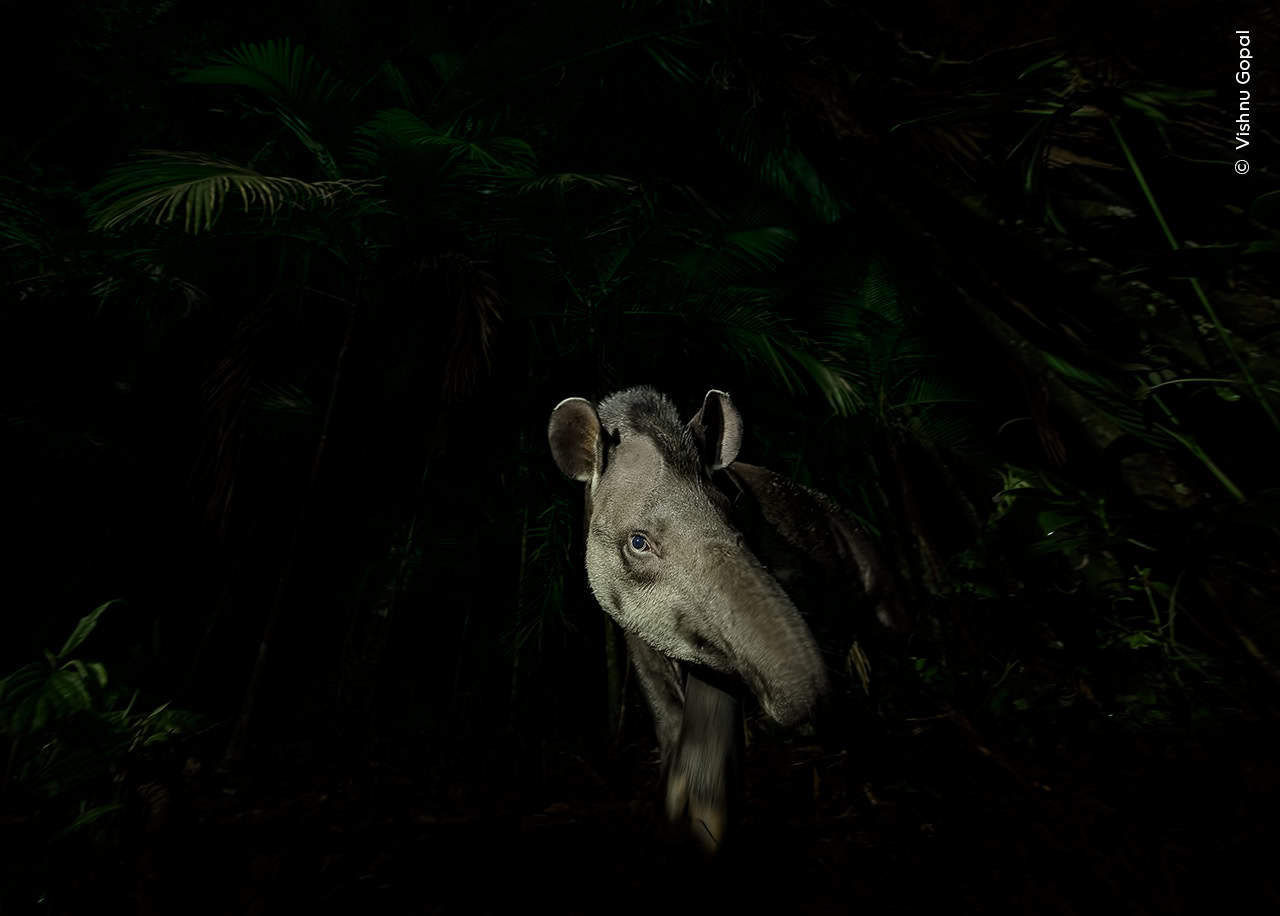
Vishnu Gopal captures the moment a lowland tapir cautiously emerges from the rainforest swamp in Brazil.
Having found hoofprints on a forest track near his camp, Vishnu waited nearby. An hour later, the tapir appeared. Using long exposure and a torch’s light to capture texture and movement, Vishnu framed the tapir’s head turned to the side as it emerged from the forest.
Lowland tapirs rely on the forest for their diet of fruits and other vegetation, and in return, the tapirs serve as seed dispersers. This important relationship is threatened by habitat loss, illegal hunting, and road collisions.
Location: Tapiraí, São Paulo, Brazil
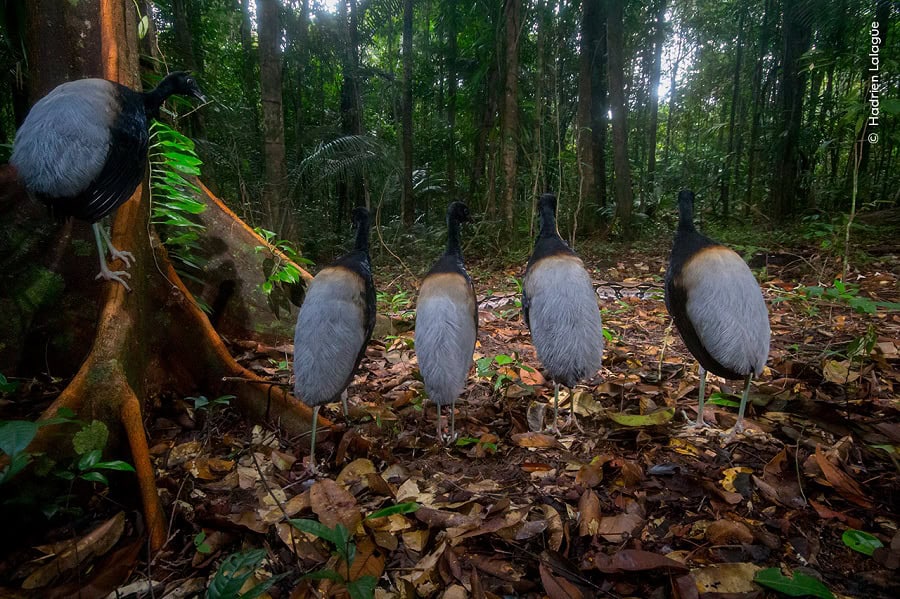
Behavior / Birds Award – Silence for the Snake Show by Hadrien Lalagüe, France
Hadrien Lalagüe is rewarded for his patience with a perfect alignment of grey-winged trumpeters watching a boa pass by.
Hadrien set up his camera trap along a trail in the rainforest surrounding the Guiana Space Center. He spent the next six months maintaining the camera kit against high humidity, plastic-eating ants, and damage from poachers. This image is his reward.
The trumpeters—named for their powerful call—spend most of their time foraging on the forest floor, eating ripe fruit, insects, and occasionally small snakes. The boa constrictor, over three meters long, could have made a meal of them.
Location: Guiana Space Center, between Kourou and Sinnamary, French Guiana.
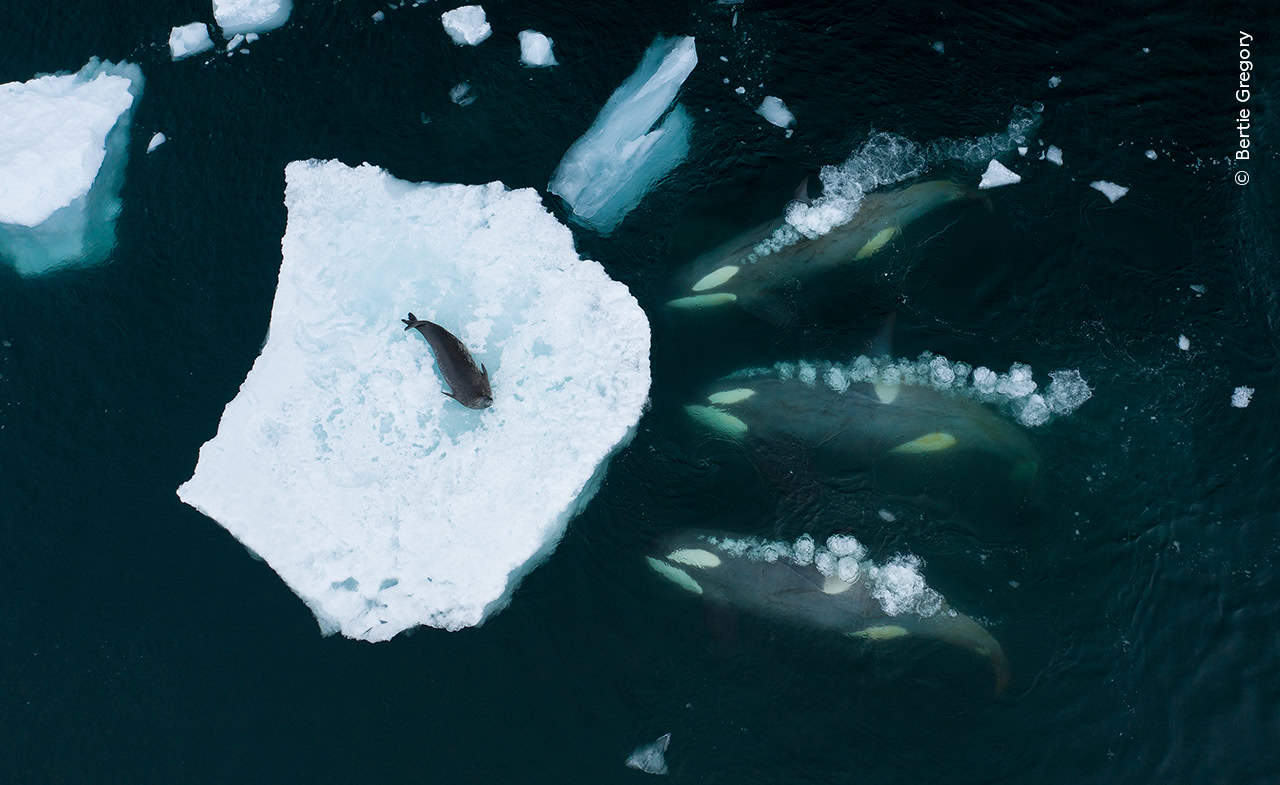
Behavior / Mammals Award – Whales Make Waves by Bertie Gregory, UK
Bertie Gregory follows a group of orcas preparing to wash a Weddell seal off the ice with a large wave.
Bertie undertook two one-month expeditions in search of orcas. « We spent all our time on the boat’s roof scanning the horizon« , he recounts. After facing strong winds and freezing conditions, he captured this remarkable behavior using his drone.
These orcas belong to a group specialized in hunting seals. They charge towards the ice, creating a wave that washes the seal into the water. With temperatures rising and the ice melting, seals are spending more time on land, and the ‘wave wash’ behavior may disappear.
Location: Antarctic Peninsula, Antarctica.
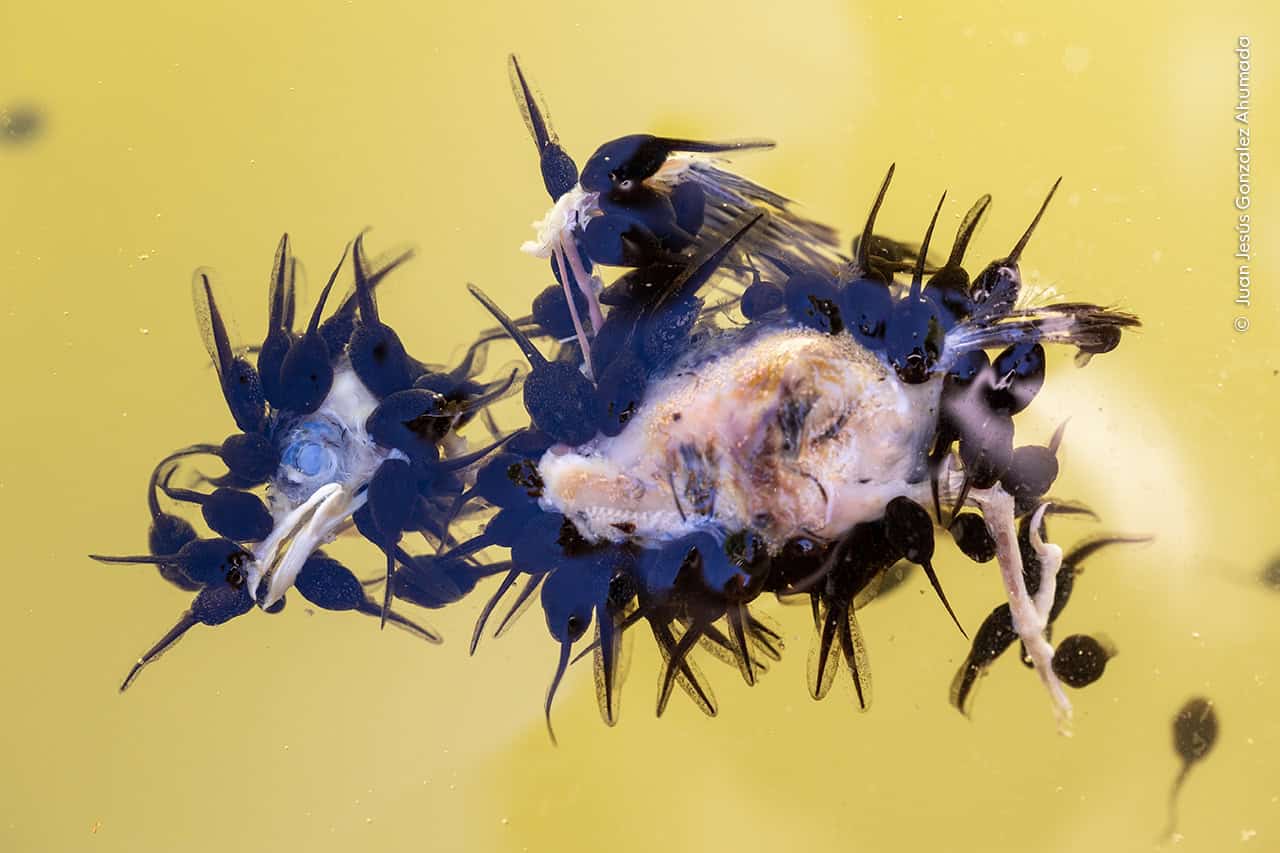
Behavior / Amphibians and Reptiles Award – Tadpole Feast by Juan Jesús Gonzalez Ahumada, Spain
Juan Jesús Gonzalez Ahumada observes toad tadpoles dining on the corpse of a young sparrow.
The drama unfolded near Juan’s home when a fledgling sparrow escaped a roof nest and fell into a nearby pond, where it drowned. Juan had to choose his moment to depict the tadpole formation and the sparrow’s eye.
Common toad tadpoles have a varied diet, including algae, vegetation, and tiny swimming invertebrates. As they grow, they become more carnivorous, taking full advantage of a feast like this when it arises.
Location: Ojén, Malaga, Spain
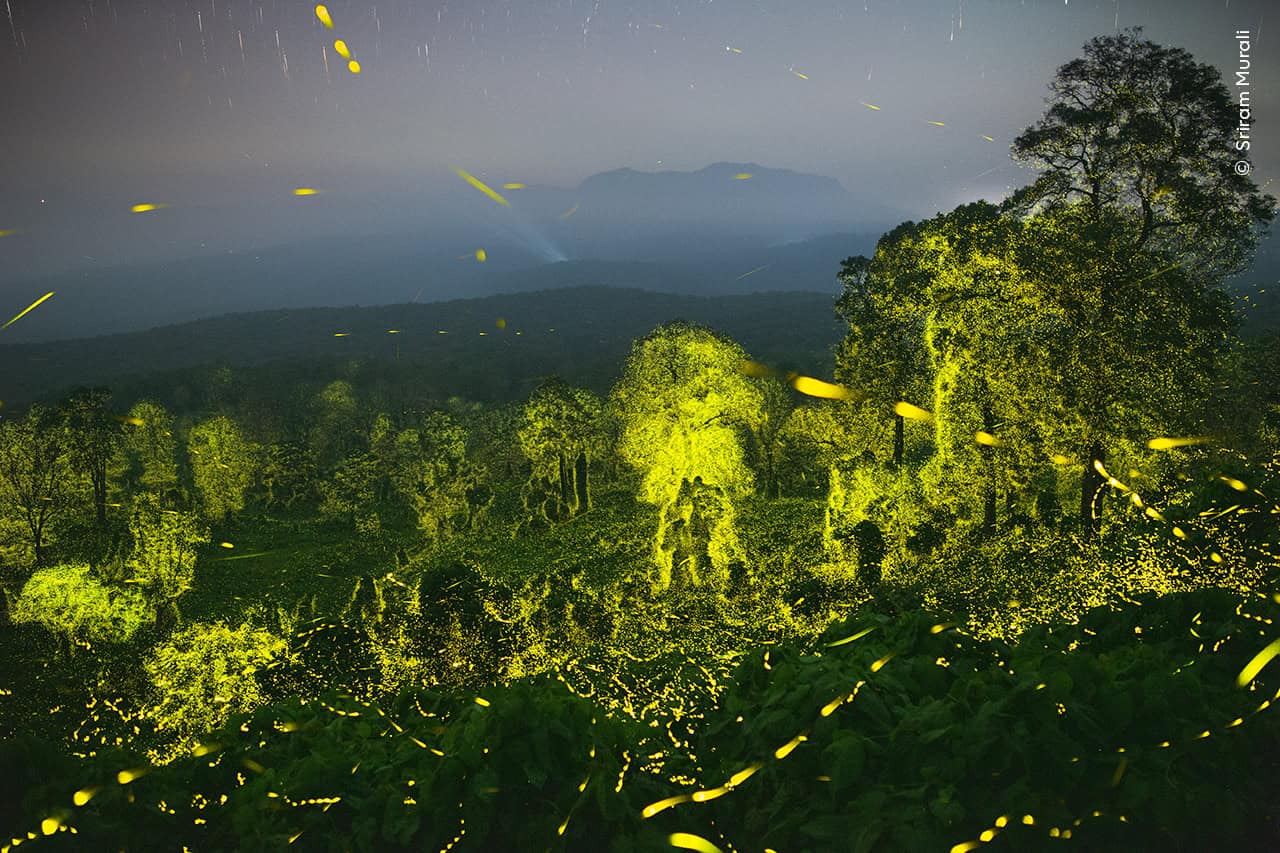
Behavior / Invertebrates Award – Fantastic Lights by Sriram Murali, India
Sriram Murali presents a night sky and forest illuminated by fireflies.
Sriram combined fifty 19-second exposures to showcase firefly flashes produced over 16 minutes in the forests near his hometown. Firefly lights start at dusk, initially few, increasing in frequency until they pulsate in unison like a wave across the forest.
Fireflies, which are actually beetles, are known for attracting mates with their bioluminescence. Darkness is a necessary ingredient for this process’s success. Light pollution affects many nocturnal creatures, but fireflies are particularly sensitive to it.
Location: Anamalai Tiger Reserve, Tamil Nadu, India.
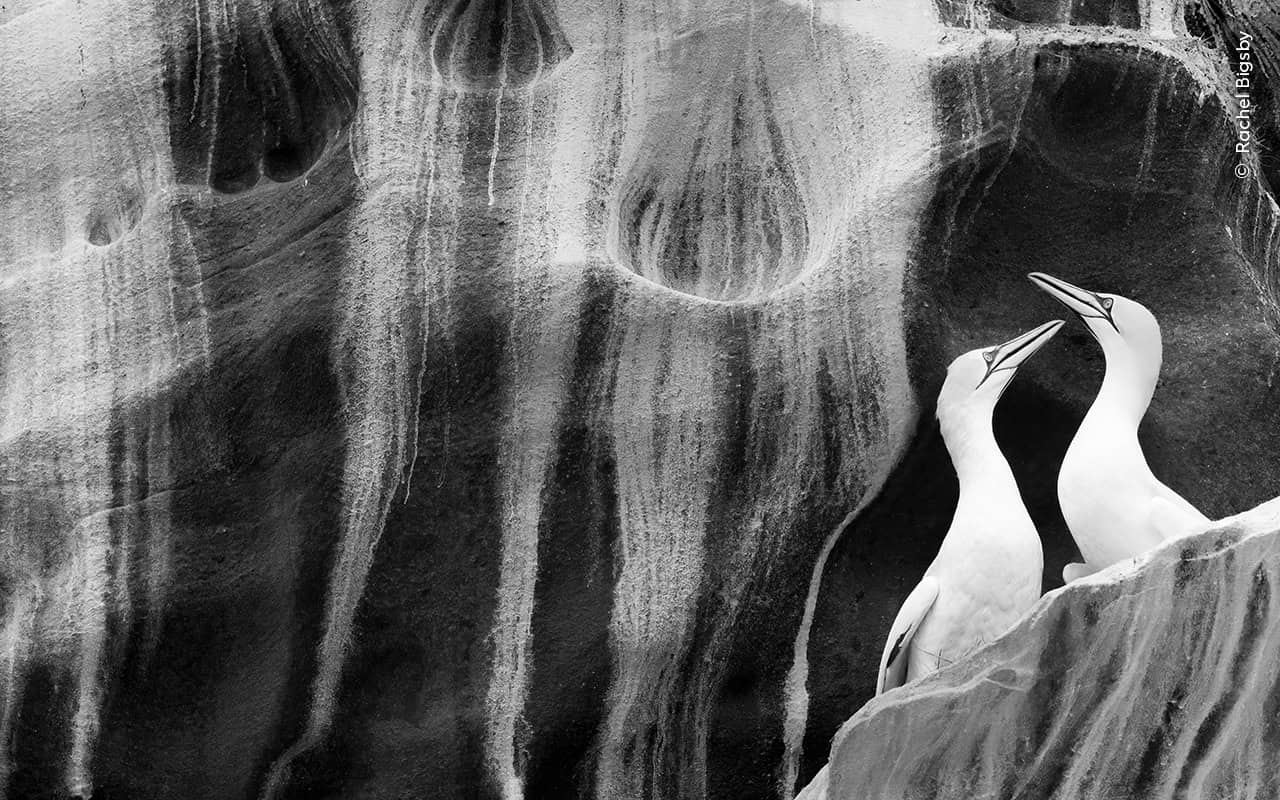
Natural Artistry Award – The Art of Seduction by Rachel Bigsby, UK
Rachel Bigsby photographs a pair of northern gannets posing against the guano-painted curves of sandstone cliffs.
From her boat in a choppy sea, Rachel realized it would be challenging to capture her project of showcasing gannets against towering cliffs. But when the boat aligned with the rocks, she spotted this pair « isolated on a lower ledge, intertwining their necks and framed by streaks of guano« .
Each summer, the island of Noss hosts over 22,000 gannets that return to breed on ledges sculpted by the elements. This species was the hardest hit by the 2022 avian flu outbreak.
Location: Noss National Nature Reserve, Shetland, Scotland, United Kingdom.
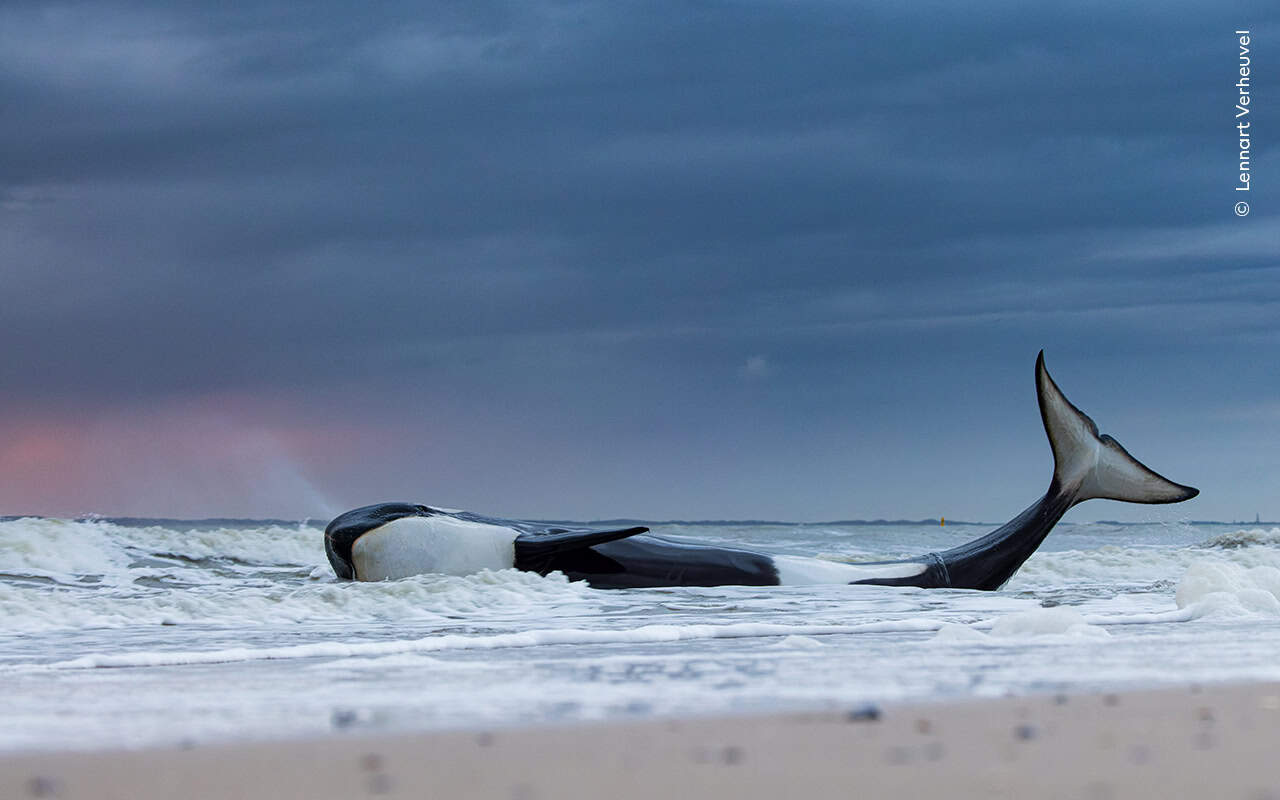
Oceans: The Bigger Picture Award – Last Breath by Lennart Verheuvel, Netherlands
Lennart Verheuvel shows the last moments of a stranded killer whale.
Lying on its side in the surf, this orca had little time left. Initially rescued, it became stranded again and died. A study later revealed the orca was not only severely malnourished but also extremely ill.
Research shows orcas in European waters have the highest concentrations of polychlorinated biphenyls in the world. These banned chemicals can persist for many years in marine food webs, weakening immune systems and reducing reproductive success in whales, porpoises, and dolphins.
Location: Cadzand-Bad, Zeeland, Netherlands.
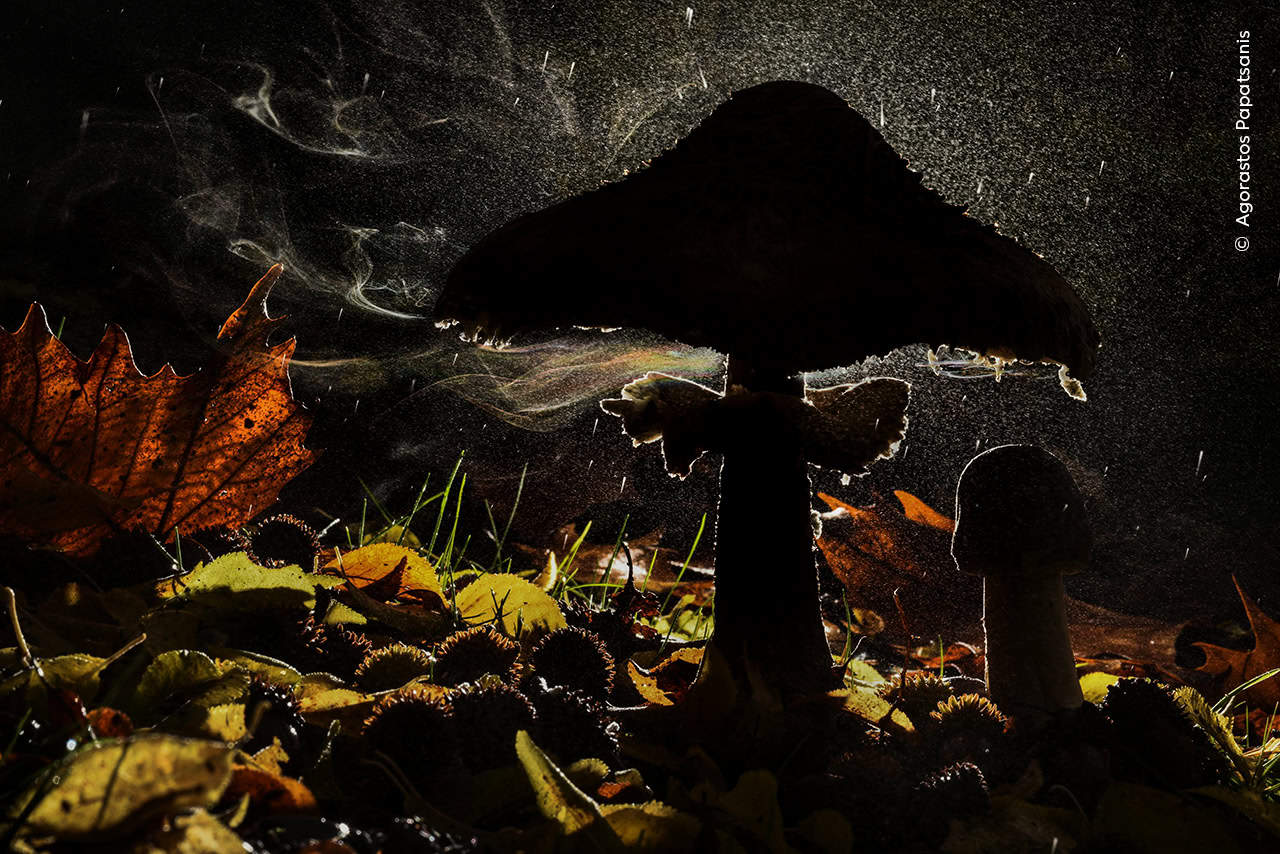
Plants and Fungi Award – Last Breath of Autumn by Agorastos Papatsanis, Greece
Agorastos Papatsanis reveals the magic of a mushroom releasing its spores in the forest.
Long fascinated by mushrooms, Agorastos used his silver photo umbrella to prevent his camera from getting wet and covered his flash carefully with a plastic bag. The touches of color come from the refraction of light passing through spore-laden air currents and rain.
Parasol mushrooms release spores from the gills under their cap. Billions of tiny spores travel—usually unseen—in air currents. Some settle where there is moisture and food, enabling them to develop networks under the forest floor.
Location: Mount Olympus, Pieria, Greece.
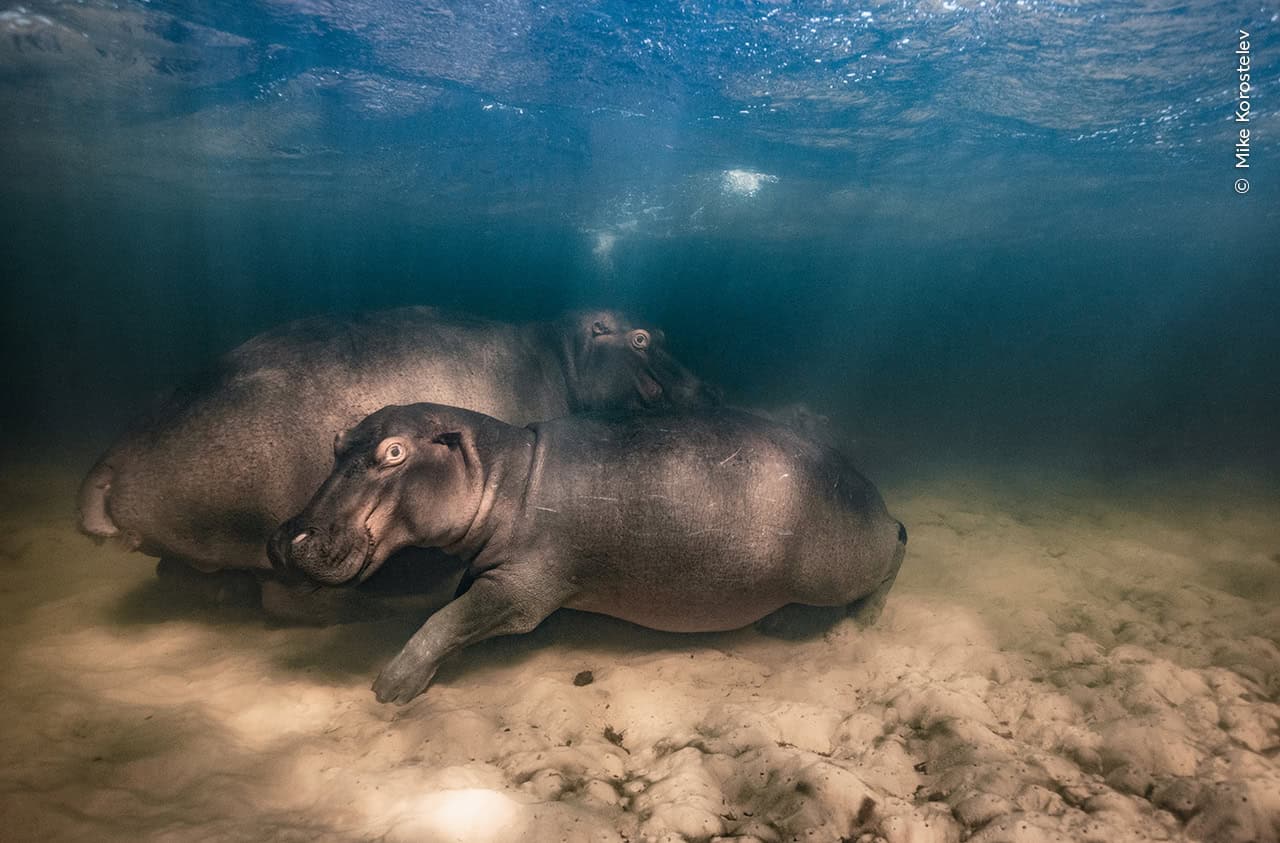
Underwater Award – Hippo Nursery by Mike Korostelev, Russia
Mike Korostelev reveals a hippo mother and her two calves resting in a shallow clear-water lake.
It’s been over two years since Mike visited the hippos of this lake and he knew they were accustomed to his boat. He spent only 20 seconds underwater with them—enough time to capture this image from a safe distance and avoid alarming the mother.
Hippos give birth to one calf every two or three years. Their slowly growing population is especially vulnerable to habitat degradation, drought, and illegal hunting for meat and ivory from their teeth.
Location: Kosi Bay, iSimangaliso Wetland Park, South Africa.
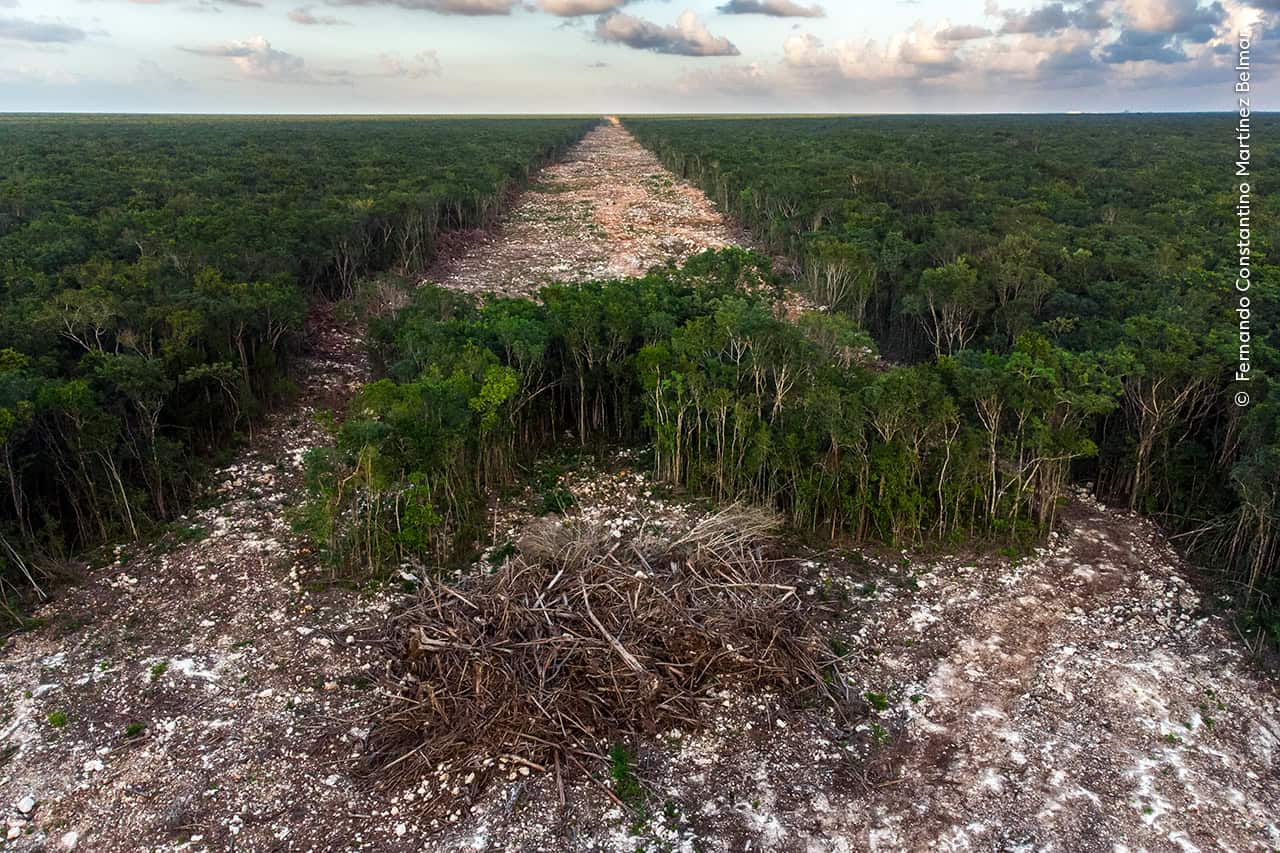
Photojournalism Award – Tourism Bulldozer by Fernando Constantino Martínez Belmar, Mexico
Fernando Constantino Martínez Belmar shows the devastating path of a new cross-border tourist railway line.
To reach a point from which he could launch his drone, Fernando was guided through a network of underground caves four kilometers long. This image is the result of that difficult journey.
The government-funded railway line connecting tourist destinations brings economic benefits to southeastern Mexico but also fragments ecosystems, threatens protected reserves and archaeological sites, and impacts indigenous populations. While the train is a more environmentally friendly mode of transport, environmentalists warn against its devastating consequences.
Location: Paamul, Quintana Roo, Mexico.
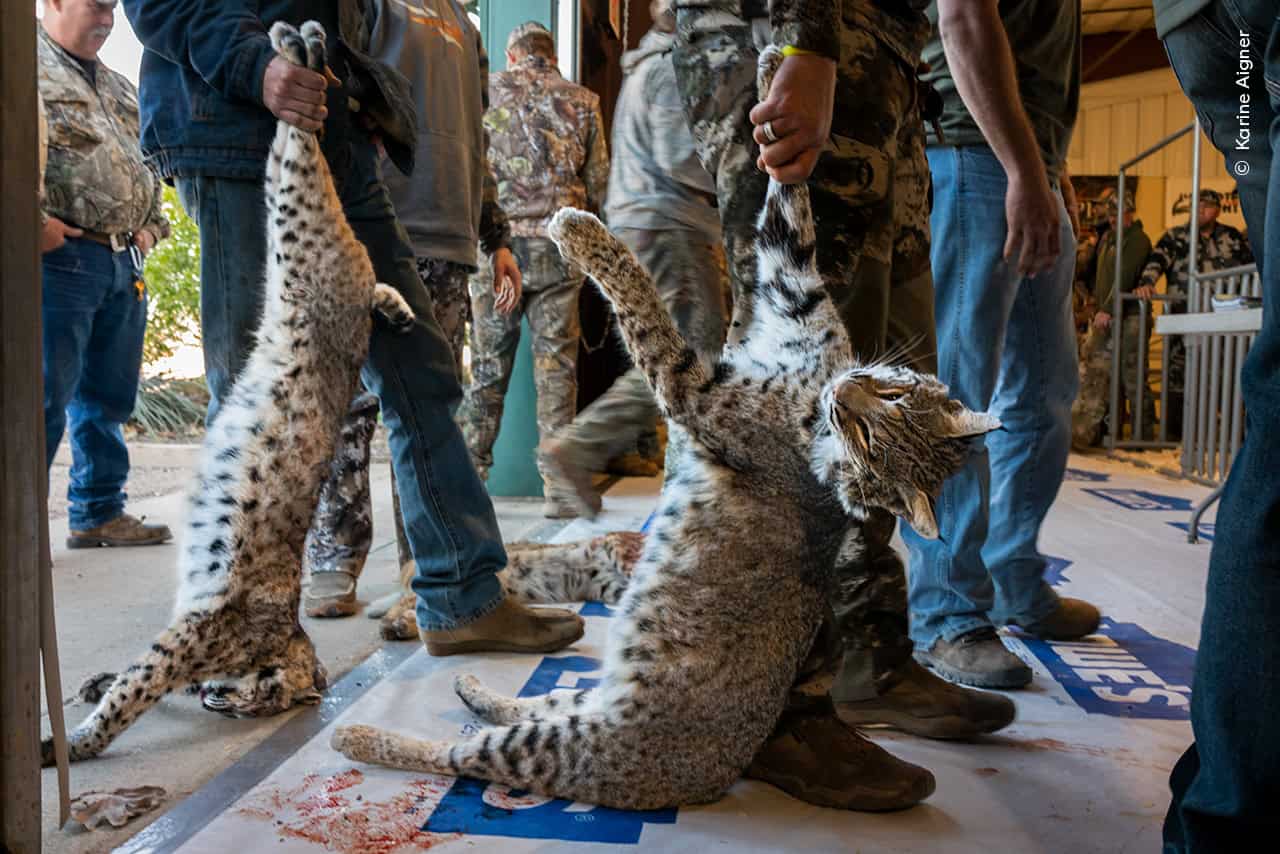
Storytelling / Photojournalism Award – The Unprotected by Karine Aigner, USA
Contestants line up to weigh their lynxes at the West Texas Big Bobcat Contest in March 2022, the most lucrative predator hunting contest in the United States. Several prizes are awarded, including for the heaviest bobcat. In 2022, the winner in this category took home 35,530 US dollars (about 28,000 pounds sterling).
Portfolio Story: Karine Aigner documents annual hunting competitions in Texas, USA. For some people in the US, hunting is a pastime. In Texas, although there are strict regulations regarding ‘game’ species, some predators such as bobcats, mountain lions, and coyotes have no protection and can be killed at any time by any means.
In this portfolio, Karine delves into the contests and festivals that celebrate the killing of these unprotected and vilified species and explores their relationship with humans.
Location of work: Texas, USA
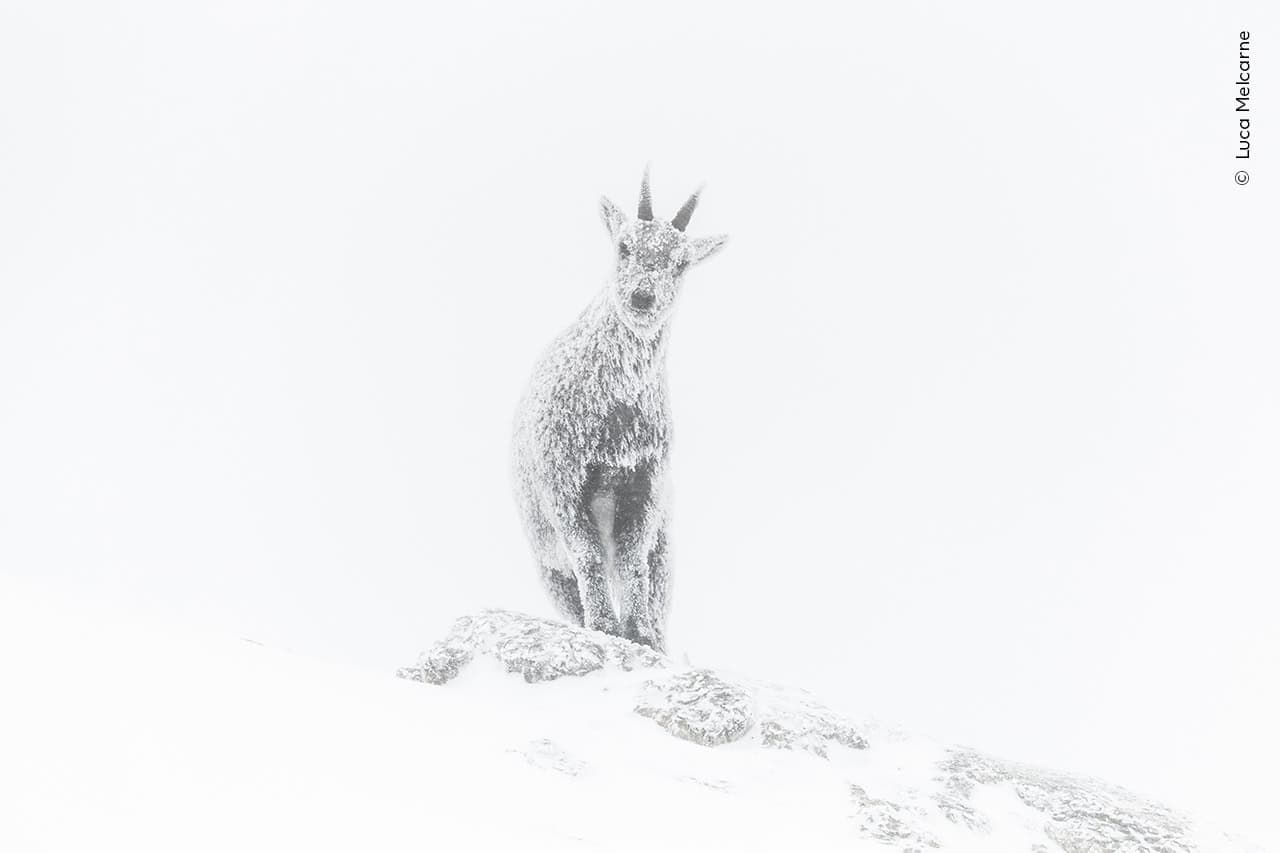
Rising Star Portfolio Award – The Icy Ibex by Luca Melcarne, France
To reach the ibex’s territory early, Luca spent a freezing night in a temporary shelter in the French Alps after skiing for six hours through the nature park. Luca thawed his camera with his breath and took the portrait of the ibex.
Portfolio Story: Luca Melcarne uses his skills as a mountain guide to reveal the fascinating life of the Alps’ animals. Born at the foot of the Vercors mountains, he is a professional mountain guide and wildlife photographer. An enthusiast of cold weather, he constantly monitors the weather to plan his shoots.
This portfolio highlights the animals living in the Vercors Regional Nature Park. His remarkable images demonstrate that patience, perseverance, and passion are essential ingredients for achieving spectacular wildlife photography.
Location: Vercors Regional Nature Park, Rhône-Alpes, France
Portfolio Award – The Golden Horseshoe by Laurent Ballesta, France
A tri-spine horseshoe crab slowly moves over the mud. Its golden protective shell hides 12 appendages. Above the horseshoe crab, a trio of juvenile golden trevallies prepare to dart in search of edible pieces stirred up by its passage.
Portfolio Story: Laurent Ballesta went in search of horseshoe crabs in the protected waters of Pangatalan Island in the Philippines.
Marine biologist and photographer Laurent Ballesta has devoted his life to exploring the oceans and revealing their wonders through art. He has led a series of major expeditions, each involving scientific mysteries and diving challenges, and all resulting in unprecedented images.
The tri-spine horseshoe crab has survived for over 150 million years, but today it faces habitat destruction and overfishing for its food and blood, used in vaccine development. However, in the protected waters off Pangatalan Island, there is hope for its survival.
Location: Pangatalan Island, Palawan, Philippines.
Discover more on the Wildlife Photographer of the Year website…
Wetlands: The Bigger Picture Award – The Dead River by Joan de la Malla, Spain
Joan de la Malla offers an aerial view of the polluted Ciliwung River winding through the Indonesian capital, Jakarta.
To find a moment when the drop in air pollution allowed a clear view, Joan returned to the site over several days. His image shows one of the most polluted rivers in the world and illustrates the growing problem of river pollution worldwide.
Plastic waste, human waste, agricultural fertilizers, and factory waste are choking the Ciliwung River. As a result, Jakarta’s residents must use groundwater for drinking water, leading to widespread subsidence, and the city is sinking.
Location: Ciliwung River, Jakarta, Indonesia.
Urban Wildlife Award – The Sunbirds of Midnight by Knut-Sverre Horn, Norway
Knut-Sverre Horn offers a glimpse of the kittiwake chicks illuminated in an abandoned factory.
From his observation post inside an abandoned fish processing plant, Knut-Sverre monitored the kittiwakes tending their chicks on the windowsill. As midnight approached, the low summer sun struck the north-facing window, accentuating the birds’ silhouettes and offering him the image he sought.
Naturally nesting on narrow ledges of high and steep coastal cliffs, kittiwake numbers have recently dropped, with some moving to urban areas due to the food shortages caused by warming oceans and pollution.
Location: Vardø, Troms og Finnmark, Norway.
Young Nature Photographer Award / 11-14 years – Out of the blue by Ekaterina Bee, Italy
Ekaterina Bee shares her intimate encounter with bottlenose dolphins.
Ekaterina’s journey to the west coast of Scotland was rich with wildlife encounters, but the bottlenose dolphins were an unexpected surprise. It was from the boat that she composed this image, highlighting the surface patterns of the water created by the dolphins’ movements.
Bottlenose dolphins are present in all the world’s oceans, except for the polar regions. Living in small groups, they are very social animals and one of the leading marine predators in Scottish waters.
Location: Portree, Isle of Skye, Scotland, UK.
Young Nature Photographer Award / 10 years and under – The Wall of Wonders by Vihaan Talya Vikas, India
Vihaan Talya Vikas observes a spider Herennia multipuncta preventing its prey from escaping.
It was Vihaan’s first visit to the tamarind grove. Fascinated by stories of the Hindu god Krishna, Vihaan felt the spider had positioned its web after being enchanted by Krishna’s flute.
This spider is an orb-weaver, creating a wheel-shaped web with sticky threads to capture flying insects. As the spider grows, it extends its web, ensnaring anything that lands there.
Location: Nallur Tamarind Grove, Karnataka, India