


Scientists from the Calvi Marine and Oceanographic Research Station (STARESO) joined the expedition to explore the water masses of the sanctuary and the surrounding sandy seabeds.
Study of the water column
Lovina Fullgrabe, a researcher at STARESO, chose to analyze the water column along the radial line connecting Nice to Calvi. Ten stations were selected, evenly distributed along the route, allowing the biologist to conduct physicochemical analyses and plankton sampling. Although similar studies were conducted in the 1970s and 2000s on smaller portions, this expedition is the first to cover the entire route.
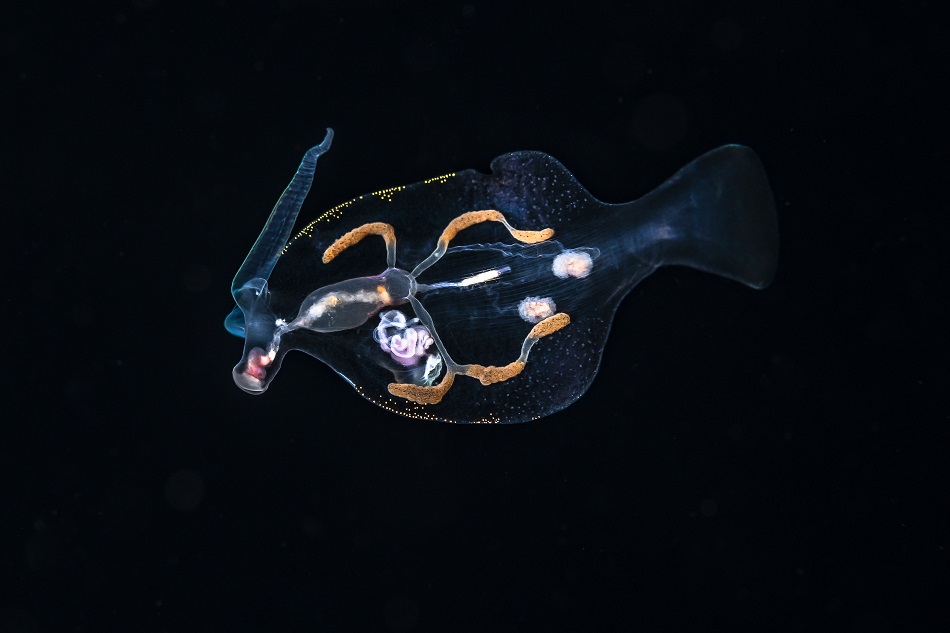
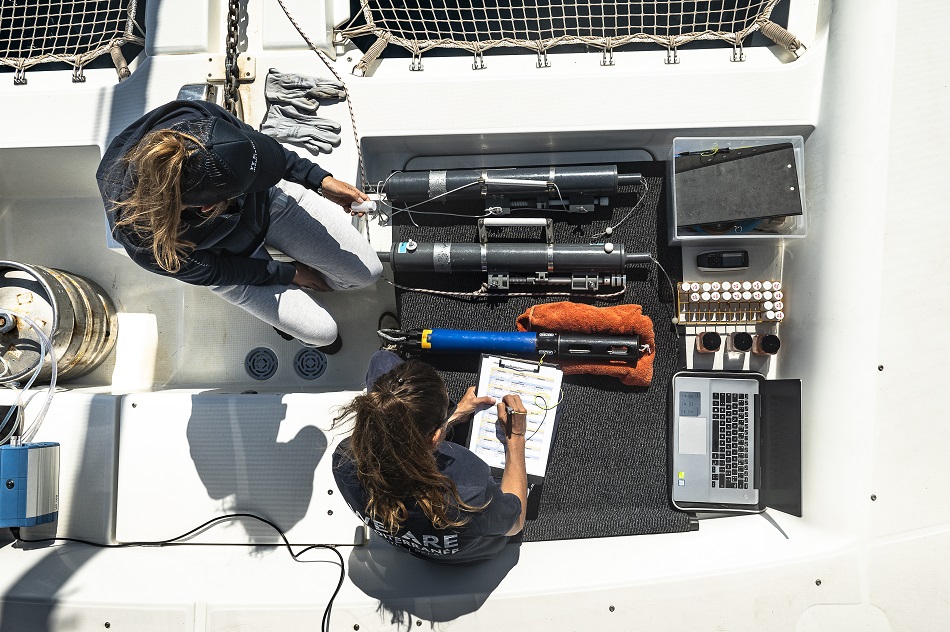
Instruments and methodology
Probes equipped with sensors were submerged to depths of 200 meters to record parameters such as salinity, water temperature, and oxygen content. Contrary to popular belief, the Ligurian triangle is not a homogeneous water mass; the Ligurian-Provencal current, rotating counterclockwise, interacts with three types of water masses, defined as hydrographic zones. The central zone, with the Gulf of Lion, is recognized as one of the four major regions capable of generating deep waters influencing thermohaline circulation in the Mediterranean.
Did you enjoy this excerpt?
Read the full article.
READING TIME ≈ 6 min
Dive into the heart of the PLONGEZ! Magazine
To enjoy this article and its exclusive content, a modest participation is required.