


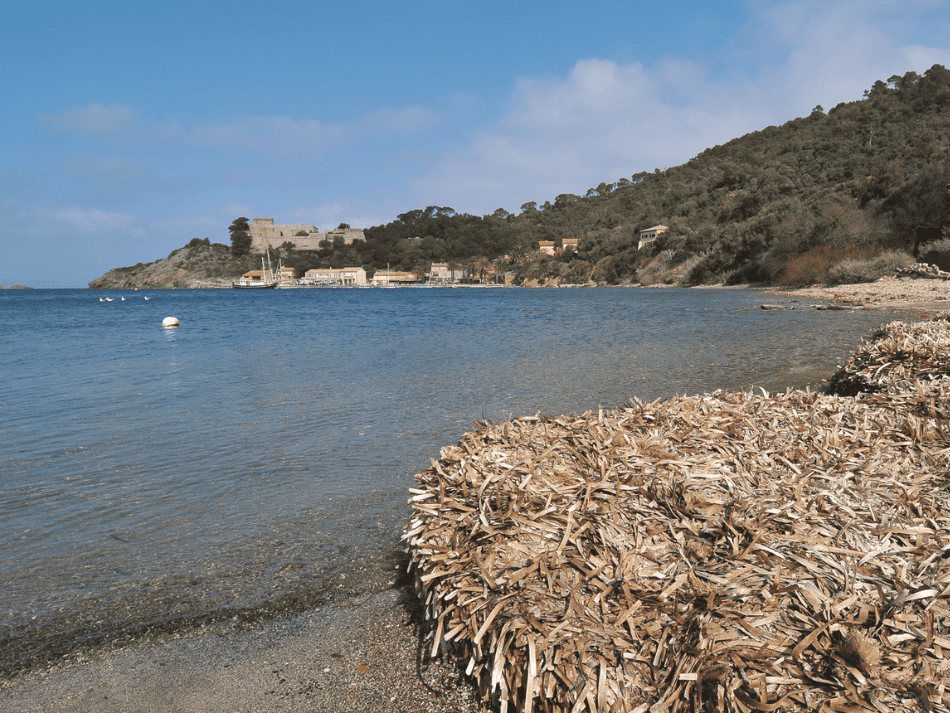
These piles of dead leaves on our Mediterranean beaches… For many, they are seen as a mere nuisance. But make no mistake! The presence of Posidonia mats ( Posidonia oceanica ) is actually a sign of a healthy ecosystem. They play a crucial role in protecting against erosion and harbor an unsuspected biodiversity. It’s time to preserve them!
These « algae » that annoy us… and yet!
Admit it, who hasn’t grumbled while climbing over those mounds mistakenly called « dead algae »? To the general public, these « algae » (which are actually aquatic plants), often perceived as unpleasant and sometimes smelly, spoil the pleasure of the beach. As a result, most municipalities regularly remove them, mechanically cleaning the coastline by spring to clear the way.
An Essential Barrier against Erosion
Yet, these mats are indispensable. They constitute a true natural protection against beach erosion. Composed not only of Posidonia leaves, but also of a mixture of sand and seawater, they form an elastic mattress that cushions the force of the waves.
Without them, each storm would carry the sand away, returning it to the sea, with two major consequences:
- Beach reduction: Requiring constant artificial replenishment.
- Smothering of meadows: The massive influx of sand can smother adjacent meadows, essential to the health of Mediterranean seabeds. The presence of imposing mats indicates healthy meadows.
The Hidden Microcosm of the Mats
Make no mistake, these piles of dead leaves are not inert! They teem with life. A multitude of animal species find refuge there:
- Detritivorous invertebrates: Feed on decaying plant material.
- Crustaceans: Of very small sizes.
- Annelids: Worms of various species.
- Gastropods: Such as the shore truncatella (Truncatella subcylindrica), a small snail with a spiral shell, sometimes present in several thousand individuals per cubic meter!
- Insects: Contribute to the balance of the coastal ecosystem.
Moreover, Posidonia leaves, carried by the wind, also enrich the back beach, particularly the dunes, providing the necessary nutrients for its specific vegetation. Finally, the leaves that return to the sea, carried by waves and storms, are a food source for coastal species. This constant exchange is vital for the natural balance.
Act for Safeguarding: A Charter to Sign
The systematic raking of beaches, carried out by municipalities before the summer season to meet tourism demands, has a high ecological and economic cost. Today, a movement is forming for a return to more natural beaches. The South Region, among others, has launched a platform to mobilize users, tourism professionals, and elected officials around coastal preservation.
The goal? To commit, by signing a charter, to adopt gestures and choices favorable to preserving the mats and respecting the natural rhythm of our coasts.
The charter proposes ambitious goals:
- Unique, natural, and authentic Mediterranean beaches.
- Respectful management of fauna and flora.
- Enhancing the Mediterranean cultural identity.
- Considering the ecosystem services provided by Posidonia in the coastal economy.
- Healthy beaches reflecting the quality of bathing waters and marine ecosystems.
- Preserving beaches for future generations and promoting biodiversity.
- Preserving the beauty and unique character of coastal landscapes.
- Friendly beaches, accessible to all, clean and minimally artificial.
- Respecting ecological functions to strengthen coastal resilience to climate change.
These objectives are complemented by individual commitments. Local communities must educate and inform the public, and it is up to each of us to reject the idea that a clean beach is necessarily an empty one!
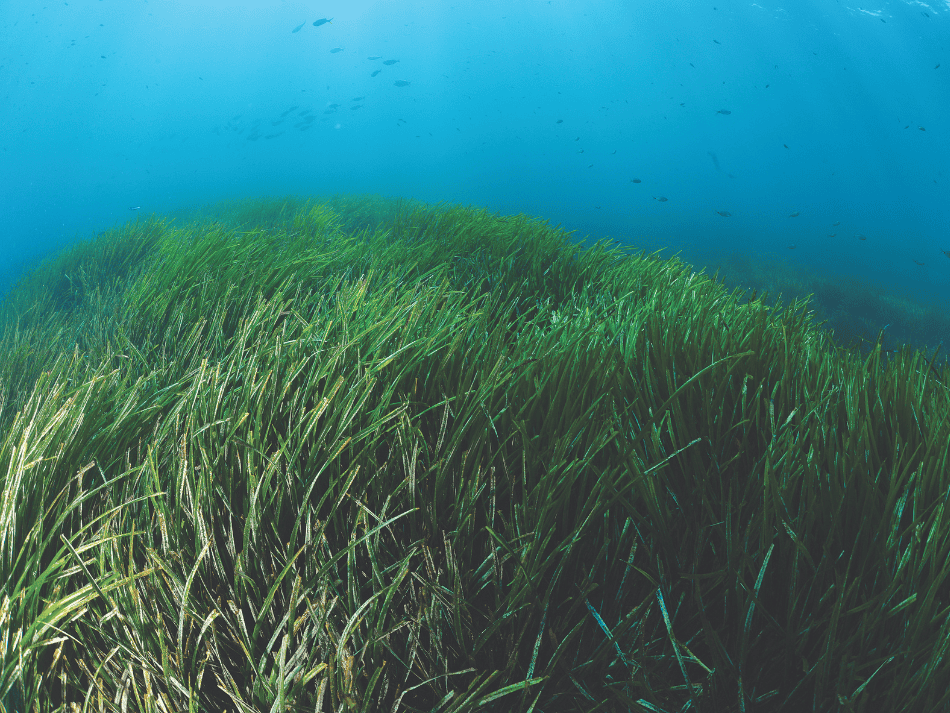
Let us remember, Posidonia is the only flowering underwater plant in the Mediterranean, a protected species, essential for the health of our marine ecosystems. Its meadows, true nurseries and pantries for many species, are also, in this time of climate change, valuable allies against coastal erosion. Considered as carbon sinks and major oxygen producers, their preservation is crucial for the balance of the Mediterranean marine environment.
To learn more and join, visit: www.act4posidonia.eu
This article, originally written by Isabelle Croizeau for the print edition of PLONGEZ!, has been adapted for the web.