


This summer, the coastal waters of Cornwall experienced an exceptional marine phenomenon: an unprecedented proliferation of octopuses. This natural spectacle captivated divers and scientists while disrupting local fishing activities.
A significant event for the marine environment
Octopus proliferations are rare in Great Britain, but they are not unknown. The Marine Biological Association has documented several « invasions » along the south coast of England, the first dating back to 1899 and the most recent in 1948. The current episode, which is the first of its kind in over 70 years, marks a turning point for the marine ecosystem of Cornwall.
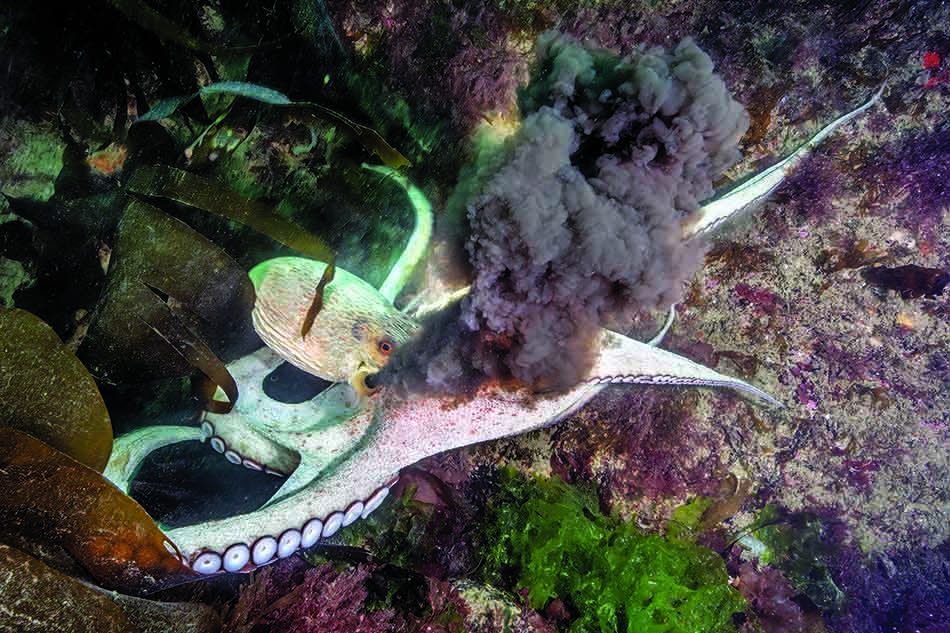
Local divers and snorkelers have reported numerous sightings, especially around the Lizard Peninsula. However, this increase in the octopus population is not limited to Cornwall, with similar reports coming from Devon and the Isle of Wight in Dorset.
The Mediterranean octopus in the spotlight
The species responsible for this proliferation is the common octopus (Octopus vulgaris), often referred to as the Mediterranean octopus. These impressive cephalopods, which can reach over a meter in diameter, are generally more common in the warm waters of southern Europe and much rarer in the UK.
Researchers attribute this population explosion to ocean warming. Since March, the waters off Devon and Cornwall have warmed by four degrees Celsius above average. Dan Barrios-O’Neill from the Marine Conservation / Cornwall Wildlife Trust explains: « These exceptionally warm waters could explain the growth and survival rate of juveniles from previous years by providing them with an abundance of planktonic food. » The common octopus can lay between 100,000 and 500,000 eggs at a time, allowing for such a demographic explosion in a short period.
Impact on local fishing
The proliferation of octopuses has created challenges and opportunities for fishermen in Cornwall. Some crustacean fishermen, which are a food source for octopuses, have noticed a decrease in their catches. Jonny Pascoe, a fisherman at Mullion Cove, states: « I have never seen so many octopuses in 15 years of fishing, and my catches have significantly decreased. »
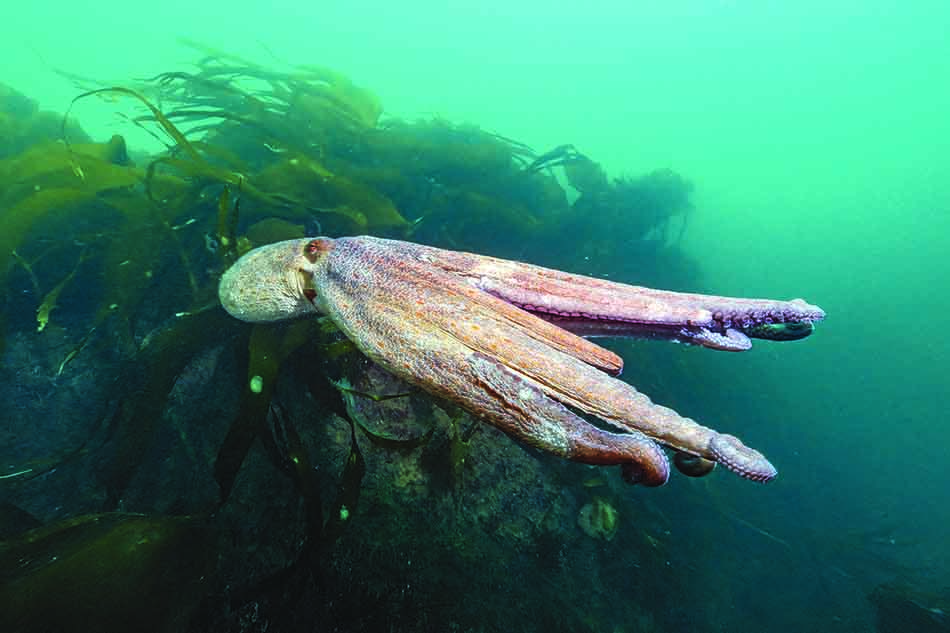
Octopuses have consumed many small crabs and lobsters, which has had a direct impact on crustacean stocks. Dan Barrios-O’Neill emphasizes that « octopuses exert significant pressure on commercially important species. »
However, this proliferation has also benefited some large commercial vessels. A trawler from Newlyn recorded a record catch of over 20 tons of octopus, valued at over £158,000 (over €180,000), illustrating the commercial value of these unexpected visitors.
Ethical considerations and sustainability
Octopus fishing raises important ethical questions. These creatures, among the most intelligent invertebrates, demonstrate problem-solving abilities and complex behavior, suggesting a heightened awareness. This challenges traditional fishing practices and raises concerns about the sustainability of octopus populations, which may be vulnerable to overfishing.
The need to establish catch limits and responsible fishing methods is crucial for the long-term preservation of the species. The economic importance of octopus fishing, which is replacing declining crustacean stocks, further complicates the situation, requiring a balance between animal welfare and the livelihoods of fishing communities.
A changing ecosystem
Despite the negative impacts on crustaceans, other marine predators are benefiting from this proliferation. Risso’s dolphins, for example, feed on octopuses and have arrived in large numbers this summer. This dynamic shows how the proliferation of octopuses is altering the marine food web along the south coast of England. Grey seals, attracted by the availability of octopuses, have also been observed in these areas.
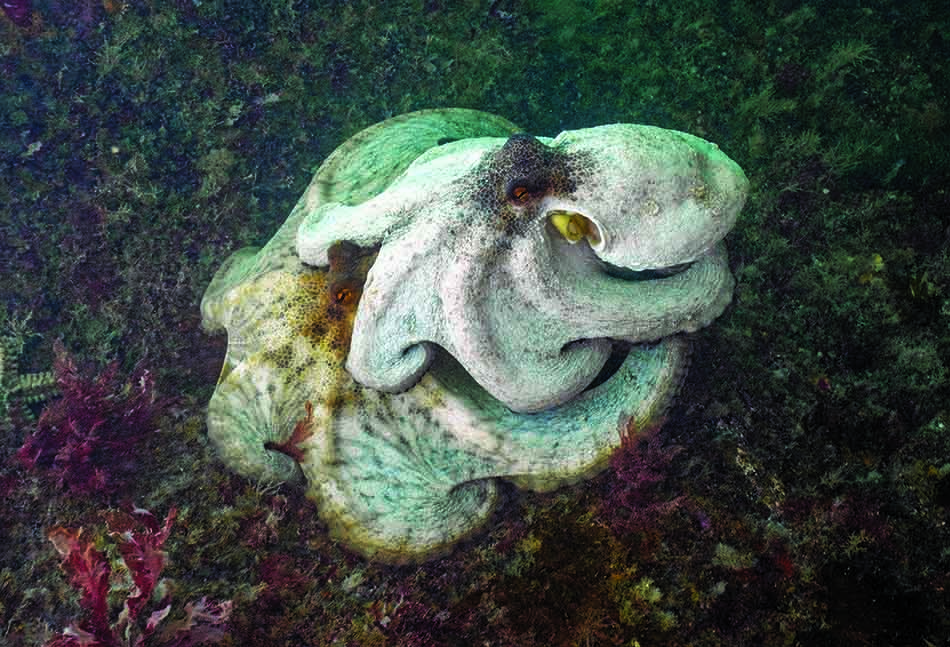
Although this proliferation is exceptional, it is essential to understand it within the context of marine population cycles. Octopuses, as short-lived animals, experience cycles of expansion and decline, but rarely on this scale. This event offers researchers a unique opportunity to study cephalopod behavior and population dynamics in British waters.
Conclusion
The proliferation of octopuses in Cornwall is a fascinating phenomenon that raises questions about the marine environment, fishing, and biodiversity. As divers and scientists continue to explore this natural spectacle, it is crucial to monitor the ecological and economic impacts of this eight-armed invasion. Marine biologists remain attentive to developments in this situation to better understand the long-term implications for the ecosystem and the fishing industry in Cornwall.
This article, originally written by Lewies Jefferies for our print edition, has been adapted for the web
Photos: Lewis Jefferies.