


Since the very first underwater dives, the natural choice was air as the breathing gas while submerged. Readily available and easily compressible, it would have been a shame not to use it to explore the ocean depths! But as soon as divers sought to venture beyond depths of 30 meters or extend their immersions, the limitations of compressed air quickly became apparent.
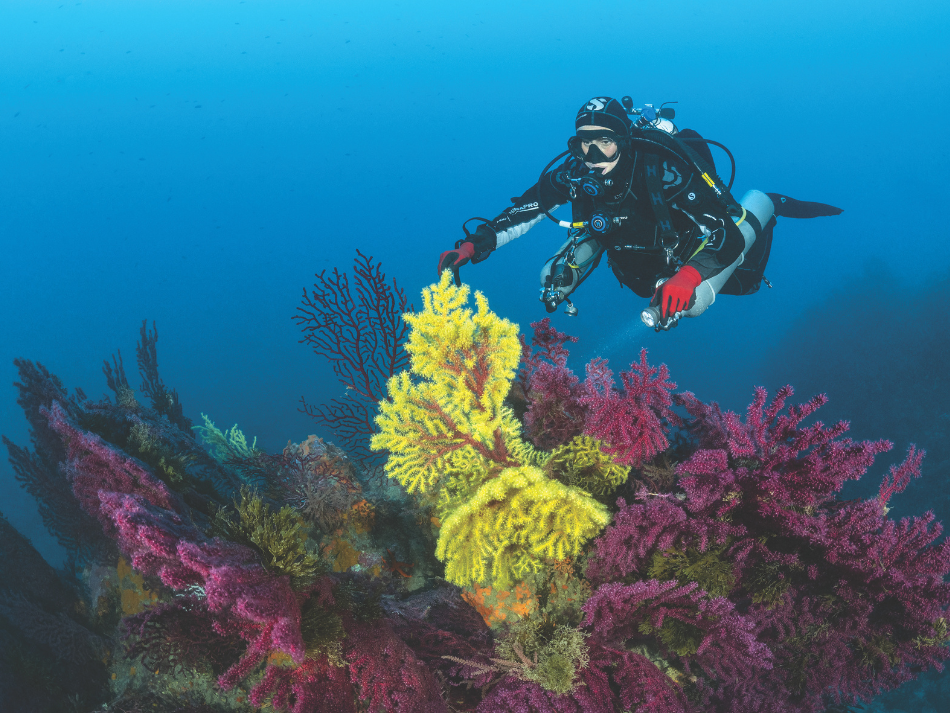
To push the boundaries of diving, they then turned to other elements from Mendeleev’s periodic table: oxygen, helium, and even hydrogen were added to mixtures, enabling ever deeper explorations. The advent of mixes like nitrox, trimix, heliox, and hydreliox revolutionized deep diving. Discover in this article how these « gaseous cocktails » are used and for which applications!
Air: the universal gas for scuba diving
Air remains the most widespread gas in scuba diving today. Why? Because it is a virtually inexhaustible resource and only a compressor is needed to use it. Its composition—21% oxygen and 79% nitrogen (with very small amounts of rare gases)—allows for comfortable evolution between 0 and 40 meters deep, both in terms of ventilation and neurology.
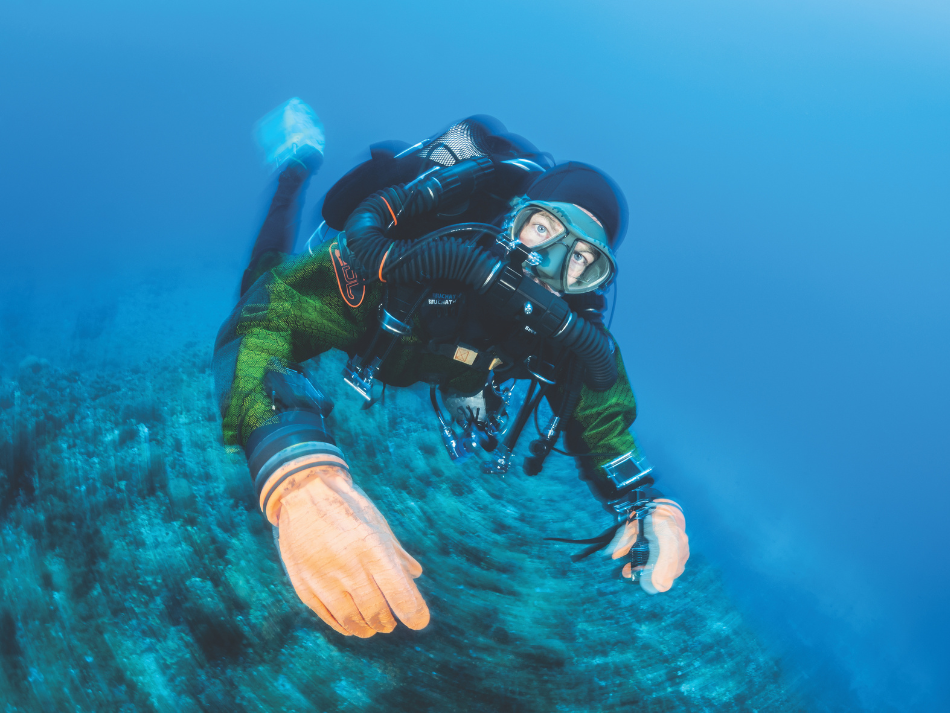
Beyond 40 meters, or during prolonged immersions, nitrogen becomes a source of constraints: narcosis, saturation, shortness of breath… Despite this, some experienced divers, like coral collectors, continue to descend to 80 meters (and sometimes more!) breathing air, but this requires rigorous training, real acclimatization, and great passion.
Did you enjoy this excerpt?
Read the full article.
READING TIME ≈ 7 min
Dive into the heart of PLONGEZ! Magazine
To enjoy this article and its exclusive content, a modest contribution is required.