


The winners of the prestigious competition Wildlife Photographer of the Year of the Natural History Museum were announced on October 8 during an awards ceremony held in the South Kensington neighborhood, London.
The winning images were selected from a record number of 59,228 entries from 117 countries and territories. The two grand title winners were selected from 18 remarkable category winners that illustrate the wonder and richness of biodiversity on our planet, while highlighting, in many cases, the numerous challenges that wildlife and flora face today worldwide. During an intensive process, each photo was judged anonymously by an international panel of experts on its originality, storytelling, technical excellence, and ethical practices.
Shane Gross receives the 2024 grand prize
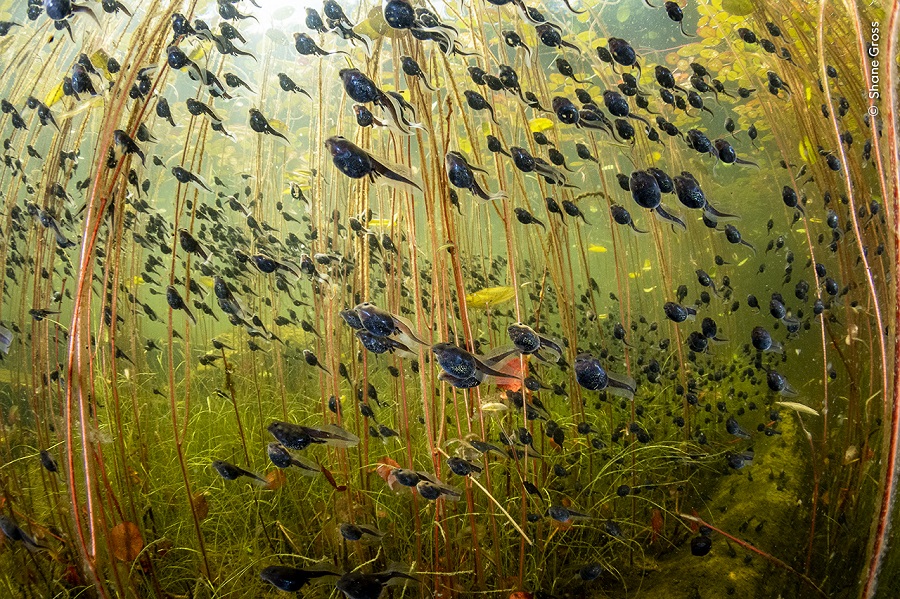
Shane Gross, a Canadian photojournalist specializing in marine conservation, was awarded the Wildlife Photographer of the Year 2024 prize for his breathtaking image « The Swarm of Life, » which highlights the magical underwater world of western toad tadpoles.
Shane captured the image by taking several hours of freediving through lily pads in Cedar Lake on Vancouver Island, British Columbia, ensuring not to disturb the fine layers of silt and algae covering the lakebed. A near-threatened species due to habitat destruction and predators, these tadpoles begin transforming into toads between four and twelve weeks after hatching, but it’s estimated that 99% of them do not reach adulthood.
Alexis Tinker-Tsavalas crowned Young Photographer of the Year
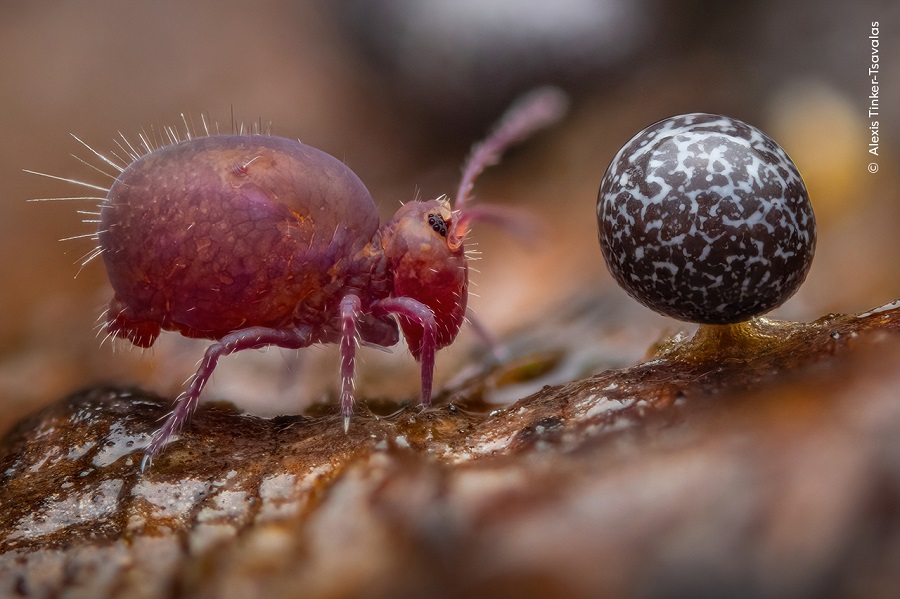
Alexis Tinker-Tsavalas, from Germany, received the Young Wildlife Photographer of the Year 2024 award for his close-up image titled « Life Under Dead Wood, » which shows slime mold fruiting bodies on the right and a tiny springtail on the left. Alexis quickly moved over a log to take this intriguing image, moving swiftly because springtails can jump several times their body length in a fraction of a second. Alexis used a technique called « focus stacking, » combining 36 images, each with a different focus area. Springtails are found in almost every corner of the planet and are one of the most abundant macroscopic animals. They play an essential role in improving soil health by feeding on microorganisms like bacteria and fungi, which aids in decomposing organic matter.
The 2025 competition will open for entries from Monday, October 14, 2024, to Thursday, December 5, 2024.
Celebrating its sixtieth year, the flagship exhibition of the Wildlife Photographer of the Year competition will open on Friday, October 11, 2024, at the Natural History Museum in London. To honor the sixtieth anniversary of the Wildlife Photographer of the Year competition, this year’s exhibition also highlights past Grand Title winners throughout the competition’s history and showcases photographs, trophies, and cameras that illustrate sixty years of revealing nature’s stories through this competition.
The exhibition also includes videos showing the global impact wildlife photography can have, as well as comments from jury members, photographers, and museum scientists, inviting visitors to advocate for the natural world.
60th Wildlife Photographer of the Year winners
Discover the full list of winners on the competition site.
15-17 years and Young Photographer of the Year Award – Alexis Tinker-Tsavalas (Germany)
Life under dead wood
Alexis quickly moved over a log to take this intriguing image, moving swiftly because springtails can jump several times their body length in a fraction of a second. Alexis used a technique called « focus stacking, » which involves combining 36 images, each with a different focus area. Springtails are present in almost every corner of the world and are one of the most abundant macroscopic animals. They play an essential role in improving soil health by feeding on microorganisms like bacteria and fungi, which aids in decomposing organic matter.
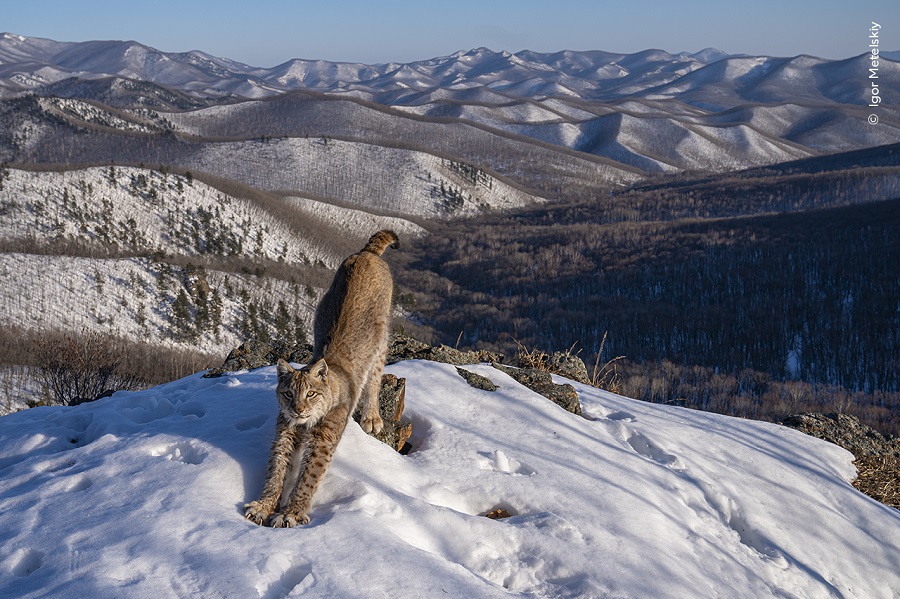
Animals in their environment – Igor Metelskiy (Russia)
Frontier of the Lynx
Igor Metelskiy shows a lynx stretching in the early evening sun, its body reflecting the undulations of nature. The remoteness and changing weather conditions made accessing this location—and transporting equipment—challenging. Igor positioned his camera trap near the footprints of potential prey. It took more than six months of waiting to get this relaxed image of the elusive lynx. A study conducted in 2013 estimated the total lynx population in Russia to be about 22,500 individuals, including 5,890 in the Russian Far East, including Primorsky Krai.
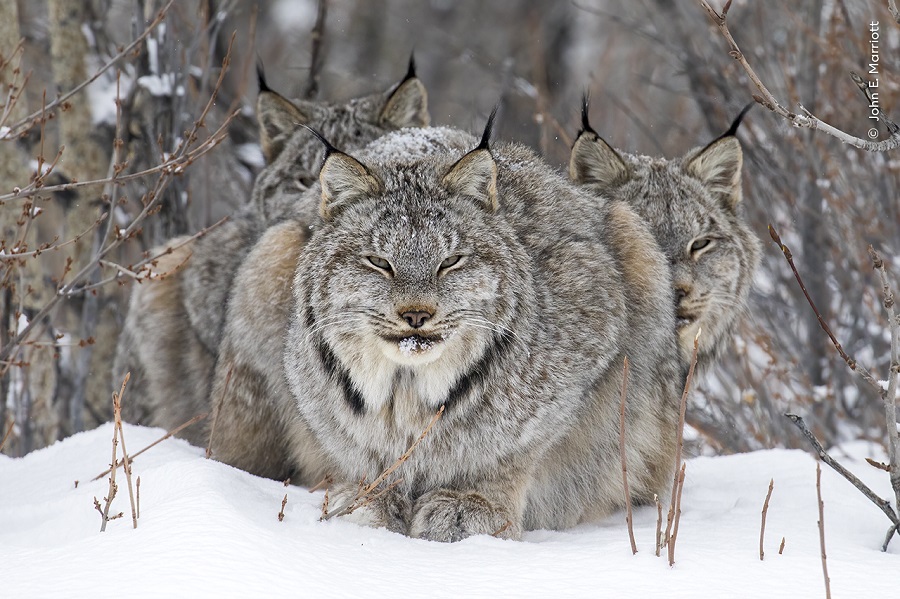
Animal portraits – John E. Marriott (Canada)
On Watch
John E. Marriott frames a resting lynx, with a young adult sheltering from the cold wind behind it. John followed this family for nearly a week, wearing snowshoes and carrying a lightweight camera to navigate the snowy forests. When new tracks led him to the group, he kept his distance to ensure he didn’t disturb them. The number of lynxes generally reflects the natural fluctuations in the population of their primary prey, the snowshoe hare. Climate change is reducing snow cover, giving other predators more opportunities to hunt hares, which threatens to decrease hare populations and, in turn, affect lynx populations.
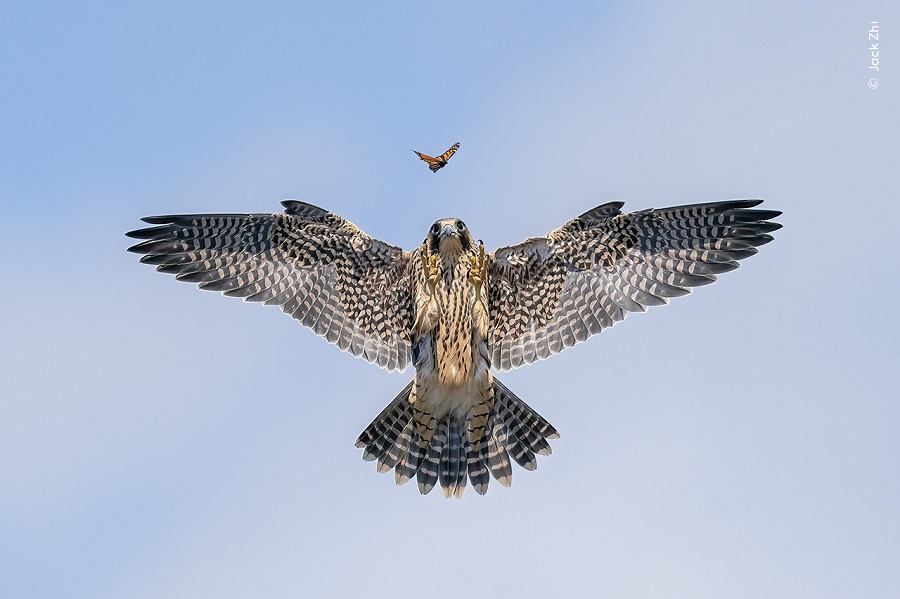
Behavior, birds – Jack Zhi (USA)
Practice makes perfect
Jack Zhi finds joy in observing a young falcon practicing hunting with a butterfly, over its nest located on a cliff. Jack has been visiting this area for eight years, observing the consistent presence of these birds and photographing the fledglings. On this day, it was challenging to follow the action as the birds were very fast. If this young peregrine falcon reaches adulthood, tests have shown it will be capable of diving onto its prey from above at speeds over 300 kilometers per hour.
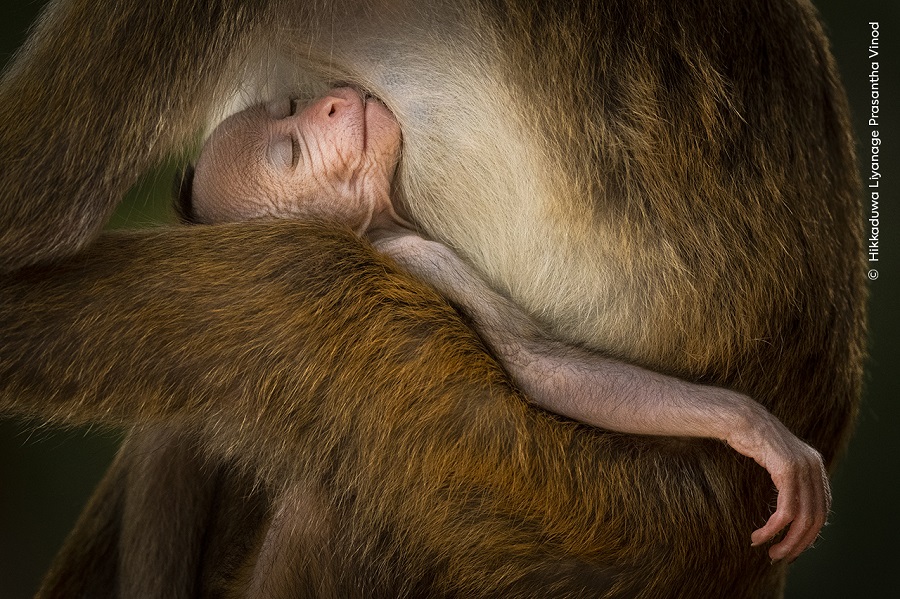
Behavior, mammals – Hikkaduwa Liyanage Prasantha Vinod (Sri Lanka)
A tranquil moment
Hikkaduwa Liyanage Prasantha Vinod captures this serene scene of a young toque macaque sleeping in the arms of an adult. Resting in a quiet spot after a morning spent photographing birds and leopards, Vinod quickly realized he wasn’t alone. A troop of toque macaques moved through the trees above him. Vinod spotted this young monkey napping between meals and used a telephoto lens to frame this peaceful moment. Toque macaques easily adapt to human food, and encroaching plantations on their habitat have led to increased incidents of shooting, snaring, and poisoning by farmers trying to protect their crops.
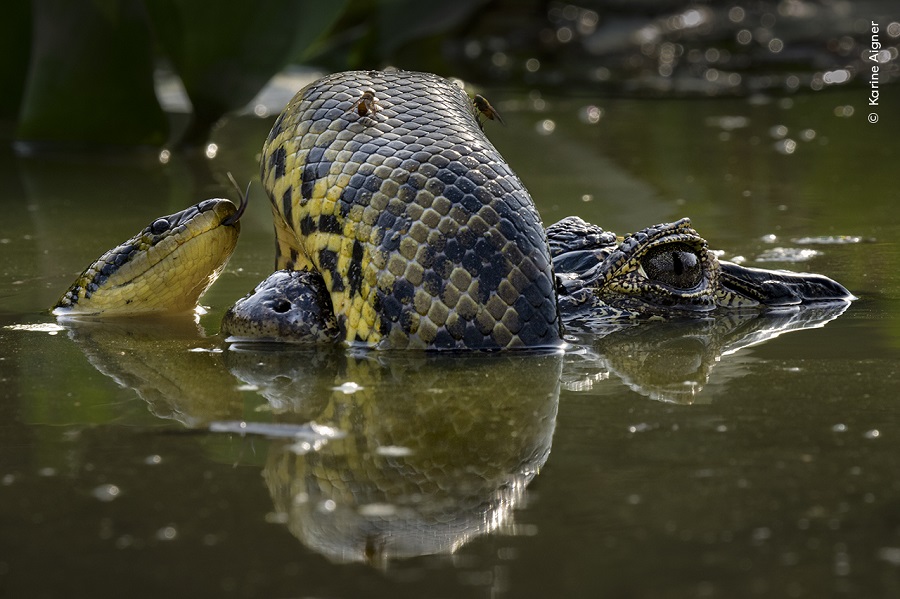
Behavior, amphibians and reptiles – Karine Aigner (USA)
Wetland Wrestle
Karine Aigner recognizes the skin of a yellow anaconda coiling around the snout of a yacare caiman. The tour group Karine was leading had stopped to photograph marsh deer when she noticed a strange form floating in the water. With binoculars, Karine quickly recognized the reptiles and saw them struggling against each other. Caimans eat everything and won’t shy away from feeding on snakes. As anacondas grow, they incorporate reptiles into their diet. It’s hard to determine who is the aggressor here. On the snake’s back are two horseflies, blood-sucking flies known for attacking reptiles.
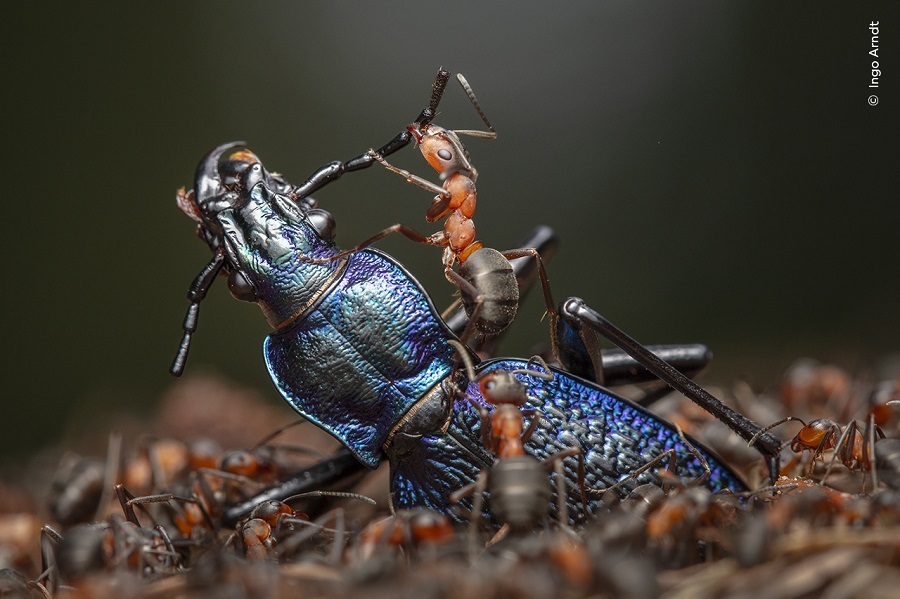
Behavior, invertebrates – Ingo Arndt (Germany)
The demolition squad
Ingo Arndt documents the efficient dismantling of a blue beetle by red wood ants. Ingo described himself as ‘full of ants’ after lying down for a few minutes next to the ants’ nest. He watched the red ants cut up an already dead beetle into pieces small enough to pass through the entrance of their home. Red wood ants predominantly feed on the honeydew secreted by aphids but also require protein. They can kill insects and other invertebrates much larger than themselves by sheer force of numbers.
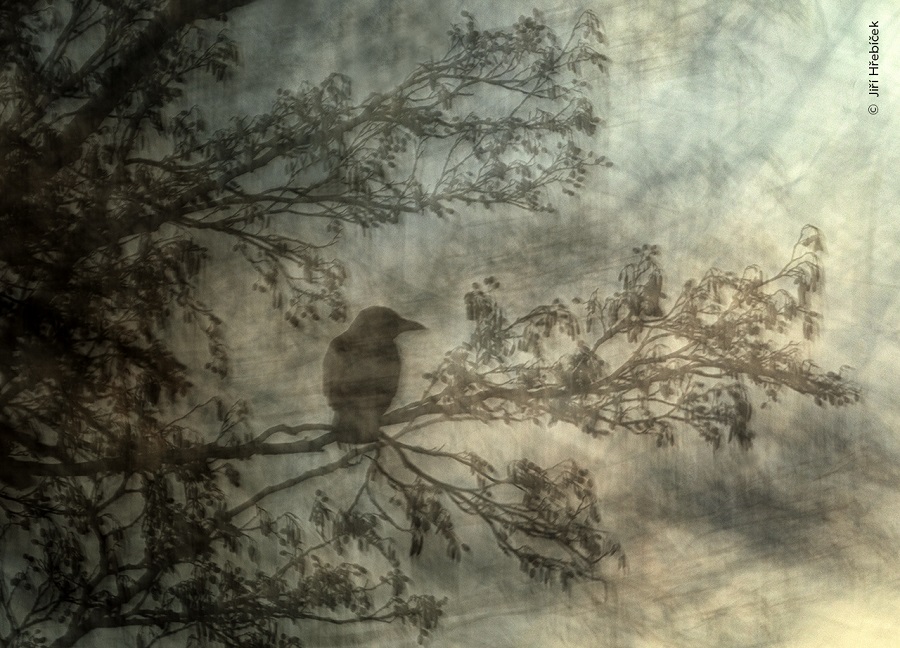
Artistic Nature – Jiří Hřebíček (Czech Republic)
The artful crow
Jiří Hřebíček creates an impressionistic vision of this hooded crow perched. Jiří often visits his local park in Basel, as it’s the perfect place to experiment with shooting techniques. To create this painted effect of a sitting crow, Jiří deliberately moved the camera in different directions while using a long shutter speed. Hooded crows are intelligent birds that have successfully adapted to coexist with humans, with gardens and parks regularly providing them with food. In Switzerland, they are found north of the Alps, with the highest concentrations around Basel.
Plants and Fungi – Fortunato Gatto (Italy)
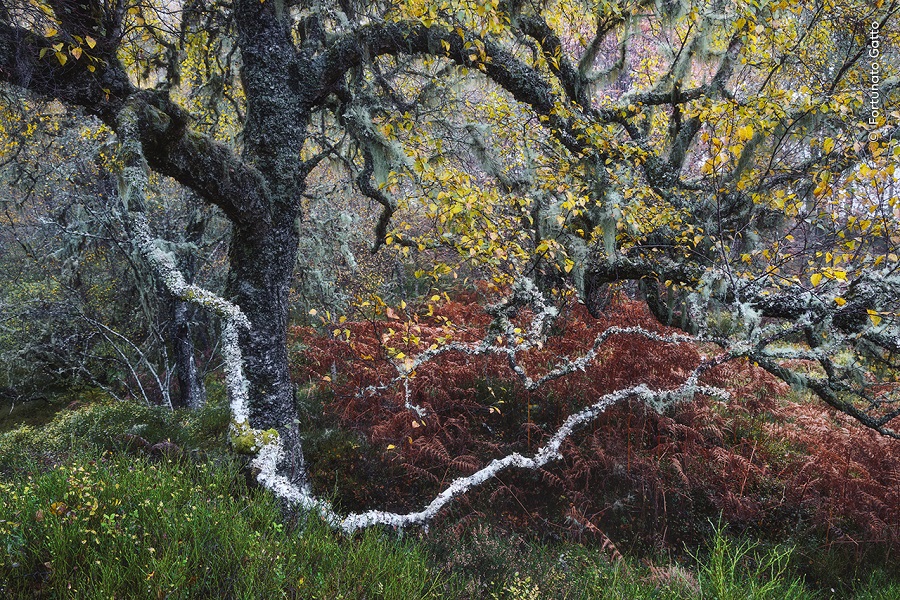
Old man of the Glen
Fortunato Gatto stumbles across an old gnarled birch tree adorned with pale ‘old man’s beard’ lichens. Fortunato often journeys alone into the ancient pine woods of Glen Affric to lose himself in their complex, chaotic, and timeless beauty. The pale ‘old man’s beard’ lichens indicate a clean air area. Glen Affric is home to the UK’s largest concentration of native trees, making it a vital ecosystem. Pollen analysis preserved in sediment layers shows the forest has been here for at least 8,300 years.
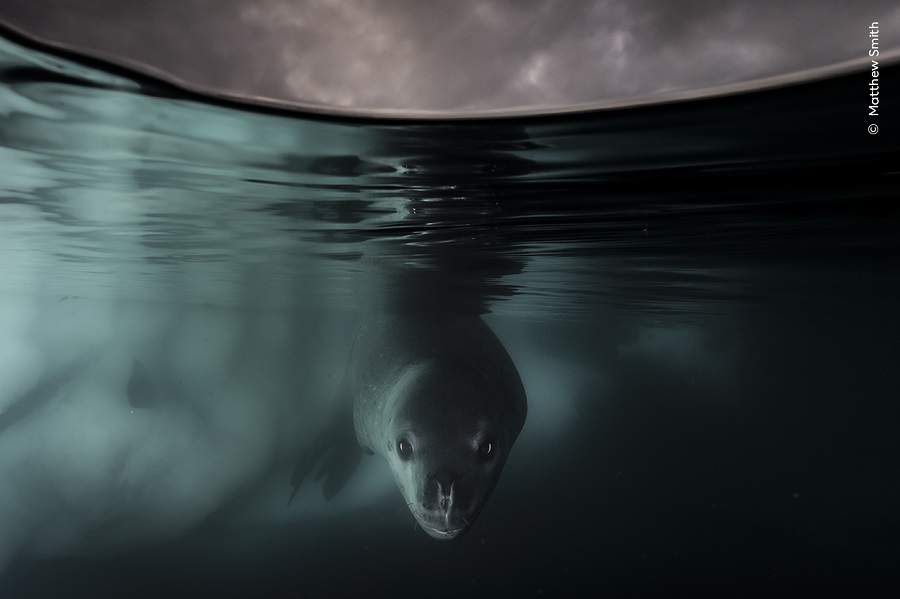
Underwater – Matthew Smith (UK/Australia)
Under the waterline
Matthew Smith carefully photographs a curious leopard seal under the Antarctic ice. He used a specially designed extension for the front of his underwater case to get this split shot. It was his first encounter with a leopard seal. The young seal approached repeatedly, curious. When it looked directly into the lens barrel, he knew he had captured something special. Although leopard seals are widespread and abundant, overfishing, shrinking ice shelves, and warming waters are depleting the krill and penguins, their primary food sources.
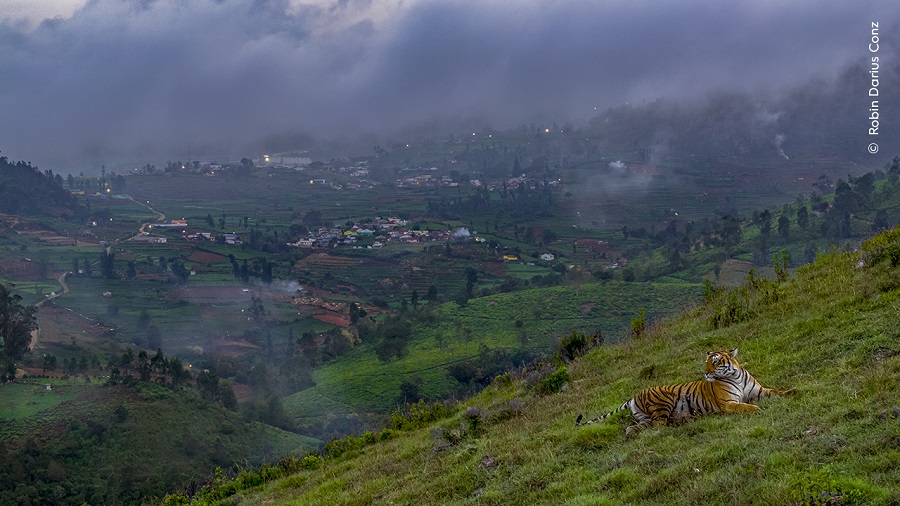
Urban Nature – Robin Darius Conz (Germany)
Tiger in town
Robin Darius Conz observes a tiger on a hillside, with a city where forests once grew in the background. Robin was following this tiger as part of a documentary about the flora and fauna of the Western Ghats. On this day, he used a drone to watch the tiger explore its territory before settling in this spot. The protected areas of the Western Ghats, where tigers are closely monitored, are among India’s most biodiverse landscapes and harbor a stable tiger population. Outside these areas, where development has created human-wildlife conflict, tiger numbers have declined.
A wider vision – Shane Gross (Canada)
The swarm of life
Shane Gross looks under the surface layer of lily pads as a mass of western toad tadpoles swims past him. Shane dived into the lake for several hours through lily pad mats. He thus avoided disturbing the fine layers of silt and algae covering the lakebed, which would have reduced visibility. Western toad tadpoles rise from the deeper parts of the lake, avoiding predators and trying to reach shallows where they can feed. Tadpoles begin to transform into toads between four and twelve weeks after hatching. It’s estimated that 99% of them won’t survive to adulthood.
Photojournalist Story – Thomas Peschak (Germany/South Africa)
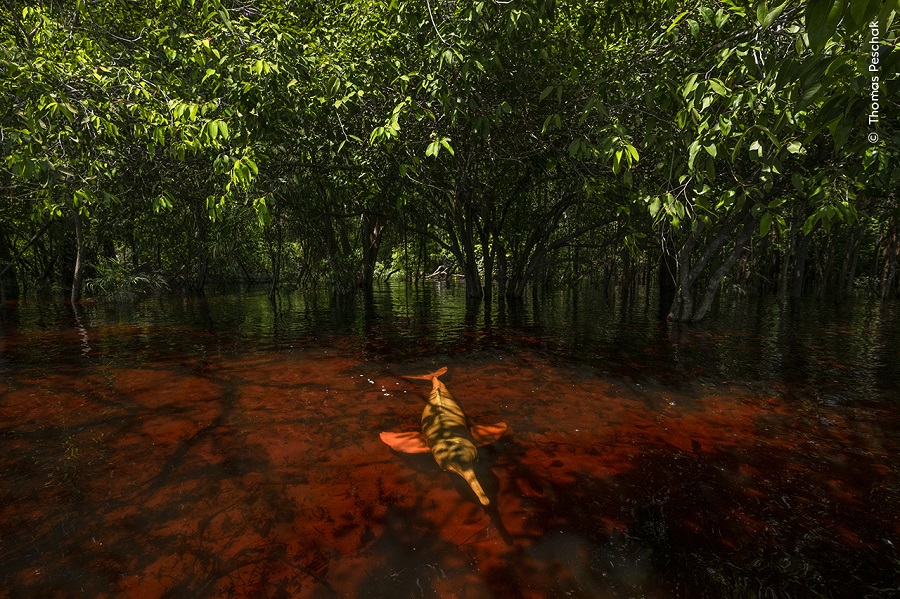
Dolphins of the forest
Among the trees… The Amazon dolphin is one of only two freshwater dolphin species living in the Amazon and Orinoco basins. Only this species has evolved to explore the seasonally flooded forest habitat.
Thomas Peschak documents the relationship between the Amazon dolphins, also known as botos or pink dolphins, and the people with whom they share their aquatic habitat. The Amazon dolphin’s relationship with humans is complex. According to traditional Amazonian beliefs, the dolphins can take human form and are both venerated and feared. Others see them as fish thieves from nets and believe they must be killed. Thomas took these photos in areas where local communities offer tourists the chance to encounter dolphins. This introduces another set of problems: when fed by humans, the dolphins are unhealthy, and the youngest do not learn to hunt for themselves.
Rising Star Portfolio – Sage Ono (USA)
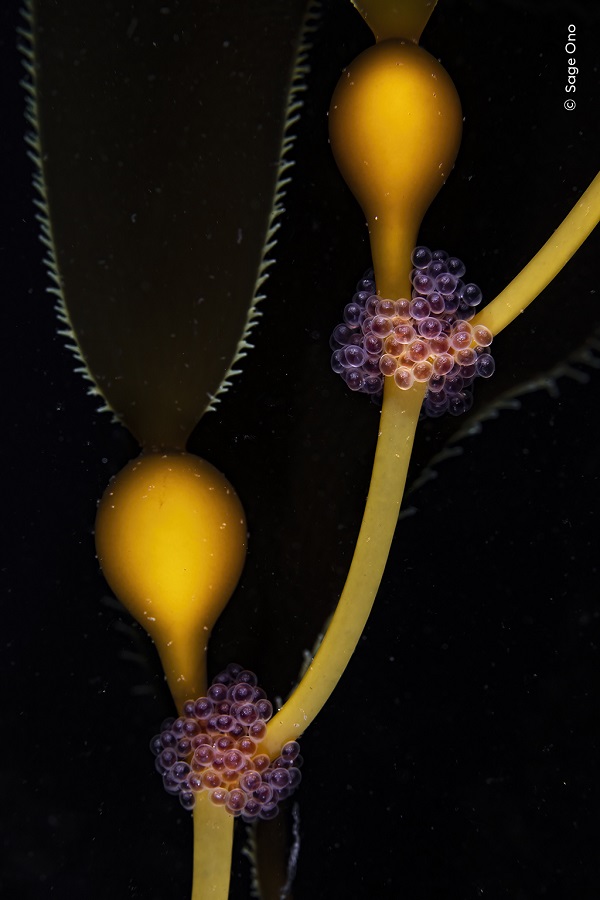
The serengeti of the sea
Ruby and gold… The color of these sharpnose sculpin eggs (Aulorhynchus flavidus) will fade as the embryos develop. But for now, they glow like gems beside the buoyant kelp « floats, » which are golden, shiny, and gas-filled. The jagged green edges of the kelp fronds complete this simple composition.
Sage Ono explores the abundant life around the giant kelp forests in the Monterey Bay National Marine Sanctuary. Inspired by stories told by his grandfather, a retired marine biologist, and the photography of a cusk eel larva, Sage acquired a compact underwater camera and decided to venture into underwater photography. After college, he moved to the coast near the Monterey Bay National Marine Sanctuary to pursue his interest. Here, the submerged world of the giant kelp forest in the bay—the largest of all seaweeds—and the diverse life they support captivated his imagination.
Impact – Jannico Kelk (Australia)
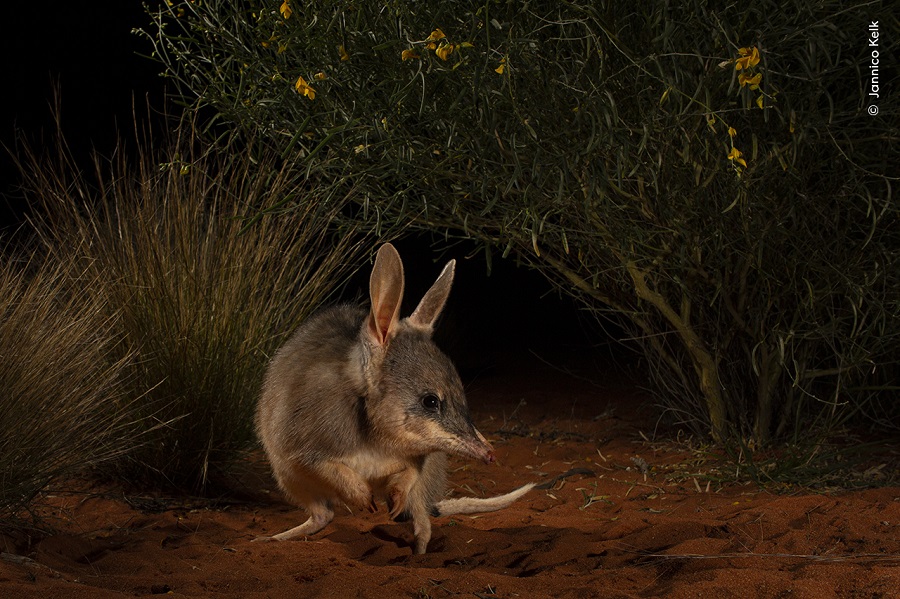
Hope for the Ninu
Jannico Kelk highlights a ninu, with grass and shrubs forming a frame in the darkness behind it. Jannico spent every morning traversing the sand dunes of a nature reserve, searching for tracks this rabbit-sized marsupial might have left the previous night. He found tracks near a burrow and set up his camera trap. The greater bilby is known by many Aboriginal names, including ninu. It had nearly disappeared due to predation by introduced foxes and cats. In fenced reserves where many predators have been eradicated, the bilby thrives.
opening image © Shane Gross / Wildlife Photographer of the Year