


Greg Lecœur was named Photographer of the Year at the famous British competition Underwater Photographer of the Year 2020 (UPY).
As every year, this competition made headlines with the participation of 5,500 photographers from 70 different countries. Participants could submit images for thirteen categories, including wide angle, portrait, wreck, black and white… The jury for this 2020 edition, composed of photographers
Wide Angle
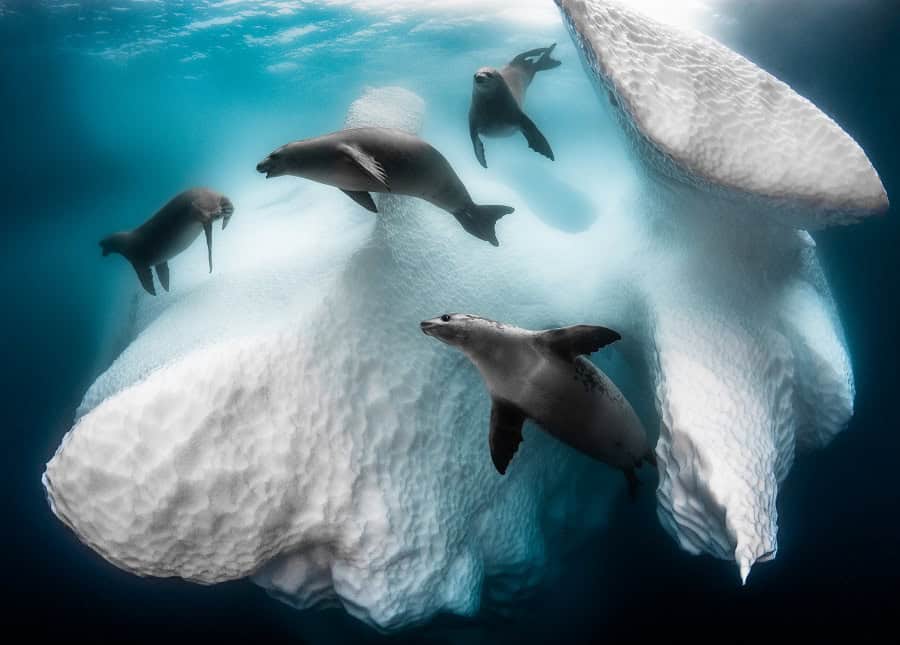
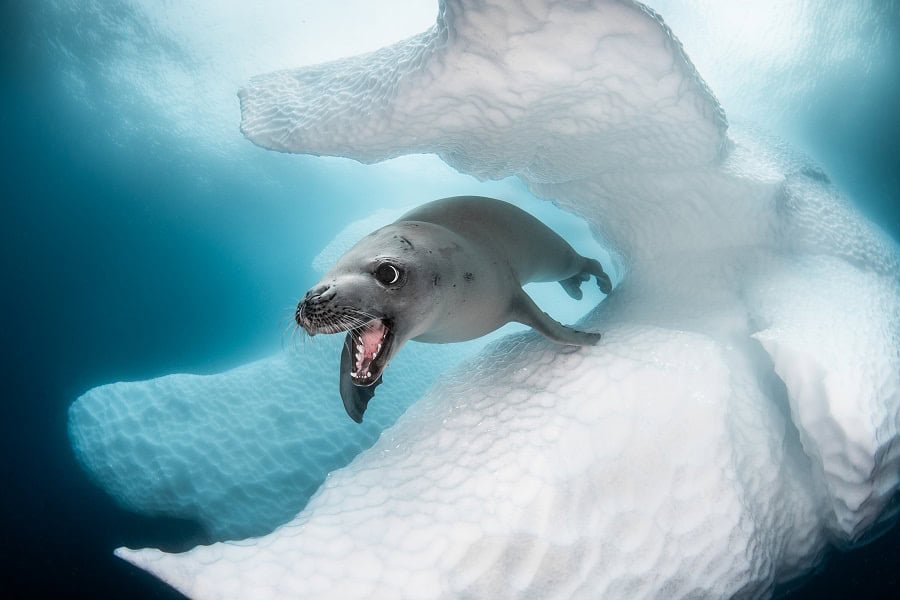
1st place – Greg Lecœur (France)
.
Greg Lecœur: « Massive and mysterious habitats, icebergs are kingdoms that house marine life. Swaying and slowly spinning in polar currents, icebergs fertilize the oceans by transporting nutrients from the land. During an expedition in the Antarctic peninsula with filmmaker Florian Fisher and freediver Guillaume Nery, we explored and documented the hidden face of this iceberg where crabeater seals have taken residence on icebergs drifting with the polar currents.. »
The judges commented : « The ballet-like rhythm of these crabeater seals and the ethereal landscape of the iceberg create a composition that draws you into a corner of the world few have witnessed. The multiple subjects lead my eyes on a journey through the frame and into the icy Antarctic ocean« . – Alex Mustard
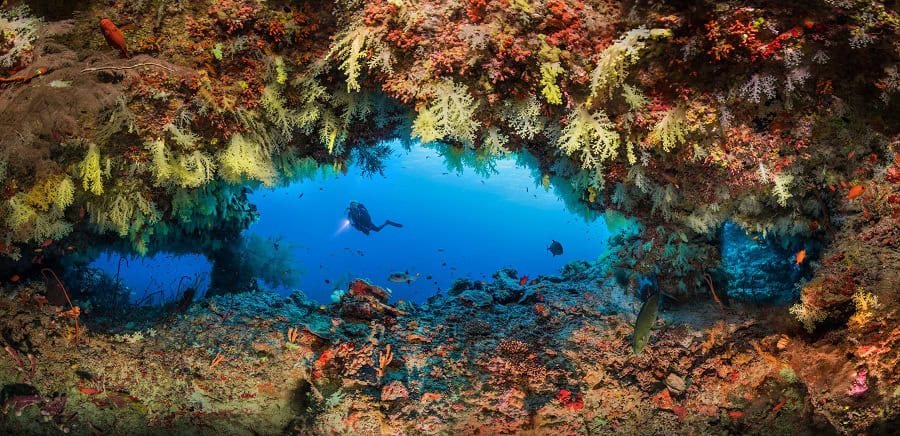
2nd place – Oleg Gaponyuk (Russia)
.
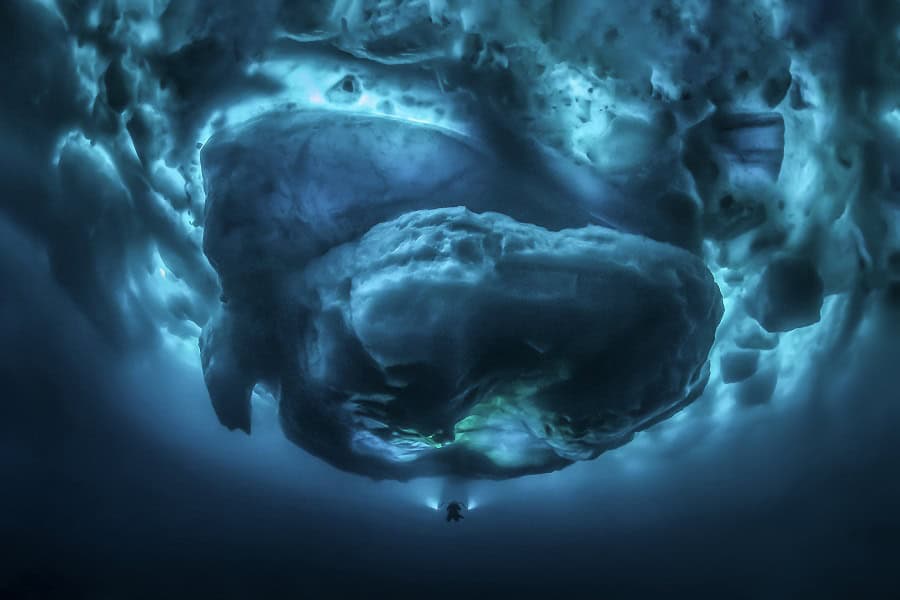
3rd place – Tobias Friedrich (Germany)
.
Macro
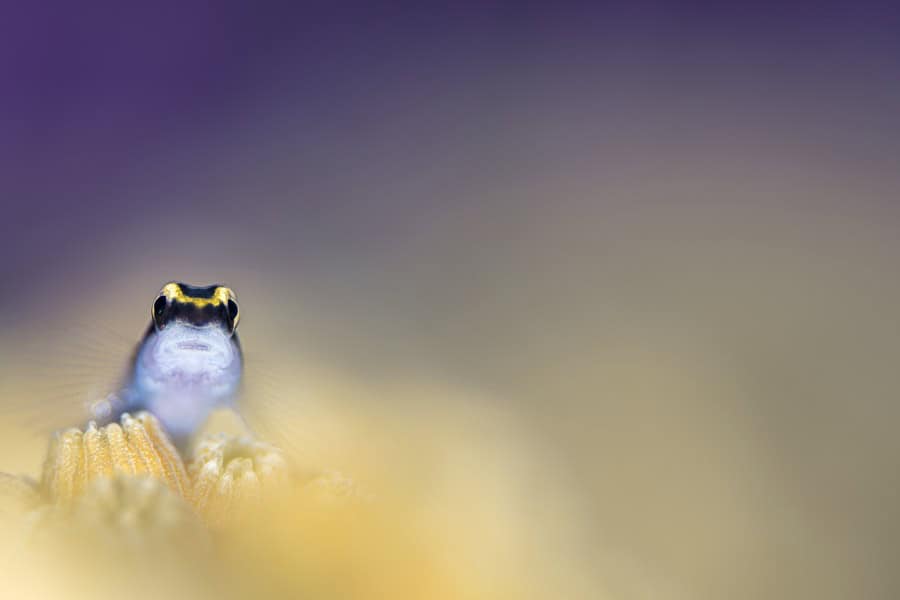
1st place – Hannes Klostermann (Germany)
.
Hannes Klostermann: « In a shallow area of a coral reef in the Cayman Islands, I spotted this little fellow posing right on top of a coral head. I noticed the purple gorgonian in the background and thought it would look nice with a shallow depth of field, a style I really like in macro photography. After this initial shot, I immediately knew I would spend the rest of the dive with this goby. Luckily, the goby seemed to really like the prime spot on top of the coral head, so it kept returning to be photographed, unbothered by me.. »
The judges commented : « This image was a winner from the start. The goby appears suspended, the color balance is superb, the eye contact is perfect, but what really caught my attention is the composition! Let’s ask ourselves how many of us, when looking at this image today, would have thought of placing the subject all the way down in the lower left corner? One of my favorite images of the entire competition. » – Martin Edge
2nd place – Keigo Kawamura (Japan)
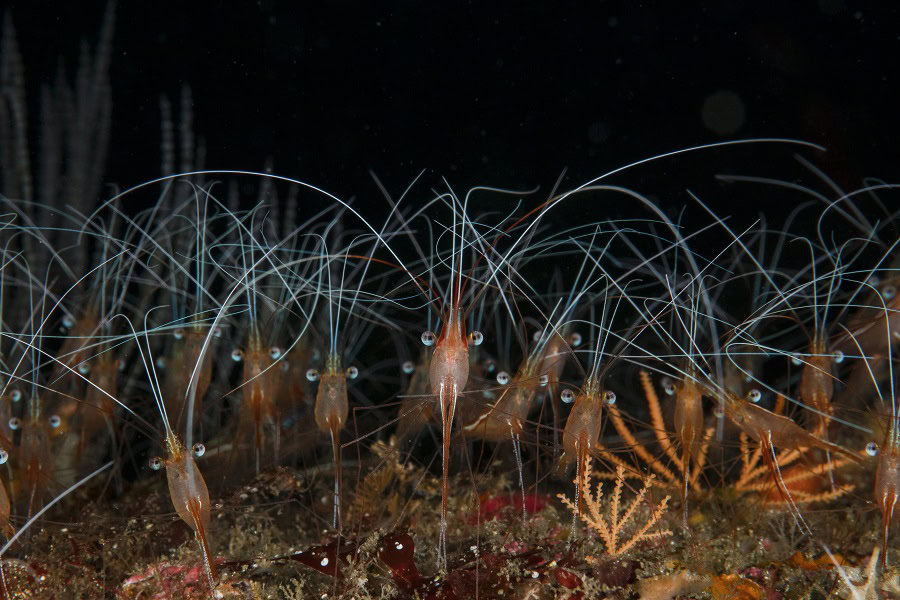
.
3rd place – Jack Israel (USA)
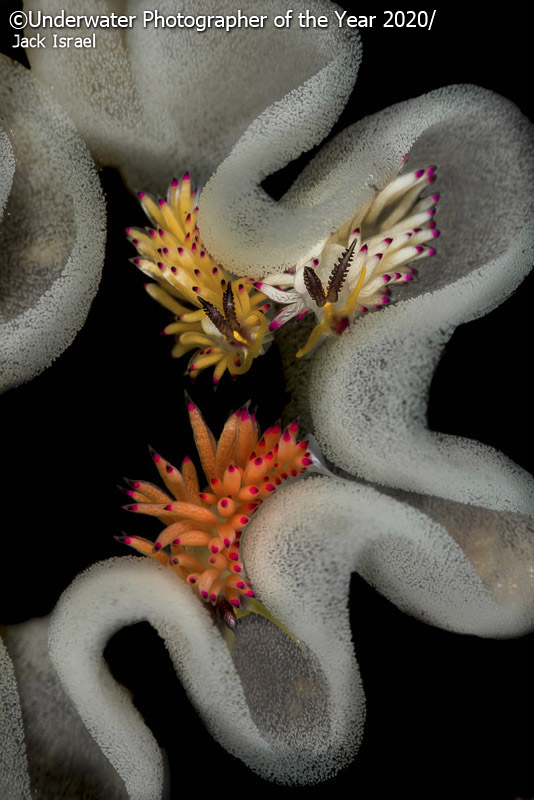
.
Wrecks
1st place – Tobias Friedrich (Germany)
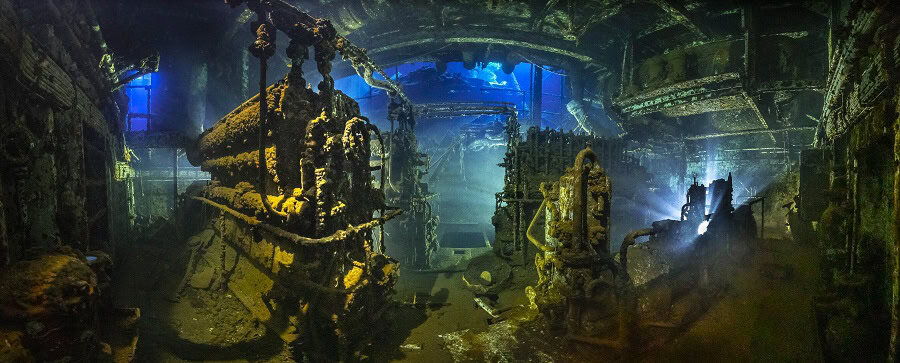
.
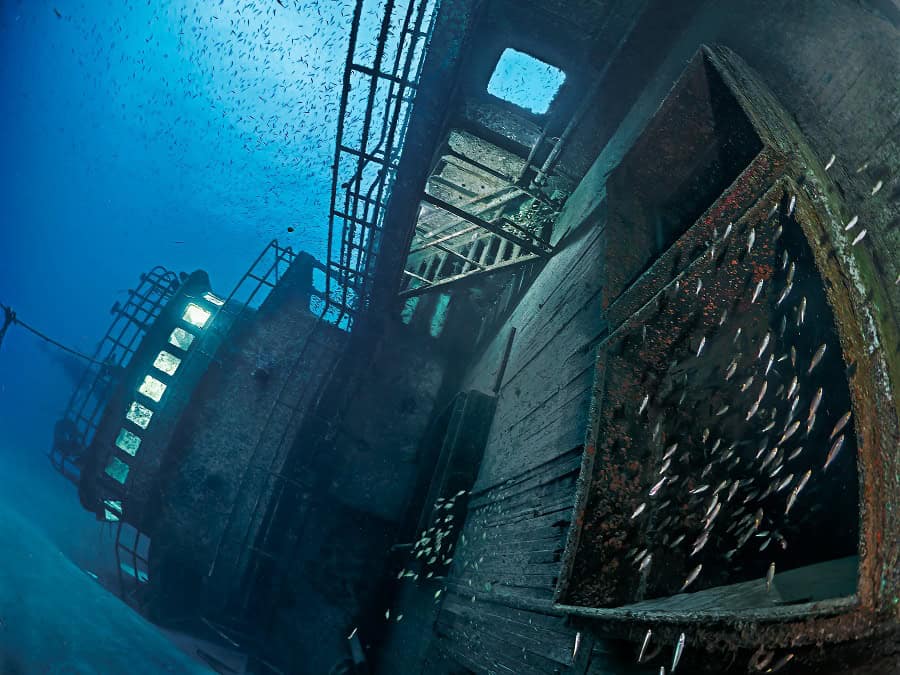
Tobias Friedrich: « Panoramic image of the engine room of the Chrisoula K. with six video lights placed behind the engines. I have visited this wreck several times on a cruise, checking the possibilities for creating different lighting in the wrecks. The space between the engine inside the wreck is narrow and the angle for one photo was not sufficient, so I thought the best idea was to create a panoramic image to showcase the engine room in its entirety. Setting up the lights took some time, as did finding the right balance between ambient light and light outside the wreck. Since the wreck is often dived in the Red Sea, I had to wait for the right slot when no one was inside. »
The judges commented : « An amazing panoramic image. The consistency of light and shadow is stunning. The blue color of the water in the distant background gives the viewer a huge sense of depth. The eye is drawn from left to right with all the machines in the wreck visible. When I first saw this image, I knew it would go far in this competition. A well-deserved winner! » – Martin Edge
2nd place – Renee Capozzola (USA)
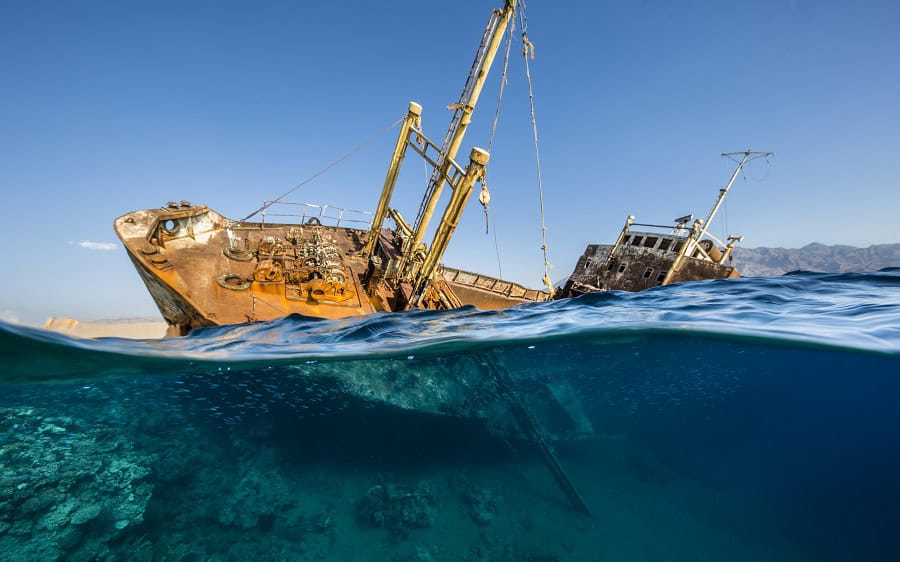
.
3rd place – Pier Mane (South Africa)
.
Animal Behavior
1st place – Pasquale Vassallo (Italy)
.
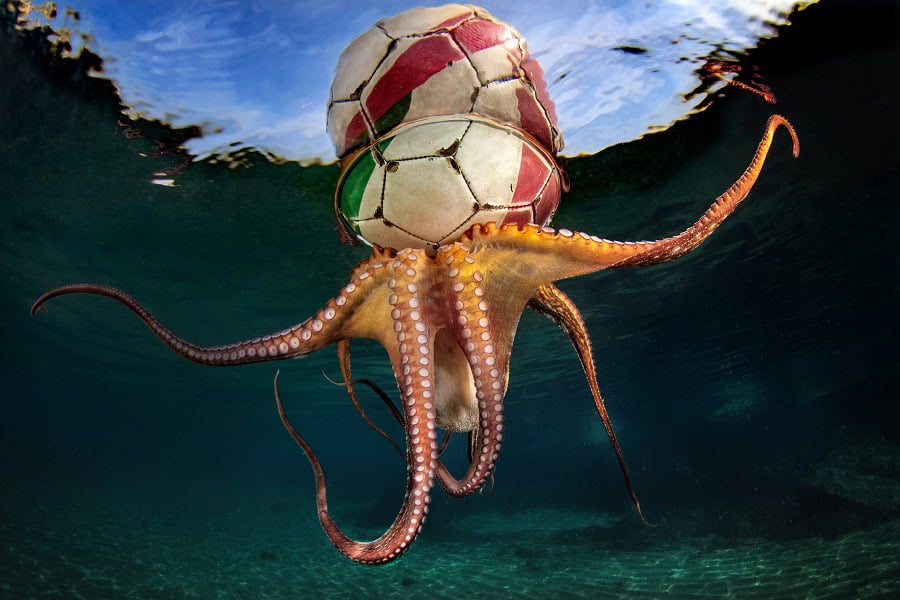
Pasquale Vassallo: « At the end of a freediving outing, I noticed a soccer ball on the surface. Intrigued, I approached, and then noticed there was an octopus underneath. I don’t know what it was doing under this ball, maybe it wanted to train for the next World Cup! I had time to take a few images before the octopus left the ball and returned to the bottom of the water.. »
The judges commented : « This image provokes a rollercoaster of emotions: it starts by making me happy, then sad. It’s impossible not to laugh at this composition that seems to show an octopus with a ball instead of a head. It’s nice to see the cephalopod intrigued by this strange object in its environment, happily waving its arms in the water. Then the photo poignantly reminds us that the oceans have been a dumping ground for our waste for too long. » – Alex Mustard
2nd place – Paolo Isgro (Italy)
.
3rd place – Filippo Borghi (Italy)
.
Portrait
1st place – Lilian Koh (Singapore)
.
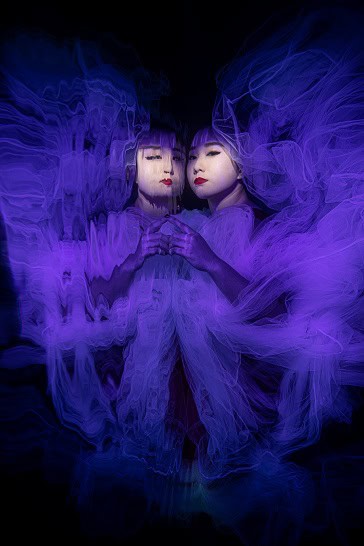
Lilian Koh: « Having been primarily immersed in creative macro, this is my first time using snoot technique on a larger scale. Keeping a shallow depth to capture the reflection, the snoot is used to focus on the model while the blue light captures the flowing veil surrounding it, creating a butterfly effect.«
The judges commented : « Some images have immediate appeal, but only the highest quality can maintain that appeal through the stages of judging in a competition. This image kept coming back and being highlighted for its originality, perfection, and delicacy. Our guidelines say: « We hope to recognize and reward excellence and creativity in the different disciplines of underwater photography. » This image is a perfect example and was unanimously praised. » – Peter Rowlands
2nd place – Rooman Luc (Belgium)
.
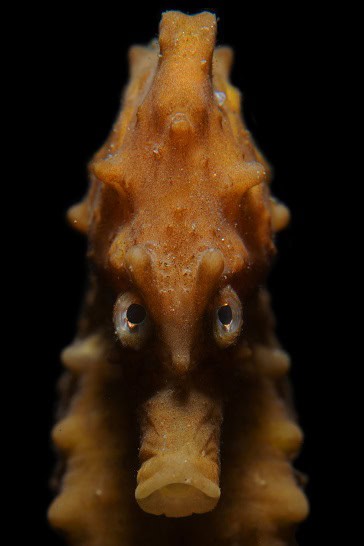
3rd place – Greg Lecœur (France)
Black and White
1st place – Mok Wai Hoe (Singapore)
.
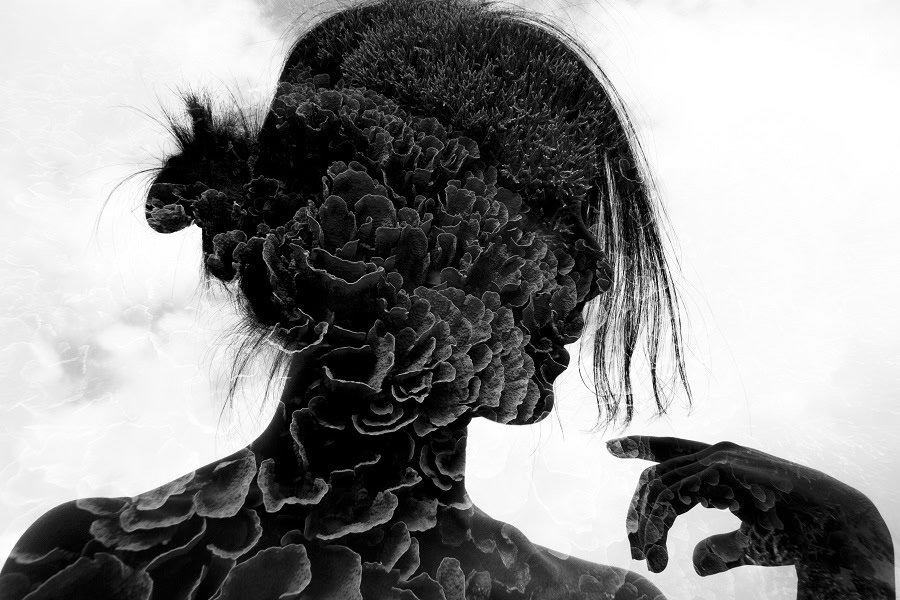
Mok Wai Hoe: « The creation of this image was inspired by double-exposure photography. This abstract style typically involves re-exposing a silhouette with a background such as an urban landscape. I was fascinated by the aesthetics and the vast possibilities for interpreting this form of visual art. At the same time, I did not find examples of this style applied underwater. I spent a year researching and experimenting to adapt this technique to underwater photography. This black and white was created by first taking a silhouette against a cloudy afternoon sky. The image was then juxtaposed with a coral garden. While this photo pays homage to the subjects closest to my heart, I hope viewers can find their own meaning by juxtaposing the elements and contrasting textures in the photo. »
The judges commented : « It is said that the best ideas are often the simplest, here is an amazing and original photo that is undoubtedly one of the most memorable in this contest. The minimalism of the concept perfectly marries with the monochrome presentation. A wonderfully beautiful photograph!« – Alex Mustard
2nd place – Henley Spiers (United Kingdom)
.
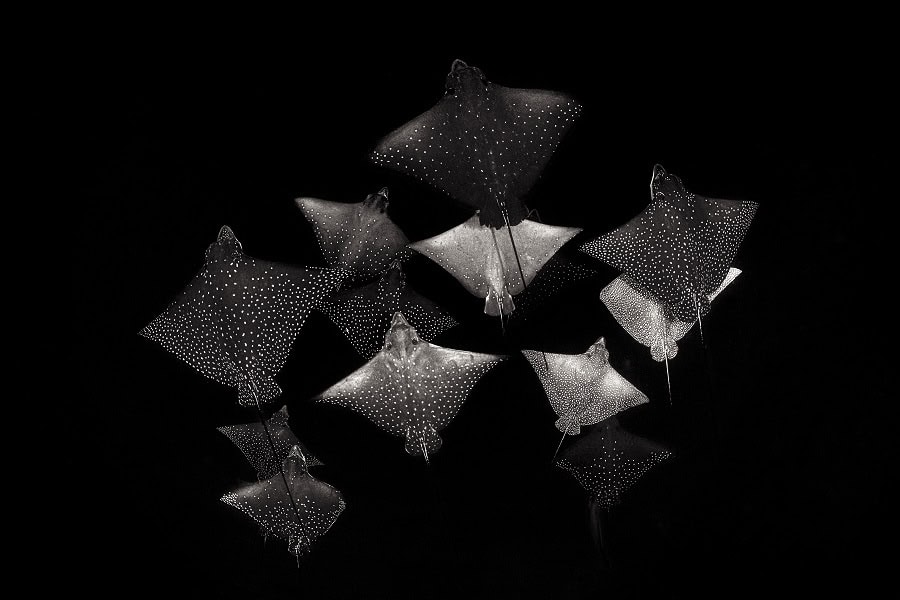
3rd place – Zena Holloway (United Kingdom)
.
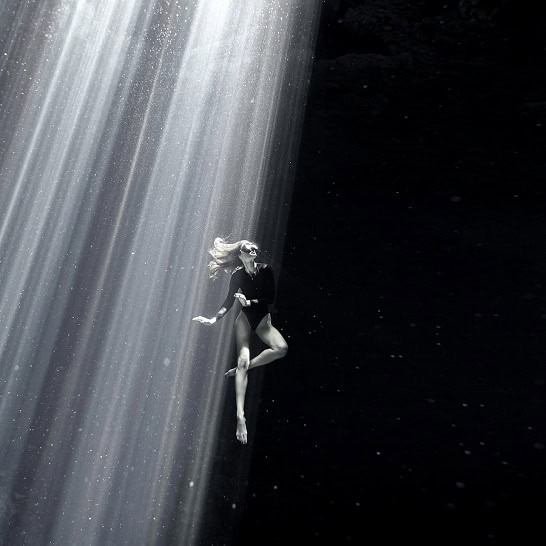
Compact Camera
1st place – ManBD (Malaysia)
.
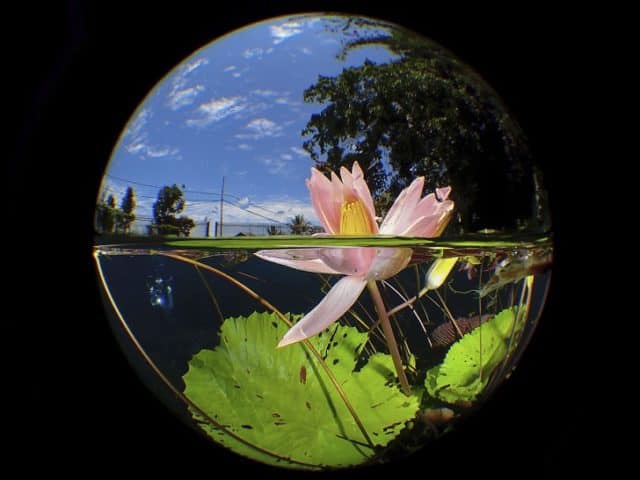
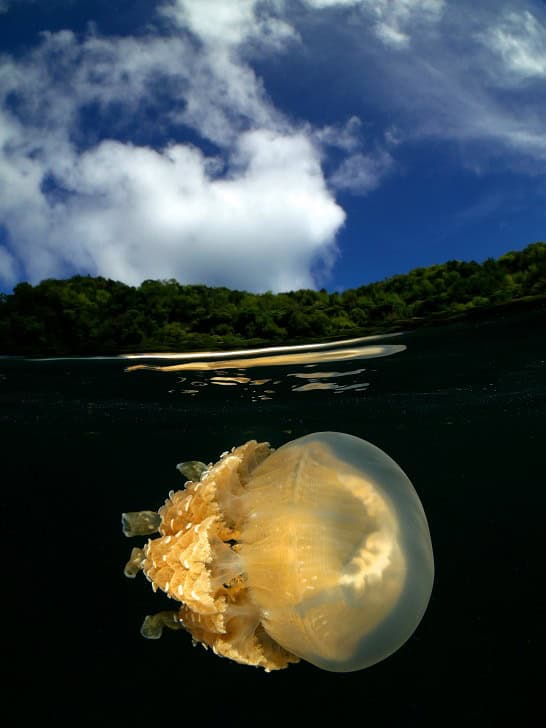
MANBD: » Situated at 670 m above sea level north of Sulawesi, Lake Uluna is a place I have always wanted to visit. When I had the opportunity to dive into this freshwater at the end of last year, I knew the photo I wanted to take. This lake with crystal-clear waters is famous for its lilies that only bloom in the morning. As for the blue sky, it provides good contrast. Equipped with a mini dome, I balanced myself to find the ideal angle and time to create this half-air, half-water. »
The judges commented : » Half-air, half-water photos taken with a compact and a small dome are not easy to achieve, but this perfectly drawn horizontal line offers a freshness and brightness that is always appealing. I must admit I didn’t spot the diver (did you?!) but when it was pointed out to me, it was the icing on the cake. » – Peter Rowlands
2nd place – Enrico Somogyi (Germany)
.
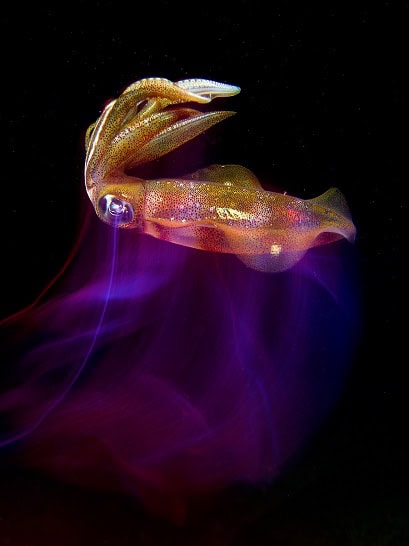
3rd place – Enrico Somogyi (Germany)
.
Most Promising Photographer
1st place – Anita Kainrath (Bahamas)
.
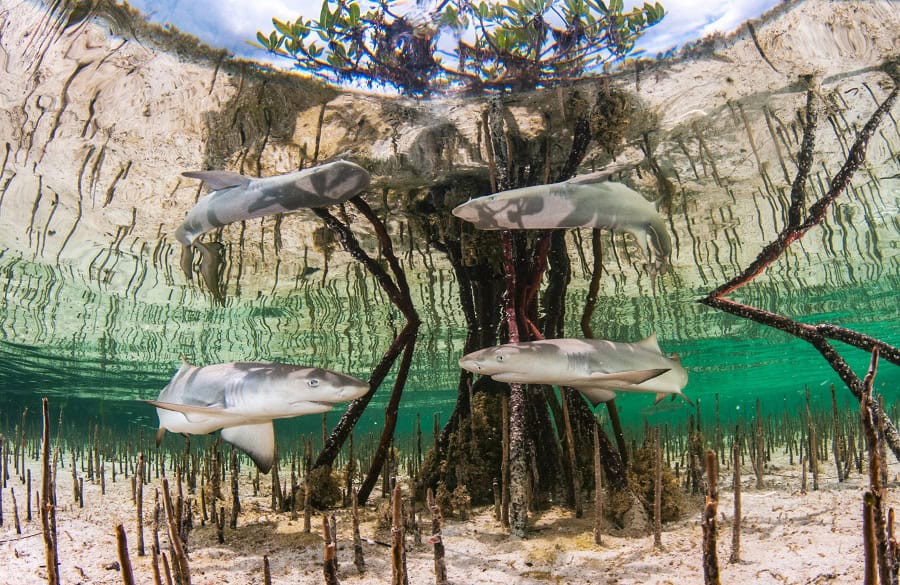
Anita Kainrath: « The Bahamas have been a shark sanctuary since 2011 but mangroves are not yet protected and it’s where juvenile lemon sharks spend the first 5 to 8 years of their lives. I was knee-deep in the water, waiting for the sharks trying not to move, which is not easy when you’re surrounded by swarms of mosquitoes. After waiting less than an hour, the little predators approached and eventually swam around my feet and camera, bumping into me and trying to taste my flash. These are curious little guys, but it takes time to earn their trust and I love watching them in their natural habitat, and that’s what I wanted to capture. Their nurseries must be protected to ensure their population does not decline.«
The judges commented : » As someone adored by mosquitoes and sand flies, I must equally applaud Anita’s tenacity first, then her images. Her persistence was certainly rewarded with a perfectly balanced image, an image we lingered on for some time, not because we were unsure, but just because we just wanted to look at it. » – Peter Rowlands
2nd place – Nur Tucker (United Kingdom)
.
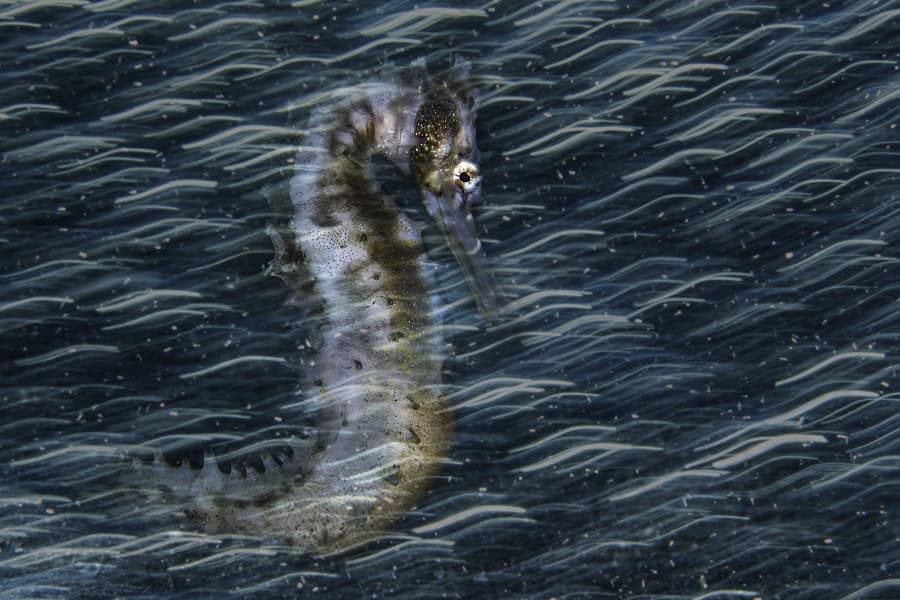
3rd place – Ines Goovaerts (Belgium)
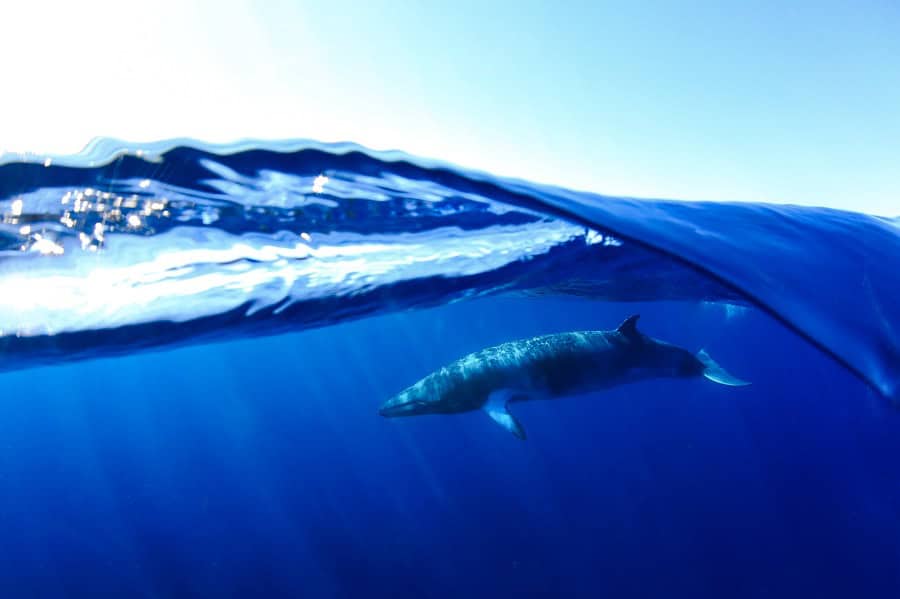
.
Wide Angle – British Waters
1st place – Arthur Kingdon (United Kingdom)
.
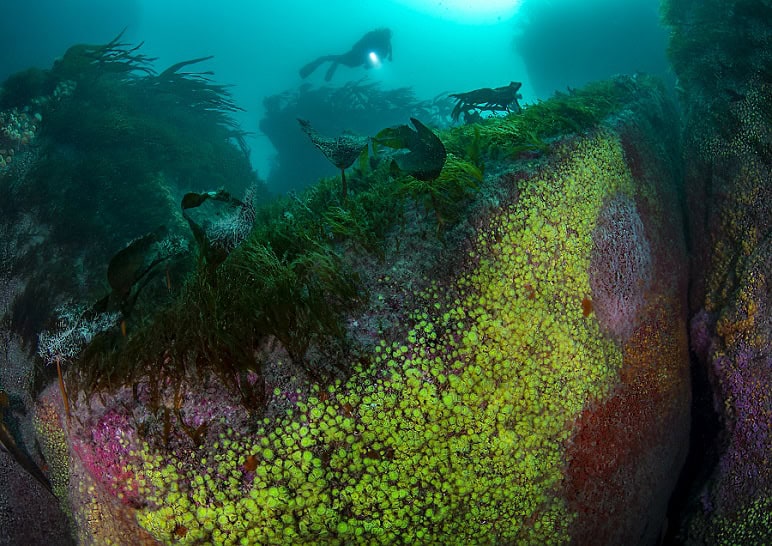
Arthur Kingdon: » The Isles of Scilly offer some of the best wide angle photography opportunities in the United Kingdom for underwater photographers. This image was taken on a site whose location is only known by the excellent skipper of Dive Scilly, and it turned out to be an amazing site with jewel anemones everywhere. It was the first dive of the week, and my first dive with my new camera. After a test shot to check exposure and lighting, I took this photo, and it was the best of the week! I was aided by Paula who offered to be my model for a dive..«
The judges commented : » This year’s winner recalls a familiar subject to last year’s winner in this category, but it is impossible to deny the connection between this impressive image and its title. It celebrates the British seas, filled with colors, textures, depth… The model’s pose is perfect. An exemplary shot! « – Alex Mustard
2nd place – Will Clark (United Kingdom)
.
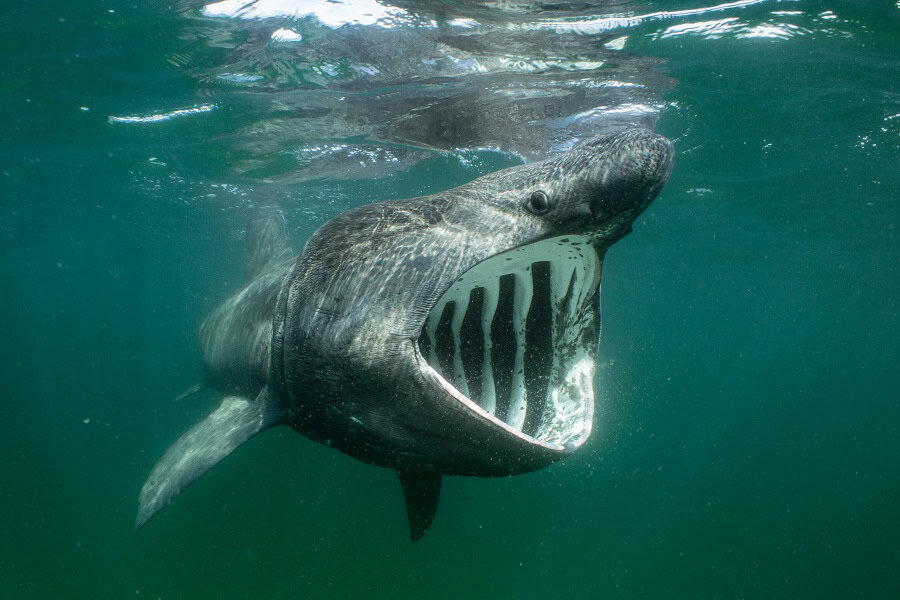
3rd place – Trevor Rees (United Kingdom)
.
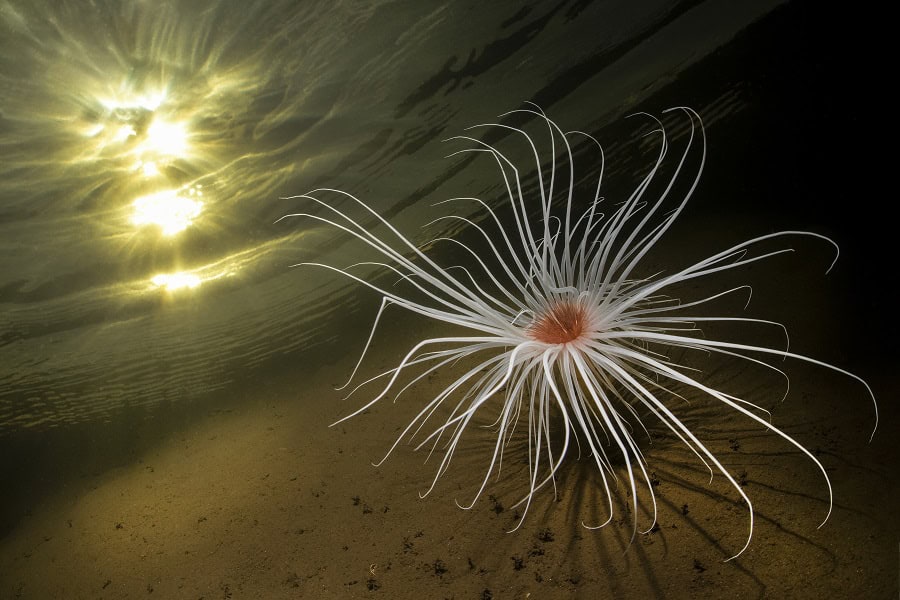
Macro – British Waters
1st place – Laura Storm (United Kingdom)
.
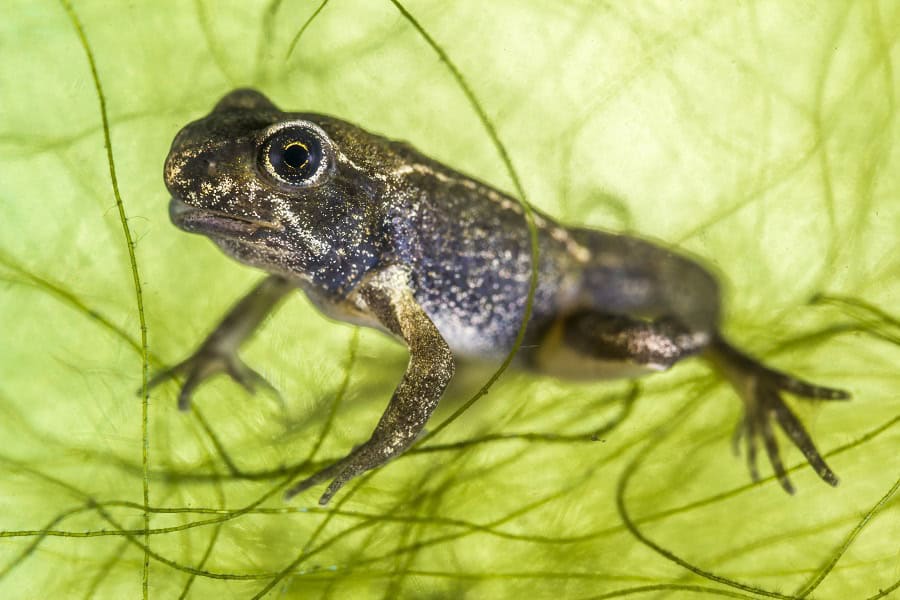
Arthur Kingdon: » I have devoted the past two years to photographing underwater habitats in British freshwater. One of the stories that captivated me is that of the common frog. During its lifetime, it has an estimated survival chance of 0.25%. It transforms like no other creature and, along the way, experiences the most fantastic adventures. This tiny frog measures less than 1 cm long. It is so light that it can balance on single, silky stands of Spirogyra. These filamentous algae, a vital and abundant first link in freshwater, reproduce rapidly and form an entangled labyrinth known as water silk. To highlight this water silk, I used two strategically placed off-camera lights. One to illuminate the tiny frog and the other to allow the algae strands to glow.. »
The judges commented : » A flawless composition, the frog’s eye and the left hind leg illustrate the old « rule » of thirds. But you’ve taken it a step further by using your two off-camera lights to light the frog and the algae at the same time. The very deserving winner of this category. » – Martin Edge
2nd place – Trevor Rees (United Kingdom)
.
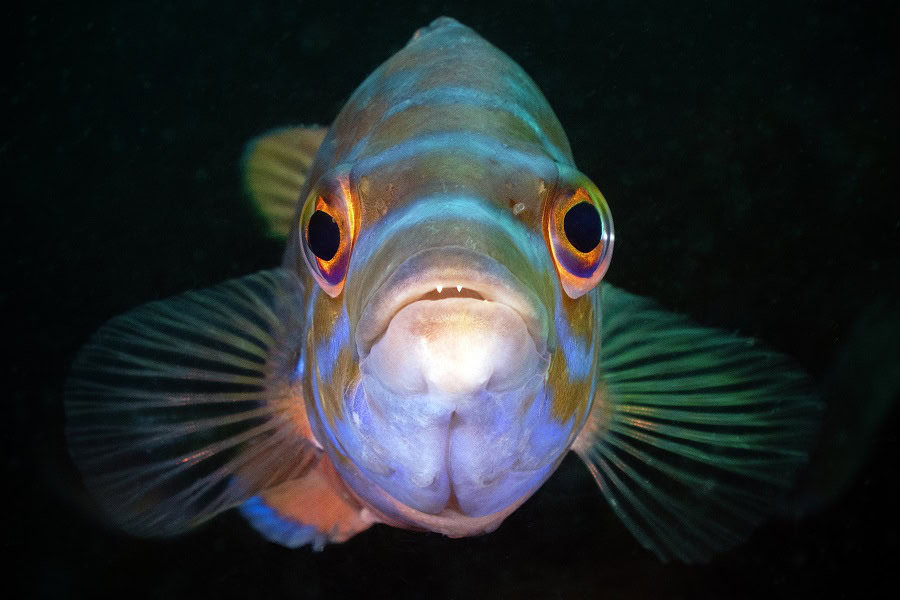
3rd place – Dan Bolt (United Kingdom)
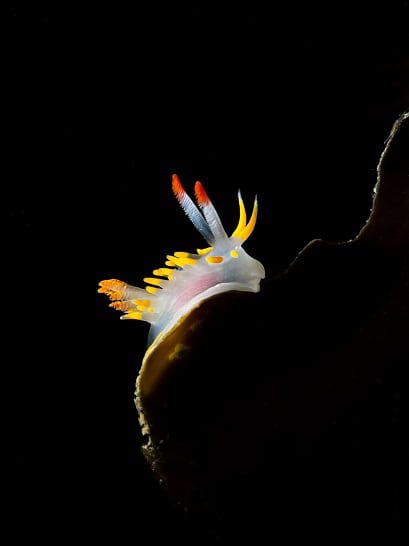
Living Together – British Waters
Interaction of underwater wildlife with human-made objects or constructions.
1st place – Dan Bolt (United Kingdom)
.
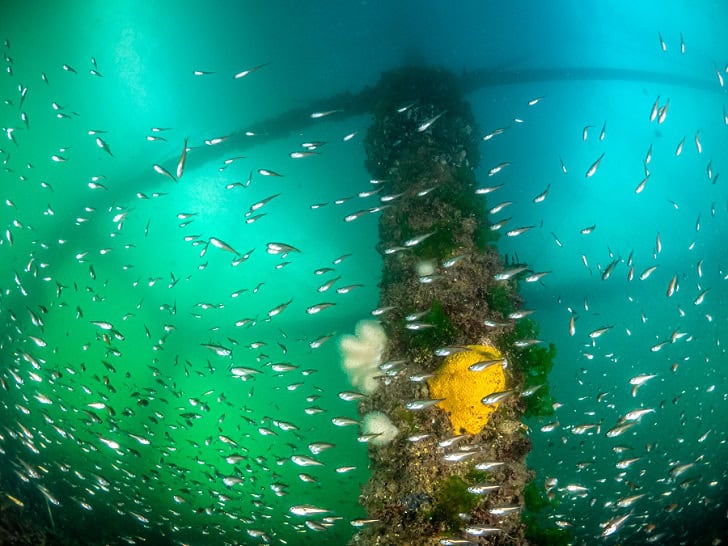
Dan Bolt: » This image shows the importance of artificial structures for life. Paignton pier, in South Devon, is no exception. The pillars house numerous sponges, anemones, and mollusks, and in summer, several hundred juveniles use the structure to shelter from predators. Diving under this pier with the sun shining in shallow waters, it’s hard to believe you’re in the United Kingdom! exception. Les piliers abritent de nombreuses éponges, des anémones et des mollusques, et en été, plusieurs centaines de juvéniles utilisent la structure pour s’abriter des prédateurs. Plonger sous cette jetée avec le soleil qui brille dans des eaux peu profondes, difficile de croire que l’on est au Royaume-Uni !«
The judges commented : » Beautiful use of wide angle for this underwater photo! The pillar itself and the shape of the structure bring so much depth to this image! It almost looks like the pier is circular. Once the viewer has followed the school of fish, I begin to follow them too, over and over again. All this is made possible by the circular position of the poles. » – Martin Edge
2nd place – Kirsty Andrews (United Kingdom)
.
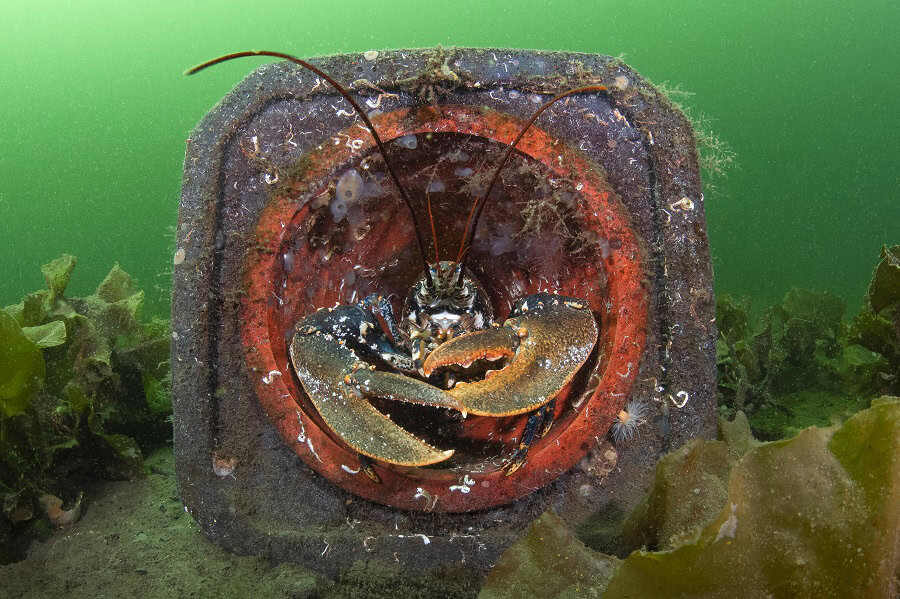
3rd place – Shannon Moran (United Kingdom)
.
Compact Camera – British Waters
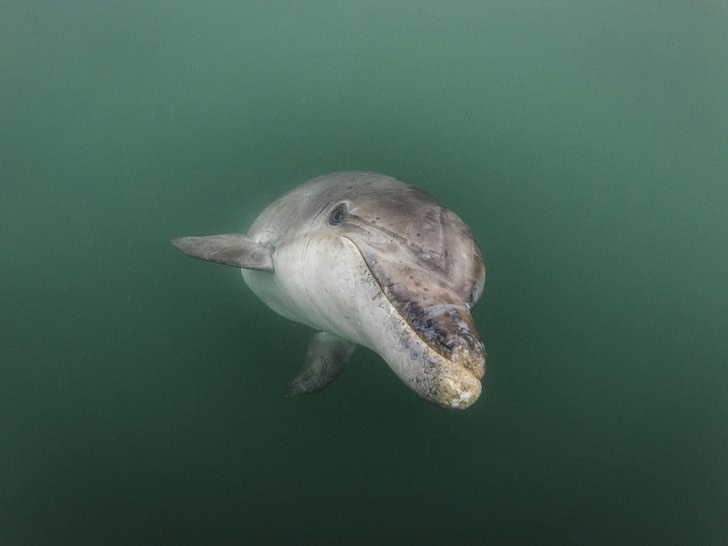
1st place – Colin Garrett (United Kingdom)
.
Colin Garrett : « In early April 2019, the sighting of a solitary male bottlenose dolphin began to be reported in and around Portland harbor. I was out diving on a local wreck and I had the strange feeling that the chances of encountering it were quite high. The dive passed without seeing it, but fortune was on our side, as on our return the distinctive dorsal fin was identified. As the animal approached us, I slipped into the water with fins and snorkel and waited, hopeful… It turned out he wasn’t nervous at all and swam right up to the camera. I can’t remember who had the bigger smile. Him or me?«
The judges commented : » Simply a shot that anyone who takes an underwater camera into British waters would be thrilled to achieve. Dolphins often move quickly and are in fact a real challenge to produce such sharp images in dark green seas.« – Alex Mustard
2nd place – James Lynott (United Kingdom)
.
3rd place – Martin Edser (United Kingdom)
.
Marine environment preservation
1st place – Pasquale Vassallo (Italy)
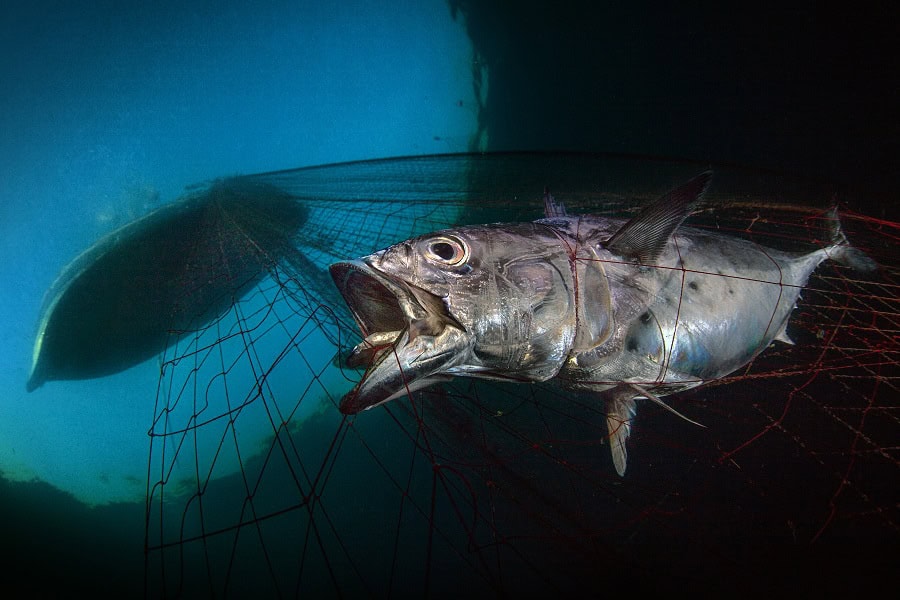
.
Pasquale Vassallo : « This winter, I went diving with local fishermen. At 6 AM, I was already in the water, as the nets are lifted at the break of dawn. While the fishermen quickly hauled in the nets, I tried to take some shots of trapped fish that were still suffering in the nets, like this tuna (Euthynnus alletteratus).«
The judges commented : » If a photo suggests a thousand words, a great image poses a thousand questions. You know these questions, just like I do. All we can do is show the truth to those living above who cannot imagine the world below, hoping they too begin to ask questions. » – Peter Rowlands
2nd Prize – David Alpert (United Kingdom)
.
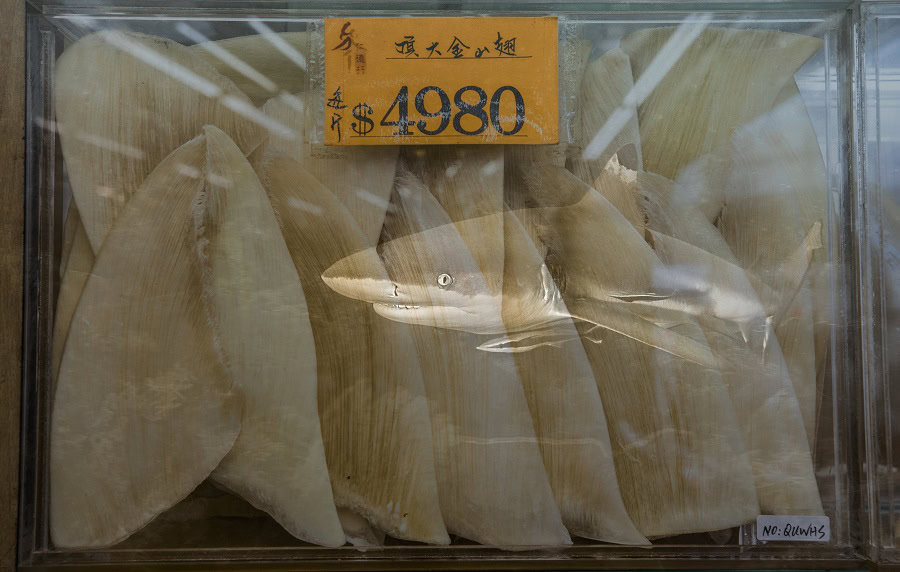
3rd Prize – Scott Gusty Tuason (Philippines)
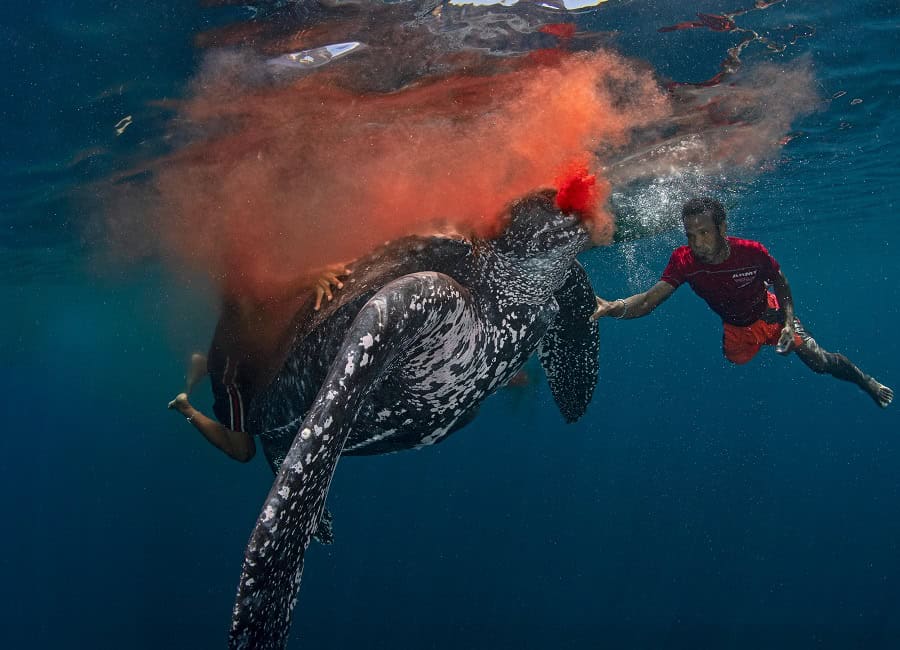
You can find all the awarded images here:http://underwaterphotographeroftheyear.com/winners/upy-yearbook/Opening image © Greg Lecœur / UPY2020