


In France, the marine medical assistance system is governed by instruction n°112/SGMer, issued by the general secretariat of the Sea, which falls under the Prime Minister. This legal framework was established by decree n° 95-1232 of November 22, 1995. Diving accidents, whether related to scuba, rebreathers, freediving, or spearfishing, are special cases for which the processing methods are clearly defined in instruction n°76/SGMer of May 31, 2021.
Organization of sea rescue
This instruction aims to standardize the rescue procedure in the event of an underwater accident. It emphasizes the importance of effective collaboration among five main actors and highlights the CROSS-SCMM-CCMM tripod:
- CROSS : Regional operational surveillance and rescue centers, which receive alerts in case of diving accidents at sea or on the coast.
- SCMM : Maritime medical coordination SAMU, responsible for coordination and medical intervention at sea.
- CCMM : Maritime medical consultation center, based in Toulouse, offering telemedical assistance.
- Maritime SMURs : Mobile maritime emergency and resuscitation units.
- Land support means : Specialized hospitals, SAMU, land-based SMURs, firefighters (SDIS), ambulances, etc.
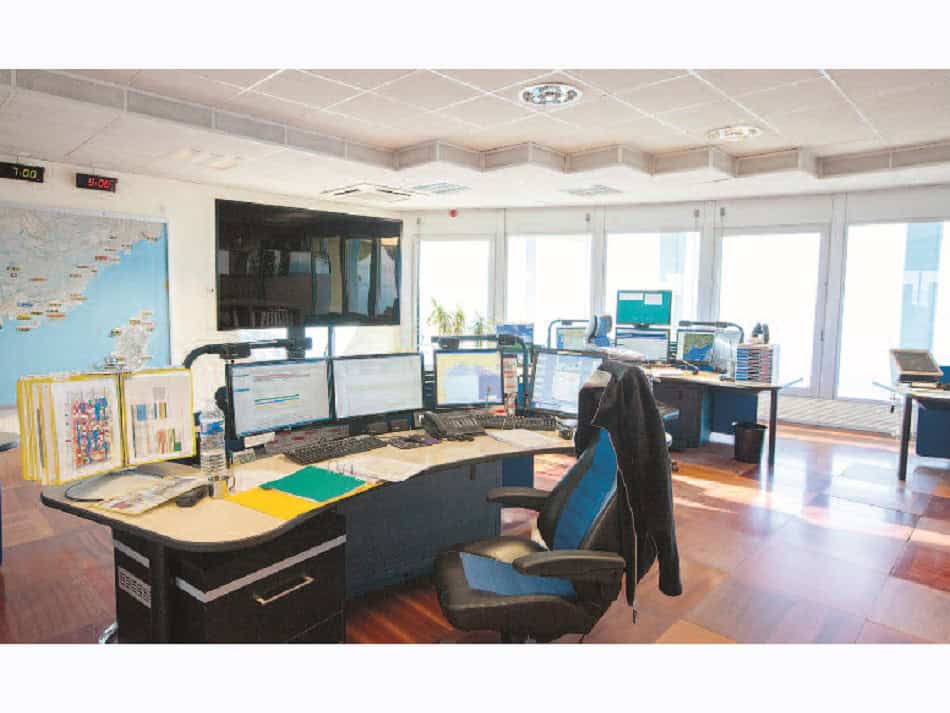
CROSS: Guardians of marine safety
The CROSS centers are responsible for monitoring and rescuing at sea, 24 hours a day, 7 days a week. Here are the active CROSS centers:
- CROSS Gris-Nez (Eastern English Channel – Pas-de-Calais)
- CROSS Jobourg (Central English Channel)
- CROSS Corsen (Western English Channel)
- CROSS Étel (Atlantic)
- CROSS Mediterranean
- CROSS Martinique (Antilles-Guiana)
- CROSS Réunion (Indian Ocean)
- JRCC Tahiti (South Pacific)
- MRCC Nouméa (New Caledonia)
These centers play a crucial role in ensuring rapid and effective interventions.
Alert procedure
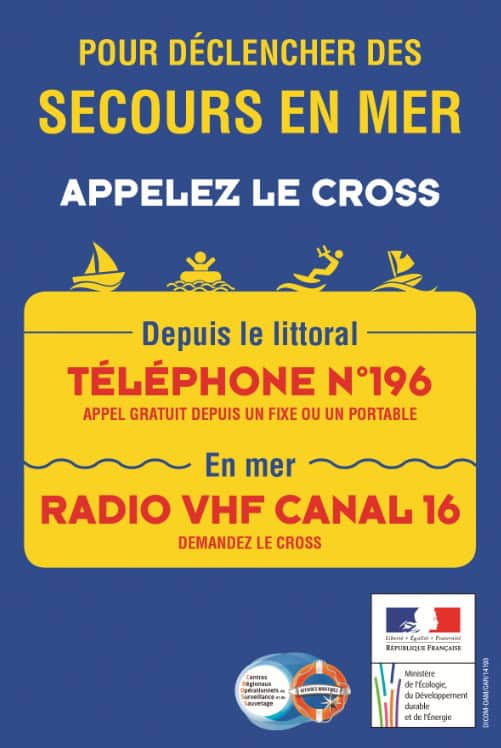
In case of an accident at sea, VHF channel 16 is the primary means of communication to alert a CROSS. It is also possible to dial the unique number 196 from the coast.
Role of SCMM
Given the specific nature of maritime interventions, instruction n°DGOS/R2/2013/409, dated November 22, 2013, has designated several SCMM:
- Atlantic : CH of the Basque Coast (Aquitaine, Southern Brittany, Poitou-Charentes)
- English Channel – North Sea : GH of Le Havre (Normandy, Hauts-de-France)
- Western English Channel : CHRU of Brest (Northern Brittany)
- Mediterranean : Intercommunal CH of Toulon – La Seyne-sur-Mer
- Antilles, Guiana, Caribbean : Martinique CHU in Fort-de-France
- Indian Ocean : CHU of La Réunion (La Réunion and Mayotte)
The SCMM coordinating doctor plays a key role in diving accidents:
- He ensures continuous medical presence.
- He relies on the initial assessment to determine the first aid to administer.
- He consults a hyperbaric physician as soon as possible.
- He evaluates the medical response to provide based on the data received.
- He ensures that specific means, such as hyperbaric chambers, are available.
- He defines, in consultation with the maritime rescue coordination center, the means of transporting the victim to appropriate care.
The CCMM: An indispensable support
Located in Saint-Lys, 20 km from Toulouse, the Maritime Medical Consultation Center (CCMM) has been operational 24 hours a day since 1983, offering telemedical assistance to ships at sea, thanks to over 40 years of experience in marine medical aid.
Maritime SMURs: Specialized intervention teams
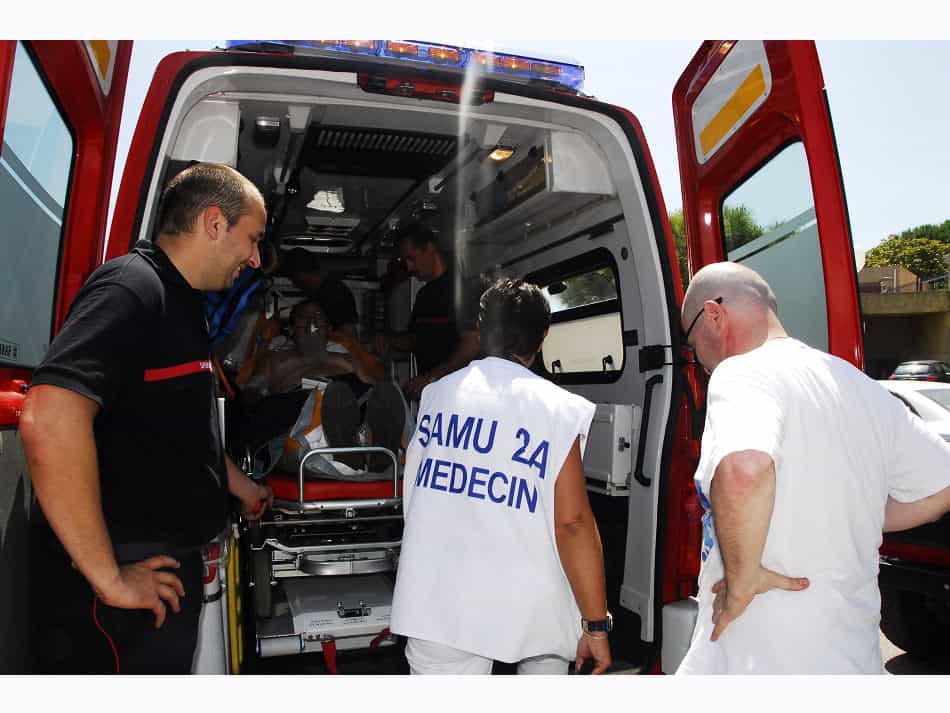
The SMUR-M units are mobilized following the SCMM’s medical regulation. Their mission is to:
- Take charge of patients in emergency situations outside health facilities.
- Ensure medical transport to care facilities, according to the patient’s needs.
The teams are specifically trained and equipped for maritime interventions.
Alert handling sheet
The alert handling sheet, attached to instruction n°76/SGMer, is a key tool for alert management in diving accidents. The operator uses it to gather information from the person reporting the accident. Initially, the information sought concerns the boat, the diving site, and the type of diving, before focusing on the victim’s condition. This can unsettle those who are not trained, so it is essential to be prepared to respond to these questions quickly.
Crucial details include the name of the diving site, its GPS coordinates, and the distance to the nearest port. These details should be included in your rescue plan to facilitate intervention.
Conclusion
Diving into the underwater world involves risks. Knowing the rescue chain and alert protocols in case of an accident is essential to ensure effective intervention. Before diving, make sure you’re well-informed and prepared. For more information on maritime safety, visit the site Ministry of the Sea.