


This year, the Delauze family, accompanied by three generations of « Comexiens », is celebrating the sixtieth anniversary of the Compagnie maritime d’expertises (Comex). A true French gem in the maritime industry, this company has given birth to numerous inventions for professionals who work and explore the abyssal depths.
An adventure born from offshore oil exploitation
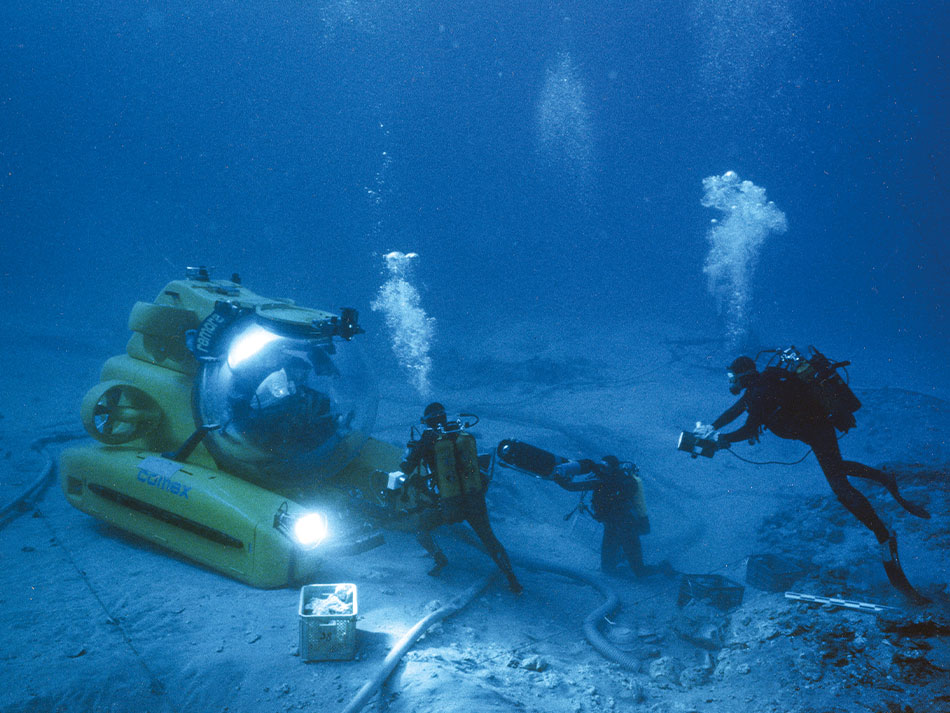
The history of Comex is intimately linked to the development of offshore oil exploitation, which transformed the destiny of many Marseille families. At the end of 1961, Henri-Germain Delauze and his wife filed the statutes of their company, the Compagnie maritime d’expertises (Comex). From its inception, the company established itself as an essential service provider for oil companies.
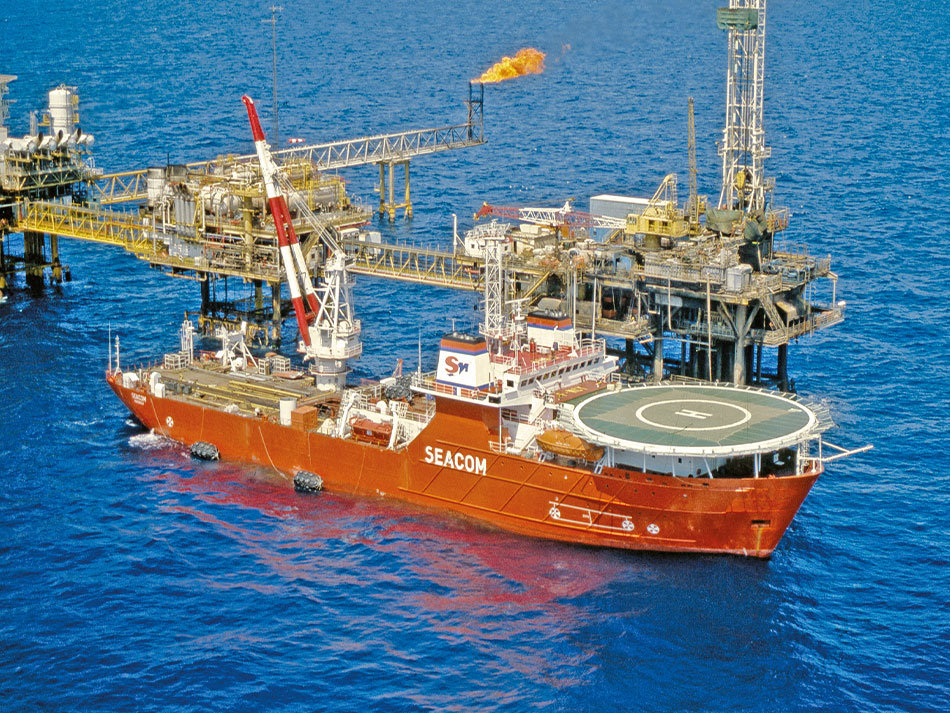
Operations at sea indeed require advanced technologies and divers capable of operating at very great depths. In the field of industrial diving, everything remained to be invented to allow complex interventions: cutting, welding, or pouring concrete under several bars of pressure. Comex quickly gained international recognition by becoming a pioneer of hyperbaric engineering. Through the development of civil and military techniques and equipment, this Marseille-based company opened new frontiers by making extreme underwater areas accessible.
Pushing the limits of industrial diving
For thirty years, Comex teams experimented and constantly pushed the boundaries of what was possible. To counter the harmful effects of nitrogen narcosis and breathlessness related to compressed air, they tested new gas mixtures. These divers were among the first in the world to use innovative gaseous suits: nitrox (nitrogen and oxygen), trimix (helium, nitrogen, oxygen), heliox (helium and oxygen), hydrox (dihydrogen and dioxygen), and hydreliox (hydrogen, helium, oxygen), saturating their bodies with these suitable gases.
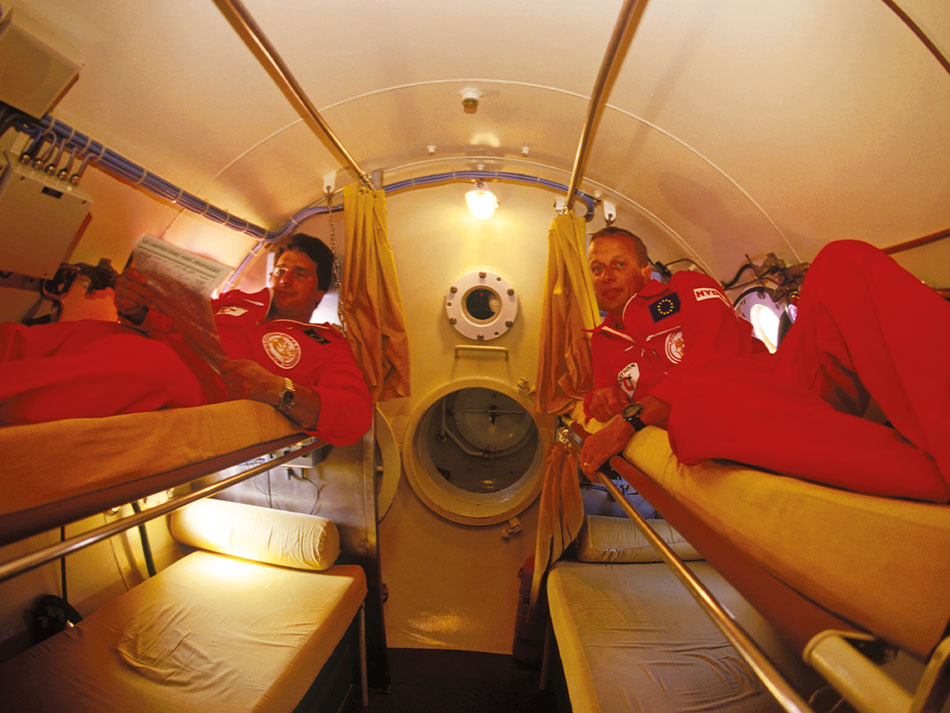
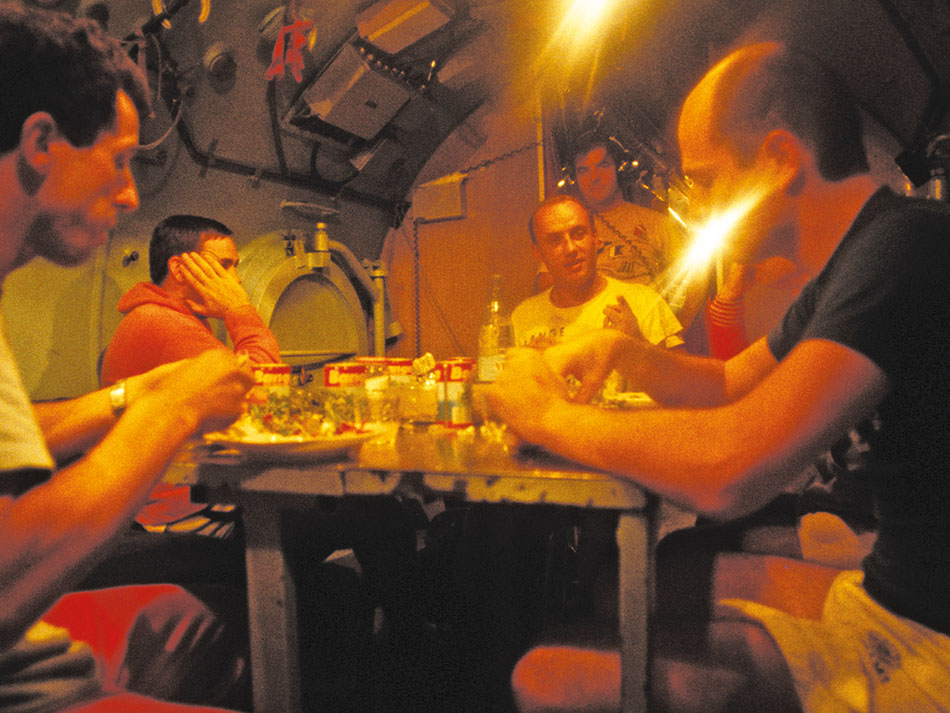
Dr. Xavier Fructus, a specialist in deep dive physiology, and his successor Dr. Bernard Gardette, supervised the observations from these experimental immersions carried out in hyperbaric chambers and at sea. In Marseille, in the Pointe-Rouge district, the first Hyperbaric Testing Center (HTC) was established. This facility allowed divers to be compressed up to 360 meters. In 1969, a new HTC was established in Mazargues (9th district), in the heart of a still rural area. It included a giant 5-meter diameter metal sphere capable of simulating a depth of 300 meters, with a total capacity going up to 800 meters.
Did you enjoy this excerpt?
Read the full article.
READING TIME ≈ 09 min
Dive into the heart of the Magazine PLONGEZ!
To enjoy this article and its exclusive content, a modest contribution is required.