


Deposited daily by the tides, used for centuries to fertilize the soil, feed livestock, or even produce soda for the glass and soap industry, seaweeds are an integral part of the landscape in Brittany and Normandy. While this resource seems familiar to those living on these coasts, it actually represents only a tiny visible portion of a surprisingly rich underwater world, often called the « kelp forest. » Yet this term is very reductive: it is a much more complex and fascinating ecosystem.
Kelp and kelp forests: an unsuspected diversity
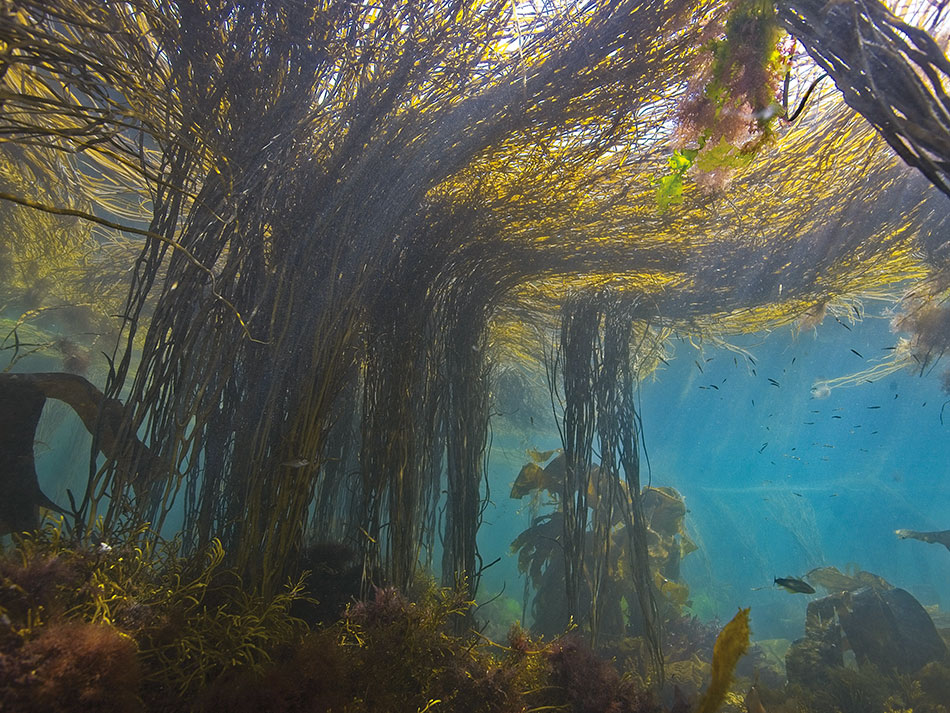
In North America, giant seaweed forests are known as « kelp. » This word, sometimes used in France, refers to macroalgae that thrive only in temperate, nutrient-rich waters. Here, « kelp forests » primarily consist of large brown algae, comparable in their layered organization and ecological role to terrestrial forests. The analogies are numerous: like trees, algae spread over several layers according to their light needs for photosynthesis. Large kelps rise several meters, capturing light at the surface and allowing smaller species to thrive beneath their fronds, much like an oak, chestnut, or beech forest where shrubs and then mosses succeed under the canopy.
An ecological organization inspired by terrestrial forests
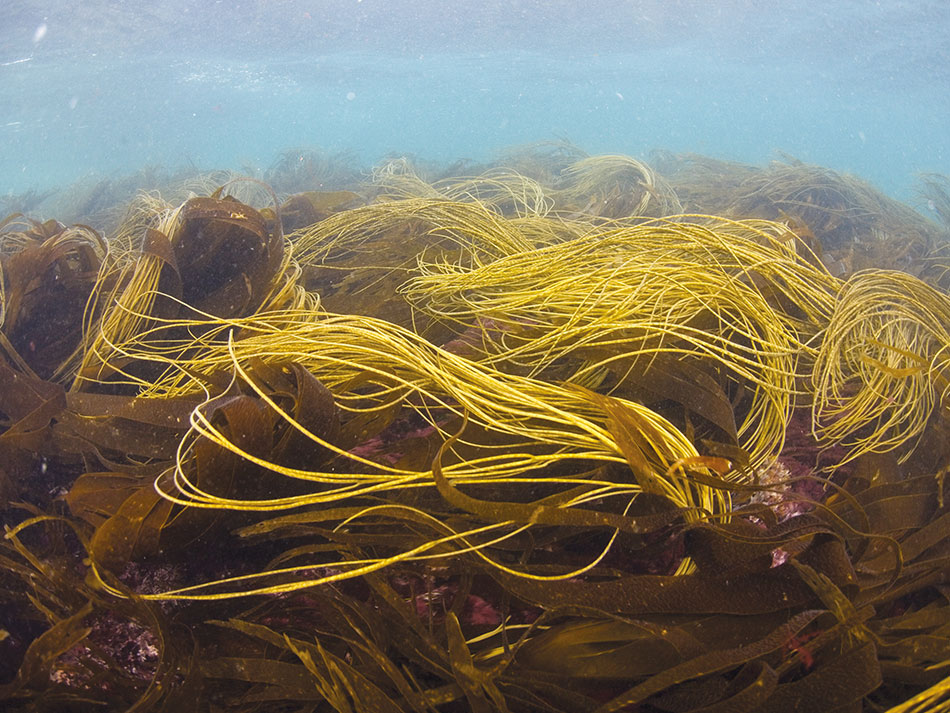
The comparisons don’t stop there. The fronds of kelps resemble the canopy, the stipe evokes the trunk, and the holdfasts play the role of roots anchoring the plant to the substrate. Beyond the visual similarity, this arrangement creates habitats tailored to each species, from large kelps to short algae, including seagrasses.
Light, a vital condition
Although trees and algae are both capable of photosynthesis, their lifestyles differ significantly. Trees draw water and nutrients through their roots, which then circulate via the trunk and branches to the leaves to perform photosynthesis. Kelp, on the other hand, absorbs nutrients directly from the water through their large fronds, with each part of the algae playing a role in its nourishment and growth.
Did you enjoy this excerpt?
Read the full article.
READING TIME ≈ 08 min
Dive into the heart of PLONGEZ! Magazine
To enjoy this article and its exclusive content, a modest contribution is required.