


Got the itch to dive? The section “Cast Off” guides you to perfect destinations for observing these majestic giants of the seas. Whether diving or from a boat, meet whales in Mexico, French Polynesia, or Reunion Island.
The winning trio
Baja California, Whale Eldorado
Every year, from January to March, Baja California, a peninsula in Mexico, becomes a haven for several whale species. They flee the cold waters of Alaska to reproduce here. No getting in the water: this is about observing these majestic creatures from your boat.
On the Pacific coast, gray whales migrate to protected areas like lagoons and bays. The San Ignacio Lagoon, at the heart of El Vizcaino Biosphere Reserve, hosts several hundred whales. Also embark along Magdalena Bay to Cabo San Lucas.
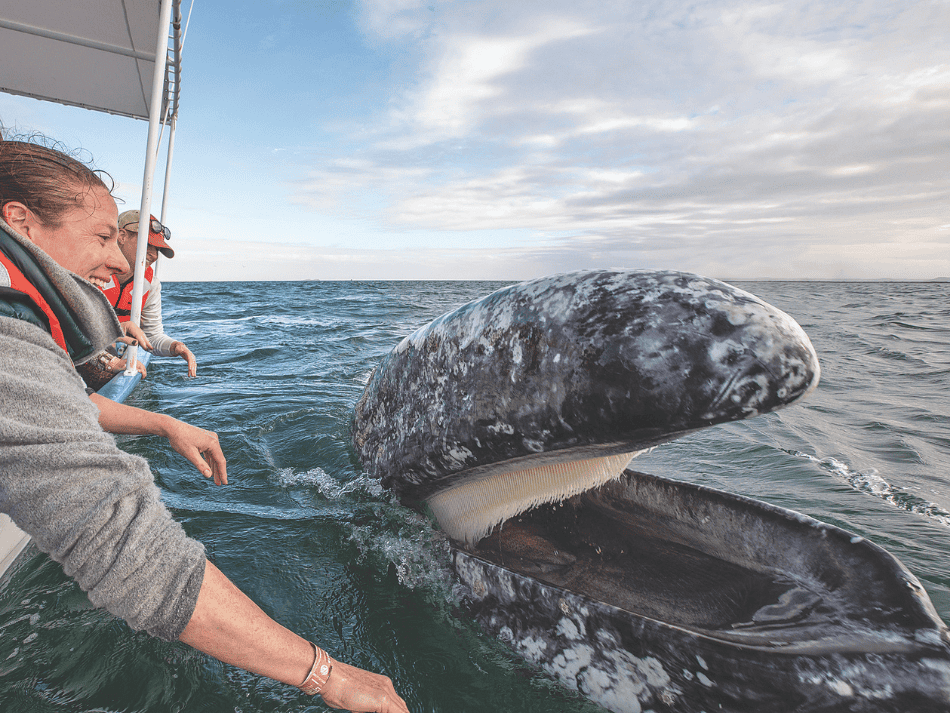
In the Sea of Cortez, Loreto Bay, a marine park, is the playground for blue whales, the largest animals in the world, reaching up to 30 meters. Keep your distance for an unforgettable encounter. Humpback whales, on the other hand, amaze with their spectacular jumps and songs. Combine your trip with dives in the Sea of Cortez!
Head above water
Enjoy a road trip along Baja California, appreciating the varied landscapes: palm forests, desert lands, white sandy beaches, and coastal towns, from typical villages to beach resorts.
Practical
- Time difference: -8 hours all year round.
- Water temperature: 17°C in winter, 26°C in summer.
- Best season: January to March for whale watching.
- Equipment: observation from a boat; no dives with the whales.
- Budget: between 60 and 90 € for a half-day boat trip.
- Operators: many local operators offer whale watching trips.
Observations in French Polynesia
It is rare to be able to dive alongside these marine giants, but French Polynesia offers this chance. Between July and October, humpback whales come to reproduce here. Polynesia is a marine sanctuary; getting in the water is therefore strictly regulated. Boats must keep a distance of at least 100 meters and reduce their speed.
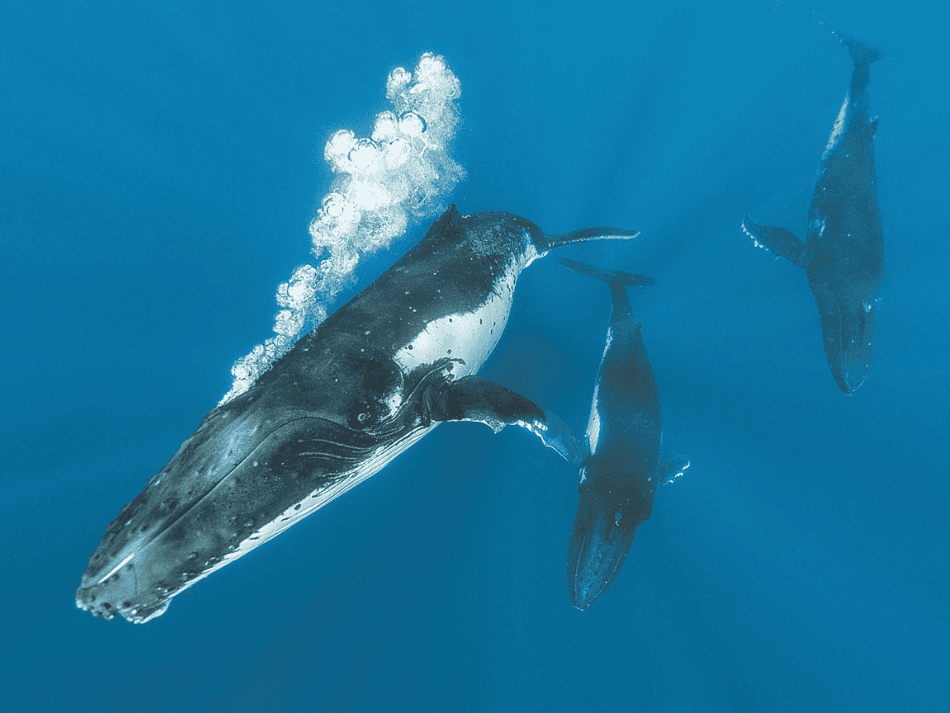
Some areas, like lagoons and bays, prohibit swimming to protect the animals. Go with a guide and in small groups. You can observe these majesties off the coast of Tahiti or Moorea. For unique encounters, visit the Austral Islands, like Rurutu, known as the whale island. From there, marvel at the grand jumps of whales and touching scenes between mothers and calves while snorkeling.
Head above water
Hike on the volcanic peaks of Moorea or explore Rurutu, far from mass tourism, to discover its wild nature and impressive limestone caves.
Practical
- Time difference: -10 hours in summer, -11 hours in winter.
- Water temperature: 26°C all year round.
- Best season: July to October for whale watching.
- Equipment: 3 mm wetsuit recommended.
- Diving level: snorkeling with whales.
- Budget: 110 € on average for the excursion to Rurutu. A 16-night stay around Tahiti, starting from 8,880 €, including flights and half-board.
- Operators: several travel agencies will take you there.
Snorkeling in Reunion Island
In the Indian Ocean, Reunion Island is home to over 20 species of marine mammals, including dolphins and humpback whales. From July to October, these cetaceans approach the shores, sometimes visible even from land. Females reproduce and give birth in these warm waters.
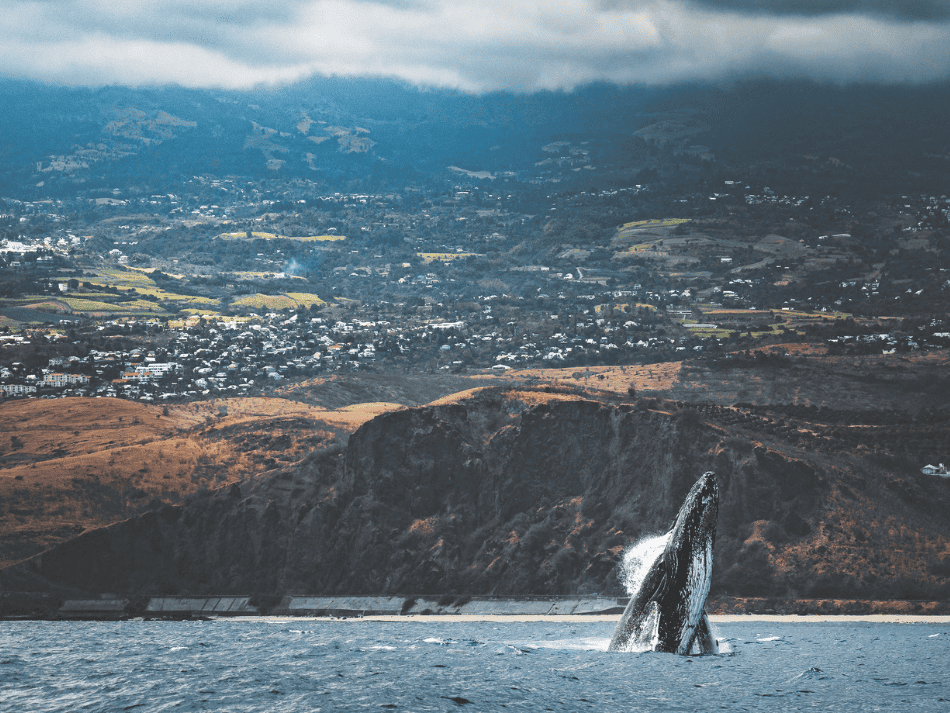
Sea excursions allow you to observe these majesties. Reunion is one of the few destinations where getting in the water for snorkeling is still possible. To avoid disturbing the animals, strict rules are in place; boats must not approach within 100 meters as of 2021.
Whales are studied and tracked using participatory science tools to record observations. For visitors who do not wish to get in the water, a listening table broadcasts the songs of whales in Saint-Denis. Combine your whale watching trips with dives near the island!
Head above water
Reunion offers a variety of landscapes, between lunar deserts, tropical forests, green fields, immense cirques, lava flows, and coasts sculpted by nature.
Practical
- Time difference: +2 hours in summer, +3 hours in winter.
- Water temperature: 23°C on average from July to October, 30°C from November to June.
- Best season: July to October for whale watching.
- Equipment: 3 to 5 mm wetsuit for snorkeling.
- Diving level: getting in the water for snorkeling.
- Budget: between 30 and 75 € for a sea observation trip.
- Operators: various diving centers and private operators organize these trips.
The pros’ choice
A stay in the Azores
Gaël from Subocea agency recommends this destination.
Why this destination?
Combining land and sea, this trip offers dives on Santa Maria with manta rays and beautiful reefs. In Sao Miguel, go hiking, explore the local cuisine, and admire the volcanoes!
Highlight?
Whale watching is done from Ponta Delgada with marine biologists. About thirty species, including sperm whales and blue whales, can be observed.
Practical information: 7-night stay from August 6 to 13, including breakfasts, flights, excursions, and half-day whale watching, starting from 2,005 €. www.subocea.com
A trip to the Caribbean
Mélina from Seven Seas offers a cruise in the Dominican Republic.
Why choose this trip?
From January to April, you can encounter humpback whales in this marine protected area between the Dominican Republic and the Turks and Caicos Islands, one of the few places where swimming with them is possible.
Travel format:
On board the Turks and Caicos Aggressor, this week-long cruise allows you to observe whales snorkeling, witnessing their behavior on the surface and underwater.
Practical information: 7-night cruise including full board, flights, and snorkeling trips, starting from 5,200 €. www.sevenseas-voyages.fr
GPS coordinates
- Mexico: 26°51’20” N – 113°09’42” W
- French Polynesia: 17°32’50” S – 149°43’10” W
- Reunion Island: 21°11’24” S – 055°12’31” E
- The Azores: 36°58’21” N – 025°06’09” W
- Silver Bank: 20°30’54” N – 069°46’26 » W
This article, initially written by Margot Harty for the print edition of PLONGEZ!, has been adapted for the web.